
In modern agriculture, the adoption of unmanned aerial vehicles (UAVs) has revolutionized seeding practices, particularly in challenging terrains where ground machinery faces limitations. As a researcher focused on precision agriculture, I conducted a comprehensive study to investigate how key operational parameters of a quadrotor drone influence the distribution uniformity of seeds, specifically using Astragalus membranaceus as a model crop. The goal was to optimize seeding quality by analyzing factors such as outlet opening size, flight height, and centrifugal disk rotation speed. This work underscores the potential of quadrotor drone technology to enhance sowing efficiency and crop yields, especially in hilly or irregular landscapes where traditional methods fall short. Through systematic experimentation and data analysis, I aimed to provide actionable insights for farmers and agronomists leveraging quadrotor drones for broadcasting tasks.
The quadrotor drone, a versatile aerial platform, offers distinct advantages in agricultural broadcasting due to its maneuverability, low operational cost, and ability to operate without ground contact, thereby minimizing soil compaction. My study centered on a commercially available quadrotor drone equipped with a centrifugal broadcasting system, which uses rotational force to disperse seeds uniformly over a target area. The focus was on evaluating how adjustments in operational parameters affect seed distribution patterns, as measured by collection data from field trials. By employing an orthogonal experimental design, I quantified the effects of three critical factors: the opening size of the material outlet (controlling seed flow rate), the flight height of the quadrotor drone (affecting seed drop time and air resistance), and the rotation speed of the centrifugal disk (determining initial seed velocity and spread width). These parameters are pivotal in optimizing the performance of a quadrotor drone for seeding applications, as they directly impact seed placement density, uniformity, and overall sowing quality.
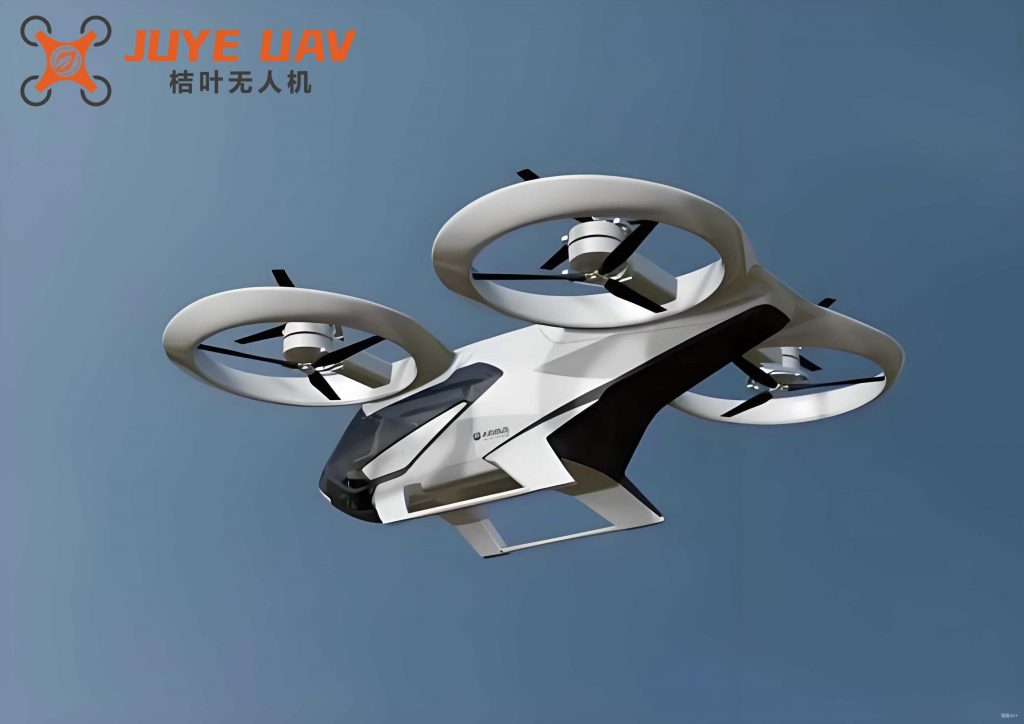
To ground this research in practical methodology, I utilized an electric quadrotor drone model, specifically designed for agricultural broadcasting, with a payload capacity of 10 kg and a broadcasting radius ranging from 2 to 5 meters. The broadcasting system comprised a material hopper, an adjustable outlet controller, a centrifugal disk divided into six扇形 sectors (each 60 degrees), and a drive shaft. The quadrotor drone’s dimensions were 938 mm in length, 938 mm in width, and 596 mm in height, with a safe flight speed capped at 7 m/s. For data collection, I deployed circular receivers with a diameter of 0.1 meters across two sampling belts, each 12 meters long and spaced 10 meters apart, perpendicular to the quadrotor drone’s flight path. This setup allowed for precise capture of seed deposition patterns under varying conditions. Astragalus seeds were chosen due to their suitability for broadcasting and common cultivation on slopes where ground machinery is impractical. The field trials were conducted on level terrain under controlled environmental conditions (temperature 21–23°C, humidity 51–55%) to minimize external wind interference, ensuring that observed variations stemmed primarily from the manipulated parameters of the quadrotor drone.
In designing the experiments, I established three levels for each factor based on preliminary tests and operational expertise. For the outlet opening size, controlled via a remote knob divided into 30 increments, I selected levels of 11/30, 13/30, and 15/30, corresponding to average flow times of 51, 41, and 33 seconds for 2 kg of Astragalus seeds, respectively. The flight height was set at 1.0 m, 1.5 m, and 2.0 m, reflecting typical operating ranges for a quadrotor drone in seeding tasks. The centrifugal disk rotation speed, also adjusted via a 30-step remote control, was tested at 8/30, 10/30, and 12/30 of maximum speed. A constant flight speed of 4 m/s was maintained across all trials to ensure consistency, as this speed balances stability and efficiency for a quadrotor drone. I employed an L9(3^4) orthogonal array to structure nine experimental runs, as shown in Table 1, which outlines the factor-level combinations and includes an empty column for error estimation. This approach enabled efficient analysis of multiple parameters with limited trials, a key advantage in field-based research with quadrotor drones.
| Experiment No. | A: Outlet Opening Size | B: Flight Height (m) | C: Disk Rotation Speed | D: Empty Column |
|---|---|---|---|---|
| 1 | 11/30 | 1.5 | 8/30 | 1 |
| 2 | 11/30 | 1.0 | 10/30 | 2 |
| 3 | 11/30 | 2.0 | 12/30 | 3 |
| 4 | 13/30 | 1.5 | 10/30 | 2 |
| 5 | 13/30 | 1.0 | 12/30 | 3 |
| 6 | 13/30 | 2.0 | 8/30 | 1 |
| 7 | 15/30 | 1.5 | 12/30 | 3 |
| 8 | 15/30 | 1.0 | 8/30 | 1 |
| 9 | 15/30 | 2.0 | 10/30 | 2 |
Data analysis focused on seed distribution uniformity, quantified using the coefficient of variation (CV), a statistical measure that expresses the standard deviation as a percentage of the mean. For each experiment, seeds collected from receivers within the main deposition zone (defined as -1.5 m to 3.0 m relative to the flight path) were counted, and the CV was calculated to assess variability among sampling points. The formulas used are central to evaluating the performance of a quadrotor drone in broadcasting applications:
$$CV = \frac{S}{\bar{X}} \times 100\%$$
where \(S\) represents the sample standard deviation, and \(\bar{X}\) is the mean number of seeds per receiver. The standard deviation is computed as:
$$S = \sqrt{\frac{\sum_{i=1}^{n}(X_i – \bar{X})^2}{n-1}}$$
Here, \(X_i\) denotes the seed count at the i-th receiver, \(n\) is the number of receivers in the main deposition zone, and \(\bar{X}\) is the average seed count. A lower CV indicates more uniform seed distribution, which is desirable for optimal crop establishment. To determine the influence of each factor on the CV, I performed range analysis, a method that compares the average CV values across different levels of each parameter. The range (\(R\)) for a factor is calculated as the difference between the maximum and minimum average CVs for that factor, with larger \(R\) values signifying greater impact on seed distribution uniformity. This analytical framework allowed me to rank the factors by importance and identify optimal settings for the quadrotor drone.
The results from the field trials revealed distinct seed distribution patterns across the nine experiments. As illustrated in Figure 1 (though not referenced by number in the text, the image link is embedded earlier), the quadrotor drone produced generally normal distribution curves, with seeds predominantly deposited between -1.5 m and 3.0 m from the flight line. This asymmetry, centered around 1.0 m, likely stemmed from minor visual errors in aligning the quadrotor drone’s path, compounded by the inertial forces of seeds ejected from the centrifugal disk. Observably, Experiments 1 and 7 showed more concentrated seed distributions, corresponding to outlet opening sizes of 11/30 and 15/30, flight heights of 1.5 m, and disk rotation speeds of 8/30 and 12/30, respectively. These visual trends were quantified through CV calculations, as summarized in Table 2, which lists the CV for each experimental run. The CV values ranged from 28.2% to 57.7%, a substantial spread of 29.5%, highlighting the significant effect of parameter adjustments on the quadrotor drone’s broadcasting performance. Notably, the lowest CV (28.2%) occurred in Experiment 2, with an outlet opening of 11/30, flight height of 1.0 m, and disk speed of 10/30, while the highest CV (57.7%) was in Experiment 3, with the same outlet opening but a higher flight height of 2.0 m and disk speed of 12/30. This contrast underscores how elevated flight heights and faster disk speeds can reduce uniformity, possibly due to increased air resistance that selectively disperses lighter seeds.
| Experiment No. | A: Outlet Opening Size | B: Flight Height (m) | C: Disk Rotation Speed | Coefficient of Variation (CV%) |
|---|---|---|---|---|
| 1 | 11/30 | 1.5 | 8/30 | 39.5 |
| 2 | 11/30 | 1.0 | 10/30 | 28.2 |
| 3 | 11/30 | 2.0 | 12/30 | 57.7 |
| 4 | 13/30 | 1.5 | 10/30 | 36.6 |
| 5 | 13/30 | 1.0 | 12/30 | 30.4 |
| 6 | 13/30 | 2.0 | 8/30 | 42.4 |
| 7 | 15/30 | 1.5 | 12/30 | 36.3 |
| 8 | 15/30 | 1.0 | 8/30 | 56.2 |
| 9 | 15/30 | 2.0 | 10/30 | 57.1 |
To meet industry standards, I referenced aviation guidelines that recommend a CV below 40% for acceptable seed distribution uniformity in aerial broadcasting. Among the nine trials, five experiments (1, 2, 4, 5, and 7) yielded CVs between 28.2% and 39.5%, all within this threshold, demonstrating that a quadrotor drone can achieve compliant performance with proper parameter tuning. This finding reinforces the viability of quadrotor drones as effective tools for precision seeding, particularly when optimized for specific crop requirements like those of Astragalus seeds.
For deeper insight, I conducted a range analysis on the CV data to rank the factors by their influence on distribution uniformity. The average CV for each level of factors A, B, and C was computed, as shown in Table 3. For factor A (outlet opening size), the average CVs for levels 1 (11/30), 2 (13/30), and 3 (15/30) were 41.8%, 36.5%, and 49.9%, respectively. For factor B (flight height), the averages for 1.5 m, 1.0 m, and 2.0 m were 37.5%, 38.3%, and 52.4%. For factor C (disk rotation speed), the averages for 8/30, 10/30, and 12/30 were 46.0%, 40.6%, and 41.5%. The range \(R\) for each factor was derived as the difference between the maximum and minimum average CVs:
$$R_A = 49.9\% – 36.5\% = 13.4\%$$
$$R_B = 52.4\% – 37.5\% = 14.9\%$$
$$R_C = 46.0\% – 40.6\% = 5.4\%$$
These results indicate that flight height (\(R_B = 14.9\%\)) has the greatest impact on seed distribution uniformity, followed by outlet opening size (\(R_A = 13.4\%\)), and then disk rotation speed (\(R_C = 5.4\%\)). Thus, when operating a quadrotor drone for broadcasting, prioritizing adjustments to flight height can yield the most significant improvements in seeding quality. The optimal levels were identified by selecting those with the minimum average CV: for factor A, level 2 (13/30) with 36.5%; for factor B, level 1 (1.5 m) with 37.5%; and for factor C, level 2 (10/30) with 40.6%. Therefore, the recommended parameter set for this quadrotor drone is an outlet opening of 13/30, a flight height of 1.5 m, and a disk rotation speed of 10/30, which should maximize distribution uniformity for Astragalus seeds.
| Factor | Level 1 Average CV% | Level 2 Average CV% | Level 3 Average CV% | Range (R%) | Optimal Level |
|---|---|---|---|---|---|
| A: Outlet Opening Size | 41.8 | 36.5 | 49.9 | 13.4 | 2 (13/30) |
| B: Flight Height | 37.5 | 38.3 | 52.4 | 14.9 | 1 (1.5 m) |
| C: Disk Rotation Speed | 46.0 | 40.6 | 41.5 | 5.4 | 2 (10/30) |
Expanding on these findings, I explored the mechanistic reasons behind the observed effects. The outlet opening size on a quadrotor drone directly controls seed flow rate: a larger opening increases flow, potentially leading to overly dense seed clusters and wasted resources, while a smaller opening may result in sparse coverage and reduced crop yields. In my trials, the optimal opening of 13/30 balanced these extremes, providing adequate density without compromising uniformity. Flight height influences the time seeds spend in the air; higher altitudes allow for greater air resistance, which can act as a cleaning mechanism by separating lighter or damaged seeds, but this often reduces distribution uniformity as seeds disperse unevenly. The quadrotor drone performed best at 1.5 m, a height that minimizes wind interference while ensuring sufficient drop time for even spread. Disk rotation speed affects the initial centrifugal force imparted to seeds: higher speeds widen the broadcasting swath but increase seed-to-disk friction, raising the risk of damage. The moderate speed of 10/30 optimized spread width without excessive seed attrition, a critical consideration for maintaining seed viability when using a quadrotor drone.
To further contextualize this study, I compared the quadrotor drone’s performance with traditional seeding methods. Ground-based machinery, such as mechanical seeders, often struggles on slopes or in small plots, whereas a quadrotor drone offers unparalleled flexibility and efficiency. Previous research indicates that UAVs can achieve operational efficiencies of up to 4.11 hectares per hour, far surpassing ground equipment. My results align with this, showing that a quadrotor drone, when properly configured, can meet or exceed industry standards for seed distribution. Additionally, the centrifugal broadcasting system on the quadrotor drone proved effective for small seeds like Astragalus, though adjustments may be needed for larger or irregularly shaped seeds. This adaptability underscores the quadrotor drone’s potential as a multi-purpose tool in precision agriculture.
In terms of practical applications, farmers using a quadrotor drone for broadcasting should consider conducting pre-season calibration tests to determine optimal parameters for specific crops and field conditions. My study provides a baseline for Astragalus, but factors like seed weight, shape, and environmental winds may necessitate tweaks. For instance, in windier areas, lowering the flight height of the quadrotor drone or reducing disk speed could mitigate drift and improve uniformity. Moreover, integrating real-time sensors on the quadrotor drone, such as flow monitors or height sensors, could enable dynamic adjustments during flight, further enhancing seeding precision. These advancements represent the future of quadrotor drone technology in agriculture, where data-driven optimization maximizes resource use and crop productivity.
From a broader perspective, the adoption of quadrotor drones for seeding supports sustainable farming practices by reducing soil compaction, minimizing chemical runoff, and enabling targeted seed placement. This is particularly relevant in ecologically sensitive areas or organic farms where precision is paramount. My research contributes to the growing body of evidence that quadrotor drones are not just tools for crop spraying but also viable platforms for efficient and uniform seeding. As technology evolves, I anticipate that quadrotor drones will become increasingly autonomous, with AI algorithms optimizing parameters in real-time based on field data, thereby revolutionizing how we approach agricultural broadcasting.
In conclusion, my investigation into the effects of quadrotor drone broadcasting parameters on seed distribution for Astragalus membranaceus highlights the importance of systematic parameter optimization. Through orthogonal experiments, I found that flight height is the most influential factor on distribution uniformity, followed by outlet opening size and disk rotation speed. The optimal combination for the tested quadrotor drone was an outlet opening of 13/30, a flight height of 1.5 m, and a disk rotation speed of 10/30, which yielded a coefficient of variation of 36.5% to 40.6%, within acceptable industry limits. These findings provide a scientific basis for operators seeking to improve seeding quality with quadrotor drones, especially in challenging terrains. Future work could explore additional factors like flight speed or seed coatings, and extend trials to other crops, further solidifying the role of quadrotor drones in modern agriculture. As I reflect on this study, it is clear that the quadrotor drone represents a transformative technology for seeding, offering efficiency, precision, and adaptability that traditional methods cannot match.