
In recent years, the rapid advancement of unmanned aerial vehicles, particularly quadrotor drones, has transformed numerous industries and daily life. As an educator and researcher, I have witnessed firsthand how these versatile systems can revolutionize teaching and learning in STEM fields. The quadrotor drone, with its simple yet robust design, offers a perfect platform for hands-on education, allowing students to explore concepts in robotics, control theory, electronics, and computer science. This article delves into the intricacies of quadrotor drone systems, their components, control mechanisms, and practical applications in educational settings, emphasizing the use of tables and formulas to encapsulate key ideas. Throughout, I will repeatedly highlight the term ‘quadrotor drone’ to underscore its centrality in modern pedagogical tools.
The quadrotor drone is a type of unmanned aerial vehicle characterized by four rotors arranged in a square configuration. This design provides stability and maneuverability, making it ideal for various tasks. In education, the quadrotor drone serves as a microcosm of larger engineering systems, enabling students to grasp complex principles through tangible projects. From my experience, integrating quadrotor drones into curricula fosters creativity, problem-solving skills, and interdisciplinary thinking. Below, I will systematically break down the quadrotor drone system, starting with its structural components.
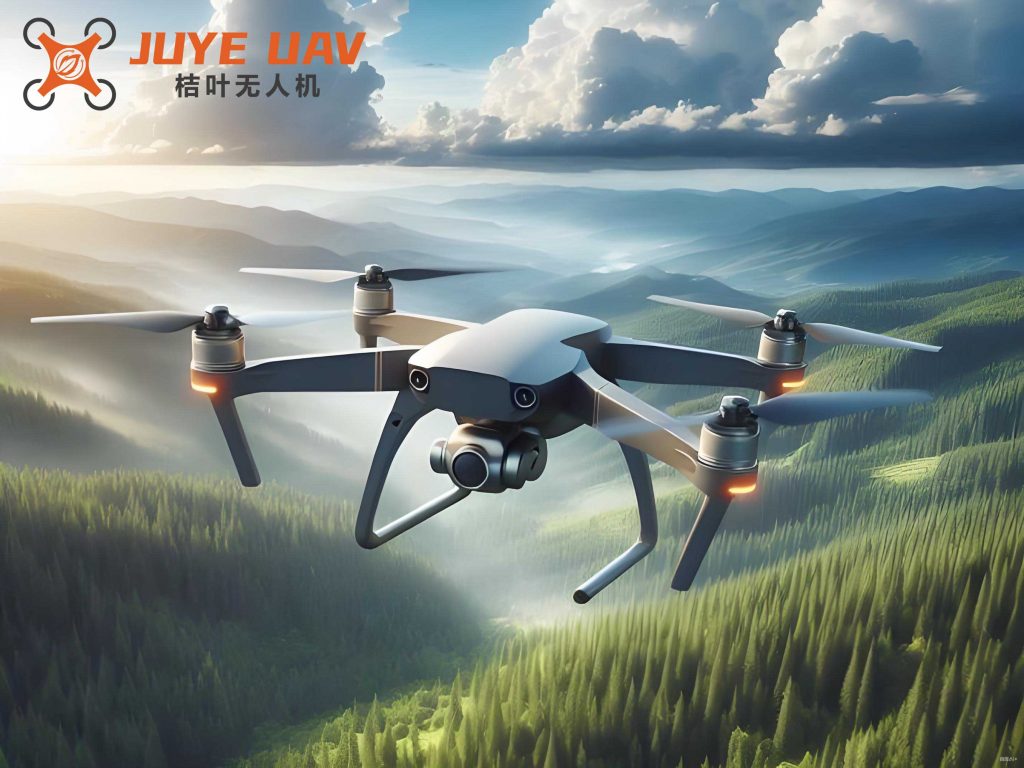
A typical quadrotor drone consists of several core modules that work in harmony to achieve flight. These include the frame, motors, electronic speed controllers (ESCs), flight controller, power management system, propellers, and optional add-ons like cameras or manipulators. To summarize, Table 1 outlines the primary components and their functions in a quadrotor drone system.
| Component | Function | Educational Relevance |
|---|---|---|
| Frame | Provides structural integrity and houses all parts | Teaches mechanical design and material science |
| Brushless Motors | Generate lift and thrust via rotation | Illustrates electromagnetism and motor dynamics |
| Electronic Speed Controllers (ESCs) | Regulate motor speed based on flight controller signals | Demonstrates power electronics and signal processing |
| Flight Controller | Processes sensor data to stabilize and control the quadrotor drone | Core for control theory and embedded systems |
| Propellers | Convert motor torque into aerodynamic lift | Explores fluid dynamics and propulsion |
| Battery | Supplies power to all electronic components | Highlights energy management and chemistry |
| Sensors (e.g., IMU, barometer) | Measure attitude, altitude, and environmental data | Introduces sensor fusion and data acquisition |
| Communication Modules | Enable remote control and telemetry | Covers wireless communication and networking |
The quadrotor drone operates on the principle of differential thrust: by varying the speeds of the four motors, it can achieve pitch, roll, yaw, and vertical movements. The dynamics of a quadrotor drone can be modeled using Newton-Euler equations. For instance, the total thrust $F$ generated by the propellers is given by:
$$ F = \sum_{i=1}^{4} k_f \omega_i^2 $$
where $k_f$ is the thrust coefficient and $\omega_i$ is the angular velocity of the $i$-th motor. The moments around the body axes are expressed as:
$$ \tau_x = l k_f (\omega_4^2 – \omega_2^2) $$
$$ \tau_y = l k_f (\omega_1^2 – \omega_3^2) $$
$$ \tau_z = k_m (\omega_1^2 – \omega_2^2 + \omega_3^2 – \omega_4^2) $$
Here, $l$ is the arm length from the center to each motor, and $k_m$ is the drag coefficient. These equations form the basis for control algorithms, making the quadrotor drone an excellent tool for teaching dynamics and control. In my classes, students use these formulas to simulate quadrotor drone behavior in software before implementing real-world tests.
At the heart of the quadrotor drone is the flight controller, a circuit board integrated with sensors like accelerometers, gyroscopes, and barometers. These sensors provide real-time data on the quadrotor drone’s orientation and altitude. The flight controller employs sensor fusion algorithms, such as complementary filters or Kalman filters, to estimate the state accurately. For educational purposes, I often simplify the PID (Proportional-Integral-Derivative) control law used for stabilization. The error $e(t)$ between desired and actual attitude is minimized by:
$$ u(t) = K_p e(t) + K_i \int_0^t e(\tau) d\tau + K_d \frac{de(t)}{dt} $$
where $K_p$, $K_i$, and $K_d$ are tuning gains. Students experiment with these gains to observe how they affect the quadrotor drone’s response, learning about feedback control firsthand. Table 2 summarizes common sensors in a quadrotor drone flight controller and their educational applications.
| Sensor Type | Measurement | Role in Quadrotor Drone | Teaching Concept |
|---|---|---|---|
| Accelerometer | Linear acceleration | Determines tilt and movement | Newton’s laws of motion |
| Gyroscope | Angular velocity | Tracks rotation rates | Rotational dynamics |
| Barometer | Atmospheric pressure | Estimates altitude | Fluid mechanics and pressure gradients |
| Magnetometer | Magnetic field direction | Provides heading reference | Earth’s magnetism and navigation |
| GPS Module | Global position | Enables autonomous flight | Geolocation and satellite technology |
Beyond basic flight, the quadrotor drone can be extended with additional modules for specialized tasks. One popular educational project is integrating a robotic manipulator or gripper onto the quadrotor drone. This transforms the quadrotor drone into an aerial robot capable of picking and placing objects, which is invaluable for teaching mechatronics and automation. The control of such a manipulator often involves pulse-width modulation (PWM) signals. For example, to open and close a gripper, a PWM signal with a specific duty cycle is sent to a servo motor. The duty cycle $D$ is defined as:
$$ D = \frac{t_{\text{on}}}{T} \times 100\% $$
where $t_{\text{on}}$ is the time the signal is high, and $T$ is the total period. In my labs, students program microcontrollers like Arduino or STM32 to generate PWM signals for quadrotor drone attachments. A simple code snippet to produce a 5% duty cycle PWM signal (as referenced in the context) might look like this in pseudocode:
while true:
    set output high
    delay(1.068 ms)  // Corresponds to ton
    set output low
    delay(21.659 ms) // Corresponds to toff
    if button pressed:
        break
This hands-on approach helps students understand embedded systems and real-time control, key skills in robotics. The quadrotor drone platform, with its modularity, allows for endless experimentation—from adding cameras for computer vision projects to implementing swarm algorithms for multiple quadrotor drones.
In educational settings, the quadrotor drone serves as a catalyst for project-based learning. I have designed courses where students build and program their own quadrotor drones from scratch. This process involves mechanical assembly, soldering circuits, configuring software, and testing flight performance. Table 3 outlines a sample curriculum module centered on the quadrotor drone, highlighting learning objectives and activities.
| Week | Topic | Learning Objective | Hands-On Activity |
|---|---|---|---|
| 1-2 | Introduction to Quadrotor Drones | Understand basic principles and components | Disassemble and reassemble a commercial quadrotor drone |
| 3-4 | Electronics and Power Systems | Learn about motors, ESCs, and batteries | Measure current draw and battery life of a quadrotor drone |
| 5-6 | Flight Dynamics and Control | Model quadrotor drone physics and implement PID control | Simulate quadrotor drone behavior in MATLAB or Python |
| 7-8 | Sensor Integration and Data Fusion | Process IMU data for attitude estimation | Calibrate sensors and log data from a flying quadrotor drone |
| 9-10 | Communication and Telemetry | Set up radio control and telemetry links | Program a ground station to monitor quadrotor drone parameters |
| 11-12 | Advanced Applications (e.g., Manipulators) | Extend quadrotor drone functionality with add-ons | Attach a gripper and control it via PWM for object retrieval |
| 13-14 | Project Development and Testing | Design and execute a custom quadrotor drone project | Build a quadrotor drone for a specific task like delivery or inspection |
The benefits of using quadrotor drones in education are manifold. They provide a tangible connection between theory and practice, motivate students through engaging projects, and develop technical competencies that are highly valued in industries like aerospace, robotics, and automation. Moreover, the quadrotor drone platform encourages interdisciplinary collaboration; for instance, computer science students can work on autonomy algorithms, while mechanical engineering students optimize the frame design. From my perspective, the quadrotor drone is more than just a tool—it’s a versatile educational asset that adapts to various skill levels and interests.
However, challenges exist, such as cost, safety concerns, and the need for specialized knowledge. To address these, I advocate for starting with simulation environments like Gazebo or CoppeliaSim, where students can safely experiment with quadrotor drone models before moving to physical systems. Additionally, open-source platforms like PX4 or ArduPilot lower the barrier to entry, allowing educators to customize quadrotor drone software for teaching. The mathematical foundation remains crucial; hence, I emphasize derivations like the quadrotor drone’s equations of motion. For example, the translational dynamics in the inertial frame can be expressed as:
$$ m \ddot{\mathbf{r}} = \begin{bmatrix} 0 \\ 0 \\ -mg \end{bmatrix} + R \begin{bmatrix} 0 \\ 0 \\ F \end{bmatrix} $$
where $m$ is the mass, $\mathbf{r}$ is the position vector, $g$ is gravity, $R$ is the rotation matrix from body to inertial frame, and $F$ is the total thrust. This equation helps students understand how forces govern quadrotor drone flight.
Looking ahead, the role of quadrotor drones in education will only expand with advancements in AI, machine learning, and IoT. Imagine students training quadrotor drones to recognize objects using neural networks or coordinating fleets for search-and-rescue simulations. These cutting-edge applications prepare learners for future technological landscapes. In my research, I explore how quadrotor drone swarms can be used to teach distributed systems and cooperative control, with algorithms based on consensus theory. The potential is limitless, and educators must continue to integrate such technologies into curricula.
In conclusion, the quadrotor drone stands as a powerful educational instrument that bridges multiple disciplines. Through detailed analysis of its components, control systems, and practical extensions like manipulators, students gain a holistic understanding of engineering principles. The use of tables and formulas, as demonstrated throughout this article, aids in synthesizing complex information. As we embrace the era of unmanned systems, the quadrotor drone will undoubtedly remain a cornerstone of hands-on learning, inspiring the next generation of innovators. My experience confirms that when students engage with a quadrotor drone, they not only learn about technology but also develop critical thinking and teamwork skills essential for their careers. Thus, I strongly advocate for the widespread adoption of quadrotor drone systems in educational institutions worldwide.