
The quadrotor drone has emerged as a quintessential platform in aerial robotics, merging the vertical take-off and landing (VTOL) capabilities of helicopters with mechanical simplicity. This underactuated system, controlled by varying the rotational speeds of four motors, presents a significant control challenge due to its inherent nonlinearity, strong coupling, and sensitivity to disturbances. Achieving stable and precise flight, especially under noisy conditions, is paramount for its application in surveillance, mapping, and delivery. While classical PID controllers are widely used, their fixed parameters often struggle with the dynamic and uncertain flight environment of a quadrotor drone. This work addresses this limitation by proposing and implementing an adaptive Fuzzy PID control strategy, demonstrating superior performance in rapid stabilization and disturbance rejection for autonomous flight.
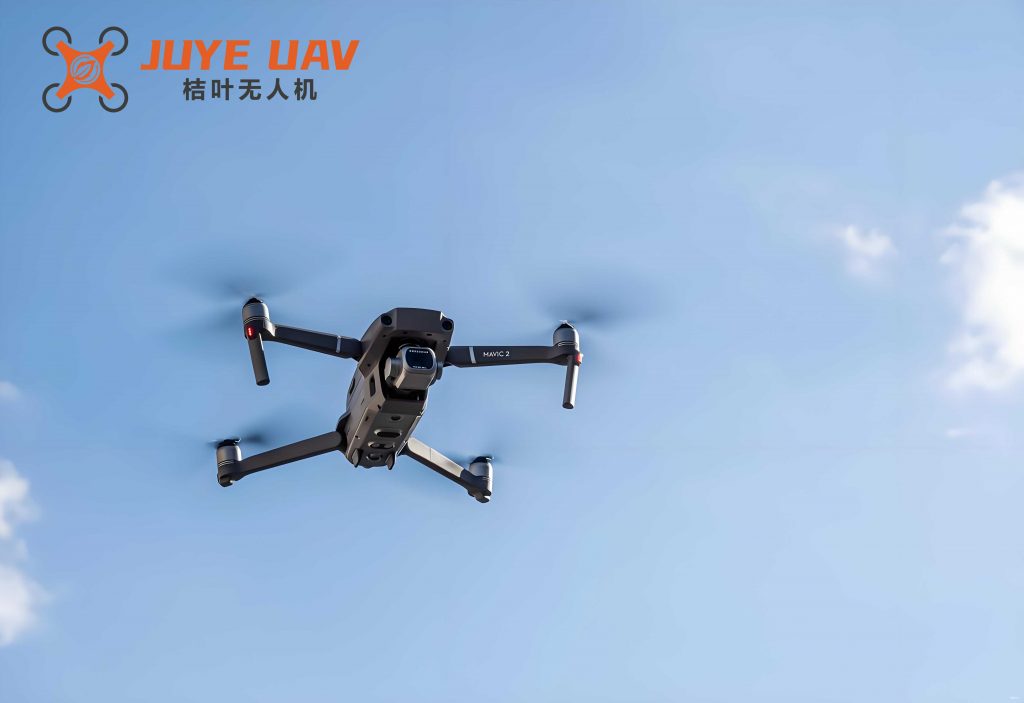
The core of any quadrotor drone lies in its flight controller’s ability to accurately estimate and control its orientation in three-dimensional space. The overall system design is a synergistic integration of sensing, computation, and actuation modules. The high-level architecture is centered around a main flight controller unit which processes sensor data, executes control algorithms, and generates command signals. The primary components include:
- Main Flight Controller: Based on a high-performance microcontroller (e.g., ARM Cortex-M series) running the core control algorithms.
- Inertial Measurement Unit (IMU): Typically an integrated package like the MPU6050, providing three-axis gyroscope and accelerometer data.
- Actuation System: Four Electronic Speed Controllers (ESCs) driving brushless DC motors with propellers.
- Remote Receiver: For manual override or command input.
- Barometer: For altitude estimation and hold functionality.
- Power Management: A robust circuit to regulate battery voltage for different subsystems.
The control objective is to manipulate the thrust and torque generated by the four rotors. The rotational motion causes a change in the orientation or attitude, described by roll ($\phi$), pitch ($\theta$), and yaw ($\psi$) angles. The simplified rigid-body dynamics for attitude can be derived using the Newton-Euler formulation. Let $\mathbf{\Omega} = [p, q, r]^T$ represent the angular velocities in the body frame. The dynamics are given by:
$$ \mathbf{J} \dot{\mathbf{\Omega}} + \mathbf{\Omega} \times \mathbf{J} \mathbf{\Omega} = \mathbf{\tau} + \mathbf{\tau}_{dist} $$
where $\mathbf{J}$ is the inertia matrix, $\mathbf{\tau} = [\tau_\phi, \tau_\theta, \tau_\psi]^T$ is the control torque vector generated by differential motor thrusts, and $\mathbf{\tau}_{dist}$ represents external disturbance torques. The relationship between the body angular rates and the Euler angle derivatives is:
$$
\begin{bmatrix} \dot{\phi} \\ \dot{\theta} \\ \dot{\psi} \end{bmatrix} =
\begin{bmatrix}
1 & \sin\phi \tan\theta & \cos\phi \tan\theta \\
0 & \cos\phi & -\sin\phi \\
0 & \sin\phi / \cos\theta & \cos\phi / \cos\theta
\end{bmatrix}
\begin{bmatrix} p \\ q \\ r \end{bmatrix}
$$
For small angles near hover, this coupling matrix simplifies, but for agile maneuvering, the full nonlinear model must be considered. The control torques are related to motor speeds $\omega_i$ by:
$$
\begin{aligned}
\tau_\phi &= l k (\omega_4^2 – \omega_2^2) \\
\tau_\theta &= l k (\omega_3^2 – \omega_1^2) \\
\tau_\psi &= b (\omega_1^2 – \omega_2^2 + \omega_3^2 – \omega_4^2) \\
T &= k (\omega_1^2 + \omega_2^2 + \omega_3^2 + \omega_4^2)
\end{aligned}
$$
where $l$ is the arm length, $k$ is the thrust coefficient, $b$ is the drag coefficient, and $T$ is the total thrust.
Design of the Adaptive Fuzzy PID Controller
The proposed controller enhances the standard PID structure with fuzzy logic to adapt its gains online based on the error and its derivative. A standard PID control law for, say, the roll angle is:
$$ u_{PID}(t) = K_p e(t) + K_i \int_0^t e(\tau) d\tau + K_d \frac{de(t)}{dt} $$
where $e(t) = \phi_{desired}(t) – \phi_{measured}(t)$.
The fixed gains $K_p$, $K_i$, $K_d$ are optimal for a specific operating point but degrade performance under varying conditions. The fuzzy PID controller dynamically adjusts these gains: $K_p’ = K_p + \Delta K_p$, $K_i’ = K_i + \Delta K_i$, $K_d’ = K_d + \Delta K_d$. The adjustments $\Delta K_p$, $\Delta K_i$, $\Delta K_d$ are outputs from a fuzzy inference system (FIS).
The FIS for each attitude channel (roll, pitch, yaw) has two inputs: the error ($e$) and the change-of-error ($ec = \dot{e}$). Both inputs and the three outputs are fuzzified using linguistic variables. A standard set of seven membership functions is used: Negative Big (NB), Negative Medium (NM), Negative Small (NS), Zero (ZO), Positive Small (PS), Positive Medium (PM), Positive Big (PB). The membership functions are typically triangular or Gaussian for computational efficiency. The rule base, formulated from expert knowledge and heuristic understanding of PID tuning, defines how the gain adjustments should behave.
| $ec$ \ $e$ | $e$ | ||||||
|---|---|---|---|---|---|---|---|
| NB | NM | NS | ZO | PS | PM | PB | |
| NB | PB/NB | PB/NB | PM/NM | PM/NM | PS/NS | ZO/ZO | ZO/ZO |
| NM | PB/NB | PM/NM | PM/NM | PS/NS | PS/NS | ZO/ZO | NS/ZO |
| NS | PM/NM | PM/NM | PS/NS | PS/NS | ZO/ZO | NS/PS | NS/PS |
| ZO | PM/NM | PS/NS | PS/NS | ZO/ZO | NS/PS | NM/PM | NM/PM |
| PS | PS/NS | ZO/ZO | NS/PS | NS/PS | NM/PM | NM/PM | NB/PB |
| PM | ZO/ZO | NS/PS | NM/PM | NM/PM | NM/PM | NB/PB | NB/PB |
| PB | ZO/ZO | ZO/ZO | NM/PM | NM/PM | NB/PB | NB/PB | NB/PB |
Note: Table entries are in the format $\Delta K_p$ / $\Delta K_d$. Rules for $\Delta K_i$ are often complementary to those for $\Delta K_d$.
The fuzzy inference process uses the Mamdani model. For a given crisp input ($e$, $ec$), the degree of membership for each fuzzy set is calculated. The corresponding rules are fired, and their conclusions are aggregated. Finally, the aggregated fuzzy output set for each gain adjustment is defuzzified using the centroid method to produce a crisp output value. This process runs in real-time on the flight controller, allowing the quadrotor drone to adapt its control effort seamlessly. For instance, a large error and large negative error change might trigger rules producing a large $\Delta K_p$ (for a swift response) and a negative $\Delta K_d$ (to prevent overshoot).
Hardware Implementation and Sensor Fusion
Reliable hardware forms the backbone for implementing advanced algorithms on a quadrotor drone. The main processing unit is typically a 32-bit microcontroller like the STM32F4 series, offering sufficient computational power and numerous peripherals. The inertial data is sourced from a MEMS-based IMU. A popular choice is the MPU6050, which combines a 3-axis gyroscope and a 3-axis accelerometer. However, raw sensor data is unusable due to noise and drift. The gyroscope provides accurate short-term angular rate data but integrates to produce drifting angle estimates. The accelerometer gives stable long-term orientation relative to gravity but is corrupted by high-frequency vibrations from motor motion.
The key to robust attitude estimation is sensor fusion. The complementary filter is an effective and computationally light algorithm. It essentially high-pass filters the gyroscope data and low-pass filters the accelerometer data, combining them in the frequency domain. A more advanced and widely used method is the Kalman filter, which provides optimal estimates. For attitude representation, quaternions ($\mathbf{q} = [q_w, q_x, q_y, q_z]^T$) are preferred over Euler angles to avoid gimbal lock. The sensor fusion algorithm outputs this quaternion, which is then converted to Euler angles for control purposes. The filter prediction step uses the gyroscope data:
$$ \dot{\mathbf{q}} = \frac{1}{2} \mathbf{q} \otimes \begin{bmatrix} 0 \\ p \\ q \\ r \end{bmatrix} $$
The update step corrects this prediction using the accelerometer measurement of the gravity vector and, if available, magnetometer data. This fused, drift-free attitude estimate is the primary feedback signal for the Fuzzy PID controllers running on each axis. The power system must provide clean and stable voltage. A typical lithium-polymer battery (e.g., 3S, 11.1V) powers the system. Low-dropout (LDO) linear regulators or switching buck converters are used to step down this voltage to 5V and 3.3V for the microcontroller, sensors, and receiver. Careful decoupling with capacitors is essential to mitigate voltage spikes caused by motor switching.
| Component | Specification / Model | Primary Function |
|---|---|---|
| Flight Controller | STM32F405RGT6 (ARM Cortex-M4) | Runs control algorithms, processes sensor data. |
| IMU | MPU6050 (6-Axis) or ICM-20948 (9-Axis) | Provides gyroscope and accelerometer readings. |
| ESC | BLHeli_S 30A 4-in-1 | Drives brushless motors with high-frequency PWM. |
| Motor | Brushless DC, 2300KV | Generates thrust and torque. |
| Propeller | 5-inch, 3-blade, Carbon Fiber | Converts motor rotation to aerodynamic thrust. |
| Battery | Li-Po, 11.1V, 1500mAh, 75C | Primary power source for all systems. |
| Voltage Regulator | 5V/3A Buck Converter, 3.3V LDO | Provides stable power to sensitive electronics. |
Software Architecture and Control Loop
The software on the quadrotor drone is designed for hard real-time operation. It is typically structured around a fast, fixed-frequency main control loop (e.g., 500 Hz to 1 kHz). The flow can be summarized as follows:
- Initialization: Configure all hardware peripherals (timers for PWM, I2C/SPI for sensors, UART for telemetry), initialize sensor drivers, and calibrate the IMU.
- Sensor Data Acquisition: Read raw gyroscope and accelerometer data from the IMU via I2C or SPI.
- Attitude Estimation: Fuse the raw sensor data using the chosen algorithm (complementary/Kalman filter) to obtain the current roll, pitch, and yaw angles.
- Control Law Execution:
- Calculate the error for each axis: $e_\phi = \phi_{cmd} – \phi$, $e_\theta = \theta_{cmd} – \theta$, $e_\psi = \psi_{cmd} – \psi$.
- Calculate the error derivative (change since last loop).
- For each axis, feed $(e, ec)$ into its dedicated Fuzzy PID inference system to obtain the adaptive gains.
- Compute the PID output using the adaptive gains: $u = K_p’ e + K_i’ \int e dt + K_d’ ec$.
- Control Allocation: Combine the three attitude control outputs ($u_\phi$, $u_\theta$, $u_\psi$) and the throttle command ($T$) to calculate the desired thrust for each motor. For an X-configuration quadrotor:
$$ \begin{bmatrix} \omega_1^2 \\ \omega_2^2 \\ \omega_3^2 \\ \omega_4^2 \end{bmatrix} = \begin{bmatrix} 1 & -1 & 1 & -1 \\ 1 & 1 & -1 & -1 \\ 1 & 1 & 1 & 1 \\ 1 & -1 & -1 & 1 \end{bmatrix} \begin{bmatrix} T \\ u_\phi \\ u_\theta \\ u_\psi \end{bmatrix} $$
(Matrix coefficients vary based on frame geometry and motor numbering). - Actuation: Convert the desired motor thrusts to PWM duty cycles and update the ESC outputs via timer peripherals.
This loop runs continuously. A lower-priority task might handle communication (receiving RC commands, sending telemetry) and higher-level navigation functions. The robustness of this software, combined with the adaptive controller, allows the quadrotor drone to maintain stability even when subjected to gusts or uneven weight distribution.
Simulation Analysis and Performance Comparison
Prior to real-world testing, the proposed Fuzzy PID controller was extensively simulated in the MATLAB/Simulink environment. A nonlinear dynamic model of the quadrotor drone was developed, incorporating motor dynamics, aerodynamic drag, and sensor noise models. The performance of the adaptive Fuzzy PID controller was compared against a well-tuned classical PID controller under identical conditions.
1. Step Response: A step change in the desired yaw angle ($\psi$) from $0^\circ$ to $30^\circ$ was commanded. The classical PID showed a noticeable overshoot and a longer settling time. The Fuzzy PID controller responded rapidly with significantly reduced overshoot, achieving the target angle more smoothly and quickly. This demonstrates the adaptive controller’s ability to apply aggressive control when error is large (high gain) and then reduce control effort as the error diminishes to prevent overshoot (adjusted derivative action).
2. Disturbance Rejection: A simulated impulsive torque disturbance was applied to the roll axis during hover. The classical PID controller exhibited a larger deviation and took longer to recover to the level attitude. The Fuzzy PID controller reacted more swiftly to the unexpected error, adapting its gains to produce a stronger corrective response, resulting in a smaller maximum deviation and faster recovery. This highlights the improved robustness of the fuzzy-based system, a critical feature for a quadrotor drone operating in windy conditions.
3. Trajectory Tracking: The controllers were tasked with tracking a sinusoidal pitch angle command. The Fuzzy PID controller showed superior tracking accuracy with lower phase lag and amplitude error compared to the classical PID. The adaptive mechanism effectively compensated for the nonlinearities in the system dynamics across the changing operating point of the oscillatory motion.
| Performance Metric | Classical PID Controller | Fuzzy PID Controller |
|---|---|---|
| Rise Time (Step) | 0.85 s | 0.62 s |
| Overshoot (Step) | 12.5 % | 4.8 % |
| Settling Time (Step, 2%) | 2.1 s | 1.3 s |
| Max Deviation (Disturbance) | 8.7° | 5.1° |
| Recovery Time (Disturbance) | 1.8 s | 1.0 s |
| RMSE (Sinusoid Tracking) | 2.34° | 1.15° |
The simulation results conclusively prove that the Fuzzy PID controller provides faster transient response, better damping (less overshoot), and stronger resistance to disturbances for the quadrotor drone model.
Practical Flight Testing and Results
The control algorithm was translated into efficient C code and deployed on the STM32-based flight controller. The hardware platform was assembled, and careful calibration of ESCs, IMU, and radio link was performed. Flight tests began with basic stabilization in hover. The quadrotor drone equipped with the Fuzzy PID controller demonstrated exceptionally stable hands-free hover, with minimal drift and very low high-frequency oscillation (“twitching”) often seen with overly aggressive PID gains.
Agility tests involved commanding rapid roll and pitch angle changes. The drone responded crisply and accurately, reaching the commanded angles without oscillation. The transition from aggressive motion back to stable hover was seamless, indicating excellent gain scheduling by the fuzzy system. In disturbance tests, the drone was manually perturbed by brief gusts from a fan or light taps. The recovery was swift and confident, validating the simulation findings on robustness.
Finally, autonomous flight modes were tested, including “Altitude Hold” using the barometer and simple waypoint navigation. The stable attitude control provided by the Fuzzy PID system formed a solid foundation for these higher-level functions. The quadrotor drone successfully performed automated take-off, climb to a preset altitude, hover, travel to a specified coordinate (using positional feedback from an external system or onboard GNSS in outdoor tests), and gentle landing. Throughout these tests, the system proved to be reliable and met all core control requirements for stable flight.
In conclusion, the integration of fuzzy logic with the classical PID framework creates a powerful adaptive controller for quadrotor drone applications. This approach successfully addresses the limitations of fixed-gain controllers in handling nonlinearities and uncertainties inherent in aerial robotic systems. The design, from mathematical modeling and simulation to hardware implementation and real-world flight testing, demonstrates a complete workflow for developing intelligent flight control systems. The Fuzzy PID controller delivered superior dynamic performance, including faster response, reduced overshoot, and enhanced disturbance rejection, compared to its classical counterpart. This makes it a highly suitable choice for ensuring the stable and reliable operation of quadrotor drones in complex and dynamic environments, paving the way for more autonomous and robust aerial missions.