
In recent years, the quadrotor drone has emerged as a pivotal platform in both civilian and military domains due to its compact size, agility, and simple structure. However, operational safety remains a critical concern, with rotor loss faults—often caused by factors like loose screws or improper handling—posing significant risks. Such faults can lead to loss of balance, uncontrolled attitudes, and even catastrophic crashes, endangering the drone, ground personnel, and surrounding environments. Statistics indicate that over 80% of failures in multi-rotor drones stem from human error, with rotor loss being a prevalent issue that mirrors effects like blade damage, motor seizure, or severe frame damage. This paper addresses the challenge of controlling a quadrotor drone experiencing a rotor loss fault, where instability and uncontrolled motion arise from shifted centers of gravity and reduced actuation. We propose a fault modeling approach based on control variable transformation, which enhances the intuitiveness and accuracy of the quadrotor drone fault representation. Given the under-actuated, strongly coupled, and nonlinear nature of quadrotor drone dynamics, we design a combined sliding mode controller that offers rapid convergence, reduced settling time, and modular control. Stability is proven via Lyapunov theory, and simulations in Matlab/Simulink validate the effectiveness of our method in managing attitude post-fault. Throughout this work, we emphasize the robustness of our controller for the quadrotor drone, ensuring it can handle the abrupt changes induced by rotor loss.
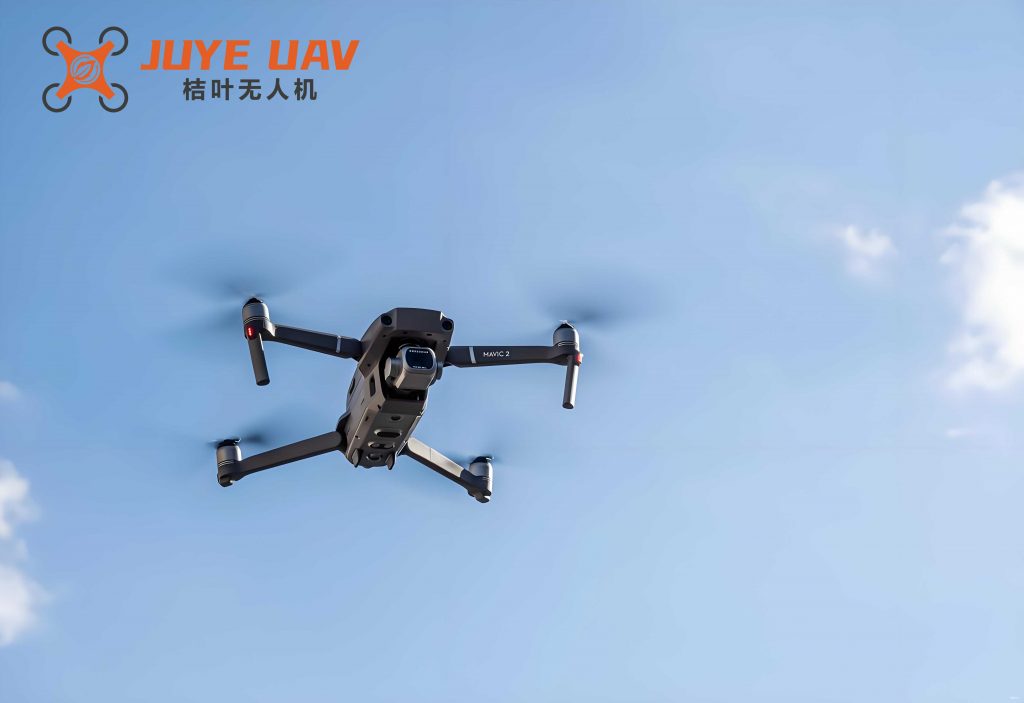
The dynamics of a quadrotor drone are foundational to our analysis. A typical quadrotor drone consists of four rotors arranged in a cross configuration, generating lift and torque through variations in rotor speeds. The motion is defined by six degrees of freedom: three positional coordinates (x, y, z) and three attitude angles (roll φ, pitch θ, yaw ψ). The rotors are paired such that opposite rotations cancel reactive torques, enabling stable flight. We define two coordinate systems: an inertial frame {E} and a body-fixed frame {B}. The transformation between these frames is given by a rotation matrix R, which depends on the attitude angles. The quadrotor drone’s equations of motion are derived from Newton-Euler principles, incorporating forces and moments. The control inputs are related to the rotor speeds as follows:
$$ \begin{bmatrix} T \\ \Gamma_{\phi} \\ \Gamma_{\theta} \\ \Gamma_{\psi} \end{bmatrix} = \begin{bmatrix} b & b & b & b \\ 0 & -lb & 0 & lb \\ -lb & 0 & lb & 0 \\ d & -d & d & -d \end{bmatrix} \begin{bmatrix} \Omega_1^2 \\ \Omega_2^2 \\ \Omega_3^2 \\ \Omega_4^2 \end{bmatrix} $$
Here, T is the total thrust, Γφ, Γθ, Γψ are the roll, pitch, and yaw moments, respectively; b is the thrust factor, d is the drag coefficient, l is the arm length, and Ωi (i=1,…,4) denotes the rotational speed of the i-th rotor. The full dynamic model of the quadrotor drone, accounting for aerodynamic drag, is expressed as:
$$ \begin{aligned} \ddot{x} &= (\cos\phi \sin\theta \cos\psi + \sin\phi \sin\psi) \frac{u_1}{m_s} – \frac{K_1 \dot{x}}{m_s} \\ \ddot{y} &= (\cos\phi \sin\theta \sin\psi – \sin\phi \cos\psi) \frac{u_1}{m_s} – \frac{K_2 \dot{y}}{m_s} \\ \ddot{z} &= (\cos\phi \cos\theta) \frac{u_1}{m_s} – g – \frac{K_3 \dot{z}}{m_s} \\ \ddot{\phi} &= \dot{\theta} \dot{\psi} \frac{I_y – I_z}{I_x} + \frac{J_r}{I_x} \dot{\theta} \Omega_r + \frac{l}{I_x} u_2 – \frac{K_4 \dot{\phi}}{I_x} \\ \ddot{\theta} &= \dot{\psi} \dot{\phi} \frac{I_z – I_x}{I_y} – \frac{J_r}{I_y} \dot{\phi} \Omega_r + \frac{l}{I_y} u_3 – \frac{K_5 \dot{\theta}}{I_y} \\ \ddot{\psi} &= \dot{\phi} \dot{\theta} \frac{I_x – I_y}{I_z} + \frac{1}{I_z} u_4 – \frac{K_6 \dot{\psi}}{I_z} \end{aligned} $$
where ms is the mass, g is gravity, Ix, Iy, Iz are moments of inertia, Jr is the rotor inertia, Ki are drag coefficients, and Ωr = Ω1 – Ω2 + Ω3 – Ω4. The control inputs are defined as u1 = T, u2 = Γφ, u3 = Γθ, u4 = Γψ. This model captures the under-actuated and coupled behavior of the quadrotor drone, where only four inputs control six outputs, making control design challenging, especially under faults.
To address rotor loss in a quadrotor drone, we develop a fault model that modifies the control input relationship. Suppose rotor i fails (e.g., rotor loss due to blade detachment), then its speed becomes zero, Ωi² = 0. This can be represented by introducing a coefficient matrix A that zeros out the contribution of the failed rotor. For instance, if rotor 1 fails, we have A1 = 0 and Aj = 1 for j ≠ 1. The control input equation becomes:
$$ \begin{bmatrix} u_1 \\ u_2 \\ u_3 \\ u_4 \end{bmatrix} = \begin{bmatrix} A_1 & 0 & 0 & 0 \\ 0 & A_2 & 0 & 0 \\ 0 & 0 & A_3 & 0 \\ 0 & 0 & 0 & A_4 \end{bmatrix} \begin{bmatrix} b & b & b & b \\ 0 & -lb & 0 & lb \\ -lb & 0 & lb & 0 \\ d & -d & d & -d \end{bmatrix} \begin{bmatrix} \Omega_1^2 \\ \Omega_2^2 \\ \Omega_3^2 \\ \Omega_4^2 \end{bmatrix} $$
This formulation allows the quadrotor drone fault model to be integrated seamlessly into the dynamics. For a single rotor loss, the system becomes under-actuated in a way that disturbs the center of gravity and reduces control authority. Our modeling approach provides a clear and accurate representation of the fault, facilitating controller design. The quadrotor drone’s behavior post-fault is characterized by asymmetric thrust and moments, leading to potential instability if not managed properly.
Given the dynamics, we decompose the quadrotor drone system into two subsystems for control design: a fully actuated subsystem and an under-actuated subsystem. The fully actuated subsystem includes the altitude z and yaw angle ψ, which have direct control inputs. The under-actuated subsystem comprises the x, y positions and roll φ, pitch θ angles, which are coupled through the thrust vector. This decomposition allows us to tailor controllers for each subsystem, enhancing performance for the quadrotor drone under fault conditions.
For the fully actuated subsystem, we design a terminal sliding mode controller to ensure finite-time convergence. Define the tracking errors for altitude and yaw as s1 = zd – z and s3 = ψd – ψ, where zd and ψd are desired values. The sliding surfaces are chosen as:
$$ s_2 = \dot{s}_1 + \omega_1 s_1 + \xi_1 s_1^{m_1’/n_1′} $$
$$ s_4 = \dot{s}_3 + \omega_2 s_3 + \xi_2 s_3^{m_2’/n_2′} $$
with ω1, ω2, ξ1, ξ2 > 0, and m1′, n1′, m2′, n2′ being positive odd integers satisfying m1′ < n1′ and m2′ < n2′. The time derivatives lead to control laws for u1 and u4:
$$ u_1 = \frac{m_s}{\cos\phi \cos\theta} \left[ \ddot{z}_d + g + \omega_1 \dot{s}_1 + \xi_1 \frac{m_1′}{n_1′} s_1^{(m_1′ – n_1′)/n_1′} \dot{s}_1 + \varepsilon_1 s_2 + \eta_1 s_2^{m_1/n_1} \right] $$
$$ u_4 = I_z \left( \ddot{\psi}_d + \omega_2 \dot{s}_3 + \xi_2 \frac{m_2′}{n_2′} s_3^{(m_2′ – n_2′)/n_2′} \dot{s}_3 + \varepsilon_2 s_4 + \eta_2 s_4^{m_2/n_2} \right) $$
where ε1, ε2, η1, η2 > 0, and m1, n1, m2, n2 are positive odd integers with m1 < n1, m2 < n2. These controllers drive the system to the sliding surfaces in finite time, guaranteeing robustness for the quadrotor drone. Stability is proven via Lyapunov functions, e.g., V1 = ½ s2², yielding V̇1 ≤ 0.
For the under-actuated subsystem, we employ a sliding mode control method tailored for under-actuated systems. Define the state vector and errors, and choose a sliding surface:
$$ s = c_1 e_1 + c_2 e_2 + c_3 e_3 + e_4 $$
with ci > 0. Using an exponential reaching law, ṡ = -M sgn(s) – λs, we derive the control input u0 for the subsystem. The controller compensates for couplings and disturbances, ensuring that the quadrotor drone maintains attitude tracking despite the fault. The stability analysis shows that the system reaches and remains on the sliding surface s = 0.
To validate our approach, we conduct simulations in Matlab/Simulink for the quadrotor drone. The parameters are listed in the table below, which summarizes key values used in the dynamic model and controller.
| Parameter | Symbol | Value | Unit |
|---|---|---|---|
| Mass | ms | 2 | kg |
| Arm length | l | 0.2 | m |
| Thrust factor | b | 2 | N·s² |
| Drag coefficient | d | 5 | N·m·s² |
| Inertia (x, y) | Ix, Iy | 1.25 | N·s²/rad |
| Inertia (z) | Iz | 2.2 | N·s²/rad |
| Rotor inertia | Jr | 1 | N·s²/rad |
| Drag coefficients | K1-K6 | 0.01-0.012 | N·s/m or N·s/rad |
| Controller gains | ω1, ω2 | 1, 3 | – |
| Sliding parameters | ξ1, ξ2 | 1, 1 | – |
We simulate three scenarios: (1) sliding mode control of a healthy quadrotor drone, (2) PID control of a quadrotor drone with rotor loss fault, and (3) sliding mode control of a quadrotor drone with rotor loss fault. The fault is introduced at t = 10 s, with initial conditions set to zero and desired positions and attitudes as [1, 1, 1] m and [0, 0, π/6.28] rad. The results demonstrate the efficacy of our controller for the quadrotor drone under fault conditions.
In the healthy case, the quadrotor drone achieves the desired position and attitude within about 5 seconds, showing smooth convergence. Under rotor loss with PID control, the quadrotor drone plunges rapidly along the z-axis, with negligible control in x and y directions. In contrast, with our sliding mode controller, the quadrotor drone exhibits a controlled descent along an expanding circular trajectory, mitigating the fall rate. The attitude angles remain bounded, with yaw variations minimized compared to PID. The table below summarizes the performance metrics post-fault, highlighting the improvements with our method.
| Scenario | Position Error (m) | Attitude Error (rad) | Descent Rate (m/s) | Remarks |
|---|---|---|---|---|
| Healthy SMC | < 0.01 | < 0.005 | N/A | Stable tracking |
| Fault PID | > 1.0 in z | > 0.5 in ψ | High (> 5) | Uncontrolled fall |
| Fault SMC | ~0.1-0.3 in x,y | < 0.1 in ψ | Moderate (~2) | Circular descent |
The simulation outputs confirm that our combined sliding mode controller enables the quadrotor drone to maintain partial controllability after rotor loss. The fault model accurately captures the dynamics, and the controller’s robust design handles the nonlinearities and couplings. We further analyze the control efforts and energy consumption, which are critical for real-world quadrotor drone applications. The control inputs u1 to u4 show adaptive adjustments post-fault, compensating for the lost rotor. This adaptability is key to the quadrotor drone’s resilience.
Our discussion extends to the broader implications for quadrotor drone safety. The proposed method can be integrated with fault detection systems to trigger reconfiguration, enhancing autonomy. Compared to existing approaches like adaptive backstepping or control reallocation, our sliding mode controller offers simpler implementation and faster response for the quadrotor drone. However, challenges remain, such as handling multiple rotor failures or external disturbances. Future work will explore adaptive gains and machine learning for fault prediction in quadrotor drones.
In conclusion, we have presented a comprehensive framework for attitude control of a quadrotor drone under rotor loss fault. The fault model, based on control variable transformation, provides an intuitive representation of the quadrotor drone’s impaired dynamics. The combined sliding mode controller, with terminal sliding for fully actuated states and conventional sliding for under-actuated states, ensures finite-time convergence and robustness. Simulations validate that our method allows the quadrotor drone to execute a controlled circular descent, reducing crash risks. This work contributes to safer operations for quadrotor drones in fault-prone environments, paving the way for more reliable unmanned systems. The quadrotor drone’s versatility demands such fault-tolerant strategies, and our approach offers a viable solution for real-time implementation.