
In recent years, the application of unmanned aerial vehicles (UAVs) has expanded rapidly across various fields, with target tracking being a common and critical task. As tracking missions become more complex, single drones often face limitations in endurance, sensor range, and operational efficiency, leading to increased interest in multi-drone cooperative systems. To address this, we focus on developing a cooperative tracking system using quadrotor drones, which offer advantages such as vertical take-off and landing, hovering capabilities, and low-speed flight. This article presents a comprehensive flight verification platform designed to validate cooperative tracking guidance laws for quadrotor drones. We detail the hardware and software system designs, conduct experiments to demonstrate stability and reliability, and discuss the platform’s extensibility and engineering value. Our goal is to enable multiple quadrotor drones to collaboratively track ground targets while maintaining formation, thereby enhancing mission effectiveness.
The core motivation stems from the need to overcome the constraints of single drones, such as limited battery life and restricted field of view. By leveraging cooperation, multiple quadrotor drones can share information, distribute tasks, and improve tracking accuracy. We propose a guidance law based on distance change rates, which allows drones to maintain a fixed distance from a target while coordinating with neighboring drones. This approach is implemented on a cost-effective quadrotor platform, utilizing the Robot Operating System (ROS) for communication and control. The system is designed to be simple, scalable, and practical for real-world applications, with experiments confirming its performance. Below, we delve into the problem description, system design, experimental validation, and conclusions, enriched with tables and mathematical formulations to summarize key aspects.
Problem Description
Cooperative tracking for quadrotor drones involves multiple drones communicating to share target states and coordinate movements. Our guidance strategy ignores take-off and landing phases, concentrating on the tracking process itself. We assume the target moves on a nearly flat surface, and the quadrotor drones fly at a constant altitude, simplifying the problem to a two-dimensional guidance scenario. The objective is for drones to follow a moving target while converging to and maintaining a circular trajectory with a specified radius around the target, evenly spaced due to cooperative guidance.
We begin by modeling the quadrotor drone as a system. The state-space representation is given by:
$$ \dot{x} = f(x, u) $$
where \( x \) is the state vector and \( u \) is the control input. For a quadrotor drone, the state vector can include attitude angles, angular rates, velocities, and positions. However, for guidance purposes, we simplify to a 2D point-mass model. Let \( x(t) \) and \( y(t) \) denote the drone’s horizontal coordinates, \( v(t) \) its speed, and \( \psi(t) \) its heading angle. The motion equations are:
$$
\begin{align*}
\dot{x}(t) &= v(t) \cos(\psi(t)) \\
\dot{y}(t) &= v(t) \sin(\psi(t)) \\
\dot{\psi}(t) &= \omega(t)
\end{align*}
$$
where \( \omega(t) \) is the yaw rate. This model is sufficient for designing guidance laws for target tracking at a fixed altitude.
The target tracking guidance law ensures the quadrotor drone maintains a desired distance \( \rho_d \) from the target. Let \( \rho \) be the actual distance and \( \dot{\rho} \) its rate of change. The guidance law is:
$$
\dot{\psi} =
\begin{cases}
k \frac{v}{\rho} (\rho_d – \rho) – \dot{\rho} & \text{if } \rho \geq \rho_d \\
k v (\rho_d – \rho) – \dot{\rho} & \text{if } \rho < \rho_d
\end{cases}
$$
where \( k \) is a positive gain. This law drives the drone to circle the target at radius \( \rho_d \).
For cooperative tracking, we extend this to multiple quadrotor drones. Consider \( N \) drones tracking the same target. The relative motion between adjacent drones is characterized by their distance \( r_{i,i-1} \) and the angle \( \theta_{i,i-1} \) between their headings. The cooperative guidance law incorporates terms to ensure even spacing around the target circle. For drone \( i \), the law is:
$$
\dot{v}_i = \dot{v}_{i-1} – k_v (r_{i,i-1} – 2\rho_d \sin(\frac{\pi}{N})) + k_\rho (\rho_i – \rho_d)
$$
where \( k_v \) and \( k_\rho \) are gains, and \( \rho_i \) is drone \( i \)’s distance to the target. This law, derived from Lyapunov stability analysis, ensures that drones distribute uniformly on the circle while tracking. The overall control structure integrates both tracking and cooperative guidance, as shown in Table 1.
| Module | Input | Output | Function |
|---|---|---|---|
| Tracking Guidance | Drone and target positions | Desired heading rate | Maintain distance to target |
| Cooperative Guidance | Neighboring drone states | Velocity adjustments | Ensure even spacing |
| Flight Controller | Guidance outputs | Motor commands | Execute maneuvers |
This formulation allows a fleet of quadrotor drones to work together seamlessly, adapting to target movements and maintaining formation integrity.
System Design
Our flight verification platform is built around quadrotor drones, each comprising hardware and software modules. The design emphasizes cost-effectiveness, ease of extension, and reliability. We describe both aspects in detail, highlighting how they integrate to support cooperative tracking.
The hardware for a single quadrotor drone includes the frame, propulsion system, flight controller, GPS, communication devices, and an onboard computer. We selected components based on performance, weight, and compatibility. The key hardware elements are summarized in Table 2.
| Component | Specification | Purpose |
|---|---|---|
| Frame | DJI F450 (450 mm axis) | Lightweight and durable structure |
| Motors and Propellers | 2212 kV motors with 9450 propellers | Provide thrust and maneuverability |
| Electronic Speed Controllers (ESCs) | 20 A max current | Control motor speed |
| Battery | 3S Li-Po, 5200 mAh | |
| Flight Controller | Pixhawk 2.4.8 | Sensor fusion, navigation, control |
| GPS Module | M8N GPS | Provide position and velocity data |
| Communication | Radi olink AT9S transmitter with R9DS receiver | Remote control and telemetry |
| Onboard Computer | Raspberry Pi 3B+ | Run guidance algorithms and ROS |
The quadrotor drone’s physical assembly ensures stable flight and payload capacity for the onboard computer and sensors. The Pixhawk flight controller handles low-level attitude control, while the Raspberry Pi executes high-level guidance laws. This separation allows for flexible algorithm development without compromising flight safety.
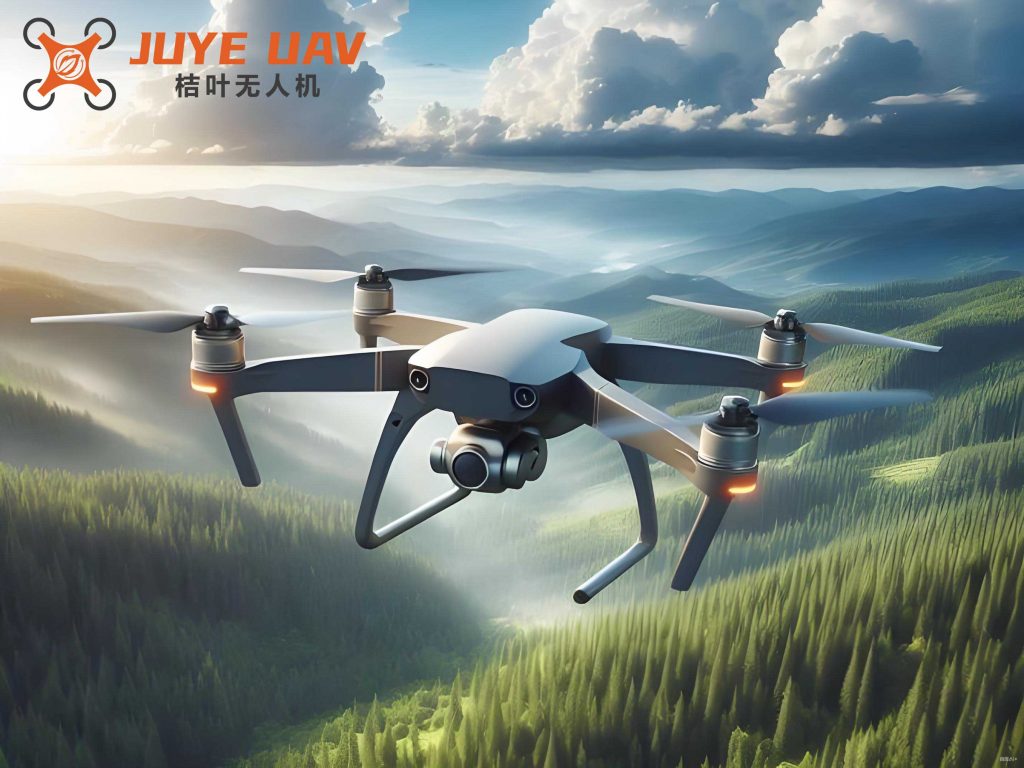
The software architecture is centered on ROS, enabling communication between drones and with ground stations. Key software modules include the flight controller firmware (PX4), ROS nodes for guidance, and tools for monitoring. The PX4 autopilot provides position and velocity control interfaces, which we access via the MAVROS package. For inter-drone communication, we configure a multi-master ROS network where one quadrotor drone acts as the master, sharing states with others. This setup supports scalable coordination. The software stack is outlined in Table 3.
| Module | Platform | Role |
|---|---|---|
| PX4 Flight Stack | Pixhawk | Low-level control, sensor processing |
| ROS (Robot Operating System) | Raspberry Pi | Middleware for communication and nodes |
| MAVROS | ROS package | Bridge between ROS and PX4 |
| Guidance Algorithms | Custom C++/Python nodes | Implement tracking and cooperative laws |
| QGroundControl | Ground station laptop | Mission planning and monitoring |
| VNC Viewer | Remote access tool | Control onboard computer from ground |
This integrated design allows each quadrotor drone to sense its environment, compute guidance commands, and communicate with peers, forming a robust system for cooperative tracking. The use of open-source components like ROS and PX4 enhances extensibility, making it easy to add more drones or modify algorithms.
Experimental Validation
We conducted flight experiments to validate the cooperative tracking guidance laws on our quadrotor drone platform. The tests involved two quadrotor drones tracking a virtual ground target, with a focus on formation maintenance and tracking accuracy. Due to safety constraints, we set different altitudes for the drones: 3 meters for drone 1 and 5 meters for drone 2. The target moved along a curved path defined by \( y = 2 \cos(\pi t / 400) x \), starting at coordinates (10, -20) relative to drone 1’s initial position at (0,0). Drone 2 started at (-5,0). The desired tracking radius \( \rho_d \) was set to 10 meters.
We configured the network with static IP addresses: 192.168.43.109 for drone 1 (master), 192.168.43.174 for drone 2, and 192.168.43.70 for the ground station. Via VNC, we remotely launched guidance nodes on each quadrotor drone’s Raspberry Pi. After takeoff, the drones autonomously tracked the target using the combined guidance laws. Flight data was logged by the Pixhawk controllers and analyzed post-mission.
The results demonstrate successful cooperative tracking. Both quadrotor drones maintained approximately 10 meters from the target, with minor oscillations due to guidance dynamics. As shown in Figure 1 (trajectory plot), the drones circled the target while staying roughly opposite each other on the circle, indicating effective coordination. Key metrics are summarized in Table 4.
| Metric | Drone 1 | Drone 2 | Target |
|---|---|---|---|
| Average Distance to Target | 10.2 m | 9.8 m | N/A |
| Speed Variation | ±0.3 m/s | ±0.5 m/s | Variable |
| Height Deviation | ±0.2 m | ±0.3 m | N/A |
| Inter-Drone Distance | ~20 m (2 × tracking radius) | N/A | |
| Attitude Adjustments | Stable roll/pitch | Stable roll/pitch | N/A |
The distance to target over time confirmed convergence to the desired radius, with errors within acceptable bounds. The quadrotor drones’ speeds averaged around 2 m/s, as prescribed by the guidance law. Drone 2 exhibited larger speed oscillations due to cooperative terms, but remained controllable. The inter-drone distance hovered near 20 meters, equal to twice the tracking radius, verifying uniform spacing. Attitude angles (roll and pitch) showed prompt responses to guidance commands, ensuring stable flight.
We further analyzed system stability using Lyapunov methods. For the cooperative guidance law, consider a Lyapunov function candidate \( V = \frac{1}{2} \sum_{i=1}^N (\rho_i – \rho_d)^2 + \frac{1}{2} \sum_{i=1}^N (r_{i,i-1} – 2\rho_d \sin(\pi/N))^2 \). Its derivative along system trajectories is:
$$
\dot{V} = \sum_{i=1}^N (\rho_i – \rho_d) \dot{\rho}_i + \sum_{i=1}^N (r_{i,i-1} – 2\rho_d \sin(\pi/N)) \dot{r}_{i,i-1}
$$
Substituting the guidance laws yields \( \dot{V} \leq 0 \), proving asymptotic stability under mild conditions. This theoretical foundation aligns with our experimental observations of convergent behavior.
These experiments validate that our quadrotor drone platform reliably executes cooperative tracking. The system handles dynamic targets and maintains formation without collisions, showcasing its practicality for real-world applications like surveillance or search-and-rescue.
Conclusion
We have developed and tested a cooperative tracking system based on quadrotor drones, addressing the limitations of single-drone operations. Our platform integrates cost-effective hardware with open-source software, featuring a modular design that simplifies extension and modification. The guidance laws enable multiple quadrotor drones to track a ground target while coordinating their positions, ensuring even distribution around a circular path. Flight experiments confirm the system’s stability and reliability, with drones successfully maintaining desired distances and formation spacing.
The key contributions include: designing a versatile flight verification platform for quadrotor drones, implementing and validating cooperative tracking guidance laws in real flights, and demonstrating the system’s engineering value through practical experiments. The platform’s scalability allows for future expansions, such as adding more quadrotor drones for complex formations or integrating advanced algorithms for obstacle avoidance. We believe this work paves the way for robust multi-drone systems in various applications, leveraging the agility and affordability of quadrotor drones.
In summary, cooperative tracking with quadrotor drones enhances mission efficiency and robustness. Our system provides a foundation for further research and deployment, emphasizing simplicity, low cost, and extensibility. As drone technology evolves, such cooperative frameworks will become increasingly vital for autonomous operations in diverse environments.