
In recent years, the proliferation of unmanned aerial vehicles, particularly quadrotor drones, has revolutionized numerous fields including aerial photography, precision agriculture, infrastructure inspection, and emergency response. The operational efficacy of a quadrotor drone is fundamentally governed by its power-to-weight ratio. A lighter structural airframe directly translates to extended flight endurance, increased payload capacity, or the ability to utilize smaller, more efficient motors and batteries. Therefore, structural lightweighting is not merely a design preference but a critical engineering imperative for enhancing the overall performance envelope of a quadrotor drone.
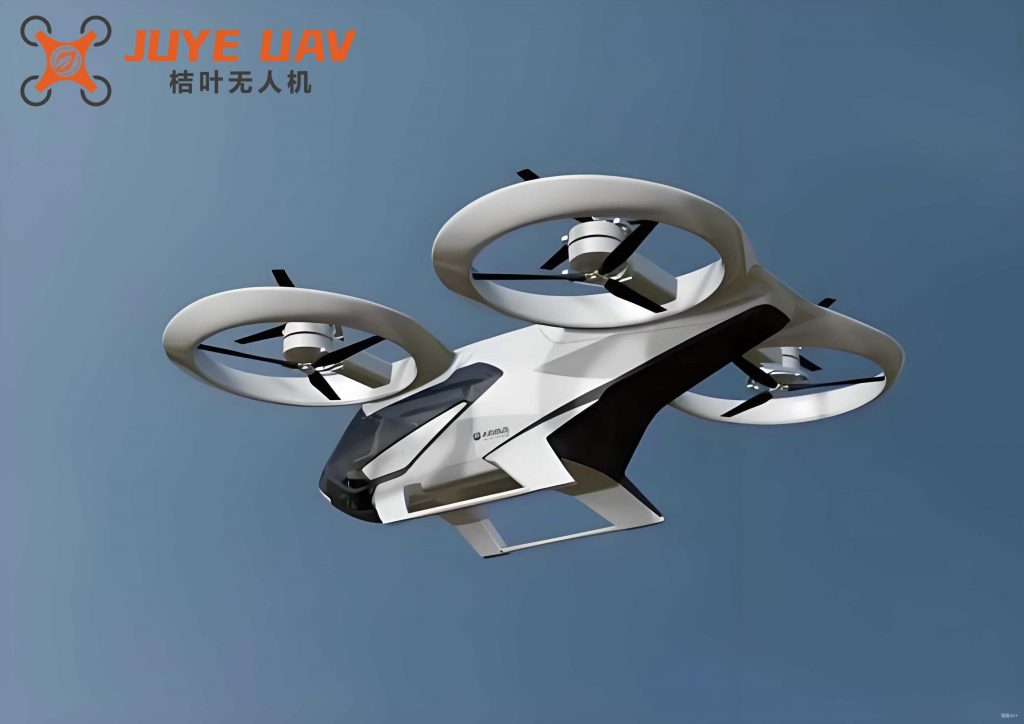
Traditional design approaches often rely on intuition and iterative sizing, which may lead to structurally inefficient components with excess material. Topology optimization, a generative design technique, offers a paradigm shift. It systematically determines the optimal material layout within a prescribed design domain, subject to given loads, constraints, and performance objectives. For a quadrotor drone frame, this means finding the most efficient load paths, removing redundant material, and achieving significant mass reduction while maintaining structural integrity.
While existing research has applied topology optimization to drone structures, many studies focus on single performance constraints, such as minimizing compliance (maximizing stiffness) under a volume fraction limit or maximizing a natural frequency. However, the real-world operation of a quadrotor drone subjects its frame to a complex interplay of static and dynamic loads. A design optimized solely for stiffness may have inadequate vibrational characteristics, risking resonance with motor or propeller excitation frequencies. Conversely, a design optimized only for frequency might fail under peak static loads encountered during aggressive maneuvers or hard landings.
This article presents a comprehensive methodology for the multi-performance constraint topology optimization of a quadrotor drone frame. The primary objective is mass minimization, a direct driver for improving the quadrotor drone’s payload and endurance. Crucially, this goal is pursued while simultaneously enforcing constraints on two key performance metrics: the maximum von Mises stress under worst-case operational loads and the first-order natural frequency. This integrated approach ensures the final lightweight design of the quadrotor drone is not only strong enough but also dynamically stable. The complete workflow, from initial design and finite element analysis to the formulation and solution of the optimization problem, followed by geometry reconstruction and validation, is detailed herein.
Methodology: A Multi-Constraint Optimization Framework
The core of this design strategy is a topology optimization problem formulated with multiple behavioral constraints. The process integrates Computer-Aided Design (CAD), Finite Element Analysis (FEA), and numerical optimization within an iterative loop. The overarching goal is to discover the most material-efficient structure for the quadrotor drone frame that satisfies all mechanical requirements.
The fundamental workflow can be summarized in the following sequence of steps:
| Step | Description | Primary Outcome |
|---|---|---|
| 1. Initial Design & Definition | Establish the baseline geometry, define design and non-design regions, and select material properties. | A parameterized CAD model ready for meshing. |
| 2. Load Case & Boundary Condition Specification | Define the critical static load cases (lift, torque, inertia relief) and dynamic excitation sources. | A complete set of operational and limit states for analysis. |
| 3. Finite Element Analysis (FEA) | Perform static structural and modal analysis on the initial design to establish baseline performance. | Baseline values for mass, maximum stress, and natural frequencies. |
| 4. Optimization Problem Formulation | Mathematically define the objective function (minimize mass) and constraints (stress, frequency). | A solvable mathematical programming problem. |
| 5. Topology Optimization Solving | Use an optimization solver (e.g., Optistruct) to iteratively redistribute material. | A conceptual material distribution (density field). |
| 6. Geometry Reconstruction & Validation | Interpret the density field into a smooth, manufacturable CAD model and perform verification FEA. | A finalized, performance-validated quadrotor drone frame design. |
The mathematical engine driving the topology optimization is the Solid Isotropic Material with Penalization (SIMP) method, a variant of the density method. In this approach, the design domain is discretized into finite elements, and each element is assigned a pseudo-density variable, \( \rho_e \), which can vary continuously between 0 (void) and 1 (solid). The material properties, specifically the Young’s modulus \( E_e \), are interpolated based on this density:
$$ E_e(\rho_e) = E_{min} + \rho_e^p (E_0 – E_{min}) $$
where \( E_0 \) is the Young’s modulus of the solid material, \( E_{min} \) is a very small modulus assigned to void regions to prevent numerical singularity (e.g., \( 10^{-9} \times E_0 \)), and \( p \) is the penalization power (typically \( p \geq 3 \)). The penalty factor \( p \) ensures that intermediate densities are uneconomical, steering the solution towards a nearly solid-void (0/1) distribution. The elemental mass is calculated as \( m_e = \rho_e \cdot V_e \cdot \rho_m \), where \( V_e \) is the element volume and \( \rho_m \) is the material density.
Mathematical Formulation of the Optimization Problem
The design challenge for the quadrotor drone frame is cast as a constrained minimization problem. Let \( \boldsymbol{\rho} = \{\rho_1, \rho_2, …, \rho_N\} \) be the vector of density design variables for all \( N \) elements in the design domain. The formal statement is:
Find: \( \boldsymbol{\rho} \)
Minimize: \( M(\boldsymbol{\rho}) = \sum_{e=1}^{N} \rho_e \cdot V_e \cdot \rho_m \)
Subject to:
$$ \sigma_{max}(\boldsymbol{\rho}) \leq \sigma_{allowable} $$
$$ f_1(\boldsymbol{\rho}) \geq f_{target} $$
$$ \boldsymbol{K}(\boldsymbol{\rho}) \boldsymbol{u} = \boldsymbol{F} $$
$$ 0 \leq \rho_e \leq 1,\quad e = 1, 2, …, N $$
Where:
- \( M(\boldsymbol{\rho}) \) is the total mass of the quadrotor drone frame structure.
- \( \sigma_{max}(\boldsymbol{\rho}) \) is the maximum von Mises stress in the structure under the applied load case.
- \( \sigma_{allowable} \) is the allowable stress, typically defined as the material yield strength divided by a safety factor.
- \( f_1(\boldsymbol{\rho}) \) is the first natural frequency (fundamental frequency) of the structure.
- \( f_{target} \) is the target minimum frequency, chosen to be safely above the primary excitation frequency of the quadrotor drone’s motors.
- \( \boldsymbol{K}(\boldsymbol{\rho}) \) is the global stiffness matrix, dependent on the element densities via the SIMP interpolation.
- \( \boldsymbol{u} \) and \( \boldsymbol{F} \) are the displacement and force vectors, respectively, defining the static equilibrium equation.
This is a non-linear programming problem with a linear objective function but non-linear constraints. The stress and frequency constraints are global measures evaluated at each iteration of the optimization loop. The sensitivity of the objective and constraints with respect to each design variable \( \rho_e \) is computed analytically (e.g., using the adjoint method), and the optimization solver uses this gradient information to update the density distribution efficiently.
Implementation: Case Study on a Quadrotor Drone Frame
To demonstrate the methodology, a common “X” configuration quadrotor drone frame with a 420mm wheelbase is used as a case study. The initial design is a simplistic, solid body connecting a central electronics bay to four motor mounts. The material selected is a carbon fiber composite, chosen for its high specific strength and stiffness, which is ideal for a weight-sensitive application like a quadrotor drone. Key properties are: Density \( \rho_m = 1.79 \, g/cm^3 \), Young’s Modulus \( E_0 = 60 \, GPa \), Yield Strength \( \sigma_y = 493 \, MPa \).
Design Domain and Non-Design Regions: The entire frame volume is designated as the design domain, except for critical interfaces. The cylindrical motor mounts (where motors attach) and the central platform (where the flight controller and battery mount) are defined as non-design regions. This ensures these functional surfaces remain intact and manufacturable. Furthermore, symmetry constraints are applied about the two central planes of the quadrotor drone to enforce a balanced and aesthetically coherent final design.
Loads and Boundary Conditions: A critical flight condition is analyzed: maximum thrust generation. Each of the four motor mounts is subjected to an upward force of 9.2 N, simulating lift. Additionally, each motor applies a reaction torque of 0.233 N·m, with adjacent motors having opposing rotation directions to counteract yaw. To simulate free-flight conditions accurately, inertia relief is applied. This technique allows the analysis of an unconstrained structure by calculating and applying fictitious constraint forces that balance the applied loads, providing realistic deformation and stress results for the quadrotor drone frame in motion.
Constraint Definition:
- Stress Constraint: The maximum allowable stress \( \sigma_{allowable} \) is set to the material yield strength of 493 MPa. The optimization ensures \( \sigma_{max} \) remains below this value with a comfortable margin.
- Frequency Constraint: The target first frequency \( f_{target} \) is set to 300 Hz. This is chosen to be significantly higher than the primary excitation frequency from the motors. For a motor with a maximum rotational speed of 7,057 RPM, the fundamental harmonic excitation frequency is \( 7057 / 60 \approx 117.6 \, Hz \). A first natural frequency above 300 Hz provides a safety factor against resonance, ensuring dynamic stability for the quadrotor drone.
The optimization is performed using the Altair Inspire software suite, which utilizes the Optistruct solver. The SIMP penalization factor \( p \) is set to 3. The optimization runs until convergence, indicated by stable changes in the objective function and satisfaction of all constraints.
Results and Discussion
The topology optimization process successfully generated a conceptual material layout for the quadrotor drone frame. The resulting density field clearly shows the primary load paths: thick, curved members emanating from the central hub towards each motor arm, and a complex, web-like structure in the central section to manage torsional and bending loads. The mass of the optimized conceptual design was reduced by approximately 49% compared to the initial solid block design, demonstrating the profound mass-saving potential of the method.
The raw output from topology optimization is a voxel-based density distribution with a “stair-stepped” or porous boundary, which is not directly manufacturable. The next crucial step is geometry reconstruction. Using CAD tools, the optimized topology is interpreted and translated into a smooth, watertight solid model. This involves sketching profiles that follow the main material concentrations, applying fillets to reduce stress concentrations, and ensuring all features are suitable for manufacturing, such as via carbon fiber layup or CNC machining. The reconstructed model retains the topological intelligence of the optimization but presents it in a practical form.
Finite Element Analysis was then conducted on the reconstructed quadrotor drone frame to validate its performance. The results confirm that all design constraints are met with significant margin:
| Performance Metric | Initial Design | Optimized & Reconstructed Design | Change |
|---|---|---|---|
| Mass | 0.964 kg | 0.554 kg | -42.5% |
| Maximum von Mises Stress | 4.92 MPa | 1.39 MPa | -71.7% |
| First Natural Frequency (f₁) | 526.4 Hz | 598.6 Hz | +13.7% |
| Maximum Static Displacement | 0.0010 mm | 0.0017 mm | +70% (negligible absolute increase) |
The analysis reveals a highly successful outcome. The primary goal of mass minimization is achieved with a 42.5% reduction in the weight of the quadrotor drone frame. Remarkably, this weight saving is accompanied by an improvement in mechanical performance. The maximum stress drops dramatically, by 71.7%, indicating a more uniform and efficient stress distribution throughout the optimized structure. The first natural frequency increases by 13.7%, pushing it further away from the motor excitation frequency and enhancing the dynamic rigidity of the quadrotor drone. The slight increase in maximum displacement is practically insignificant (on the order of micrometers) and well within acceptable limits for a quadrotor drone airframe.
The success of this multi-constrained approach highlights a key insight: optimizing for a single objective, like stiffness, often leads to sub-optimal designs when other real-world factors are considered. By simultaneously managing stress and frequency, the optimization algorithm is forced to find a design that is not just light, but also robust and resistant to vibrational issues. This holistic view is essential for the reliable operation of a quadrotor drone under diverse and demanding conditions.
Conclusion
This article has detailed a systematic methodology for the multi-performance constraint topology optimization of a quadrotor drone frame. By formulating the design problem with the dual objectives of minimizing mass while constraining maximum stress and first natural frequency, a structurally efficient and high-performance airframe is generated. The case study demonstrates that significant mass reduction (over 40%) is achievable without compromising—and indeed often enhancing—critical mechanical properties. The resulting design features intelligent material placement that follows natural load paths, leading to lower operational stresses and higher fundamental frequencies.
The implications for quadrotor drone development are substantial. The weight savings directly increase the available payload capacity for sensors, cameras, or delivery packages. Alternatively, for a fixed payload, the reduced mass extends flight time, a paramount concern in drone applications. The systematic, simulation-driven approach reduces reliance on trial-and-error prototyping, accelerating the design cycle and leading to more innovative and efficient quadrotor drone architectures. Future work could involve incorporating more complex dynamic load cases, aeroelastic effects, or investigating the use of spatially graded lattice structures enabled by additive manufacturing to further push the boundaries of lightweight design for the next generation of quadrotor drones.