
The realm of unmanned aerial vehicles has witnessed remarkable growth, with the quadrotor drone emerging as a platform of particular interest due to its simple mechanical structure, high maneuverability, and vertical take-off and landing capabilities. However, the effective control of a quadrotor drone presents significant challenges stemming from its inherent characteristics: it is an underactuated system with strong nonlinearities and coupled dynamics. Furthermore, practical deployment is complicated by modeling inaccuracies, actuator limitations, and susceptibility to unknown external disturbances. Traditional control strategies often struggle to guarantee both the transient performance (overshoot, settling time) and steady-state performance (tracking accuracy) of the system simultaneously. This work addresses these challenges by proposing a novel dual-loop control architecture that ensures rapid, accurate, and robust trajectory tracking for a quadrotor drone.
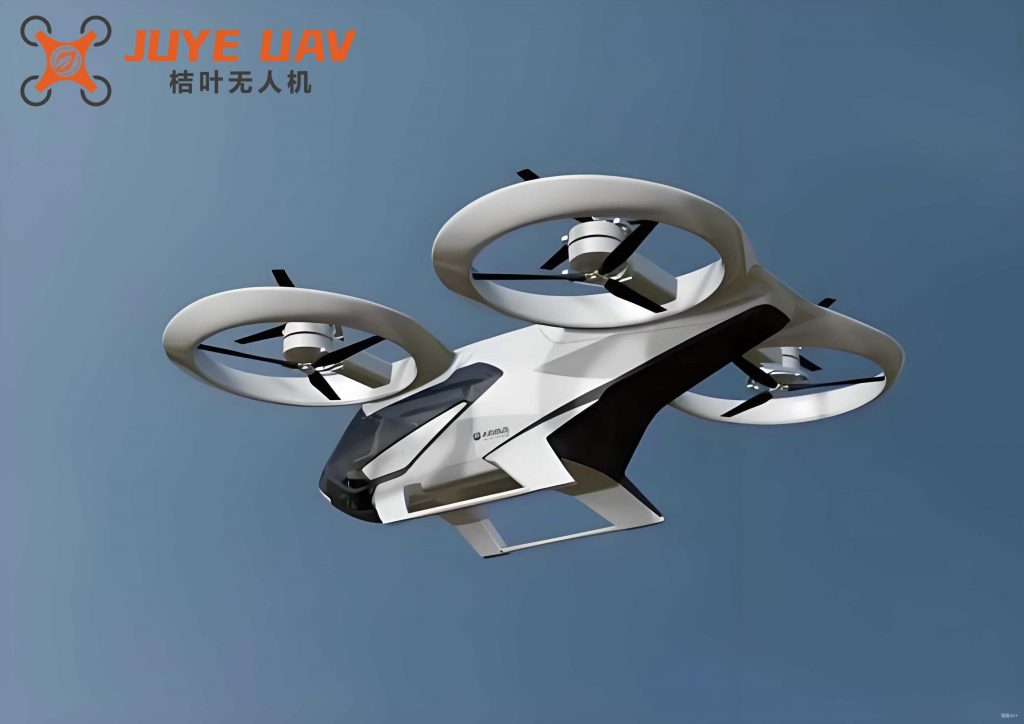
The core of our approach lies in the synthesis of several advanced control techniques. We employ a Prescribed Performance Control (PPC) framework to explicitly enforce user-defined bounds on the tracking error, thereby governing both its transient and steady-state behavior. To circumvent the tedious manual tuning associated with conventional PID controllers, we develop an adaptive PID (APID) scheme where the controller gains are dynamically adjusted online using a sliding mode-based adaptation law. This adaptive mechanism is further augmented with a Radial Basis Function (RBF) neural network, which acts as a compensator to mitigate chattering effects from the sliding mode law and to approximate modeling uncertainties. The overall control system is structured into an outer position loop and an inner attitude loop. The outer loop generates desired attitude commands using our proposed Prescribed Performance Adaptive PID (PPAPID) controller, while the inner loop stabilizes the attitude using the APID controller. The stability of the entire closed-loop system is rigorously proven via Lyapunov analysis. Extensive simulation studies demonstrate the superior performance of our method in terms of convergence speed, accuracy, and robustness against various forms of disturbances, compared to standard PID, sliding mode control (SMC), and basic adaptive PID strategies.
Mathematical Model of the Quadrotor Drone
To design a model-based controller, we first establish the nonlinear dynamical model of the quadrotor drone. We define two coordinate frames: the earth-fixed inertial frame $\{E\}$ and the body-fixed frame $\{B\}$ attached to the drone’s center of mass. The position of the drone in $\{E\}$ is denoted by $\boldsymbol{\xi} = [x, y, z]^T$, and its orientation by the Euler angles $\boldsymbol{\Theta} = [\phi, \theta, \psi]^T$, representing roll, pitch, and yaw, respectively. The transformation from the body frame to the inertial frame is given by the rotation matrix $^E_B\boldsymbol{R}$:
$$
^E_B\boldsymbol{R} = \begin{bmatrix}
c_\theta c_\psi & s_\phi s_\theta c_\psi – c_\phi s_\psi & c_\phi s_\theta c_\psi + s_\phi s_\psi \\
c_\theta s_\psi & s_\phi s_\theta s_\psi + c_\phi c_\psi & c_\phi s_\theta s_\psi – s_\phi c_\psi \\
-s_\theta & s_\phi c_\theta & c_\phi c_\theta
\end{bmatrix}
$$
where $s_\cdot$ and $c_\cdot$ denote $\sin(\cdot)$ and $\cos(\cdot)$, respectively. Under standard assumptions (rigid, symmetric structure, negligible aerodynamic drag), the translational and rotational dynamics of the quadrotor drone are derived using the Newton-Euler formalism:
$$
\begin{aligned}
\ddot{x} &= (\cos\phi \sin\theta \cos\psi + \sin\phi \sin\psi)\frac{U_1}{m} \\
\ddot{y} &= (\cos\phi \sin\theta \sin\psi – \sin\phi \cos\psi)\frac{U_1}{m} \\
\ddot{z} &= (\cos\phi \cos\theta)\frac{U_1}{m} – g \\
\ddot{\phi} &= \dot{\theta}\dot{\psi}\left(\frac{I_y – I_z}{I_x}\right) + \frac{U_2}{I_x} \\
\ddot{\theta} &= \dot{\phi}\dot{\psi}\left(\frac{I_z – I_x}{I_y}\right) + \frac{U_3}{I_y} \\
\ddot{\psi} &= \dot{\phi}\dot{\theta}\left(\frac{I_x – I_y}{I_z}\right) + \frac{U_4}{I_z}
\end{aligned}
$$
Here, $m$ is the mass, $g$ is gravitational acceleration, $I_x, I_y, I_z$ are moments of inertia, and $U_1$ to $U_4$ are the control inputs. The total thrust $U_1$ and the torques $U_2, U_3, U_4$ are related to the squared rotational speeds of the four rotors. The system can be written in a state-space form:
$$
\ddot{\boldsymbol{\Gamma}} = \mathbf{f}(\mathbf{u}) + \mathbf{g}_x(\boldsymbol{\Gamma}, \dot{\boldsymbol{\Gamma}})
$$
where $\boldsymbol{\Gamma} = [x, y, z, \phi, \theta, \psi]^T$, $\mathbf{u} = [U_1, U_2, U_3, U_4]^T$, $\mathbf{f}$ is a diagonal matrix of input gains, and $\mathbf{g}_x$ contains Coriolis, gravitational, and coupling terms. The tracking error is defined as $\mathbf{e} = \boldsymbol{\Gamma} – \boldsymbol{\Gamma}_d$, where $\boldsymbol{\Gamma}_d$ is the desired trajectory.
Fundamentals of Prescribed Performance Control
Prescribed Performance Control is a transformative methodology that allows the designer to predefine the behavioral envelope of the tracking error. For a scalar error $e(t)$, the objective is to maintain it within a decaying funnel defined by a performance function $\rho(t)$:
$$
-\delta \rho(t) < e(t) < \rho(t), \quad \text{if } e(0) > 0 \\
-\rho(t) < e(t) < \delta \rho(t), \quad \text{if } e(0) < 0
$$
for all $t \geq 0$, where $0 < \delta \leq 1$ is a constant that constraints the maximum overshoot, and $\rho(t)$ is a smooth, bounded, positive, and strictly decreasing function with $\lim_{t\to\infty} \rho(t) = \rho_\infty > 0$. A common choice is:
$$
\rho(t) = (\rho_0 – \rho_\infty) e^{-\kappa t} + \rho_\infty
$$
where $\rho_0 > \rho_\infty$ and $\kappa > 0$ dictates the convergence rate. This formulation guarantees that the error converges to a residual set $(-\delta\rho_\infty, \rho_\infty)$ or $(-\rho_\infty, \delta\rho_\infty)$ with a convergence speed no less than $\kappa$ and an overshoot less than $\delta \rho_0$. To incorporate this constraint into controller design, the constrained error is transformed into an equivalent unconstrained variable $\lambda$ via a smooth, strictly increasing function $S(\lambda)$:
$$
e(t) = \rho(t) S(\lambda), \quad \text{where } S(\lambda) = \frac{e^{\lambda} – e^{-\lambda}}{e^{\lambda} + e^{-\lambda}}.
$$
The inverse transformation is:
$$
\lambda = S^{-1}\left(\frac{e(t)}{\rho(t)}\right) = \frac{1}{2} \ln\left(\frac{1 + \frac{e(t)}{\rho(t)}}{1 – \frac{e(t)}{\rho(t)}}\right).
$$
Stabilizing this transformed error $\lambda$ implicitly ensures the original error $e(t)$ remains within the prescribed performance bounds. This core idea is applied to the position tracking errors of the quadrotor drone.
Controller Design for the Quadrotor Drone
The control system employs a cascaded structure. The outer loop (position controller) computes the required total thrust $U_1$ and the desired roll ($\phi_d$) and pitch ($\theta_d$) angles for the inner loop. The inner loop (attitude controller) generates torques $U_2, U_3, U_4$ to track these desired angles and the desired yaw $\psi_d$.
Inner Loop: Adaptive PID Attitude Control
For the attitude subsystem ($\phi, \theta, \psi$), we design an Adaptive PID (APID) controller. The classical PID control law is $\mathbf{u}_{PID} = \hat{K}_P \mathbf{e}_a + \hat{K}_I \int \mathbf{e}_a \, dt + \hat{K}_D \dot{\mathbf{e}}_a$, where $\mathbf{e}_a$ is the attitude error. The key innovation is to treat the gain matrices $\hat{K}_P, \hat{K}_I, \hat{K}_D$ as adaptive parameters updated online. We define a sliding surface for the attitude error:
$$
\mathbf{s}_a = \dot{\mathbf{e}}_a + \mathbf{K}_{1a} \mathbf{e}_a + \mathbf{K}_{2a} \int \mathbf{e}_a \, dt
$$
where $\mathbf{K}_{1a}, \mathbf{K}_{2a}$ are positive definite, user-chosen matrices. Using the sliding mode reaching law concept and the gradient descent method, the adaptation laws for the PID gains are derived as:
$$
\begin{aligned}
\dot{\hat{K}}_P &= \eta_P \, \mathbf{s}_a \mathbf{e}_a^T \\
\dot{\hat{K}}_I &= \eta_I \, \mathbf{s}_a \left(\int \mathbf{e}_a \, dt\right)^T \\
\dot{\hat{K}}_D &= \eta_D \, \mathbf{s}_a \dot{\mathbf{e}}_a^T
\end{aligned}
$$
where $\eta_P, \eta_I, \eta_D > 0$ are learning rates. This mechanism automatically tunes the controller gains to minimize the sliding surface. To compensate for the approximation error between this adaptive PID and the ideal controller, and to suppress chattering, an RBF neural network compensator $\mathbf{u}_{RBF} = \hat{\mathbf{W}}^T \mathbf{h}(\mathbf{x})$ is added. The final inner loop control law is:
$$
\mathbf{u}_{att} = \mathbf{u}_{APID} + \mathbf{u}_{RBF}.
$$
The network weights $\hat{\mathbf{W}}$ are updated by $\dot{\hat{\mathbf{W}}} = \eta_W (\mathbf{h}(\mathbf{x}) \mathbf{s}_a^T – \eta_{wd} \hat{\mathbf{W}})$, where $\eta_W, \eta_{wd} > 0$.
Outer Loop: Prescribed Performance Adaptive PID Position Control
The outer loop controls the translational dynamics $(x, y, z)$. We apply the PPC methodology to each position error $e_x, e_y, e_z$. Each error is transformed using its own performance function $\rho_i(t)$ into an unconstrained error $\lambda_i$:
$$
\lambda_i = \frac{1}{2} \ln\left( \frac{1 + e_i/\rho_i(t)}{1 – e_i/\rho_i(t)} \right), \quad i \in \{x, y, z\}.
$$
We then design an APID controller to stabilize the transformed error vector $\boldsymbol{\lambda} = [\lambda_x, \lambda_y, \lambda_z]^T$. A sliding surface is defined for the transformed system:
$$
\mathbf{s}_p = \dot{\boldsymbol{\lambda}} + \mathbf{K}_{1p} \boldsymbol{\lambda} + \mathbf{K}_{2p} \int \boldsymbol{\lambda} \, dt.
$$
The virtual control inputs for the translational dynamics (which are later mapped to $U_1, \phi_d, \theta_d$) are generated by a similar APID structure on $\boldsymbol{\lambda}$, plus the RBF network compensation. The adaptation laws for the outer-loop PID gains follow the same principle as the inner loop but are driven by $\mathbf{s}_p$ and the transformed errors. The resulting control signals $[u_x, u_y, u_z]^T$ are then converted into the actual quadrotor drone commands:
$$
\begin{aligned}
U_1 &= m \sqrt{u_x^2 + u_y^2 + (u_z + g)^2} \\
\phi_d &= \arctan\left( \frac{u_x \sin\psi_d – u_y \cos\psi_d}{u_z + g} \right) \\
\theta_d &= \arctan\left( \frac{u_x \cos\psi_d + u_y \sin\psi_d}{u_z + g} \right)
\end{aligned}
$$
where $\psi_d$ is the independently specified desired yaw angle. This composite strategy is termed Prescribed Performance Adaptive PID (PPAPID) control.
Stability Analysis
The stability of the entire closed-loop system for the quadrotor drone is established using Lyapunov’s direct method. We consider a composite Lyapunov candidate function $V$ that includes terms for the sliding surfaces of both loops and the parameter estimation errors (neural network weights and PID gains).
For the inner attitude loop, consider:
$$ V_a = \frac{1}{2} \mathbf{s}_a^T \mathbf{s}_a + \frac{1}{2\eta_W} tr(\tilde{\mathbf{W}}^T \tilde{\mathbf{W}}) $$
where $\tilde{\mathbf{W}} = \mathbf{W}^* – \hat{\mathbf{W}}$ is the weight estimation error and $\mathbf{W}^*$ represents the ideal weights. Taking its time derivative and substituting the control law $\mathbf{u}_{att}$, the adaptation laws, and the weight update law, we obtain after manipulation:
$$ \dot{V}_a \leq -\mathbf{s}_a^T \mathbf{K}_{sa} \mathbf{s}_a – \frac{\eta_{wd}}{2} tr(\tilde{\mathbf{W}}^T \tilde{\mathbf{W}}) + \epsilon_a $$
where $\mathbf{K}_{sa}$ is a positive definite matrix from the controller design and $\epsilon_a$ is a small positive constant related to the neural network approximation error bound. This proves that $\mathbf{s}_a$ and $\tilde{\mathbf{W}}$ are uniformly ultimately bounded (UUB). Since $\mathbf{s}_a$ is a stable linear operator on $\mathbf{e}_a$, the attitude tracking error $\mathbf{e}_a$ is also UUB.
For the outer position loop with prescribed performance, a similar but more involved analysis is performed using the transformed error $\boldsymbol{\lambda}$. The Lyapunov function includes the sliding surface $\mathbf{s}_p$:
$$ V_p = \frac{1}{2} \mathbf{s}_p^T \mathbf{s}_p + \frac{1}{2\eta_{Wp}} tr(\tilde{\mathbf{W}}_p^T \tilde{\mathbf{W}}_p). $$
Following a procedure analogous to the inner loop, we can show that:
$$ \dot{V}_p \leq -\mathbf{s}_p^T \mathbf{K}_{sp} \mathbf{s}_p – \frac{\eta_{wdp}}{2} tr(\tilde{\mathbf{W}}_p^T \tilde{\mathbf{W}}_p) + \epsilon_p. $$
This guarantees the UUB of $\mathbf{s}_p$ and consequently of $\boldsymbol{\lambda}$. By the properties of the performance function $\rho(t)$ and the transformation $S(\lambda)$, the UUB of $\boldsymbol{\lambda}$ directly implies that the original positional tracking error $\mathbf{e}_p = [e_x, e_y, e_z]^T$ is not only UUB but also strictly confined within the predefined performance envelopes $-\delta_i \rho_i(t) < e_i(t) < \rho_i(t)$. Thus, the overall system is stable, and the tracking errors for the quadrotor drone satisfy the prescribed transient and steady-state performance specifications.
Simulation Results and Performance Evaluation
To validate the effectiveness and robustness of the proposed PPAPID controller for the quadrotor drone, comprehensive numerical simulations were conducted in MATLAB/Simulink. The physical parameters of the simulated drone are listed in the table below.
| Parameter | Value | Parameter | Value |
|---|---|---|---|
| Mass, $m$ | 2.0 kg | Arm Length, $l$ | 0.2 m |
| Gravity, $g$ | 9.81 m/s² | Inertia $I_x$, $I_y$ | 0.0021 kg·m² |
| Inertia $I_z$ | 0.0036 kg·m² | Thrust Coeff., $b$ | 2.86e-7 N·s² |
| Drag Coeff., $d$ | 4.42e-10 N·m·s² |
The desired trajectory is a helical path combined with a step in yaw: $\boldsymbol{\Gamma}_d = [\sin(t), \cos(t), t, 0, 0, \pi/6]^T$. The initial condition is set to the origin. The proposed PPAPID controller is compared against three benchmarks: a conventional fixed-gain PID, a standard Sliding Mode Controller (SMC), and the basic Adaptive PID (APID) without prescribed performance. Three simulation scenarios are executed.
Scenario 1: Disturbance-Free Tracking
In the absence of external disturbances, all controllers achieve trajectory tracking. However, their performance differs significantly. The proposed PPAPID controller forces the position errors to converge within the strict, pre-defined performance bounds, achieving stable tracking in under 1 second with negligible steady-state error. The conventional PID has persistent steady-state error and slower convergence (~2 s). The SMC, while ultimately stable, exhibits severe chattering in the attitude channels and a longer settling time (~5 s). The basic APID improves upon PID but still lacks the strict transient regulation offered by PPC. The tracking results are quantified by the Average Absolute Error (AAE) over the simulation period.
| Axis | PID (m) | SMC (m) | APID (m) | PPAPID (m) |
|---|---|---|---|---|
| X | 0.101 | 0.079 | 0.046 | 0.006 |
| Y | 0.138 | 0.068 | 0.068 | 0.012 |
| Z | 0.230 | 0.097 | 0.013 | 0.005 |
Scenario 2: Sinusoidal Disturbance Rejection
To test robustness, time-varying sinusoidal disturbances are injected into the position dynamics: $d_x = d_y = d_z = 1.5\sin(t)$ [N]. The proposed PPAPID controller for the quadrotor drone demonstrates remarkable robustness, maintaining tight tracking with only a minor increase in error bounds. The other controllers show degraded performance, with significantly larger errors, especially the SMC in the Z-axis. The AAE values confirm the superiority of the PPAPID approach under harmonic disturbances.
| Axis | PID (m) | SMC (m) | APID (m) | PPAPID (m) |
|---|---|---|---|---|
| X | 0.239 | 0.134 | 0.093 | 0.010 |
| Y | 0.211 | 0.112 | 0.101 | 0.023 |
| Z | 0.259 | 0.497 | 0.064 | 0.006 |
Scenario 3: Complex Nonlinear Disturbance Rejection
A more challenging, state-dependent nonlinear disturbance is applied: $d_i = 15 \cdot \text{sgn}(\dot{e}_i)$ [N], for $i \in \{x, y, z\}$, where $\text{sgn}$ is the signum function. This represents a severe, discontinuous perturbation opposing the direction of motion. The proposed controller exhibits exceptional resilience, with tracking performance nearly identical to the disturbance-free case. In stark contrast, the performance of PID, SMC, and basic APID deteriorates substantially, with errors increasing by orders of magnitude in some axes (notably SMC in the Z-axis).
| Axis | PID (m) | SMC (m) | APID (m) | PPAPID (m) |
|---|---|---|---|---|
| X | 0.389 | 0.278 | 0.164 | 0.017 |
| Y | 0.398 | 0.345 | 0.242 | 0.045 |
| Z | 0.615 | 2.023 | 0.078 | 0.007 |
The simulation results conclusively demonstrate that the proposed Prescribed Performance Adaptive PID control framework delivers superior trajectory tracking for a quadrotor drone. It guarantees predefinable transient and steady-state performance, eliminates the need for manual PID tuning, and exhibits strong robustness against a wide spectrum of external disturbances, from harmonic to aggressive nonlinear types. The integration of PPC, gain adaptation via sliding mode, and neural network compensation creates a powerful and practical control solution for advanced quadrotor drone applications.