
In recent years, unmanned aerial vehicles (UAVs) have garnered significant attention due to their vast potential in both military and civilian applications. Among these, the quadrotor drone represents a particularly prominent and widely utilized class. Its configuration, featuring four rotors each mounted on a brushless DC motor, provides the thrust necessary for flight. Control of the vehicle’s attitude is achieved by systematically varying the rotational speeds of these rotors, which in turn generates the moments acting on the airframe. However, the quadrotor drone system is inherently characterized by severe multivariable coupling, nonlinearity, and sensitivity to external disturbances. Furthermore, factors such as component degradation, motor wear, or propeller damage can lead to various faults. Actuator faults—including gain faults, voltage control failures, or structural damage—are inevitable and can adversely affect the control system’s performance. The occurrence of such faults can detrimentally impact the tracking performance and stability of the closed-loop control system. Consequently, flight stability, reliability, and safety have become paramount metrics for control system design. To meet these stringent requirements, researchers have explored fault-tolerant control systems incorporating fault detection and isolation mechanisms for quadrotor drones. Alternatively, adaptive control algorithms have been developed to provide fault tolerance for actuator faults without an explicit fault diagnosis scheme. While these methods aim to maintain stability and acceptable performance levels by compensating for faults and disturbances, a critical challenge in designing robust fault-tolerant systems remains the lack of precise information regarding the fault’s occurrence time, location, and severity. Therefore, obtaining detailed information about the fault’s magnitude, characteristics, and temporal behavior is essential in the initial stage of designing a fault-tolerant control system. This need for precise fault information is the primary motivation for developing advanced Fault Detection and Estimation (FDE) techniques. A robust FDE scheme, highly sensitive to faults yet insensitive to disturbances, is therefore a fundamental requirement.
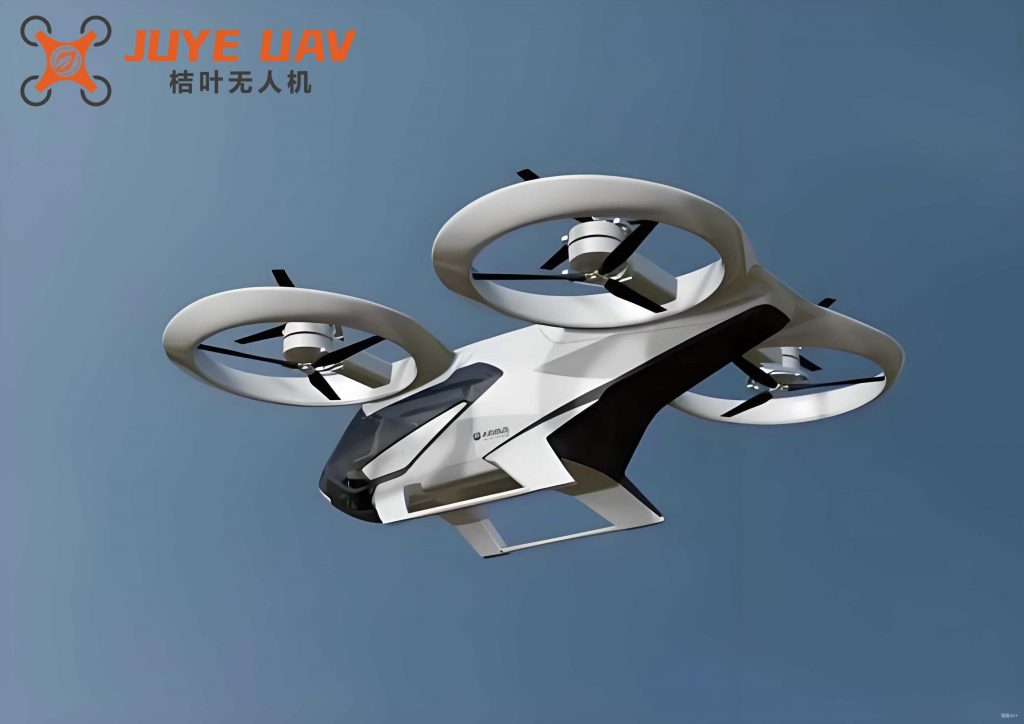
My work focuses on a class of Lipschitz nonlinear systems, which accurately model quadrotor drones, subject to actuator faults, modeling uncertainties, and measurement noise. I propose a robust FDE method based on adaptive technology and observer theory. The proposed methodology operates in two distinct phases: fault detection and fault estimation.
Mathematical Model and Problem Formulation
The dynamics of a quadrotor drone can be derived using Newton-Euler equations. The model considers the forces and torques generated by the motors, accounting for known disturbances and model uncertainties. The translational and rotational dynamics are given below. The control inputs—total thrust \(U\), roll torque \(T_\phi\), pitch torque \(T_\theta\), and yaw torque \(T_\psi\)—are related to the squared motor speeds \(\Omega_i^2\) via a mapping matrix \(\mathbf{\Pi}\):
$$
\begin{bmatrix} U \\ T_\phi \\ T_\theta \\ T_\psi \end{bmatrix} = \mathbf{\Pi} \begin{bmatrix} \Omega_1^2 \\ \Omega_2^2 \\ \Omega_3^2 \\ \Omega_4^2 \end{bmatrix}, \quad \text{where} \quad \mathbf{\Pi} = \begin{bmatrix} b_F & b_F & b_F & b_F \\ b_F l & -b_F l & -b_F l & b_F l \\ b_F l & b_F l & -b_F l & -b_F l \\ k & -k & k & -k \end{bmatrix}.
$$
Here, \(b_F\) is the thrust coefficient, \(k\) is the drag torque coefficient, and \(l = d/\sqrt{2}\) with \(d\) being the distance from the motor to the center of mass. The nonlinear dynamic model is:
$$
\begin{aligned}
\dot{\mathbf{p}}_E &= \mathbf{v}_E \\
\dot{\mathbf{v}}_E &= \frac{1}{m} \mathbf{R}_{EB}(\boldsymbol{\eta}) \left( \begin{bmatrix} 0 \\ 0 \\ -U \end{bmatrix} – \mathbf{c}_d \mathbf{v}_B \right) + \begin{bmatrix} 0 \\ 0 \\ g \end{bmatrix} + \boldsymbol{\xi}_v + \boldsymbol{\chi}_v \\
\dot{\boldsymbol{\eta}} &= \mathbf{R}_{\eta}(\phi, \theta) \, \boldsymbol{\omega} \\
\dot{\boldsymbol{\omega}} &= \begin{bmatrix} \frac{J_y – J_z}{J_x} q r \\ \frac{J_z – J_x}{J_y} p r \\ \frac{J_x – J_y}{J_z} p q \end{bmatrix} + \begin{bmatrix} \frac{1}{J_x} T_\phi \\ \frac{1}{J_y} T_\theta \\ \frac{1}{J_z} T_\psi \end{bmatrix} + \boldsymbol{\xi}_\omega + \boldsymbol{\chi}_\omega
\end{aligned}
$$
For the purpose of designing a model-based FDE scheme, I consider a generalized state-space representation that encapsulates the nonlinear dynamics, uncertainties, and actuator faults:
$$
\begin{aligned}
\dot{\mathbf{x}}(t) &= \mathbf{A}\mathbf{x}(t) + \mathbf{B}\mathbf{u}(t) + \boldsymbol{\xi}(\mathbf{x},\mathbf{u}) + \boldsymbol{\chi}(\mathbf{x},\mathbf{u},t) + \beta(t-T)\mathbf{F}_a(\mathbf{x},\mathbf{u}) \\
\mathbf{y}(t) &= \mathbf{C}\mathbf{x}(t) + \mathbf{D}\mathbf{d}(t)
\end{aligned}
$$
The term \(\beta(t-T)\mathbf{F}_a(\mathbf{x},\mathbf{u})\) models the change in system dynamics due to an actuator fault occurring at an unknown time \(T\). I adopt a multiplicative fault model, which is particularly effective for representing partial failures or degradation in quadrotor drone actuators such as motor wear or voltage loss:
$$
\mathbf{F}_a(\mathbf{x},\mathbf{u}) = \boldsymbol{\varphi}(\mathbf{x},\mathbf{u})\boldsymbol{\theta}
$$
where \(\boldsymbol{\varphi}(\mathbf{x},\mathbf{u})\) is a known functional structure of the fault, and \(\boldsymbol{\theta}\) is an unknown vector representing the fault magnitude and severity. The function \(\beta(t-T)\) characterizes the fault evolution profile. For an abrupt fault (e.g., sudden partial loss of effectiveness), \(\beta(t-T)\) is a step function. For an incipient fault (e.g., slow performance degradation), it can be modeled as \(\beta(t-T) = 1 – e^{-k(t-T)}\). The core problem is to design an adaptive observer-based scheme that can robustly detect the occurrence of such a fault (i.e., determine when \(\beta(t-T)\boldsymbol{\theta} \neq \mathbf{0}\)) and subsequently provide an accurate online estimate \(\hat{\boldsymbol{\theta}}(t)\) of the fault parameters.
Methodology: Adaptive Observer-Based FDE
Fault Detection Phase
The first stage involves designing a nonlinear diagnostic observer to generate a residual signal. This observer estimates the system states based on the nominal fault-free model and the actual inputs and outputs. The residual is the difference between the measured and estimated outputs. The observer structure is:
$$
\begin{aligned}
\dot{\hat{\mathbf{x}}}(t) &= \mathbf{A}\hat{\mathbf{x}}(t) + \mathbf{B}\mathbf{u}(t) + \boldsymbol{\xi}(\hat{\mathbf{x}},\mathbf{u}) + \beta(t-T)\boldsymbol{\varphi}(\hat{\mathbf{x}},\mathbf{u})\hat{\boldsymbol{\theta}}(t) + \mathbf{P}(\mathbf{y}(t) – \mathbf{C}\hat{\mathbf{x}}(t)) \\
\hat{\mathbf{y}}(t) &= \mathbf{X}\hat{\mathbf{x}}(t)
\end{aligned}
$$
Here, \(\hat{\boldsymbol{\theta}}(t)\) is the estimate of the fault vector (initially zero), and \(\mathbf{P}\) is the observer gain matrix to be designed. Defining the state estimation error as \(\boldsymbol{\sigma}(t) = \mathbf{x}(t) – \hat{\mathbf{x}}(t)\), its dynamics under a no-fault condition (\(\boldsymbol{\theta}=\mathbf{0}\)) are:
$$
\dot{\boldsymbol{\sigma}}(t) = (\mathbf{A} – \mathbf{P}\mathbf{C})\boldsymbol{\sigma}(t) + \boldsymbol{\xi}(\mathbf{x},\mathbf{u}) – \boldsymbol{\xi}(\hat{\mathbf{x}},\mathbf{u}) + \boldsymbol{\chi}(\mathbf{x},\mathbf{u},t) + \mathbf{P}\mathbf{D}\mathbf{d}(t).
$$
The residual signal is \(\boldsymbol{\nu}(t) = \mathbf{y}(t) – \hat{\mathbf{y}}(t) = \mathbf{C}\boldsymbol{\sigma}(t) + \mathbf{D}\mathbf{d}(t)\). To make a detection decision, I employ an evaluation function \(J_\nu(t)\) computed over a finite moving time window \(T_1\):
$$
J_\nu(t) = \left( \int_{t}^{t+T_1} \boldsymbol{\nu}^T(\tau)\boldsymbol{\nu}(\tau) \, d\tau \right)^{1/2}.
$$
The key to robust detection is to compare \(J_\nu(t)\) against a carefully derived adaptive threshold \(J_{th}(t)\). This threshold accounts for the worst-case influence of model uncertainties \(\boldsymbol{\chi}\) and disturbances \(\mathbf{d}(t)\) on the residual in the absence of a fault. Under standard Lipschitz and boundedness assumptions for the nonlinearities and disturbances, I derive the following threshold.
Theorem 1 (Detection Threshold). For the nonlinear system and observer defined above, the residual evaluation function \(J_\nu(t)\) in the fault-free case is bounded by:
$$
J_\nu(t) \le J_{th}(t) = \left( \int_{t}^{t+T_1} \left( \frac{\alpha(\bar{\chi} + \|\mathbf{P}\|\|\mathbf{D}\|\bar{d}_1)\|\mathbf{C}\|}{b – \alpha\kappa_1} + \left( \alpha\varepsilon – \frac{\alpha(\bar{\chi} + \|\mathbf{P}\|\|\mathbf{D}\|\bar{d}_1)}{b – \alpha\kappa_1} \right) \|\mathbf{C}\| e^{-(b-\alpha\kappa_1)\tau} + \|\mathbf{D}\|\bar{d}_1 \right)^2 d\tau \right)^{1/2}
$$
where \(\kappa_1\) is the Lipschitz constant of \(\boldsymbol{\xi}\), \(\bar{\chi}\) and \(\bar{d}_1\) are bounds on the uncertainty and disturbance, and \(\alpha, b, \varepsilon\) are positive constants related to the stability of \((\mathbf{A}-\mathbf{P}\mathbf{C})\). A fault is declared detected at time \(t_d\) if \(J_\nu(t_d) > J_{th}(t_d)\).
Fault Estimation Phase
Once a fault is detected, the adaptive estimation law is activated. The objective is to update the fault parameter estimate \(\hat{\boldsymbol{\theta}}(t)\) so that it converges to a neighborhood of the true value \(\boldsymbol{\theta}\). To achieve robust estimation in the presence of disturbances and prevent parameter drift, I propose a switching \(\rho\)-modification based adaptive law. The stability of the combined observer and estimator is analyzed using Lyapunov theory.
Theorem 2 (Adaptive Fault Estimator). Consider the faulty system and the observer. Under the stated assumptions, if there exists a positive definite matrix \(\mathbf{Q}\) such that a specific Linear Matrix Inequality (LMI) derived from the error dynamics is satisfied, then the following adaptive law ensures that the state estimation error \(\boldsymbol{\sigma}(t)\) and the parameter estimation error \(\tilde{\boldsymbol{\theta}}(t) = \boldsymbol{\theta} – \hat{\boldsymbol{\theta}}(t)\) are uniformly ultimately bounded:
$$
\dot{\hat{\boldsymbol{\theta}}}(t) = \gamma \boldsymbol{\varphi}^T(\hat{\mathbf{x}},\mathbf{u}) \mathbf{C}^T \mathbf{Y} \boldsymbol{\nu}(t) – \gamma \rho_s \hat{\boldsymbol{\theta}}(t)
$$
where \(\gamma > 0\) is the learning rate, \(\mathbf{Y}\) is a positive definite matrix derived from the LMI solution, and \(\rho_s\) is a switching modulation term:
$$
\rho_s = \begin{cases}
0 & \text{if } \|\hat{\boldsymbol{\theta}}(t)\| < N \\
\rho_0 \left( \frac{\|\hat{\boldsymbol{\theta}}(t)\|}{N} – 1 \right) & \text{if } N \le \|\hat{\boldsymbol{\theta}}(t)\| \le 2N \\
\rho_0 & \text{if } \|\hat{\boldsymbol{\theta}}(t)\| > 2N
\end{cases}
$$
with \(\rho_0 > 0\) and \(N > 0\) being design parameters chosen to be slightly larger than the expected norm of \(\boldsymbol{\theta}\). This law provides robust adaptation, shutting off the modification term when the estimates are small and applying increasing correction as they grow, thus effectively counteracting drift due to disturbances.
The design parameters, primarily the observer gain \(\mathbf{P}\) and the matrix \(\mathbf{Y}\), are computed by solving the feasibility problem of the following LMI, which encapsulates the stability condition and is tractable using standard convex optimization tools:
$$
\begin{bmatrix}
\boldsymbol{\Theta} & \mathbf{M}_1 & \mathbf{0} & \boldsymbol{\Gamma} & \boldsymbol{\Gamma}\mathbf{U} & \mathbf{0} & \mathbf{0} \\
\mathbf{M}_1^T & \mathbf{M}_2 & \mathbf{0} & \mathbf{0} & \mathbf{0} & \mathbf{U}^T\boldsymbol{\Gamma} & \mathbf{U}^T\boldsymbol{\Gamma}\mathbf{U} \\
\mathbf{0} & \mathbf{0} & -\rho_s\mathbf{I} & \mathbf{0} & \mathbf{0} & \mathbf{0} & \mathbf{0} \\
\boldsymbol{\Gamma} & \mathbf{0} & \mathbf{0} & -3\mathbf{I} & \mathbf{0} & \mathbf{0} & \mathbf{0} \\
\boldsymbol{\Gamma}\mathbf{U} & \mathbf{0} & \mathbf{0} & \mathbf{0} & -\mathbf{I} & \mathbf{0} & \mathbf{0} \\
\mathbf{0} & \mathbf{U}^T\boldsymbol{\Gamma} & \mathbf{0} & \mathbf{0} & \mathbf{0} & -2\mathbf{I} & \mathbf{0} \\
\mathbf{0} & \mathbf{U}^T\boldsymbol{\Gamma}\mathbf{U} & \mathbf{0} & \mathbf{0} & \mathbf{0} & \mathbf{0} & -\mathbf{I}
\end{bmatrix} \prec 0
$$
where \(\boldsymbol{\Gamma} = \mathbf{C}^T\mathbf{Y}\mathbf{C}\), \(\mathbf{U}=\mathbf{C}^{-1}\mathbf{D}\), and \(\boldsymbol{\Theta}, \mathbf{M}_1, \mathbf{M}_2\) are matrices containing system and observer matrices along with Lipschitz constants.
Simulation and Experimental Validation
I validate the proposed FDE scheme for a quadrotor drone attitude control system through numerical simulations and Hardware-in-the-Loop Simulation (HILS). The quadrotor drone model’s attitude dynamics are used, focusing on the angular velocity states.
Fault Scenarios
Two critical actuator fault types are considered:
Scenario 1 (Incipient Fault): Simulating motor wear or increased friction, modeled as a slow, additive fault on the control input with an evolution profile: \(F_{a1} = (1 – e^{-0.5(t-15)}) \times 0.8 \times 0.1\), activating at \(t = 15\)s and representing a 10% performance loss.
Scenario 2 (Abrupt Gain Fault): Simulating a sudden partial loss of motor effectiveness, modeled as a multiplicative fault: \(F_{a2} = -0.25 \epsilon(t-10)\), where \(\epsilon(t)\) is the unit step function, activating at \(t = 10\)s and representing a 25% thrust reduction.
Simulation Results
The performance is evaluated under four conditions: 1) Fault without uncertainties, 2) Fault with model uncertainty, 3) Fault with measurement noise, and 4) Comparison with a standard Sliding Mode Observer (SMO) based method from literature.
For Scenario 1, the proposed method detected the incipient fault at \(t_d = 15.2\)s. The fault estimate \(\hat{\theta}(t)\) accurately tracked the slow build-up of the true fault magnitude. The adaptive threshold \(J_{th}(t)\) effectively distinguished the fault-induced residual growth from nominal fluctuations.
For Scenario 2, the abrupt fault was detected nearly instantaneously at \(t_d = 10.25\)s. The adaptive estimator quickly converged to the true fault magnitude of 0.25. The table below summarizes the detection performance and estimation accuracy (measured by Mean Squared Error – MSE) compared to the literature SMO method.
| Method | Scenario 1 Detection Time (s) | Scenario 2 Detection Time (s) | Scenario 1 MSE | Scenario 2 MSE |
|---|---|---|---|---|
| Proposed Method | 15.2 | 10.25 | \(6.67 \times 10^{-4}\) | \(3.82 \times 10^{-4}\) |
| Literature SMO Method | 15.5 | 10.5 | \(5.12 \times 10^{-3}\) | \(3.58 \times 10^{-3}\) |
The results clearly show that my method offers faster detection and a significant order-of-magnitude improvement in estimation accuracy for the quadrotor drone faults. Furthermore, the robustness of the method was confirmed under conditions of model uncertainty (\(\bar{\chi}=0.1\)) and high-frequency measurement noise (\(\mathbf{d}(t)=0.01\sin(200t)\)), where the estimation remained stable and accurate, unlike the compared method which showed significant deviation and drift.
Hardware-in-the-Loop (HILS) Validation
To further demonstrate practical feasibility, I implemented the FDE algorithm on a real-time HILS testbed. The setup consisted of a physical quadrotor drone (DJI F450 frame) fixed on a spherical joint, a Pixhawk flight controller, and a xPC Target real-time simulation environment running the vehicle’s nonlinear dynamics and the proposed FDE algorithm. The quadrotor drone was commanded to follow an elliptical trajectory at constant altitude. The abrupt fault from Scenario 2 (25% motor effectiveness loss at t=10s) was injected into the motor control signal in real-time.
The HILS results successfully corroborated the simulations. The fault was detected at \(t_d = 10.35\)s, as the residual on the affected angular rate channel exceeded its adaptive threshold. The online fault estimate converged reliably to the injected fault value, proving that the algorithm performs effectively with real sensor data and hardware interfaces in the loop.
Discussion and Parameter Selection
The effectiveness of the proposed FDE scheme for quadrotor drones hinges on appropriate parameter selection. The LMI-based design ensures stability, but the adaptive law’s performance is tuned via the parameters \(\gamma\), \(\rho_0\), and \(N\).
- Learning Rate (\(\gamma\)): A larger \(\gamma\) leads to faster convergence of the fault estimate but can increase sensitivity to measurement noise. For the quadrotor drone application, I found values between 50 and 200 provided a good balance.
- Modification Parameters (\(\rho_0, N\)): The parameter \(N\) should be chosen as a conservative upper bound on the expected fault norm \(\|\boldsymbol{\theta}\|\). For instance, if a maximum fault severity of 30% is anticipated, setting \(N=0.35\) is reasonable. The parameter \(\rho_0\) controls the strength of the modification. A value too small may not prevent drift, while one too large can unnecessarily bias the estimates. Through simulation, \(\rho_0\) in the range of 0.1 to 0.5 was effective.
- Threshold Parameters (\(T_1, \varepsilon\)): The evaluation window \(T_1\) affects the smoothness of \(J_\nu(t)\). A longer window (e.g., 0.2-0.5s) filters out transient noise but adds a small delay to detection. The initial error bound \(\varepsilon\) can be set based on knowledge of initial condition uncertainties.
The proposed switching \(\rho\)-modification law is superior to a fixed \(\sigma\)-modification for the quadrotor drone FDE problem because it avoids unnecessarily distorting small estimates (which could correspond to healthy operation or very small faults) while robustly limiting large parameter drift caused by persistent disturbances. This is crucial for maintaining accurate fault estimates during long-duration quadrotor drone flights where ambient wind and sensor bias act as near-constant disturbances.
Conclusion
I have presented a comprehensive adaptive fault detection and estimation scheme for quadrotor drones subject to actuator faults, model uncertainties, and measurement noise. The method integrates a nonlinear diagnostic observer with a robust adaptive law featuring switching \(\rho\)-modification. The fault detection mechanism employs an analytically derived adaptive threshold, ensuring robustness against false alarms. The fault estimation mechanism guarantees uniformly ultimately bounded errors for both state and parameter estimates. All design conditions are formulated as Linear Matrix Inequalities, facilitating systematic computation of observer and estimator gains.
Extensive simulation studies under two realistic fault scenarios—incipient and abrupt—demonstrated the method’s accuracy, rapid detection capability, and superior performance compared to an existing sliding mode observer approach. The method’s robustness was verified in the presence of significant model uncertainties and measurement noise. Finally, the practical viability of the scheme was successfully confirmed through a Hardware-in-the-Loop experiment using a real quadrotor drone platform. The results collectively affirm that the proposed FDE method is a reliable and effective tool for enhancing the reliability and safety of quadrotor drone operations, providing critical fault information that can be directly utilized for subsequent fault-tolerant control reconfiguration.