
The integration of Unmanned Aerial Vehicles (UAVs) into modern firefighting and rescue operations represents a paradigm shift. These systems, specifically designated as fire UAVs, transcend the role of mere tools; they have become indispensable partners for first responders. Their ability to access hazardous, toxic, or structurally compromised environments provides a critical layer of safety and situational awareness previously unattainable. From aerial reconnaissance and thermal imaging to payload delivery and three-dimensional mapping, fire UAVs are redefining the operational landscape of emergency response. Consequently, the individuals who operate these sophisticated systems—the fire UAV pilots—are at the heart of this technological revolution. Their skill, judgment, and professionalism directly translate into mission success and enhanced public safety. This article explores the current state, challenges, and, most importantly, the necessary pathway toward the comprehensive professionalization of fire UAV pilots, a journey integral to the future of smart firefighting.
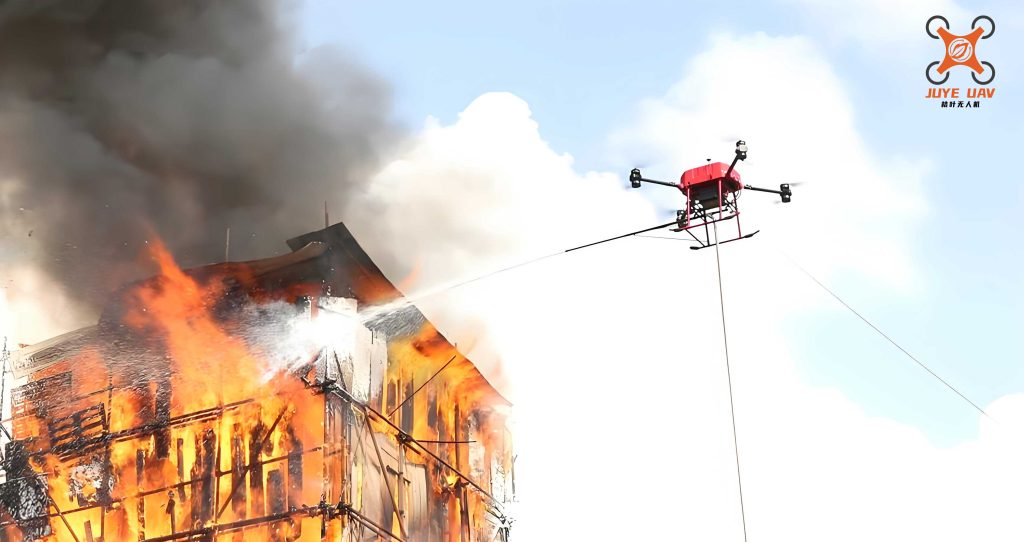
The proliferation of fire UAVs within fire rescue services is staggering. As a case study, consider a major municipal fire department operating a fleet of over 170 fire UAV units manned by more than 270 certified pilots, averaging two pilots per fire station. This fleet annually executes over 7,000 sorties across various fire suppression and rescue missions, accumulating more than 1,100 flight hours. These figures underscore the operational dependency on fire UAV capabilities. This demand has catalyzed the emergence of “UAV Pilot” as a formal occupation, recognized by labor authorities, attracting a new generation of operators. However, integrating this new profession into the rigid, tradition-bound structure of fire services presents unique challenges that necessitate a deliberate professionalization strategy.
Current Landscape of the Fire UAV Pilot Corps
Operating a fire UAV in emergency contexts is fundamentally different from recreational or commercial drone flying. The environment is dynamic, high-stakes, and often extreme. A fire UAV pilot’s role is multifaceted, blending technical prowess with tactical acumen.
1.1 Defining Characteristics of a Professional Fire UAV Pilot
A competent fire UAV pilot must possess a layered skill set. At the foundation lies thorough knowledge of the aircraft’s technical parameters, limitations, and the extensive web of aviation safety regulations promulgated by civil aviation authorities. Pre-flight checklists, airspace authorization protocols, and real-time regulatory compliance are non-negotiable tenets. Beyond basic piloting, stable handling skills and exceptional psychological resilience are paramount for operating in chaotic disaster zones.
The modern fire UAV is a data node. Pilots must be adept at interpreting the real-time data stream on their control interfaces—thermal signatures, gas concentration readings, structural integrity visuals—and making immediate, informed decisions. Post-mission, the ability to process collected data is equally crucial. Competence in specialized software to generate orthomosaic maps, 3D models of collapse sites, or detailed damage assessment reports transforms raw data into actionable intelligence. This skill progression can be modeled as a competency function:
$$ C_{pilot} = f(T_k, O_p, D_a, S_m) $$
Where \( C_{pilot} \) is the overall competency, \( T_k \) is technical knowledge (regulations, mechanics), \( O_p \) is operational proficiency (flight skills), \( D_a \) is data analysis capability, and \( S_m \) is software mastery for modeling. Furthermore, basic maintenance and troubleshooting abilities are essential to ensure fleet readiness and reduce downtime, as formal repairs can be prohibitively slow during ongoing emergencies.
1.2 The Demanding Operational Environment
Fire UAV pilots operate where needed, which invariably means outdoors in punishing conditions. Missions occur in scorching heat, where focus must be maintained despite physical discomfort, and in freezing cold, where tactile control of the remote becomes a challenge. Operations can extend for many hours during large-scale incidents, requiring sustained concentration. The pilot must manage not only the aircraft but also their own physiological and psychological state amidst the stress of the emergency. The operational envelope \( E_{op} \) for a fire UAV pilot can be described as a multidimensional constraint:
$$ E_{op} = \{ \text{Weather}, \text{Hazard Intensity}, \text{Time Pressure}, \text{Data Criticality} \} $$
The pilot’s performance must remain optimal across all variables in \( E_{op} \).
1.3 Composition of the Pilot Corps
The fire service typically sources its fire UAV pilots through two primary channels, each with implications for professionalization:
| Source Channel | Description | Advantages | Challenges for Professionalization |
|---|---|---|---|
| Internal Cultivation | Selection from new recruits or existing personnel (often communications specialists), followed by centralized training and certification. | Aligns with organizational culture, understands fireground tactics. | May lack prior aviation mindset; training may be viewed as an ancillary skill. |
| External Recruitment | Hiring of civillian-certified pilots on a contractual or civilian staff basis. | Brings dedicated aviation expertise and experience. | Integration into fire service rank structure and emergency response protocols can be difficult. |
An annual recurrent training cycle is usually mandated to maintain currency, but its depth and standardization vary widely.
Systemic Challenges Impeding Professionalization
Despite their critical role, fire UAV pilots face institutional hurdles that prevent their role from being recognized as a true, independent profession within the fire service.
2.1 The Absence of a Clear Career Progression Ladder
Currently, there is no unified, service-wide career ladder specific to fire UAV pilots. Proficiency is often benchmarked against external civilian standards (e.g., certification levels from civil aviation authorities or manufacturer-based training programs). These external metrics, while valuable for basic competency, do not translate into formal rank advancement, specialized pay grades, or defined leadership roles within the fire service’s own hierarchy. The pilot’s development lacks a structured, internally recognized pathway.
2.2 Ambiguous Professional Identity and Role Dilution
In most organizational charts, “Fire UAV Pilot” is not a standalone position. The duty is typically an additional responsibility assigned to a firefighter, often one serving as a communications officer. In formal promotion and occupational qualification systems, only grades for “Fire Communications Officer” exist. UAV operation skill is treated as a supplementary, value-added ability rather than the core competency of a distinct profession. This dilutes the focus on developing deep, specialized expertise in fire UAV operations, as it is not the primary basis for career evaluation.
2.3 Lack of Performance-Linked Incentives and Accountability
There is frequently a disconnect between a pilot’s skill level, mission performance, and their compensation or recognition. Without explicit mechanisms tying performance metrics—such as mission success rates, data quality, innovation in deployment, or maintenance records—to tangible rewards or consequences, motivation can wane. This creates an environment where exceptional performance is not formally distinguished, stifling initiative and healthy competition within the pilot corps. The incentive function \( I \) is currently flawed:
$$ I_{\text{current}} \approx \text{constant} $$
$$ I_{\text{needed}} = f(P_s, M_c, I_q, T_r) $$
Where \( I_{\text{needed}} \) should be a function of Pilot Skill (\(P_s\)), Mission Count/Complexity (\(M_c\)), Intelligence Quality (\(I_q\)), and Training Responsibility (\(T_r\)).
The Tripartite Framework for Professionalization
To overcome these challenges and forge a true profession, a systematic approach built on three interdependent pillars is essential: Standardization, Normalization, and Intelligentization.
3.1 Standardization: The Foundation of Professional Practice
Professionalization is impossible without standards. Current fire UAV operations often proceed based on ad-hoc tasking or general safety guidelines. There is a pressing need for comprehensive, service-wide standards that govern not only the technical specifications of fire UAV systems but, more importantly, the operational procedures for their use. These standards must be tailored to firefighting’s unique needs.
A robust standardization framework must cover:
- Operational Protocols: Standardized workflows for pre-flight checks, mission planning, in-flight communication, data capture, and post-mission reporting for different incident types (fire, HAZMAT, search and rescue, etc.).
- Pilot Qualification: A clear, tiered standard for pilot selection, initial certification, recurrent training requirements, and competency checkrides specific to fire service operations.
- Maintenance and Logistics: Standards for fleet maintenance schedules, battery management, data security, and equipment readiness.
The development of such standards can be inspired by analogous frameworks, such as public security standards for police UAV systems, which meticulously define technical requirements, operational conduct, and management protocols.
3.2 Normalization: Institutionalizing the Profession
Normalization refers to the process of embedding the standardized role of the fire UAV pilot into the fabric of the fire service’s culture, structure, and daily practice. This involves two key dimensions: Professional Ethos and Formalized Skill Recognition.
Professional Ethos: Fire UAV pilots must internalize the core values of the fire service—commitment, courage, and service—and apply them through the lens of their technical specialty. This includes a strong sense of duty, adherence to ethical data use, and unwavering focus on mission support.
Formalized Skill Recognition: Standardized skills must be mapped to a formal, internal career track. This involves creating a dedicated occupational series for “Fire UAV Pilot” with its own ranks (e.g., Apprentice Pilot, Lead Pilot, Master Pilot/Trainer, UAV Section Chief). Promotion through these ranks would be contingent on achieving defined skill milestones, passing standardized practical exams, and accumulating operational experience. An example of a normalized skill progression matrix is shown below:
| Rank / Level | Required Certification | Minimum Flight Hours (Operational) | Key Responsibilities | Skill Validation |
|---|---|---|---|---|
| Apprentice Pilot | Basic Fire UAV Operator | 50 hrs | Assist in missions, basic data collection, equipment prep. | Practical flight test on core maneuvers. |
| Lead Pilot | Advanced Fire UAV Tactician | 250 hrs | Lead mission flights, perform complex data acquisition (3D mapping), train apprentices. | Scenario-based tactical evaluation. |
| Master Pilot / Trainer | Fire UAV Instructor | 500+ hrs | Curriculum development, high-risk mission planning, evaluate other pilots, R&D for new tactics. | Instructional competency assessment & peer review. |
This normalization aligns internal career progression with skill development, providing a clear, merit-based pathway that is independent of other fire service specialties.
3.3 Intelligentization: Data-Driven Career and Force Management
The professionalization of fire UAV pilots must leverage data and intelligent systems. Currently, records of pilot performance, flight hours on specific fire UAV platforms, mission histories, and training achievements are often fragmented or non-existent. A unified, intelligent UAV Management Platform is crucial.
This platform would serve as the central nervous system for professional development, with core functions including:
1. Integrated “Pilot-Machine” Data Registry: A dynamic database linking every pilot to their qualifications, certifications, logged flight hours (categorized by mission type and complexity), recurrent training records, and equipment proficiency (specific fire UAV models).
2. Objective Performance Analytics: The platform would aggregate operational data to generate performance metrics. For example, it could analyze the geospatial accuracy of mapping missions, the timeliness of reconnaissance data delivery, or the success rate of payload delivery in training scenarios. These metrics feed into a composite performance score \( S_P \):
$$ S_P = \sum_{i=1}^{n} w_i \cdot m_i $$
Where \( m_i \) are individual performance metrics (data accuracy, response time, etc.) and \( w_i \) are weights assigned based on mission criticality and pilot level.
3. Talent Management and Succession Planning: By analyzing the aggregated data, the platform can visually map the talent landscape. It can identify skill gaps across the force, highlight top performers for advanced training or leadership roles, and facilitate the creation of balanced response teams by matching pilot skills with anticipated incident needs. It enables predictive modeling for workforce development:
$$ \text{Training Need}_{future} = f(\text{Skill Gap}_{current}, \text{Incident Trend}_{forecast}, \text{Attrition Rate}_{historical}) $$
This intelligent approach ensures career management is transparent, equitable, and strategically aligned with the organization’s operational goals, finally creating the direct link between performance and professional advancement that is currently missing.
Conclusion: Charting the Course for a Mature Profession
The era of the fire UAV as a niche gadget is over. We have entered the age of the fire UAV as a core operational system, and with it, the imperative to professionalize its human operators. The ad-hoc approach to managing fire UAV pilot talent is no longer tenable. The path forward requires a deliberate, structured commitment to building a profession characterized by clear standards, normalized career pathways integrated into the fire service, and intelligent, data-driven management of human capital. By establishing rigorous training standards tied to formal ranks, implementing performance-based incentives, and leveraging technology to track and cultivate expertise, fire departments can transform their fire UAV operators from skilled hobbyists or adjunct communicators into a corps of dedicated, professional aviators. This professionalization is not an end in itself; it is the essential catalyst for unlocking the full, life-saving potential of fire UAV technology, ensuring that these eyes in the sky are guided by the most capable, respected, and professionally fulfilled hands on the ground. The future of firefighting is airborne, intelligent, and interdependent—and its success hinges on the professional standing of the fire UAV pilot.