
As a practitioner deeply involved in the integration of unmanned aerial systems within fire and rescue services, I have witnessed firsthand the transformative impact of fire drones. These advanced tools are no longer mere accessories but essential assets in tackling complex emergencies, from hazardous material incidents to large-scale disasters. The rise of the fire drone has necessitated a parallel evolution in the personnel who operate them—the fire drone pilots. This article explores the current landscape, challenges, and future trajectory of professionalizing fire drone pilots, emphasizing the need for structured frameworks to harness their full potential. Through this first-person perspective, I aim to delineate the pathways toward a more standardized, regulated, and intelligent ecosystem for fire drone operations.
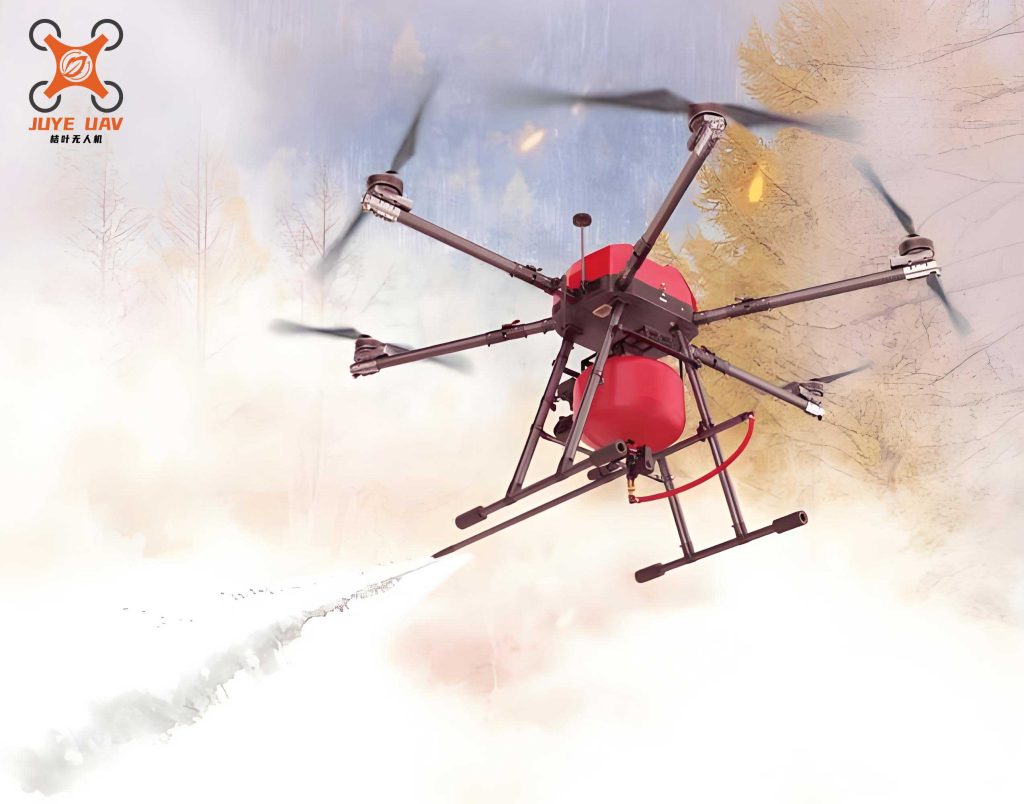
The adoption of fire drones has skyrocketed in recent years, with these devices performing tasks that are too dangerous, inaccessible, or time-sensitive for human responders. For instance, in a typical regional fire department, fire drones may be deployed over 7,000 times annually, accumulating more than 1,100 flight hours. Such statistics underscore the indispensable role of fire drones in enhancing situational awareness, conducting aerial reconnaissance, delivering payloads like fire retardants or life-saving supplies, and even assisting in search-and-rescue missions. The image below captures a quintessential application: a fire drone executing a precision drop of emergency resources in a simulated disaster scenario, highlighting its versatility and critical function in modern firefighting.
To contextualize the scale of integration, consider the following data from a representative fire rescue corps, which illustrates the proliferation of fire drones and their operators:
| Metric | Value | Implication |
|---|---|---|
| Total Fire Drones | 172 units | High asset density per station |
| Fire Drone Pilots | 275 personnel | Average of 2 pilots per station |
| Annual Missions | ~7,000 sorties | Frequent deployment in diverse scenarios |
| Cumulative Flight Hours | ~1,100 hours | Substantial operational experience |
This proliferation aligns with global trends, where fire drone usage is becoming a cornerstone of emergency response. In 2019, national occupational frameworks officially recognized “drone pilot” as a new profession, catalyzing an influx of skilled individuals into fields like firefighting. However, merely increasing numbers is insufficient; the quality, consistency, and professionalism of fire drone pilots determine operational efficacy. Thus, a thorough analysis of their current status is paramount.
Current Profile of Fire Drone Pilots: Characteristics, Environment, and Composition
Fire drone pilots are not just remote controllers; they are multidisciplinary experts who must blend technical prowess with operational acumen. From my experience, a competent fire drone pilot must master several core domains. Firstly, they need an in-depth understanding of fire drone specifications, including flight dynamics, sensor capabilities, and payload limits. Secondly, adherence to aviation safety regulations—such as those issued by civil aviation authorities—is non-negotiable, requiring meticulous pre-flight checks, airspace authorization, and compliance with no-fly zones. Thirdly, pilots must exhibit stable操控 skills and psychological resilience, especially when navigating chaotic disaster sites where decisions split seconds matter. Additionally, with modern fire drones featuring sophisticated app-based interfaces, proficiency in software操作 for real-time data interpretation, 2D/3D mapping, and model generation is crucial. Lastly, basic maintenance and troubleshooting abilities reduce downtime, as fire drones are complex devices prone to wear in harsh environments.
The work environment for fire drone pilots is inherently demanding. Operations often occur outdoors, exposing pilots to extreme weather—from freezing winters that numb fingers to scorching summers that test endurance. During prolonged incidents, fire drone pilots may need to sustain focus for hours, managing continuous flights to monitor evolving hazards. This physical and mental stamina is as vital as technical skill. The following table summarizes key occupational attributes and environmental challenges:
| Aspect | Description | Impact on Fire Drone Pilots |
|---|---|---|
| Technical Skills | Flight control, software操作, maintenance | Ensures effective fire drone utilization |
| Regulatory Knowledge | Aviation laws, safety protocols | Prevents accidents and legal issues |
| Psychological Factors | Stress management, decision-making | Critical in high-pressure rescue scenarios |
| Physical Demands | Exposure to elements, long hours | Requires robust health and adaptability |
| Technological Adaptation | Rapid app/software updates | Needs continuous learning |
The composition of fire drone pilot teams typically derives from two sources: internal cultivation and external recruitment. Internally, agencies select trainees from new recruits or communication specialists, providing centralized training through certified programs to obtain licenses. Externally, they hire individuals with prior drone experience—often as contracted firefighters or civil servants—who already hold relevant certifications. Annual refresher courses are mandated to maintain competency. This dual approach fosters diversity but also introduces variability in skill levels, underscoring the need for uniform standards.
Challenges Impeding Fire Drone Pilot Professionalization
Despite progress, several systemic issues hinder the professional growth of fire drone pilots. From my observations, these challenges stem from institutional gaps rather than individual shortcomings. Primarily, the lack of a clear career progression mechanism within fire departments is a significant barrier. Currently, fire drone pilot roles are often adjunct to other duties, such as communications officers, with no dedicated career ladder. Promotions and skill assessments rely on generic criteria (e.g., junior/senior communication officer ratings), where fire drone proficiency is merely an ancillary factor. This disincentivizes specialization and advanced training.
Secondly, the ambiguous occupational identity of fire drone pilots complicates professional recognition. Without a formal position in organizational charts, pilots struggle to define their niche, leading to role confusion and undervaluation. This is exacerbated by the absence of tailored performance metrics that reflect the unique contributions of fire drone operations. Thirdly, compensation and incentive structures are poorly aligned with skill mastery or mission outcomes. Since salary and benefits rarely correlate with fire drone expertise or task performance, motivation wanes, fostering a culture where “more or less effort yields the same reward.” This stagnation undermines competitiveness and innovation within pilot teams.
To quantify these challenges, consider a conceptual model for pilot motivation ($M$) based on career incentives:
$$ M = \alpha C + \beta R + \gamma S $$
where $C$ represents career advancement opportunities, $R$ denotes recognition and rewards, $S$ signifies skill utilization, and $\alpha$, $\beta$, $\gamma$ are weighting coefficients. In many current setups, $C$ and $R$ are near zero, causing $M$ to plummet. The table below encapsulates these problems:
| Challenge | Manifestation | Consequence |
|---|---|---|
| Vague Promotion Pathways | No dedicated ranks for fire drone pilots | Reduced career ambition and retention |
| Ambiguous Job Definition | Pilots兼任 other roles (e.g., communicators) | Diluted expertise and role conflict |
| Inadequate Incentives | Pay unrelated to fire drone skill level | Low morale and diminished performance |
| Absence of Standardized Evaluation | Reliance on external certifications alone | Inconsistent competency assessments |
Addressing these issues requires a holistic shift toward professionalization, mirroring broader trends in fire service occupational development.
Trends Driving Professionalization: Standardization, Regulation, and Intelligence
The future of fire drone pilot professionalization hinges on three pillars: standardization, regulation, and intelligence. Drawing from best practices and emerging technologies, I believe these elements can transform ad-hoc operations into a cohesive profession.
Standardization: Establishing Uniform Benchmarks
Standardization entails creating consistent protocols for fire drone operations, pilot training, and equipment maintenance. Presently, fire drone activities often follow vague guidelines or临时 directives, lacking rigorous standards. To professionalize, we need frameworks that specify operational procedures—from pre-flight checks to data reporting—while ensuring compatibility with national aviation rules. For example, public security agencies have introduced standards for police drones, covering technical specs, safety measures, and management protocols. Similarly, fire services should adopt analogous norms tailored to rescue contexts.
A potential standard could involve a competency matrix for fire drone pilots, as shown below:
| Skill Level | Required Fire Drone Operations | Assessment Criteria |
|---|---|---|
| Basic | Stable hovering, basic photography | Flight accuracy >90%, safety compliance |
| Intermediate | Thermal imaging, payload delivery | Mission success rate >85%, data quality |
| Advanced | 3D mapping, swarm coordination | Model accuracy <5% error, team leadership |
Moreover, standardization can be mathematically expressed through a performance index ($PI$) for fire drone pilots:
$$ PI = \sum_{i=1}^{n} w_i \cdot S_i $$
where $S_i$ represents scores in $n$ standardized skill areas (e.g., navigation, emergency response), and $w_i$ are weights assigned based on operational priority. This index facilitates objective comparisons and progression tracking.
Regulation: Enhancing Professional Conduct and Skill
Regulation focuses on codifying professional ethics and skill requirements for fire drone pilots. It encompasses both soft skills—like adherence to core values of loyalty and service—and hard skills, validated through standardized testing. National initiatives, such as the “1+X” vocational skill等级 system, have outlined drone pilot standards, which fire departments can adapt. For instance, a regional fire corps has already drafted competency benchmarks for无人装备操控员, specifying duties and required knowledge.
To formalize this, consider a regulatory framework where fire drone pilot certification depends on achieving thresholds in multiple domains. Let $T$ denote the total certification score, calculated as:
$$ T = \lambda_f F + \lambda_k K + \lambda_e E $$
Here, $F$ is flight skill assessment, $K$ is knowledge test results, $E$ is ethical evaluation, and $\lambda_f$, $\lambda_k$, $\lambda_e$ are regulatory coefficients. Pilots must exceed a minimum $T_{min}$ to qualify, ensuring holistic competence. Regular audits and renewals would maintain standards, aligning with civil aviation mandates.
Intelligence: Leveraging Data for Management and Development
Intelligence involves using digital platforms to manage fire drone pilots and optimize operations. Currently, data on pilot performance, flight hours, or mission histories are fragmented, hindering analysis. An intelligent management system could aggregate information across diverse fire drone brands, tracking device status, pilot credentials, and operational metrics. Such a system would enable dynamic talent pooling, where pilots are ranked based on multidimensional criteria like experience, training scores, and incident response effectiveness.
For example, a fire drone pilot efficacy metric ($E_p$) could be derived from:
$$ E_p = \frac{\sum_{j=1}^{m} Q_j \cdot H_j}{D + \epsilon} $$
where $Q_j$ is the quality score of mission $j$, $H_j$ is its duration, $D$ is total deployment time, and $\epsilon$ is a small constant to avoid division by zero. This metric, visualized through dashboards, would inform promotions and training needs. Additionally, the system could correlate fire drone data with rescue outcomes, providing insights for tactical improvements. The integration of artificial intelligence could further predict maintenance needs or optimize flight paths, enhancing overall efficiency.
The synergy of standardization, regulation, and intelligence creates a virtuous cycle: clear standards inform regulations, which generate data for intelligent systems, which in turn refine standards. This triad is essential for elevating fire drone pilots from technicians to professionals.
Future Outlook and Strategic Recommendations
Looking ahead, the professionalization of fire drone pilots is inevitable given technological advancements and growing reliance on unmanned systems. By 2024, the global market for civil drones is projected to exceed $200 billion, with industrial segments like firefighting driving significant份额. National policies are increasingly supportive, offering opportunities to institutionalize fire drone pilot careers. To capitalize on this momentum, I propose several actionable steps.
First, establish a dedicated occupational category for fire drone pilots within fire department hierarchies, with clear ranks (e.g., Apprentice, Specialist, Master Pilot) tied to salary scales. Second, develop a comprehensive training curriculum that blends theoretical knowledge (e.g., aerodynamics, regulations) with practical simulations of rescue scenarios. Third, implement a digital portfolio system for each pilot, recording certifications, mission logs, and performance analytics to inform career decisions. Fourth, foster collaboration with academic institutions to offer accredited programs in fire drone operations, ensuring a steady talent pipeline. Finally, promote research into fire drone applications, such as AI-assisted disaster assessment, to keep skills relevant.
In conclusion, the journey toward professionalizing fire drone pilots is a multifaceted endeavor requiring commitment from all stakeholders. As fire drones become ever more integral to rescue work, investing in the humans behind the controls is not just beneficial—it is imperative. By embracing standardization, regulation, and intelligence, we can build a robust profession that enhances operational effectiveness, ensures safety, and ultimately saves more lives. The sky is no longer the limit; with professional fire drone pilots, it is a domain of endless possibility.