
The rapid proliferation of unmanned aerial vehicles (UAVs), or drones, across military, security, and civilian domains has created an unprecedented demand for proficient operators. The traditional paradigm of drone training, heavily reliant on physical flights in constrained environments, is increasingly untenable. It is costly, risky, weather-dependent, and lacks the scalability and scenario diversity required for modern, complex operations. This analysis explores the transformative role of virtual simulation systems in addressing these challenges, fundamentally reshaping how drone training is conceived, delivered, and evaluated.
Virtual simulation technology constructs a high-fidelity, interactive digital twin of the real world. For drone training, this involves the precise mathematical modeling of drone aerodynamics, sensor data, environmental physics, and operational scenarios. The core value proposition is the creation of an immersive, repeatable, and risk-free sandbox where operators can hone their skills, from basic piloting to advanced mission execution. The mathematical foundation often begins with the equations of motion. A simplified rigid-body dynamics model for a multi-rotor drone, central to any high-fidelity drone training simulator, can be expressed as:
$$
\begin{aligned}
m \frac{d\vec{v}}{dt} &= \sum \vec{F} = m\vec{g} + \vec{F}_{thrust} + \vec{F}_{drag} \\
I \frac{d\vec{\omega}}{dt} &= \sum \vec{\tau} = \vec{\tau}_{thrust} + \vec{\tau}_{gyro} + \vec{\tau}_{drag}
\end{aligned}
$$
Where \( m \) is mass, \( \vec{v} \) is velocity, \( I \) is the inertia tensor, \( \vec{\omega} \) is angular velocity, \( \vec{F}_{thrust} \) and \( \vec{\tau}_{thrust} \) are forces and torques from rotors, and drag and gyroscopic effects are accounted for. Simulating these dynamics in real-time is the first critical step for realistic drone training.
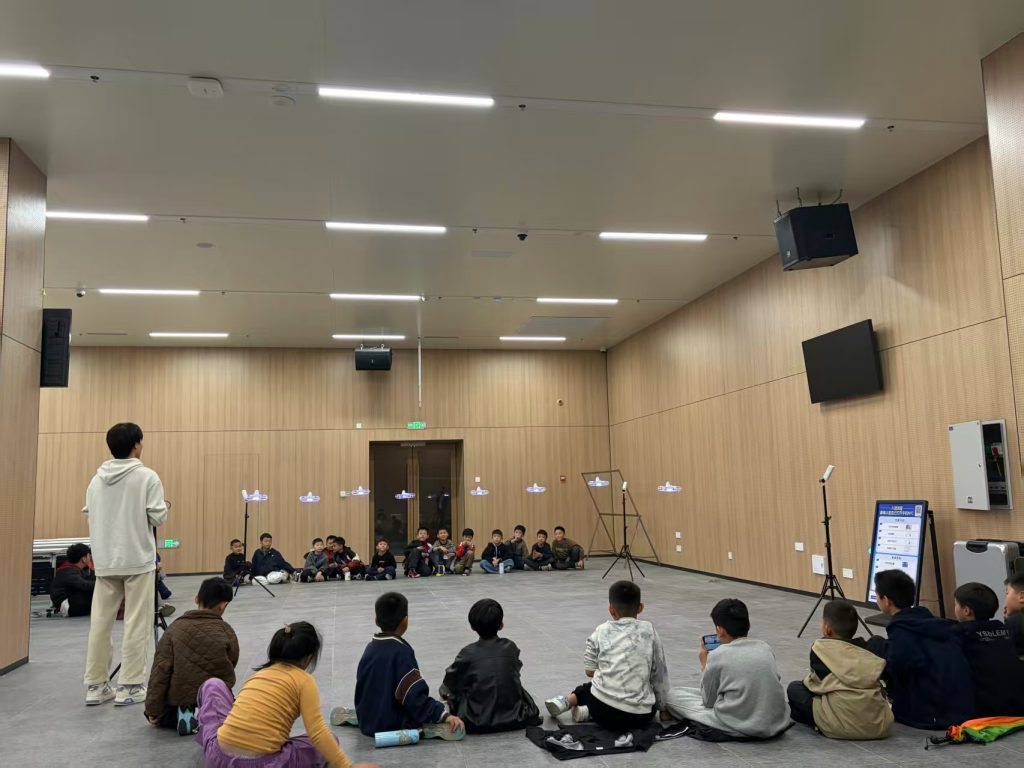
The advantages of virtual simulation for drone training are profound and multi-faceted, as summarized in the following comparative analysis.
| Aspect | Traditional Drone Training | Virtual Simulation-Based Training |
|---|---|---|
| Cost | High (fuel, maintenance, potential crash damage) | Low (initial software/hardware investment) |
| Risk | Significant (to equipment, personnel, and environment) | Negligible |
| Environmental Variability | Limited by weather and location availability | Unlimited (storms, night, urban canyons, etc.) |
| Scenario Repetition | Difficult and costly to recreate identical conditions | Instant and perfect repetition for muscle memory |
| Data Collection & Analysis | Manual, often subjective | Automatic, quantitative, and objective |
| Scalability | Limited by number of physical drones and instructors | Highly scalable through networked simulators |
A modern drone training simulation system is architected around several integrated core components. The effectiveness of the overall drone training experience depends on the performance of each subsystem, which can be benchmarked by key technical indicators.
| System Component | Key Performance Indicators (KPIs) | Impact on Drone Training |
|---|---|---|
| Visual Scene Rendering | Frame Rate (>60 Hz), Latency (<20 ms), Texture/Geometry Detail | Determines presence and spatial awareness, critical for FPV drone training. |
| Flight Dynamics Model | Physics Fidelity, Computational Speed, Model Matching to Real UAV | Ensures skills learned transfer directly to real-world drone operation. |
| Control Interface | Haptic Feedback Fidelity, Control Mapping Accuracy, Ergonomics | Builds correct muscle memory and operational reflexes for drone training. |
| Instructor Station | Scenario Editing Tools, Real-time Parameter Control, Debriefing Capabilities | Enables tailored, effective, and measurable drone training programs. |
The development of drone training simulators is advancing rapidly. In security applications, systems are being designed to simulate complex operational environments, from mountainous terrain for search and rescue to dense urban landscapes for surveillance. These systems go beyond basic flight control, integrating simulated payloads like thermal cameras and loudspeakers. A critical area of research involves simulating multi-drone swarm operations, which requires sophisticated networking and coordination algorithms. The performance of a drone swarm in a training simulation can be evaluated using metrics like mission completion time \( T_{mission} \), coverage efficiency \( \eta_{cov} \), and communication reliability \( R_{comm} \), potentially modeled as:
$$
P_{success} = f(T_{mission}, \eta_{cov}, R_{comm}) \quad \text{where} \quad \eta_{cov} = \frac{A_{covered}}{A_{total}}
$$
Despite significant progress, current virtual systems for drone training face notable challenges that can hinder their effectiveness. The most significant is the fidelity gap. Simulating every nuanced physical interaction, such as complex aerodynamic ground effects or the failure mode of a specific motor bearing, remains computationally prohibitive. Furthermore, the stochastic nature of real-world communications, with its latency spikes and dropouts, is often oversimplified, leaving trainees unprepared for critical real-time decision-making under degraded link conditions. Another major shortfall is scenario diversity. Many systems offer generic landscapes rather than meticulously scanned real-world locations or fail to provide a comprehensive library of high-stakes, procedurally generated emergency situations. This can lead to a trained operator who is proficient in controlled flight but lacks the adaptive reasoning for complex, evolving missions. Finally, user experience is frequently an afterthought. Overly complex menus, non-intuitive control mappings, and a lack of adaptive learning pathways can create unnecessary friction, reducing the efficiency and engagement of the drone training process.
The path forward for virtual drone training systems lies in strategic optimization and technological convergence. First, the user experience must be paramount. This involves intuitive human-machine interfaces, personalized learning trajectories powered by data analytics, and robust feedback mechanisms to continuously refine the system based on trainee performance. A quantitative measure of training effectiveness \( E_{training} \) could be developed, factoring in skill acquisition speed \( S \), task performance \( T \), and knowledge retention \( R \):
$$
E_{training} = \alpha S + \beta T + \gamma R
$$
where \( \alpha, \beta, \gamma \) are weighting coefficients determined by the training objectives.
Second, training scenarios require dramatic enrichment. This necessitates the use of high-precision 3D modeling from LIDAR and photogrammetry, dynamic weather and physics engines, and a vast library of mission-specific templates—from tactical building clearance to large-scale disaster response. Third, and most crucially, is the fusion of emerging technologies. Integrating Artificial Intelligence is transformative: AI can generate intelligent adversary forces, provide automated coaching, and manage complex swarm behaviors within the simulation. The integration of real sensor data streams (e.g., live infrared or RF signal maps) into the virtual environment creates a powerful mixed-reality training layer. Finally, leveraging next-generation networking (5G/6G) is essential for enabling low-latency, multi-participant, geographically distributed drone training exercises that mirror future network-centric operations. The relationship between network latency \( L \), required control bandwidth \( B \), and achievable training realism \( \Phi \) for collaborative drone training can be conceptualized as:
$$
\Phi = \frac{k \cdot B}{L + \epsilon}
$$
where \( k \) is a system constant and \( \epsilon \) represents processing delays.
In conclusion, virtual simulation is not merely a supplementary tool but is becoming the cornerstone of modern, scalable, and effective drone training programs. It transcends the limitations of physical training, offering a safe, cost-effective, and infinitely versatile environment to develop and assess operator competency. The trajectory is clear: future systems will evolve towards fully integrated, intelligent, and hyper-realistic training ecosystems. These systems will leverage AI, big data analytics, and immersive technologies to provide personalized, mission-specific, and continuously adaptive learning experiences. The standardization of these platforms will further ensure interoperability and allow for the objective benchmarking of operator skills across organizations. Ultimately, the advancement of virtual drone training simulation is a strategic imperative, directly contributing to enhanced operational readiness, safety, and mission success for all organizations that rely on unmanned systems.