
In today’s rapidly evolving technological landscape, drone training has become a critical component for effective operational deployment, particularly in law enforcement and public safety contexts. As an experienced drone instructor, I have observed that many organizations struggle with high loss rates during daily drone training exercises and face challenges in rapidly enhancing pilot proficiency. To address these issues, I propose an integrated drone training methodology that combines hands-on assembly, virtual simulation, and real-flight practice. This approach not only reduces equipment damage but also accelerates skill acquisition, ensuring that operators develop a deep understanding of drone systems and master control techniques. Drone training, when structured systematically, can transform novices into competent pilots capable of handling complex missions. In this article, I will delve into each phase of this methodology, emphasizing the importance of drone training through detailed explanations, tables, and mathematical models to optimize learning outcomes.
Drone training begins with a foundational phase: assembly training. This step is often overlooked, but it is essential for building a comprehensive understanding of drone components and their functions. From my perspective, allowing trainees to assemble a drone from scratch fosters familiarity with the hardware, which translates to better troubleshooting and maintenance skills during real operations. The assembly process typically involves three main stages: frame assembly, circuit soldering, and flight controller installation. Each stage requires careful attention to detail, and I encourage trainees to document their steps to reinforce learning. Drone training through assembly not only reduces future repair costs but also instills confidence in operators, as they become intimately aware of how each part contributes to overall performance. Below, I outline a table summarizing key components and tools needed for assembly training, which serves as a checklist for trainees.
| Component | Description | Tools Required |
|---|---|---|
| Frame (Arms and Center Plates) | Provides structural support; color-coded for orientation. | Screwdriver, screws. |
| Electronic Speed Controllers (ESCs) | Regulates motor speed; requires soldering to power distribution. | Soldering iron, solder, heat shrink tubing. |
| Flight Controller (e.g., APM) | Core processing unit; mounted with vibration damping. | 3M double-sided tape, calibration software. |
| Power Cables and Connectors | Delivers energy from battery to ESCs; uses XT60 plugs. | Wire strippers, multimeter. |
| Propellers and Motors | Generates lift; must be matched for balanced thrust. | Wrench, balancing tool. |
During frame assembly, trainees learn to identify orientation through color-coded arms—a crucial aspect for spatial awareness in flight. The mechanical stability of the drone can be modeled using basic physics principles. For instance, the torque generated by each motor must balance to maintain hover. If we denote the thrust from motor i as \( T_i \) and its distance from the center of mass as \( r_i \), the net torque \( \tau \) should be zero for equilibrium: $$ \tau = \sum_{i=1}^{4} T_i \times r_i = 0 $$ This equation highlights the importance of symmetric assembly, which trainees internalize through hands-on practice. Soldering connections, such as those for ESCs, requires precision to avoid short circuits. I often use Ohm’s law to explain current flow: $$ V = I \times R $$ where \( V \) is voltage, \( I \) is current, and \( R \) is resistance. Poor soldering increases resistance, leading to power loss and potential failure—a key lesson in drone training. Flight controller installation involves aligning the board with the drone’s forward direction, and trainees practice calibration routines to ensure sensors are accurately mapped. This phase of drone training typically takes 10-15 hours, but it pays dividends in reduced downtime during advanced stages.
After assembly, drone training progresses to virtual simulation, which I consider a safe and cost-effective way to develop piloting skills. Using simulators like Phoenix RC, trainees can practice in a risk-free environment, experimenting with various flight scenarios without damaging physical equipment. Drone training through simulation focuses on gradual skill development, starting with single-channel exercises and advancing to full-channel control. This step is vital for building muscle memory and reflexive control habits. I emphasize that virtual drone training should mimic real-world conditions as closely as possible, including weather effects and emergency procedures. The table below categorizes the simulation training phases, each designed to isolate specific control axes before integrating them.
| Training Phase | Channels Enabled | Objective | Typical Duration |
|---|---|---|---|
| Single-Channel Hover | Elevator or Aileron only | Master basic pitch or roll control in tail-in, nose-in, and side-in orientations. | 5-10 hours |
| Dual-Channel Hover | Elevator + Aileron | Coordinate two axes for stable hover in all orientations. | 10-15 hours |
| Full-Channel Hover | All four channels (Elevator, Aileron, Rudder, Throttle) | Achieve precise control in complex maneuvers like 8-figure flights. | 15-20 hours |
| Scenario-Based Training | All channels + environmental variables | Practice mission-specific tasks, e.g., search patterns or obstacle avoidance. | 20+ hours |
The dynamics of drone control in simulation can be described using linearized equations of motion. For a quadcopter, the pitch angle \( \theta \) and roll angle \( \phi \) are controlled by differential thrust. The simplified model for hover training is: $$ \ddot{\theta} = \frac{L}{I} (T_2 – T_4) $$ $$ \ddot{\phi} = \frac{L}{I} (T_1 – T_3) $$ where \( L \) is the arm length, \( I \) is the moment of inertia, and \( T_i \) are thrusts. Trainees learn to adjust throttle inputs to maintain altitude while manipulating these angles. In single-channel drone training, they focus on one equation at a time, reducing cognitive load. For example, when practicing elevator-only control, the goal is to minimize \( \ddot{\theta} \) deviations. As proficiency grows, dual-channel training introduces cross-coupling effects, where a change in pitch affects roll and vice versa. I often use PID controller principles to explain how simulators mimic real responses: $$ u(t) = K_p e(t) + K_i \int e(t) dt + K_d \frac{de(t)}{dt} $$ where \( u(t) \) is the control output and \( e(t) \) is the error. This formula helps trainees understand why overshooting occurs and how to dampen oscillations. Drone training in virtual environments also allows for data logging; I encourage trainees to review flight metrics, such as stability plots, to identify areas for improvement. By the end of this phase, operators should be able to perform smooth takeoffs, landings, and basic maneuvers without crashing in the simulator—a testament to effective drone training.
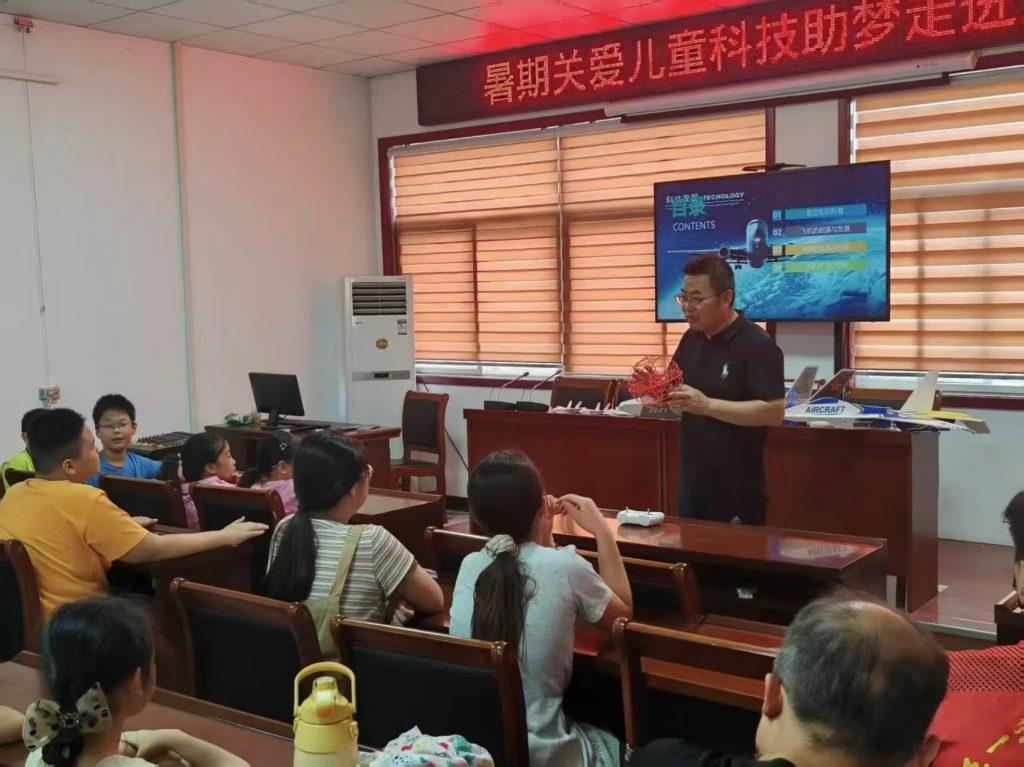
Transitioning to real-flight drone training is where skills are consolidated and tested in actual conditions. I always stress the importance of pre-flight checks to ensure safety and equipment integrity. This phase involves systematic ground inspections, followed by controlled flight exercises that build on virtual practice. Drone training in the field exposes operators to environmental factors like wind, GPS interference, and battery management, which are less predictable in simulations. A thorough ground check includes verifying frequency pairing between transmitter and receiver, inspecting mechanical parts, and calibrating sensors. I use a checklist table to standardize this process, ensuring no step is missed.
| Pre-Flight Check Item | Procedure | Acceptance Criteria |
|---|---|---|
| Transmitter-Receiver Pairing | Initiate linking mode; confirm LED indication. | Steady green light on receiver. |
| Frame and Propeller Inspection | Visually inspect for cracks or looseness; tighten screws. | No visible damage; secure attachments. |
| Power System Test | Connect battery; listen for ESC beeps; check voltage. | Consistent beep sequence; voltage above threshold. |
| Flight Controller Arming | Perform stick combination; observe motor response. | Motors idle smoothly without jerking. |
| Control Surface Verification | Move sticks gently; confirm correct drone movement. | Drone responds appropriately in all axes. |
Once ground checks are complete, real-flight drone training progresses to basic hover and orientation drills, eventually advancing to complex patterns like the 8-figure flight. This maneuver is an excellent benchmark for assessing pilot skill, as it requires coordinated control across all channels. The 8-figure path can be represented parametrically. If we consider a horizontal plane, the drone’s position \( (x, y) \) over time \( t \) might follow: $$ x(t) = A \sin(\omega t) $$ $$ y(t) = B \sin(2\omega t) $$ where \( A \) and \( B \) are amplitudes determining the figure’s size, and \( \omega \) is the angular frequency. Trainees aim to trace this path while maintaining constant altitude, which involves continuous adjustments. I break down the maneuver into segments, each corresponding to a change in orientation (e.g., tail-in to nose-in). The force balance during turning requires centripetal acceleration: $$ F_c = \frac{m v^2}{r} $$ where \( m \) is drone mass, \( v \) is speed, and \( r \) is turn radius. Operators learn to apply roll and yaw inputs to achieve this force without losing altitude. Drone training for 8-figure flights typically involves 20-30 repetitions, with incremental speed increases. I also incorporate emergency procedures, such as manual recovery from gust disturbances, to build resilience. This hands-on drone training solidifies theoretical knowledge, and by logging flight data, we can analyze performance trends. For instance, tracking battery consumption over multiple flights helps optimize power management—a critical aspect of operational drone training.
To evaluate progress, a structured assessment system is integral to drone training. I have developed a scoring framework that quantifies performance across multiple dimensions, from flight stability to landing accuracy. This objective evaluation not only identifies strengths and weaknesses but also motivates trainees to improve. Drone training assessments should be conducted periodically, with feedback loops to refine training methods. The table below details the scoring criteria I use, which are based on a point system totaling 100 points. Each category is weighted according to its importance in overall pilot competency.
| Category | Sub-Criteria | Score Range | Description |
|---|---|---|---|
| Flight Performance | Severe damage or no response | 0 | Drone is inoperable due to crashes or electrical issues. |
| Partial response but unable to take off | 1-7 | Some functions work, but flight is not achievable. | |
| Normal takeoff with minor issues | 8-10 | Drone flies but exhibits instability or control lags. | |
| Smooth takeoff and flight | 8-10 (full) | Flawless operation from start to finish. | |
| Flight Stability | Large uncontrolled oscillations | 0 | Drone wobbles excessively; pilot cannot compensate. |
| Moderate oscillations with some control | 1-15 | Pilot manages to reduce but not eliminate wobble. | |
| Minimal oscillations, good control | 16-30 | Drone remains steady within a small tolerance zone. | |
| Flight Proficiency | Outside target zone consistently | 0 | Fails to maintain position in designated airspace. |
| Within large zone (green) with height variations | 1-8 | Stays in area but altitude fluctuates significantly. | |
| Within medium zone (yellow) with minor variations | 9-16 | Better positional accuracy; small altitude changes. | |
| Within small zone (red) consistently | 17-20 | Precise hover at target point with minimal deviation. | |
| Landing Stability | Crash or component damage | 0 | Landing results in breakage or serious impact. |
| Rough landing but no damage | 1-10 | Drone bounces or tilts but remains intact. | |
| Smooth and controlled touchdown | 11-20 | Gentle descent with no abrupt movements. | |
| Landing Accuracy | Outside all target circles | 0 | Misses the landing area completely. |
| Within outer circle (green) | 1-3 | Lands in the general vicinity but off-center. | |
| Within middle circle (yellow) | 4-6 | Closer to center; acceptable for basic operations. | |
| Within inner circle (red) | 7-10 | Bullseye landing; demonstrates high precision. | |
| Bonus Skills | No orientation mastery | 0 | Cannot maintain control in nose-in or side-in views. |
| Partial orientation control | 1-6 | Manages one orientation but struggles with others. | |
| Full orientation proficiency | 7-10 | Executes stable flight in all orientations for 15+ seconds each. |
The total score \( S \) is calculated as a sum across categories, with each category’s score \( C_i \) weighted by an importance factor \( w_i \). For simplicity, I often use a linear combination: $$ S = \sum_{i=1}^{6} w_i \cdot C_i $$ where \( \sum w_i = 1 \). Typically, I assign weights based on training priorities; for example, flight stability might have \( w = 0.3 \), while landing accuracy has \( w = 0.2 \). This quantitative approach allows for objective comparison between trainees and tracking improvements over time. Drone training assessments also include qualitative feedback, such as commentary on stick control smoothness or decision-making under stress. I record these evaluations in a database, enabling trend analysis. For instance, if multiple trainees score low on landing accuracy, I might adjust the virtual training module to include more landing drills. This iterative refinement is key to effective drone training programs. Moreover, incorporating mathematical models like the above scoring formula helps standardize evaluations across different instructors, ensuring consistency in drone training outcomes.
In summary, the integrated drone training methodology I have described—encompassing assembly, virtual simulation, and real-flight practice—provides a robust framework for developing proficient drone operators. Drone training is not merely about learning to fly; it is about understanding the system holistically, from hardware components to software control. Through hands-on assembly, trainees gain technical insights that reduce maintenance issues. Virtual drone training offers a safe space to experiment and build reflexes without risk. Real-flight drone training consolidates these skills in dynamic environments, preparing operators for real-world challenges. The assessment system ensures continuous improvement, making drone training a data-driven process. From my experience, this approach significantly lowers equipment loss rates and accelerates competency, ultimately enhancing operational readiness. As drone technology evolves, so must drone training methods; I advocate for ongoing incorporation of advanced simulators, AI-based analytics, and scenario-based drills to keep pace with demands. Drone training, when executed with rigor and innovation, empowers operators to harness the full potential of unmanned systems for public safety and beyond.
To further optimize drone training, I recommend exploring interdisciplinary concepts. For example, integrating principles from control theory, such as state-space representations, can deepen understanding. The drone’s state vector might be defined as: $$ \mathbf{x} = [x, y, z, \dot{x}, \dot{y}, \dot{z}, \phi, \theta, \psi, \dot{\phi}, \dot{\theta}, \dot{\psi}]^T $$ where \( x, y, z \) are positions, \( \phi, \theta, \psi \) are Euler angles, and dots denote derivatives. Training exercises can be designed to manipulate specific state variables, enhancing precision. Additionally, statistical analysis of flight data, like variance in hover position, can inform personalized training plans. If \( \sigma^2 \) represents position variance, a reduction over time indicates improved stability: $$ \sigma^2 = \frac{1}{N} \sum_{i=1}^{N} (x_i – \bar{x})^2 $$ where \( N \) is the number of samples. By monitoring such metrics, instructors can tailor drone training to address individual weaknesses. Ultimately, the goal of drone training is to create adaptable, skilled operators who can thrive in diverse missions, and this methodology provides a scalable path to achieve that. Drone training, therefore, should be viewed as an investment in capability building, with each phase contributing to a comprehensive skill set that ensures safety, efficiency, and effectiveness in the field.