
The landscape of regulatory enforcement, particularly within the sphere of state-monopolized industries, is undergoing a profound transformation. Traditional methods, characterized by significant manpower investment, cumbersome procedures, and logistical limitations, are increasingly proving inadequate against sophisticated, covert, and geographically dispersed illicit activities. In our field, the challenges of monitoring production, intercepting smuggling routes, and ensuring market compliance demand a technological leap forward. The integration of Unmanned Aerial Vehicle (UAV) technology has emerged not merely as an auxiliary tool but as a cornerstone for building a smart, efficient, and proactive enforcement paradigm. However, the mere procurement of advanced drones is insufficient. The true potential of this technology is unlocked only through a systematic, well-conceived, and practically grounded drone training program for enforcement personnel. This article, from our operational perspective, delves into the critical importance of UAVs, analyzes the current shortcomings in drone training, and proposes a comprehensive, innovative framework for developing a highly skilled drone-enabled enforcement force.
The imperative for adopting UAV technology in our enforcement operations is multifaceted and compelling. The limitations of ground-based patrols and static surveillance are evident in complex terrains—dense forests, rugged coastlines, and sprawling industrial zones—which often serve as sanctuaries for illicit operations. Drones shatter these geographical constraints, offering a versatile, eye-in-the-sky capability. Their importance can be summarized through several key operational vectors:
| Operational Vector | Traditional Method Limitations | Drone-Enhanced Capabilities | Impact on Enforcement Efficacy |
|---|---|---|---|
| Spatial & Temporal Coverage | Limited by road networks, manpower shifts, and visibility conditions. Slow response to tips. | Rapid deployment over large, inaccessible areas. Persistent monitoring and night operations (via thermal imaging). | Expands supervisory reach exponentially, enabling 24/7 surveillance of high-risk zones. |
| Covert Reconnaissance & Evidence Collection | Overt approaches risk alerting suspects, leading to evidence destruction. Ground-level evidence capture is limited in scope. | High-altitude, silent observation and high-resolution imaging/videography from safe distances. Creation of orthomosaic maps and 3D models of suspect sites. | Enables secure, court-admissible digital evidence collection without compromising ongoing investigations. |
| Data Integration & Intelligence Led Enforcement | Data collection is manual, fragmented, and slow to analyze. Intelligence often lags behind events. | Real-time data (imagery, GPS logs) streamed to command centers. Integration with GIS and data analytics platforms for pattern recognition. | |
| Officer Safety & Resource Optimization | Personnel are exposed to potential confrontations in hazardous environments. High operational costs for large-scale raids. | Drones act as force multipliers, conducting initial reconnaissance to assess threats and logistical needs before personnel deployment. | Transforms operations from reactive to proactive and predictive. Facilitates strategic resource allocation based on aerial intelligence. |
From our standpoint, the value proposition is clear. Effective drone training is the critical bridge that transforms this technological potential into tangible enforcement outcomes. It is the process through which personnel evolve from passive operators to active intelligence gatherers and tactical analysts.
Despite recognizing the strategic value, the current state of drone training within enforcement agencies often reveals significant gaps that hinder optimal utilization. Our analysis identifies several systemic issues:
- Fragmented Application Awareness: Awareness of drone applications is frequently siloed. Personnel may perceive drones only as advanced cameras for basic surveillance, overlooking their potential in spectral analysis for identifying hidden facilities, logistics chain monitoring, or large-scale event documentation. This limited perception stifles innovation in operational planning.
- Deficient Instructor Cadre: There is a severe shortage of instructors who possess the dual expertise of certified, advanced drone piloting skills and deep, practical experience in enforcement operations. Training often relies on external commercial pilots who lack understanding of our specific legal protocols, operational sensitivities, and tactical scenarios.
- Theory-Practice Disconnect: Drone training programs are often heavy on generic flight theory and basic maneuvers but lack immersion in real-world enforcement contexts. Trainees may learn to fly in an open field but are unprepared to pilot in a cluttered urban environment while tracking a vehicle or to operate a multi-sensor payload for a specific forensic objective.
- Absence of Cross-Domain Collaboration Frameworks: Training is typically conducted within agency boundaries. There is a lack of standardized, interoperable drone training protocols that would enable joint operations with maritime, border, or other law enforcement agencies. This limits the effectiveness in tackling cross-jurisdictional crimes.
These shortcomings can be modeled as a system where the operational output (enforcement effectiveness) is a function of technology (T), training quality (Qt), and tactical integration (I). The current state shows a sub-optimal output due to a low Qt and I:
$$ \text{Operational Effectiveness } E = f(T, Q_t, I) \approx T \times Q_t \times I $$
Where, under ideal conditions, each factor approaches 1. Currently, \( Q_t \) and \( I \) are significant limiting factors, often below 0.5, drastically reducing the return on investment in technology (T).
To address these challenges, we propose a holistic and innovative model for drone training. This model is built on four interconnected pillars: Needs-Centric Curriculum Design, Immersive Practical Training, Legal-Tactical Fusion, and Continuous Evaluation & Ecosystem Development.
Pillar 1: Needs-Centric & Tiered Curriculum Design
The curriculum must be meticulously tailored to our mission profiles, not adapted from generic commercial courses. We propose a tiered system, moving from foundational compliance to advanced tactical mastery. The core of the curriculum must be a dynamic matrix aligning training modules with specific operational scenarios.
| Operational Scenario | Required Drone Skills | Supporting Knowledge Modules | Training Deliverable |
|---|---|---|---|
| Coastal/ Border Surveillance | Long-range BVLOS (Beyond Visual Line of Sight) flight planning, endurance management, maritime target identification, low-light/thermal camera operation. | Maritime law basics, radar data correlation, weather pattern analysis for coastal regions, radio communication protocols. | Ability to autonomously patrol a 20km coastal sector, identify and classify vessel types, and relay real-time data to intercept units. |
| Industrial Site Inspection & Evidence Lockdown | Precision flight in GNSS-denied environments (inside warehouses), 3D mapping/modeling, detailed still photography for forensic analysis, evidence chain-of-custody logging via drone metadata. | Property law, forensic photography standards, structural analysis basics, data integrity and encryption protocols. | Creation of a centimeter-accurate 3D model of a suspect facility for virtual jury walkthroughs and detailed photographic evidence of specific machinery or stockpiles. |
| Large-scale Market Sweeps & Crowd Monitoring | Swarm coordination (multiple drones), real-time video downlinking to multiple command nodes, crowd behavior analysis via aerial footage, safe operations over populated areas. | Crowd management psychology, public safety regulations, multi-agency coordination procedures, data privacy laws. | |
| Follow-up & Tracking of Suspect Vehicles | High-speed tracking maneuvers, maintaining visual contact while obeying airspace rules, covert piloting techniques, live coordinate transmission. | Traffic law, urban airspace restrictions, tactical driving knowledge, real-time intelligence fusion. |
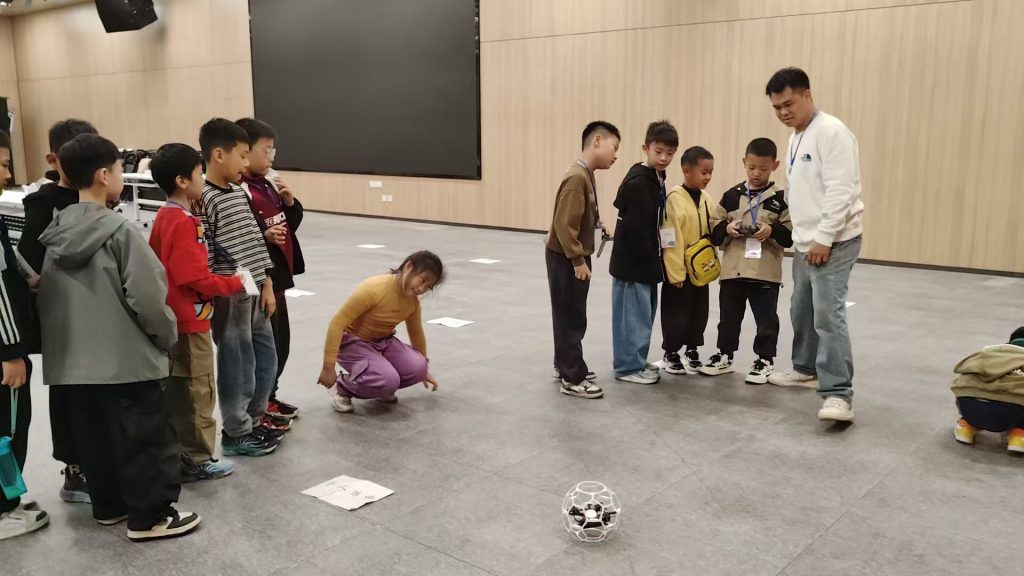
The tiered curriculum structure can be visualized as follows:
| Tier | Target Trainee | Core Content | Certification Goal |
|---|---|---|---|
| Tier 1: Foundation & Compliance | All field personnel | Basic UAV awareness, aviation regulations (e.g., ICAO Annex 2, local CAA rules), airspace classification, basic safety protocols, ethics of surveillance. | Regulatory Awareness Certificate |
| Tier 2: Certified Operator | Designated drone pilots | Advanced flight theory, manual piloting skills, basic photography/videography, maintenance, passing official aviation authority pilot license exam. | National Aviation Authority Remote Pilot License (RPL) |
| Tier 3: Tactical Specialist | Elite pilots for complex missions | Mission-specific sensor operation (multispectral, LiDAR, thermal), tactical flight planning, data processing software (Pix4D, DroneDeploy), incident command system integration. | Internal Agency Tactical Operator Certification |
| Tier 4: Instructor & Mission Commander | Senior tactical specialists | Instructional techniques, advanced mission simulation design, legal briefing preparation, cross-agency coordination, budget and technology lifecycle management. | Internal Agency Instructor & Commander Certification |
Pillar 2: Immersive Practical Training & Simulation
Theoretical knowledge must be cemented through relentless practice in realistic conditions. We advocate for the establishment of dedicated drone training facilities that replicate challenging operational environments. These facilities should include:
- Urban Canyon Simulator: A GPS-jammed environment with obstacle courses simulating buildings, wires, and moving objects to train for tracking and inspection in dense settings.
- Rural/Topographic Range: A large, outdoor area with varied terrain (hills, forests, water bodies) for training in long-range BVLOS operations, search patterns, and concealment detection.
- Night Operations Zone: A controlled dark environment for mastering thermal imaging, infrared spotting, and low-light navigation.
Furthermore, training must heavily utilize high-fidelity software simulators before live flights. These simulators allow for risk-free practice of emergency procedures (e.g., motor failure, signal loss) in virtual replicas of actual operational districts. The success rate of a live mission \( S_{live} \) can be seen as dependent on the number of simulated repetitions \( n_{sim} \) of that mission profile:
$$ S_{live} = 1 – e^{-k \cdot n_{sim}} $$
where \( k \) is a learning constant specific to the individual and mission complexity. This asymptotic model emphasizes that increasing quality simulated practice \( n_{sim} \) dramatically increases the probability of live mission success, approaching certainty.
Pillar 3: Legal-Tactical Fusion in Training
Every aspect of drone training must be infused with legal consciousness. Pilots are not just operators; they are evidence collection officers in the air. A dedicated legal module must cover:
- Admissibility of Aerial Evidence: Chain of custody for digital files, metadata integrity, proper documentation of flight logs, and compliance with evidence rules.
- Privacy Law Navigation: Understanding and operating within the bounds of surveillance and data protection laws (e.g., GDPR implications for capturing incidental personal data).
- Use-of-Policy Framework: Clear rules of engagement for drones: when to pursue, when to retreat, how to respond to interference, and reporting protocols for incidents.
Training exercises must include “legal injects” where trainees must justify their flight plan and data handling procedures to a mock prosecutor or judge, ensuring their actions will withstand judicial scrutiny.
Pillar 4: Continuous Evaluation & Ecosystem Development
Assessment cannot be a single final flight test. We propose a Continuous Competency Assessment (CCA) model:
| Assessment Type | Frequency | Method | Metrics |
|---|---|---|---|
| Proficiency Flight Check | Bi-annual | Standardized maneuver course under varying conditions (wind, obstacles). | Precision (cm deviation from target), time to complete, number of errors/waivers. |
| Tactical Scenario Evaluation | Annual or post-major-upgrade | Full mission simulation (e.g., “respond to a tip about a hidden warehouse”). | Intelligence gathered, evidence quality, adherence to legal & safety protocols, communication effectiveness. |
| Data Processing Skills Audit | Annual | Tasked to process a raw data set (images, logs) into a specific intelligence product (map, report, target list). | Product accuracy, turnaround time, analytical depth. |
| Peer & Supervisor Review | Quarterly | 360-degree feedback on teamwork, situational awareness, and decision-making in actual or simulated operations. | Subjective ratings on key behavioral competencies. |
Finally, to break down silos, we must foster an ecosystem. This involves creating a community of practice for drone operators across different enforcement units, standardizing data formats for shared situational awareness, and conducting periodic joint drone training exercises with allied agencies. The overall system effectiveness \( E_{system} \) of a cross-agency drone network can be modeled as:
$$ E_{system} = \alpha \cdot \sum E_{agency} + \beta \cdot C + \gamma \cdot I_{std} $$
where \( \sum E_{agency} \) is the sum of individual agency capabilities, \( C \) is the quality of cross-agency communication and joint drone training, \( I_{std} \) is the level of data/protocol interoperability, and \( \alpha, \beta, \gamma \) are weighting coefficients where \( \beta \) and \( \gamma \) are critical for achieving synergy (\( E_{system} > \sum E_{agency} \)).
In conclusion, the integration of drones into our enforcement apparatus is a strategic imperative. Its success, however, is intrinsically tied to the quality, depth, and innovation of our drone training programs. By moving beyond basic pilot certification to a holistic model that embraces mission-centric curriculum design, immersive simulation, legal-tactical fusion, and continuous ecosystem development, we can cultivate a new generation of enforcement professionals. These specialists will not only fly drones but will wield them as intelligent instruments of law, enhancing our reach, precision, and legitimacy. The future of effective, efficient, and smart enforcement is airborne, and it is our responsibility to ensure our personnel are expertly trained to command that frontier.