
In recent years, the rapid advancement of high-tech agricultural technologies has positioned drone bio-intelligent systems at the forefront of modern farming. As a researcher in this field, I have witnessed how these technologies, which integrate biology and artificial intelligence, are revolutionizing agriculture by enhancing precision, efficiency, and sustainability. This article explores the application and promotion of drone bio-intelligent technology, drawing from practical experiences in arid regions similar to the Hexi Corridor in China, where climate conditions favor seed cultivation and crop growth. My analysis focuses on the advantages, challenges, technical pathways, and innovative directions, with an emphasis on the critical role of drone training in widespread adoption. Through this first-person perspective, I aim to provide a comprehensive overview that leverages tables and formulas to summarize key insights, ultimately advocating for strategies that drive agricultural high-quality development.
Drone bio-intelligent technology refers to the fusion of unmanned aerial vehicles (UAVs) with biological principles and AI algorithms to simulate neural reasoning and perceptual capabilities. By employing ground remote control or navigation flight control systems, these drones achieve efficient and intelligent operations such as spraying, data processing, and decision-making in agriculture. The evolution from simple “plant protection drones” to broader “agricultural drones” reflects a global trend toward diversifying solutions for farming needs. In my research, I have observed that this technology hinges on key components: sensors for data acquisition, AI models for analysis, and automated flight systems for execution. The core innovation lies in mimicking biological systems—for instance, using swarm intelligence algorithms for coordinated drone fleets, which can be modeled as: $$ \text{Swarm Efficiency} = \sum_{i=1}^{n} \left( \frac{\text{Area Covered}_i}{\text{Time}_i} \right) \times \text{Coordination Factor} $$ where \( n \) represents the number of drones, and the Coordination Factor accounts for AI-driven synchronization. This bio-inspired approach enables drones to adapt dynamically to crop environments, much like how organisms respond to stimuli.
The application of drone bio-intelligent technology in arid regions presents unique opportunities and hurdles. Based on my fieldwork in areas with climates characterized by low precipitation, high evaporation, and ample sunshine—factors ideal for seed breeding—I have analyzed how drones optimize agricultural practices. Below, a table summarizes the key environmental factors and their impact on drone utilization:
| Environmental Factor | Description | Influence on Drone Application |
|---|---|---|
| Annual Precipitation | Less than 100 mm | Enhances need for water-efficient spraying; drones reduce water usage by up to 98% compared to manual methods. |
| Sunshine Duration | Over 3000 hours per year | Provides optimal conditions for drone operations, but requires thermal management systems to prevent overheating. |
| Temperature Variation | Large diurnal fluctuations | Affects battery performance and pesticide efficacy; drones must integrate temperature-adjusted AI models. |
| Wind Patterns | Frequent and variable | Demands advanced stabilization algorithms; can be modeled as: $$ \text{Stability Index} = \frac{\text{Nominal Flight Time}}{\text{Wind Disturbance}} $$ |
From my observations, the advantages of drone bio-intelligent technology are profound. Firstly, operational efficiency is significantly higher than traditional methods. For example, drones can cover areas dozens of times faster than manual sprayers, with farmers reporting savings in time, labor, water, and pesticides. This efficiency can be quantified using a formula for comparative analysis: $$ \text{Efficiency Ratio} = \frac{\text{Drone Coverage Rate (ha/h)}}{\text{Manual Coverage Rate (ha/h)}} $$ where typical values exceed 50:1 in open fields. Secondly, adaptability to diverse terrains—whether flatlands or undulating landscapes—allows drones to operate where human access is limited, reducing physical strain and increasing safety. However, I have also noted disadvantages, primarily the high initial costs of drone procurement and maintenance. Issues such as crashes (“crash incidents”) or technical failures lead to substantial upkeep expenses, which can deter small-scale farmers. A cost-benefit analysis reveals: $$ \text{Net Benefit} = \sum \left( \text{Savings from Reduced Inputs} – \text{Drone Costs} \right) $$ where inputs include water, pesticides, and labor.
Technical challenges in deploying drone bio-intelligent technology are multifaceted and require innovative solutions. In my research, I have identified several critical hurdles, as outlined in the table below:
| Technical Challenge | Description | Potential Solutions |
|---|---|---|
| High-Precision Navigation | Accurate positioning for automated farming tasks in GPS-limited areas. | Integration of RTK-GPS and inertial measurement units (IMUs); algorithm: $$ \text{Position Error} = \sqrt{(\Delta x)^2 + (\Delta y)^2} $$ |
| Customization for Crops | Tailoring drone parameters to specific crop types and growth stages. | AI-driven adaptive systems; use of spectral sensors to adjust spraying patterns. |
| Image Recognition | Rapid identification of pests, diseases, and crop health from aerial imagery. | Deep learning models (e.g., CNNs); accuracy metric: $$ \text{Accuracy} = \frac{\text{Correct Identifications}}{\text{Total Samples}} $$ |
| Battery Life | Limited flight duration restricts operational scope in large farms. | Development of high-energy-density batteries; optimization via: $$ \text{Flight Time} = \frac{\text{Battery Capacity}}{\text{Power Consumption}} $$ |
| Data Security | Protecting sensitive agricultural data from cyber threats. | Encryption protocols and secure cloud platforms; risk assessment formulas. |
Addressing these challenges necessitates a robust technical pathway. In my work, I have devised a step-by-step approach: first, establishing a drone application platform with multi-sensor integration (e.g., multispectral cameras, LiDAR); second, processing data through computer vision and machine learning techniques to extract actionable insights; third, building predictive models such as random forests or neural networks for decision support; and fourth, iteratively refining systems based on field feedback. Innovation directions include enhancing sensor diversity for richer farmland data, leveraging AI for real-time analytics, constructing intelligent decision-support systems that incorporate agronomic knowledge, and expanding applications to areas like environmental monitoring. A key innovation is the use of federated learning for privacy-preserving data analysis, expressed as: $$ \text{Global Model} = \arg\min_{\theta} \sum_{i=1}^{N} \frac{n_i}{n} F_i(\theta) $$ where \( F_i \) represents local loss functions from individual drones.
The promotion of drone bio-intelligent technology hinges on strategic measures, with drone training being a cornerstone. From my engagement with agricultural communities, I emphasize that effective training programs are essential for safe and efficient drone operations. Policies play a pivotal role—governments can incentivize adoption through subsidies, tax reductions, and streamlined regulations. For instance, offering financial support for drone purchases or including drone services in agricultural subsidy schemes lowers entry barriers. Standardization is equally crucial; establishing clear industry standards for flight operations, maintenance, and pesticide application ensures consistency and safety. I advocate for developing专用 pesticide protocols that align with drone spraying technologies, as improper use can reduce efficacy. Moreover, controlling costs through research into durable components and shared economy models (e.g., drone leasing) makes the technology more accessible.
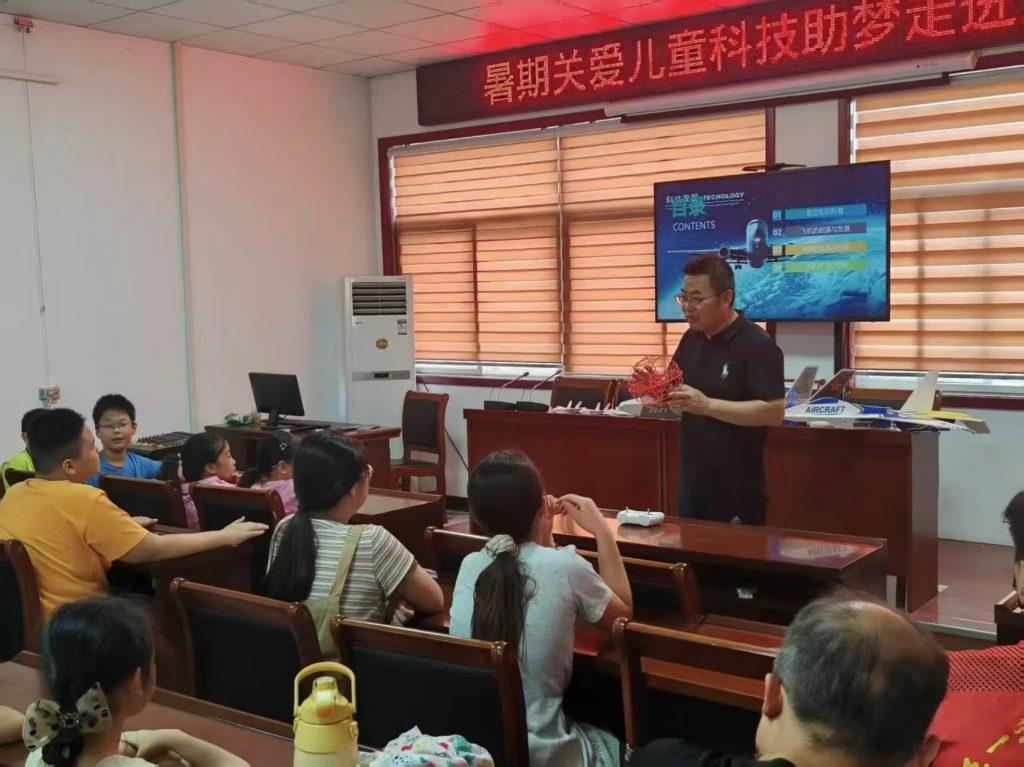
Drone training must be comprehensive and accessible to build a skilled operator base. In my view, training should cover legal regulations, flight skills, maintenance, and crop-specific knowledge. Implementing certification programs ensures that only qualified individuals conduct field operations, mitigating risks. The integration of drone training into sales packages—where buyers receive bundled courses—has proven effective in enhancing user competency. Furthermore, professional agricultural service companies can amplify推广 by offering training alongside drone rentals, creating a sustainable ecosystem. To illustrate the importance of training, consider the following formula for operational success: $$ \text{Success Rate} = \text{Technical Proficiency} \times \text{Regulatory Compliance} $$ where both factors are bolstered by structured drone training. The image below highlights a practical training scenario, underscoring the hands-on approach needed for mastery.
Innovative service models further drive technology adoption. In my research, I have explored商业模式 such as customization, leasing, and digital platforms. Customized drone production tailors solutions to local crop needs, while leasing options reduce upfront costs for farmers. Service tracking via IoT and big data enables real-time support, minimizing downtime. Online platforms facilitate knowledge sharing and remote monitoring, connecting farmers with experts. For example, a drone service efficiency model can be expressed as: $$ \text{Service Efficiency} = \frac{\text{Number of Successful Missions}}{\text{Total Missions}} \times 100\% $$ which improves with robust training and support networks. Emphasizing drone training in these models—through continuous education and certification updates—ensures long-term viability. Additionally, public-private partnerships can accelerate推广 by combining resources for training centers and demonstration projects.
Looking ahead, the convergence of drone bio-intelligent technology with AI and big data promises transformative impacts. From my perspective, future advancements will focus on enhancing autonomy, such as fully automated fleets that communicate via 5G networks, and improving sustainability through reduced chemical usage. The role of drone training will become even more critical as systems grow complex, requiring operators to master新 skills in data analysis and system maintenance. I anticipate that global collaboration will standardize practices, while localized adaptations will address regional agricultural nuances. In conclusion, by prioritizing innovation, supportive policies, and comprehensive drone training, we can unlock the full potential of this technology to foster resilient and high-yielding agricultural systems worldwide.