
The rapid evolution of the drone industry represents a significant frontier in both technological innovation and economic growth. As a strategic emerging sector, its sustainable advancement is inextricably linked to the availability of a highly skilled, technically proficient workforce. This article analyzes the alignment between industry demand for technical talent and the current state of professional drone training within vocational education systems. The core argument is that a scientifically constructed vocational education framework for drones is not merely beneficial but essential. It provides the necessary guidance for institutions to rationally establish majors, optimize curriculum structures, and effectively integrate professional skills with occupational literacy, thereby cultivating the high-quality technical talent required to fuel the industry’s future.
Industry Demand for Technical Drone Skills
The drone sector has experienced exponential growth, driven by technological advancements, expanding application markets, and supportive national policies. The industrial chain encompasses upstream design and R&D, midstream manufacturing of core systems (flight control, navigation, airframe), and downstream applications across diverse fields such as precision agriculture, aerial surveying, power inspection, logistics, and emergency response. This breadth necessitates a wide spectrum of technical roles.
Market analysis indicates a substantial and growing demand for skilled personnel. While estimates vary, projections consistently point to a significant talent shortfall. The demand for operational and technical support roles is particularly acute. The following table summarizes a projected demand scenario for drone training graduates against a backdrop of overall industry growth.
| Year | Projected Industry Demand for Skilled Personnel | Projected Graduate Output (Vocational) | Estimated Gap |
|---|---|---|---|
| 2023 | ~150,000 | ~22,000 | ~128,000 |
| 2024 | ~180,000 (Est.) | ~30,000 (Est.) | ~150,000 (Est.) |
This gap can be conceptually modeled. Let ( D_t ) represent the total industry demand for skilled drone personnel in year ( t ), ( U_g ) represent the demand from emerging new application sectors, ( I_g ) represent the demand from traditional industrial sectors scaling up operations, and ( G_t ) represent the number of qualified graduates from vocational drone training programs. The talent gap ( \Delta_t ) can be expressed as:
$$ \Delta_t = D_t – G_t = (U_g + I_g) – G_t $$
where ( \Delta_t ) remains persistently positive, indicating a systemic undersupply.
Core technical skill positions identified by the industry include:
- Drone Operation & Application Specialists: Piloting for specific missions (e.g., spraying, mapping, inspection).
- Drone Assembly & Debugging Technicians: Building, configuring, and testing drone systems.
- Drone Inspection & Maintenance Technicians: Diagnosing faults, performing repairs, and maintaining systems.
- Ground Control Station Operators: Planning missions, monitoring flights, and processing data.
The competency requirements for these roles are multifaceted. Beyond core operational or mechanical skills, modern drone training must address the integration of new technologies. For instance, expertise in data processing from sensors, basic understanding of AI for automated flight analytics, and familiarity with IoT for fleet management are becoming increasingly valuable. The table below outlines the evolving competency matrix.
| Job Position | Core Technical Tasks | Evolving Skill Requirements |
|---|---|---|
| Operation & Application | Mission planning, safe flight operation, payload management. | Data analysis (GIS, photogrammetry), understanding of automated mission parameters, sector-specific knowledge (agronomy, electrical grids). |
| Assembly & Debugging | Mechanical assembly, electronic system integration, functional testing. | Ability to work with composite materials, proficiency with advanced diagnostic software, understanding of modular system architecture. |
| Inspection & Maintenance | Fault diagnosis, component repair/replacement, system calibration. | Knowledge of battery management systems (BMS), ability to interpret system logs, skills in preventative maintenance scheduling. |
Furthermore, employers emphasize “soft” or professional competencies. The sustainability of skills in a fast-changing field requires strong capacities for lifelong learning, problem-solving, teamwork, and meticulous attention to detail—embodying a modern工匠精神 (craftsman spirit). Effective drone training programs must, therefore, fuse hard technical skills with these enduring professional attributes.
The Current State of Vocational Drone Training
In response to industry needs, vocational education systems have established dedicated programs. At the secondary vocational level, a major such as “Drone Operation and Maintenance” is common. At the tertiary (higher vocational) level, “Drone Application Technology” is the predominant program, with recent additions like “Drone Surveying Technology” reflecting application specialization.
The growth in program establishment has been rapid. From a handful of institutions several years ago, the number of higher vocational colleges offering drone-related majors has expanded significantly, now numbering in the hundreds. Enrollment figures have followed a similar upward trajectory, indicating strong student interest aligned with perceived job market opportunities.
However, the geographical distribution of these training programs does not perfectly align with the concentration of drone industry activity. Major industry clusters exist in regions like the Pearl River Delta and Yangtze River Delta. While some provinces within these regions have many training institutions, others have relatively fewer, potentially creating localized talent supply bottlenecks. This mismatch suggests a need for more strategic regional planning in drone training capacity development.
Mismatch Analysis: Training Output vs. Industry Needs
Despite increased enrollment, a quantitative mismatch persists. The annual output of graduates from vocational drone training programs is still an order of magnitude smaller than the estimated annual demand from the industry. This fundamental gap, represented by ( \Delta_t ) in our earlier formula, underscores the need for both expanding capacity and enhancing the efficiency of talent cultivation.
More nuanced than the quantity gap is the quality and specificity mismatch. Industry feedback, synthesized from various surveys, points to several key areas of misalignment:
1. Curriculum Currency vs. Technological Pace: The pace of innovation in drone hardware, software, and applications is extremely fast. Curricula in drone training institutions can lag behind, often teaching to the technology of 2-3 years prior. There is a critical need for dynamic curriculum update mechanisms involving close industry collaboration.
2. Depth of Systems Knowledge vs. Task-Specific Skills: Some programs may focus heavily on piloting skills (the “how to fly”) without sufficient depth in understanding the underlying systems—the “why” and “how it works.” This limits graduates’ ability to troubleshoot, adapt to new platforms, or progress into technical support and debugging roles. The ideal skills profile, ( S_{ideal} ), balances operational proficiency ( O_p ) with systems knowledge ( K_s ) and adaptive problem-solving ability ( A_{ps} ):
$$ S_{ideal} = \alpha O_p + \beta K_s + \gamma A_{ps} $$
where ( \alpha, \beta, \gamma ) are weighting coefficients reflecting industry priorities, with ( \beta ) and ( \gamma ) increasingly valued.
3. Professional Literacy Gaps: As noted, employers highly value resilience, responsibility, and precision. Traditional drone training may not explicitly or effectively cultivate these attributes. Instances of high turnover among new graduates are sometimes attributed not to technical inability, but to mismatched expectations regarding fieldwork demands and the need for persistent, detail-oriented work.
The following table summarizes the alignment assessment based on typical employer satisfaction surveys (on a 1-5 scale):
| Assessment Dimension | Average Satisfaction Score | Key Issue Identified |
|---|---|---|
| Overall Satisfaction | 4.1 | Generally positive, but with clear areas for improvement. |
| Specialized Knowledge Alignment | 3.2 | Knowledge structure can be outdated or too theoretical. |
| Practical Skill Alignment | 3.5 | Hands-on skills adequate for entry-level but lack depth for complex tasks. |
| Professional Competency Alignment | 4.0 | Sustainability, teamwork, and learning agility are appreciated. |
| Work Ethic & Attitude | 3.5 | Concerns regarding adaptability to field conditions and meticulousness. |
Guidelines for Optimizing Drone Training Systems
To bridge the identified gaps, a multi-stakeholder approach is required, focusing on strategic planning, curricular innovation, and deepened collaboration.
1. Strategic Planning and Policy Coordination:
Educational authorities should guide the development of drone training programs with a keen eye on regional industrial maps. The goal is to achieve a better geographical match between talent supply and demand. In mature industry clusters, training capacity should be reinforced and diversified. Furthermore, the professional ecosystem itself requires clearer, standardized regulations and competency certifications, which in turn provide a stable framework for curriculum design.
2. Curriculum Reform and Specialization:
The monolithic “drone application technology” major may be insufficient. A future-oriented drone training framework should consider a cluster of related specializations:
- Drone Systems Technology: Focusing on assembly, integration, debugging, and maintenance.
- Drone Data Application: Focusing on mission planning, sensor data acquisition, processing, and analysis for surveying, inspection, etc.
- Drone Operations & Safety Management: Focusing on advanced piloting, fleet operations, airspace risk assessment, and regulatory compliance.
This allows for deeper, more targeted skill development. The curriculum must be modular and agile, with input from industry partners to integrate new tools, software, and safety protocols regularly.
3. Enhancing Practical, Industry-Integrated Training:
The core of effective drone training lies in experiential learning. This goes beyond basic flight practice. It should include:
- Hands-on projects involving full assembly, configuration, and testing of drone systems.
- Real-world simulation projects using current industry software for mission planning and data analysis.
- Mandatory, substantive internships or modern apprenticeship models within partner companies.
- Incorporation of故障诊断 (fault diagnosis) scenarios and maintenance logs into practical coursework.
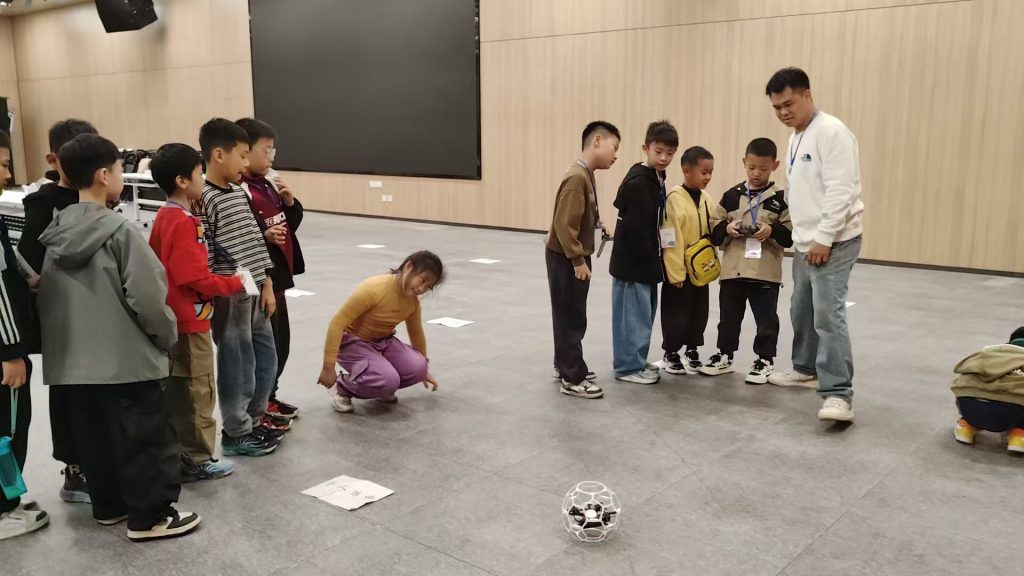
The integration of the provided image link highlights the practical, hands-on nature of effective training, which must be a central component of any program.
4. Cultivating “Dual-Qualified” Instructors and Professional Literacy:
The quality of drone training is directly tied to instructor capability. A systematic effort is needed to develop “dual-qualified” instructors who possess both formal pedagogical skills and up-to-date, practical industry experience. This can be achieved through secondments to companies, industry certification programs for teachers, and hiring professionals as part-time instructors. Simultaneously, professional literacy—encompassing safety culture, ethical operation, meticulousness, and teamwork—must be woven into the fabric of the entire training program, not treated as an add-on module.
Conclusion and Future Outlook
The drone industry’s trajectory is one of continued expansion and sophistication. The demand for skilled technical personnel is structural and growing. While vocational drone training has made significant strides in establishing programs and attracting students, critical mismatches in scale, specialization, and skill depth remain. Addressing these gaps requires a concerted shift from merely training operators to educating adaptable technologists. This involves strategic regional planning of training capacity, the development of specialized, agile curricula co-created with industry, a paramount focus on high-quality practical and experiential learning, and the holistic cultivation of both technical mastery and professional character. By implementing such a comprehensive approach, vocational drone training can truly fulfill its role as the indispensable foundation for a robust, innovative, and sustainable drone industry, powering its applications from the field to the sky.