
As drone technology continues to advance and its applications expand, drone-based power line inspection has become an indispensable component of the power industry. The flight operations for such inspections demand high technical proficiency, necessitating that pilots possess corresponding professional素养 and skills. In my extensive observation and involvement within this field, I have identified significant challenges in the current drone operation market, including恶性竞争 and unlicensed flights, which have led to frequent accidents posing serious threats to public safety. To guide and standardize the healthy development of this emerging profession, it is imperative to establish a vocational training system aligned with industry needs,完善相关行业标准和规范, and attract更多优秀的人才 to propel the high-quality development of the power sector. This article delves into a comprehensive framework for drone training tailored specifically for power grid inspection, emphasizing systematic approaches, practical strategies, and innovative methodologies.
The demand for qualified drone pilots for power inspection, hereafter referred to as “pilots,” is growing annually, yet the current domestic supply falls far short of power enterprises’ requirements. Our analysis reveals three primary constraints on pilot career development: talent shortage, the proliferation of diverse drone models, and high skill requirements. The limited number of individuals choosing this career, coupled with lengthy training and certification cycles, exacerbates the shortage. Moreover, power inspection drones come in various types for applications such as visible-light photography, autonomous patrols, infrared thermometry, radar scanning, and flame-throwing for obstacle clearance, each requiring specific operational knowledge. This diversity increases the专业难度 of learning. Furthermore, the inherent risks in drone power inspection work demand exceptional飞行技能 and rich practical experience to ensure both the quality and safety of inspections.
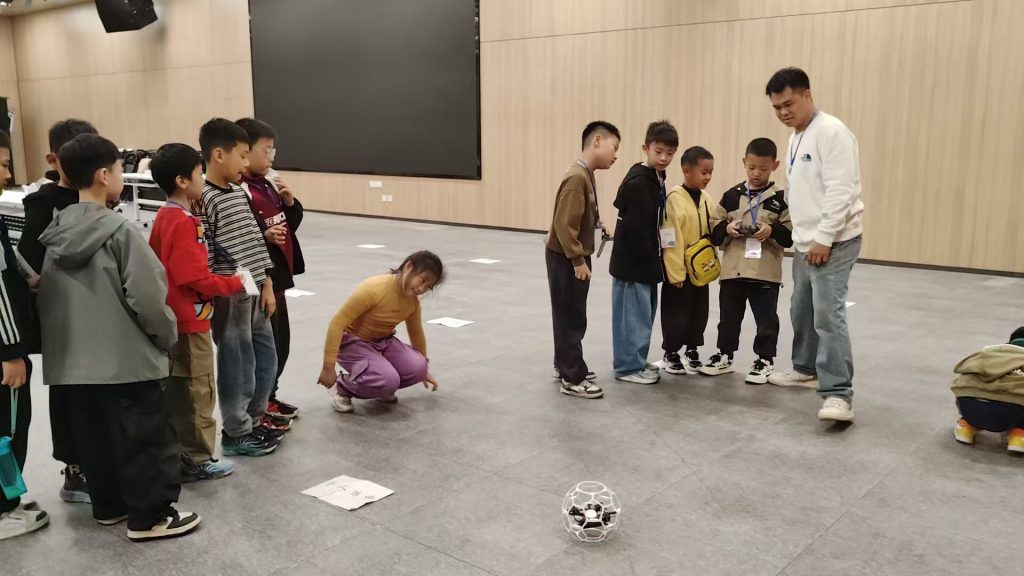
To meet the need for high-caliber drone pilots in power inspection, an immediate establishment of a complete drone training system is essential. This system must ensure that pilots receive systematic and professional培养. The foundation lies in robust制度建设. A scientific, standardized, and完善的培养制度 should encompass talent selection, instructor teams, venue construction, resource allocation, and assessment evaluation, guaranteeing the effectiveness of the drone training program. For instance, talent selection criteria can be formalized using a weighted scoring model:
$$ S_{selection} = \alpha \cdot K_{theoretical} + \beta \cdot K_{practical} + \gamma \cdot K_{psychological} $$
where $S_{selection}$ is the overall selection score, $K_{theoretical}$ represents theoretical knowledge assessment, $K_{practical}$ denotes basic hands-on aptitude, $K_{psychological}$ stands for psychological and stress tolerance evaluation, and $\alpha$, $\beta$, $\gamma$ are weighting coefficients summing to 1, typically with $\beta > \alpha > \gamma$ to emphasize practical aptitude in drone training.
| System Component | Key Elements | Implementation Metrics |
|---|---|---|
| Talent Selection | Criteria based on aptitude tests, background checks, initial技能 assessment | Pre-qualification score threshold $S_{min}$ = 70/100 |
| Instructor Team Building | Collaboration with industry associations, educational institutions, power enterprises | Minimum 5 years field experience per instructor; instructor-to-trainee ratio ≤ 1:10 |
| Training Venue Construction | Safe, scientific, practical sites; low noise, stable wind, open视野, no interference | Venue area ≥ 10,000 m²; equipped with消防设施 and急救设施 |
| Resource Allocation | Drones, controllers, simulators, computers, software suites | Drone-to-trainee ratio ≥ 1:3; simulator stations ≥ 5 |
| Training Mechanism | Structured plans for theory, practice, continuous education | Annual curriculum update cycle; ≥ 40 hours of refresher drone training yearly |
| Assessment & Evaluation | Multi-dimensional evaluation of knowledge, skills,心理素质, teamwork, safety | Comprehensive final score $F$ calculated as per Equation (2) below |
师资建设 is another critical pillar. By uniting industry associations, educational bodies, and power companies, we can cultivate a coaching team with rich practical experience and technical guidance capabilities. This team is vital for delivering effective drone training. Similarly,场地建设 must adhere to principles of safety, science, and practicality, selecting locations with minimal noise, stable wind conditions,开阔视野, no electromagnetic interference, and远离群众活动, while equipping them with necessary safety设施.资源配置 should align with training demands, ensuring quality and quantity of教学设施 like drones, controllers, simulators, and software to enhance the drone training outcomes.
The培训机制 requires a scientific and feasible framework. Developing detailed training plans for theoretical courses and practical sessions, each with clear objectives and evaluation standards, is paramount. Optimizing training content to focus on practical skills in飞行控制技术, flight safety, and power inspection, alongside定期进行持续教育 to更新知识和技能, forms the core of effective drone training. For curriculum design, we can model the skill progression over time $t$ (in weeks) using a learning curve:
$$ C(t) = A \cdot (1 – e^{-k t}) + B $$
where $C(t)$ is the competency level (0 to 100), $A$ is the maximum achievable skill gain from drone training, $k$ is the learning rate constant, and $B$ is the initial skill level. This illustrates how structured drone training accelerates proficiency.
考核评价 necessitates a scientific system for multi-faceted assessment. Evaluating pilots on knowledge mastery, practical experience accumulation,心理素质和应变能力, teamwork, communication, safety awareness, and飞行规范性 ensures they possess comprehensive capabilities to handle real-world emergencies. A holistic evaluation formula can be applied:
$$ F = w_1 \cdot E_{theory} + w_2 \cdot E_{sim} + w_3 \cdot E_{field} + w_4 \cdot E_{safety} + w_5 \cdot E_{team} $$
Here, $F$ is the final assessment score (pass if $F \geq 80$), $E_{theory}$ is theoretical exam score, $E_{sim}$ is模拟训练 performance, $E_{field}$ is场地飞行训练 evaluation, $E_{safety}$ is safety protocol adherence score, $E_{team}$ is teamwork assessment, and $w_i$ are weights such that $\sum w_i = 1$, typically with $w_3$ and $w_4$ highest to emphasize practical and safety aspects of drone training.
Delving into specific无人机电力巡检飞行员培训策略, the first cornerstone is理论学习. Mastering drone flight theory is key to understanding principles, applications, and safety management. This encompasses无人机基本原理, power facility knowledge, power inspection techniques, image analysis, and data processing. Pilots must become thoroughly familiar with drone components like engines, batteries, flight control systems, and sensors. Knowledge of aerodynamics and航空导航 is essential as drones are affected by forces like airflow and气压 during operation. Moreover, compliance with legal regulations, including licensing and airspace restrictions, is a critical part of the drone training curriculum. A sample module breakdown for theoretical drone training is:
| Theory Module | Key Topics | Hours | Learning Objectives |
|---|---|---|---|
| Drone Fundamentals | Components, aerodynamics, propulsion systems | 15 | Explain drone operational principles and limitations |
| Power Systems | Grid infrastructure, equipment types, common faults | 10 | Identify key inspection points on power lines and towers |
| Regulations & Safety | Airspace laws, permits, risk assessment protocols | 12 | Apply legal requirements to plan safe inspection missions |
| Data Processing | Image analysis, thermal data interpretation, reporting | 8 | Analyze inspection data to detect anomalies and generate reports |
模拟训练 is an effective method to cultivate core飞行技能. It fosters精准操控,快速响应,空中应变, and紧急处理 abilities. Using virtual scenarios and simulator software, pilots can反复训练 in diverse situations such as wind variations, signal interference,恶劣天气, obstacles, and跨越物. This drone training approach helps develop environmental sensitivity and perceptual skills, like mastering altitude, distance,飞行姿态调节, and姿态切换, thereby enhancing hazard prevention. The effectiveness of simulator-based drone training can be quantified by the reduction in real-flight error rates:
$$ \Delta E = E_0 – E_s = E_0 \cdot (1 – e^{-N_s / \tau}) $$
where $\Delta E$ is the error reduction, $E_0$ is the initial error rate without simulator drone training, $E_s$ is the error rate after training, $N_s$ is the number of simulator sessions, and $\tau$ is a decay constant specific to the training program. This underscores the value of simulated drone training in skill consolidation.
场地飞行训练, conducted with actual equipment in designated areas, is indispensable for consolidating and elevating pilot skills. It helps pilots better adapt to complex environments and master无人机飞行技术 more proficiently. Part of this drone training involves日常维护 knowledge—cleaning, charging, debugging—and diagnosing common faults. By setting up scenarios that mimic real inspection tasks with varying difficulties, pilots gradually enhance their娴熟程度. In inspection contexts, they practice操控,巡检技巧, and环境感知能力, thereby improving应对复杂情景的能力 through continuous实践. A progressive field training schedule for drone training might look like:
| Training Phase | Focus Skills | Duration (hours) | Success Criteria |
|---|---|---|---|
| Basic Maneuvers | Take-off, landing, hovering, basic navigation | 20 | Complete 10 consecutive perfect maneuvers without assistance |
| Inspection Patterns | Grid飞行, linear tracking, close-up imaging of mock towers | 30 | Capture clear images of specified targets with 95% accuracy |
| Adverse Conditions | Operation in moderate wind (10-15 knots), low-light scenarios | 25 | Maintain stable flight and complete 80% of inspection tasks |
| Emergency Drills | Motor failure模拟, signal loss recovery, obstacle avoidance | 15 | Execute safe emergency landing or recovery procedure within 60 seconds |
竞技训练 offers a platform to boost technical levels and confidence. Through competitions, pilots experience different venues and rules, strengthening their drone掌控能力, while learning from peers broadens perspectives and fosters industry进步.科学规划训练内容, providing appropriate赛场环境, strengthening团队建设, and iterative总结和调整 are crucial. Gradually increasing difficulty helps pilots enhance their竞赛能力和巡检水平. This form of drone training also emphasizes teamwork—领导力,沟通,决策,协调—promoting more默契和高效 collaboration, which is vital for coordinated power inspection missions. The performance improvement from competitive drone training can be modeled as:
$$ P_{comp} = P_{base} + \delta \cdot \log(1 + N_{comp}) $$
where $P_{comp}$ is post-competition performance score, $P_{base}$ is baseline performance, $\delta$ is a improvement factor from drone training, and $N_{comp}$ is the number of competitions participated in. This logarithmic relation shows diminishing returns but sustained gains from competitive drone training.
创新实践应用 is essential for cultivating excellent drone pilots. Beyond traditional methods, innovative drone training modes like online courses, VR, and AR should be adopted. Immersive virtual reality simulation can enable training in基础飞行操控,巡检作业路径规划,安全距离保持,电力设备成像,缺陷查找, and突发故障处置, covering virtual transmission line inspection, fault diagnosis, and exclusion. Such drone training overcomes limitations of physical场地,设施,环境, addressing the high cost, low efficiency, and limited access of real-drone training. For instance, VR-based drone training can simulate complex scenarios at a fraction of the cost, with effectiveness given by:
$$ C_{VR} = \frac{C_{real}}{N_{reps}} \cdot \eta $$
Here, $C_{VR}$ is the cost per effective training repetition in VR drone training, $C_{real}$ is the cost per real-drone training session, $N_{reps}$ is the number of repetitions achievable in VR per real session (typically $N_{reps} > 5$), and $\eta$ is an efficacy factor (0 < η ≤ 1) accounting for realism. This highlights the economic advantage of innovative drone training.
Furthermore, sustained development in drone inspection necessitates rapid设备升级和创新实践. Establishing industry-academia-research collaboration platforms attracts优秀团队和技术, fostering回馈社会 and broader application coverage. This ecosystem approach reinforces the无人机电力巡检飞行员培养 as a systematic, scientific, and long-term endeavor. Through a well-established drone training system, we can cultivate cohorts of excellent drone pilots, ensure良性发展 of the workforce, and provide robust人才支撑 for the application and promotion of drone power inspection. The overall impact of a comprehensive drone training program on inspection efficiency can be summarized as:
$$ \eta_{inspection} = \frac{N_{defects\_found}}{N_{defects\_total}} = f(T_{theory}, T_{sim}, T_{field}, E_{experience}) $$
where $\eta_{inspection}$ is the inspection efficiency (defect detection rate), and it is a function of theory training hours $T_{theory}$, simulation training hours $T_{sim}$, field training hours $T_{field}$, and overall experience factor $E_{experience}$ gained through continuous drone training. Maximizing this efficiency is the ultimate goal of our drone training framework.
In conclusion, the development of a robust drone training ecosystem for power line inspection is paramount for ensuring grid security and stability. By integrating systematic制度建设, practical培训策略, and innovative technologies, we can address current shortages and skill gaps. This holistic approach to drone training not only enhances individual pilot competencies but also advances the entire power industry towards safer, more efficient, and sustainable operations. The continuous evolution of drone training methodologies will remain a cornerstone in supporting the expanding role of drones in critical infrastructure maintenance.