
The rapid evolution of Unmanned Aerial Vehicles (UAVs), or drones, represents a transformative force in the modern technological landscape. Initially conceived for military purposes, drones have proliferated into civilian and commercial domains, driven by breakthroughs in navigation, communication, sensor technology, and artificial intelligence. This expansion has catalyzed the growth of the low-altitude economy, encompassing activities from aerial logistics and precision agriculture to infrastructure inspection and emergency response. However, this rapid adoption brings forth significant regulatory challenges. Incidents of unsafe operations, airspace incursions, and privacy violations underscore the urgent need for a robust, comprehensive, and forward-looking safety regulatory framework. This paper explores the current state of drone safety governance, analyzes persistent challenges, and proposes a holistic system of countermeasures. A central thesis is that effective regulation must be systemic, integrating rigorous legal structures, advanced technological oversight, and, fundamentally, a widespread culture of safety ingrained through mandatory and comprehensive drone training.
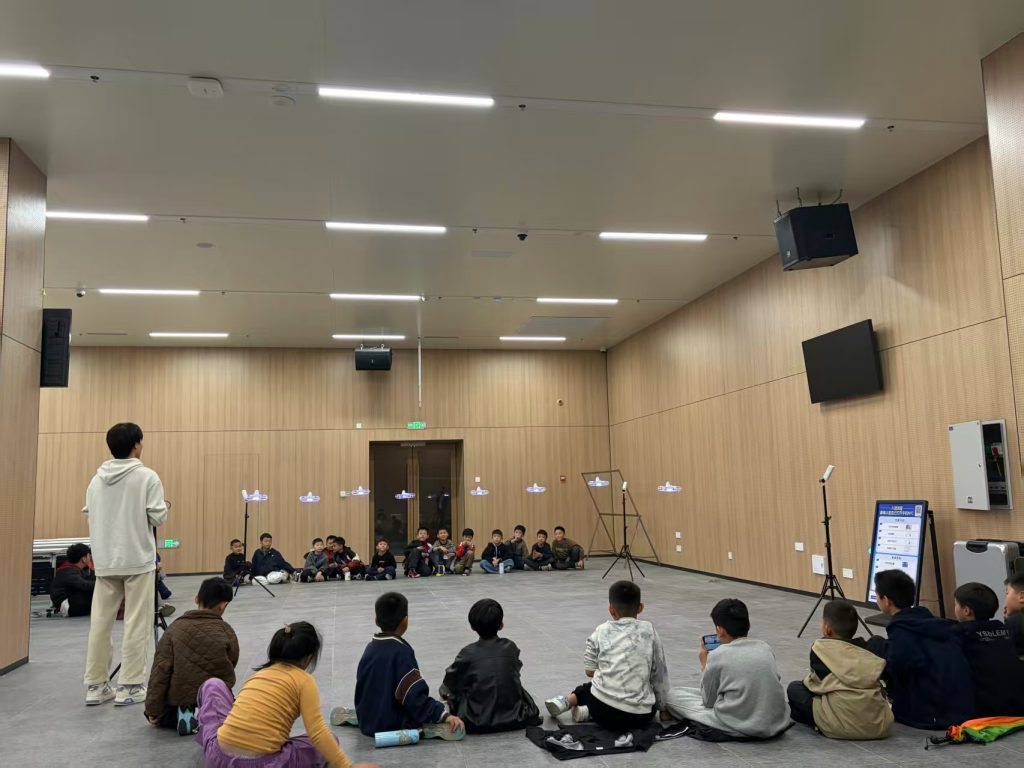
Current Applications and Regulatory Landscape of Drones
The utility of drones spans numerous sectors, each presenting unique operational profiles and risk factors. Understanding this breadth is essential for crafting nuanced regulations.
| Sector | Primary Applications | Typical Risk Profile |
|---|---|---|
| Aerial Filming & Inspection | Cinematography, infrastructure monitoring, real estate. | Proximity to structures/people, varied environments. |
| Precision Agriculture | Crop spraying, health monitoring, field mapping. | Chemical handling, low-altitude flights over large areas. |
| Logistics & Delivery | Package delivery, medical supply transport. | Beyond Visual Line of Sight (BVLOS) operations, urban integration. |
| Public Safety & Emergency Response | Search and rescue, disaster assessment, fire monitoring. | Operations in hazardous, dynamic conditions, often with priority airspace. |
| Surveying & Mapping | Topographic surveys, 3D modeling, construction site monitoring. | Systematic flight patterns, data security, geospatial accuracy. |
In response to this expanding ecosystem, regulatory frameworks have begun to coalesce. The cornerstone is often a hierarchical structure of laws and administrative rules that address different lifecycle stages of a drone: design and production standards, mandatory registration and identification, flight operation rules (including visual line-of-sight requirements and altitude ceilings), and the designation of no-fly zones (e.g., around airports, critical infrastructure). Regulatory authority is typically distributed among several agencies: a civil aviation authority oversees flight operations and airworthiness; a telecommunications regulator manages radio frequency spectrum allocation to prevent interference; and law enforcement agencies address illicit activities. Technologically, surveillance systems combining radar, radio frequency (RF) scanners, and acoustic sensors are being deployed to detect unauthorized drones, while geofencing software is increasingly mandated to create virtual barriers preventing drones from entering restricted airspace.
Persistent Challenges in Safety Regulation
Despite progress, the regulatory regime faces multidimensional challenges that hinder its effectiveness and scalability.
1. Regulatory Gaps and Lag: Legal frameworks often struggle to keep pace with technological innovation. Regulations may be overly broad, lacking specificity for novel operations like autonomous BVLOS flights or urban air mobility. Punitive measures for violations can be inconsistently applied or lack sufficient deterrence. A critical gap is the lack of universal, standardized drone training and certification requirements that are commensurate with the risk category of the operation.
2. Fragmented Institutional Responsibilities: Overlapping or unclear mandates between different regulatory bodies can lead to coordination failures, regulatory arbitrage, or enforcement gaps. For instance, determining whether an incident falls under aviation safety, communications law, or general public security can delay response.
3. Technical Limitations of Surveillance: The very attributes that make drones useful—small size, low-altitude flight, and high maneuverability—make them difficult to track. Consumer drones using spread-spectrum or encrypted communication protocols can evade basic RF detection. In cluttered urban environments, sensor effectiveness degrades. The formula for the probability of detection $P_d$ in such an environment can be modeled as a function of signal-to-noise ratio and clutter:
$$P_d = f\left(\frac{S}{N + C}\right)$$
where $S$ is the drone signal, $N$ is system noise, and $C$ represents environmental clutter. High $C$ significantly reduces $P_d$.
4. Low Public Awareness and Ad-Hoc Operations: A significant portion of safety incidents stems from casual users operating without awareness of airspace rules or operational best practices. The absence of mandatory foundational drone training for all users fosters a culture where safety is an afterthought rather than a prerequisite.
Proposing a Systemic Framework for Enhanced Safety Governance
Addressing these challenges requires a systemic, layered approach that integrates policy, technology, and human factors into a cohesive safety management system.
1. Refining the Legal and Institutional Framework
The legal foundation must evolve from general principles to a risk-based, operation-centric code. This involves:
- Categorizing Operations by Risk: Implementing a clear classification system (e.g., Open, Specific, Certified categories) with escalating regulatory requirements based on weight, speed, operational area, and proximity to people.
- Clarifying Agency Mandates: Establishing a lead agency with overarching authority while defining clear, non-overlapping support roles for spectrum management, law enforcement, and data privacy. A formal inter-agency coordination protocol is essential.
- Mandating Insurance and Liability Frameworks: Requiring third-party liability insurance for commercial and higher-risk operations to ensure financial accountability in case of accidents.
2. Constructing an Integrated Regional Oversight Platform
A centralized digital platform is crucial for situational awareness and efficient administration. This “system of systems” would integrate:
| Platform Layer | Function | Data Inputs |
|---|---|---|
| Data Fusion Core | Aggregates and correlates data from disparate sources. | RF detection, radar tracks, ADS-B signals, flight plan submissions. |
| Dynamic Airspace Management | Manages UAS Traffic Management (UTM), issues real-time alerts, and defines dynamic geofences. | Airspace status, weather data, NOTAMs, live flight data. |
| Identity & Credential Management | Validates remote ID signals and links them to registered users and their drone training certifications. | Remote ID broadcasts, operator database, certification records. |
| Analytics & Forensics | Uses AI/ML to identify anomalous flight patterns, predict conflicts, and provide post-incident analysis. | Historical flight paths, incident reports, risk models. |
The operational efficacy of such a platform can be conceptualized by its coverage efficiency $E_c$:
$$E_c = \frac{N_{detected}}{N_{total}} \times \frac{T_{response}}{T_{incident}}$$
where a high $E_c$ requires maximizing the ratio of drones detected and minimizing the response time $T_{response}$ relative to the incident duration $T_{incident}$.
3. Strengthening Technical Oversight and Countermeasure Capabilities
Technology must be leveraged both for monitoring and for ensuring compliance by design.
- Advancing Detection Technologies: Investing in multi-sensor fusion (RF, radar, electro-optical) and AI-driven pattern recognition to improve identification of non-cooperative drones in complex environments.
- Enforcing “Safety by Design”: Mandating built-in features like reliable Remote ID (a digital license plate), immutable log files, and hardware-enforced geofencing that cannot be easily disabled by users.
- Developing Graded Mitigation Responses: Deploying a range of counter-drone systems, from targeted radio frequency jamming to capture nets, with clear protocols for their authorized use to minimize collateral disruption.
- Operator Skill Validation: Technical systems should interface with drone training records. Advanced operations (e.g., BVLOS, night flights) could require electronic verification of a pilot’s specific certification before the drone’s flight control system enables those functions.
4. Instituting a Comprehensive Drone Training and Public Education Culture
This is arguably the most critical and sustainable pillar. Safety must be internalized by every stakeholder.
- Stratified and Mandatory Training Curricula: Implementing a tiered drone training system. Basic training (covering regulations, airspace, weather, and emergency procedures) would be mandatory for all users. Advanced modules would be required for commercial operations, complex environments, or specific technical skills (e.g., thermal imaging analysis).
- Standardized Testing and Certification: Developing nationally or internationally recognized knowledge and practical flight tests, with certifications that must be periodically renewed, ensuring ongoing education.
- Integration with Regulatory Platforms: Linking certification databases directly to flight authorization and oversight platforms, creating a closed loop between qualification and operational permission.
- Continuous Public Awareness Campaigns: Utilizing media, industry partnerships, and school programs to disseminate core safety messages, emphasizing that operating a drone is a privilege contingent on responsible behavior and proper drone training.
The relationship between training investment and safety outcomes can be expressed as a risk reduction function:
$$R_{new} = R_{baseline} \cdot e^{-\lambda T}$$
where $R_{new}$ is the post-training incident rate, $R_{baseline}$ is the untrained incident rate, $T$ represents the intensity/quality of drone training, and $\lambda$ is a positive constant denoting the efficacy of the training program.
Conclusion
The integration of drones into the global airspace and economy is inevitable and holds tremendous promise. However, realizing this potential responsibly is contingent upon establishing a trusted and effective safety ecosystem. This paper argues that such a system cannot rely on any single solution. It must be a synergistic integration of precise and adaptive regulations, a unified technological oversight infrastructure capable of real-time management, and, most fundamentally, a deep-rooted culture of competency and responsibility fostered through universal, high-quality drone training. The proposed framework—linking refined law, integrated platforms, advanced technology, and human capital development—aims to create a resilient environment. This environment not only mitigates current risks of collision, intrusion, and misuse but also provides the certainty and public confidence necessary for the scalable and sustainable growth of the low-altitude economy. Future research must focus on quantifying the impact of these measures, particularly the return on investment from standardized drone training, and on adapting the framework to the next generation of autonomous aerial systems.