
The evolution of Unmanned Aerial Vehicles (UAVs) has been a cornerstone of modern aerospace technology, offering distinct advantages such as reduced operational costs and shorter pilot training cycles compared to manned aircraft. This efficiency in drone training and deployment has catalyzed their widespread adoption across military and civilian domains for communication, reconnaissance, and surveillance missions. The fundamental operational distinction lies in the control paradigm: a manned aircraft pilot operates from within the cockpit, whereas a UAV operator relies entirely on a Data Link System (DLS) to transmit commands and receive data from a Ground Control Station (GCS). This link is the critical, real-time tether between the operator and the vehicle, responsible for telecommand (uplink), telemetry, and payload data (downlink) transmission. Its reliability is paramount; a persistent failure can lead to a loss of control, potentially resulting in mission abortion or catastrophic incidents. This underscores the critical need for comprehensive drone training that deeply covers link system operations and failure modes.
Data links are typically categorized by their operational range: Line-of-Sight (LOS) and Beyond-Line-of-Sight (BLOS). This analysis focuses on the LOS link system of a specific UAV type. LOS links commonly utilize distinct frequency bands for different data streams to manage spectrum and functionality. The typical allocation is summarized in the table below:
| Frequency Band | Direction | Primary Function |
|---|---|---|
| 804.5 – 845 MHz | Uplink | Remote Control (for UAV) |
| 1430 – 1446 MHz | Downlink | Mission Payload Information |
| 2408 – 2440 MHz | Downlink | Monitoring & Video |
For the core flight control and telemetry in LOS, the system employs a dual-band architecture for redundancy:
- C-Band Link: The primary link, handling uplink telecommands and downlink telemetry/image data.
- UHF Band Link: The backup link, handling uplink telecommands and basic downlink telemetry.
The system is designed so that if the primary C-band link degrades, the UHF link maintains basic control. However, a concurrent failure of both LOS links forces the UAV into a pre-programmed autonomous control mode (e.g., emergency return), severing the operator’s direct control over engines, avionics, and other critical systems—a high-risk scenario. Therefore, rigorous drone training programs must simulate such dual-link failures to prepare operators for appropriate contingency responses.
Composition of the LOS Data Link System
The LOS link system for the subject UAV comprises three main hardware groups: the C-band Airborne Data Terminal (ADT), the UHF ADT, and the Ground Data Terminal (GDT). The collective functions are:
- Real-time transmission of remote control commands to the UAV and its onboard equipment within LOS range.
- Real-time transmission of UAV flight parameters and onboard equipment status (telemetry) within LOS range.
- Real-time transmission and reception of reconnaissance/payload data within LOS range.
- Acceptance of initial operational parameters (e.g., frequency, power, GDT location) from the GCS.
The GDT is a complex assembly. A simplified functional breakdown of its components for receiving the critical C-band downlink is as follows:
| GDT Subsystem | Key Components | Primary Function in Downlink Reception |
|---|---|---|
| Antenna Assembly | C-band Directional Antenna, Omni Antenna, Servo | Captures the RF signal from the UAV. The directional antenna, pointed by the servo, provides high gain. |
| RF Front-end | Low-Noise Amplifier (LNA), Duplexer, Switches | Amplifies the weak received signal, filters noise, and routes it. Protects the receiver from the high-power uplink signal. |
| Channel Combiner | Down-Converter, AGC Amplifier | Down-converts the RF signal to an Intermediate Frequency (IF, e.g., 140 MHz) and maintains a constant signal level. |
| Terminal Processor | Modem (Modulator/Demodulator), Cryptographic Unit | The core processing unit. The modem demodulates the IF signal, decodes the data, and handles synchronization. |
The downlink signal path is: UAV C-band ADT → GDT Directional Antenna → RF Front-end (LNA) → Channel Combiner (Down-conversion & AGC) → Terminal Processor (Demodulation & Decryption) → Link Operator’s Console. The modem’s demodulation and decoding process is mathematically intensive. The received IF signal, \( s_{IF}(t) \), can be represented as:
$$ s_{IF}(t) = A(t) \cos(2\pi f_{IF} t + \phi(t) + \theta_n) + n(t) $$
where \( A(t) \) is the amplitude, \( \phi(t) \) carries the phase-shift keying (PSK) modulated data, \( \theta_n \) is an unknown constant phase offset, and \( n(t) \) is additive white Gaussian noise.
The demodulator must perform carrier recovery to estimate and cancel \( f_{IF} \) and \( \theta_n \), symbol timing recovery, and then decode the data. For a coherent PSK system like this, the carrier recovery often uses a Phase-Locked Loop (PLL). The process involves generating a local carrier estimate \( \hat{c}(t) = \cos(2\pi f_{IF} t + \hat{\theta}) \). The error signal for the PLL, \( e_{\phi}(t) \), is derived from the phase difference. A critical step after carrier recovery is frame synchronization, where the demodulator searches for a known bit pattern (preamble) in the decoded symbol stream to determine the start of a data frame. Only when both carrier synchronization and frame synchronization are stably achieved does the link enter a “locked” state, indicated on the operator’s software. The complexity of this process highlights why advanced drone training must include fundamentals of digital communication to help troubleshoot link issues.
Phenomenon and Root Cause Analysis of the Loss-of-Lock Fault
During a specific flight test day, operators and engineering personnel observed a critical anomaly: the LOS C-band downlink exhibited multiple instances of “Loss-of-Lock.” More concerning than the event itself was the recovery time. While brief, sub-second drops due to radio frequency interference were normal, these events required several seconds to re-acquire lock, far exceeding the system requirement of <1 second for both C-band and UHF links.
Initial correlation analysis of flight data replay suggested that the fault might be triggered by specific operator actions (e.g., switching between dorsal/ventral UAV antennas, changing transmit power) or abrupt changes in UAV attitude (pitch/roll). These events could cause a momentary deep fade or phase jump in the downlink signal, prompting the GDT demodulator to lose synchronization and initiate a re-acquisition sequence. The fault symptom indicated that the re-acquisition was failing multiple times before final success, leading to the prolonged downtime. This scenario is a key case study for drone training, demonstrating how operator actions can interact with system vulnerabilities.
Subsequent fault isolation pointed decisively to the C-band Ground Modem. Laboratory bench tests using cable connections showed perfect performance, with re-lock times under 1 second. However, the real-world wireless channel in the test field consistently provoked the fault. Since the cryptographic unit and other channel equipment were unchanged, the modem, which had undergone a recent design update for another project, became the prime suspect. Engineers hypothesized a design flaw—a “low-level error”—in the new modem’s demodulator synchronization logic.
Deep-dive analysis revealed the root cause: Phase Ambiguity in the Demodulator’s Carrier Recovery Loop. In a Costas loop or similar PLL used for carrier recovery from suppressed-carrier signals like BPSK/QPSK, there exists an inherent phase ambiguity. For M-PSK modulation, the loop can lock at one of M possible phase states, separated by \( \frac{2\pi}{M} \). For example, in a QPSK system, the loop can lock with a phase error of \( 0, \frac{\pi}{2}, \pi, \text{or} \frac{3\pi}{2} \) radians. This is mathematically represented by the fact that the phase detector output is periodic.
Let the transmitted symbol phase be \( \phi_k \in \{0, \frac{\pi}{2}, \pi, \frac{3\pi}{2}\} \). The received signal phase is \( \phi_k + \theta \), where \( \theta \) is the unknown channel phase shift. The PLL aims to estimate \( \theta \). However, the error signal \( e \) is derived from a function like \( \sin(M(\phi_{\text{error}})) \), which has multiple zeros. The loop could converge to an estimate \( \hat{\theta} = \theta + \frac{2\pi n}{M} \), where \( n \) is an integer. When \( n \neq 0 \), the demodulated symbols \( \hat{\phi}_k = \phi_k + \theta – \hat{\theta} = \phi_k – \frac{2\pi n}{M} \) are all rotated, resulting in all data bits being incorrect despite the loop being technically “locked” in frequency. This is a false lock.
The original modem’s synchronization state machine had a flaw. After the carrier loop achieved frequency lock, it would quickly check for frame synchronization. If the phase was ambiguous (false lock), the frame synchronizer would fail. The state machine would then interpret this as a failure to achieve *any* lock, reset the entire acquisition process, and start over. The probability of landing in the correct phase state on each attempt is \( 1/M \). Therefore, the expected number of attempts to achieve correct lock is \( M \). With each full acquisition cycle taking ~0.3 seconds, the total time could be \( M \times 0.3 \) seconds. For QPSK (M=4), this averages 1.2 seconds, but with statistical variation, longer times like the observed 8 seconds are possible. This intricate failure mode is an excellent technical subject for advanced drone training modules focused on avionics systems engineering.
Solution Implementation and Verification
The solution targeted the synchronization state machine algorithm within the ground C-band modem’s firmware. The goal was to resolve the phase ambiguity without relying solely on a single, immediate frame sync check that would trigger a costly reset.
The improved algorithm incorporated a Phase Ambiguity Resolution step. After the carrier loop indicates frequency lock, the algorithm does not immediately declare success or failure. Instead, it systematically tests for the correct phase hypothesis. One common method is to use a known data sequence (e.g., the frame sync word). The algorithm can apply the different possible phase corrections (\( 0, \frac{\pi}{2}, \pi, \frac{3\pi}{2} \)) to the incoming symbol stream and attempt frame synchronization at each hypothesized phase. The phase hypothesis that yields a successful frame sync correlation peak is identified as correct. Once the correct phase is identified, a constant phase rotation is applied in the baseband processing to de-rotate the subsequent symbols. This process is formalized below:
Let the complex received symbol after down-conversion be \( r_k = s_k e^{j\theta} + n_k \), where \( s_k \) is the transmitted symbol and \( \theta \) is the unknown phase. The carrier loop locks to \( \theta + \Delta \phi \), where \( \Delta \phi \in \{0, \frac{\pi}{2}, \pi, \frac{3\pi}{2}\} \). For each candidate correction \( \phi_c \in \{0, -\frac{\pi}{2}, -\pi, -\frac{3\pi}{2}\} \), compute:
$$ y_k = r_k \cdot e^{j\phi_c} $$
Then, correlate the sequence of \( y_k \) corresponding to the known frame sync pattern period with the expected pattern \( p_k \):
$$ C(\phi_c) = \left| \sum_{k=0}^{N-1} y_k \cdot p_k^* \right| $$
The correct \( \phi_c \) is:
$$ \hat{\phi}_c = \arg \max_{\phi_c} C(\phi_c) $$
Subsequent data is processed as \( \hat{s}_k = r_k \cdot e^{j\hat{\phi}_c} \).
This algorithm ensures that the first time the carrier loop achieves frequency lock, the link can proceed to full, correct data lock. The legacy 1-second “sync confirmation timer” mentioned in logs became largely irrelevant, as it only acted as a watchdog to reset a truly non-locking system.
Verification was conducted in two phases:
- Laboratory Testing: The updated firmware was tested extensively under simulated fading and noisy channels. Data showed that the vast majority of re-acquisition events resulted in a single, successful lock. The statistical distribution of lock times shifted dramatically, with the mean and 99th percentile well below the 1-second requirement.
- Field Testing: The firmware was deployed to the test field GDT. Subsequent UAV taxi tests and flight trials confirmed the fix. The C-band downlink maintained robust lock during previously triggering maneuvers, and any momentary breaks re-locked consistently in less than 1 second. The fault was resolved.
The process of diagnosing this fault and implementing the fix underscores a vital aspect of drone training: not just operating the system, but understanding the logic behind its indicators and trusting the engineering process for resolution.
Conclusion and Broader Implications for Drone Training
This detailed case study of a C-band downlink loss-of-lock fault elucidates a critical, subtle vulnerability in UAV data link systems—phase ambiguity in the demodulator’s carrier recovery loop. What initially appeared as random, prolonged drops was traced to a deterministic design flaw in the state machine logic. The resolution involved implementing a robust phase ambiguity resolution algorithm within the modem’s firmware, transforming the synchronization process from a probabilistic trial-and-error sequence into a deterministic, rapid recovery.
The technical lesson is clear: redundancy in hardware (C-band and UHF) is necessary but insufficient if a common design flaw can affect the primary channel’s performance. System validation must rigorously test under real-world wireless channel conditions, not just benign laboratory setups. However, the broader, equally important lesson pertains to human factors and drone training.
Effective drone training must transcend basic flight operations. It needs to cultivate drone training that produces operators and maintenance crews with systems-level awareness. Training curricula should include:
1. Principles of Data Links: Understanding modulation, synchronization, and the meaning of “lock” versus “false lock.”
2. Diagnostic Procedures: Training operators to methodically correlate fault symptoms (e.g., lock time increases) with specific flight conditions or actions.
3. Logistics of Updates: Understanding how software/firmware updates are verified and validated before field deployment.
4. Contingency Response: Reinforcing the procedures for when links degrade, emphasizing switchover to backup UHF and preparation for autonomous vehicle modes.
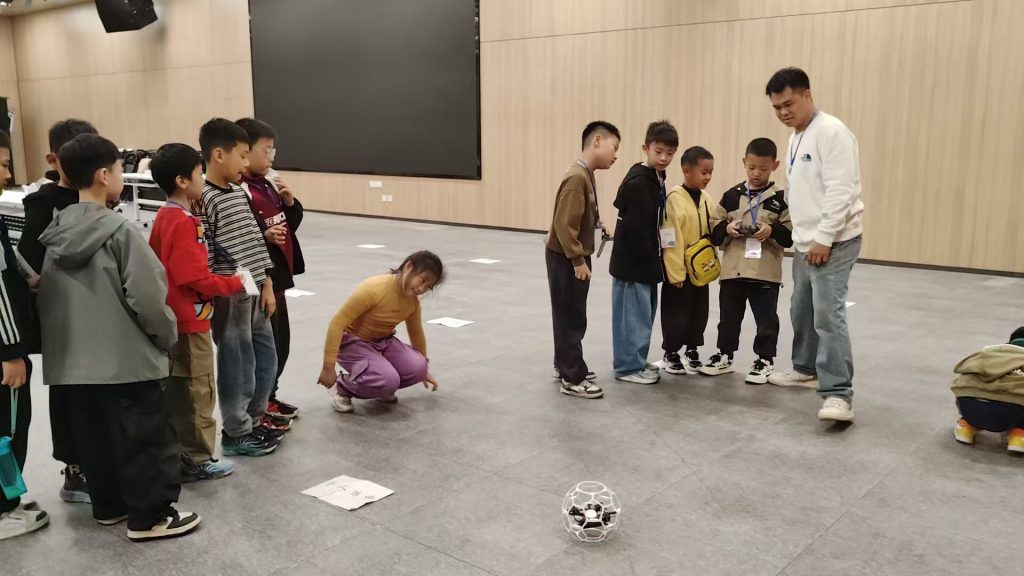
A well-trained operator is not merely a user of the system but an integral part of its diagnostic and safety network. This incident demonstrates that even highly engineered systems can harbor latent faults. A comprehensive drone training program empowers personnel to identify anomalies accurately, communicate them effectively to engineering teams, and correctly implement solutions, thereby ensuring the reliability and safety of UAV operations. Ultimately, the synergy between robust engineering—like the phase ambiguity fix—and deeply embedded, systematic drone training forms the foundation for successful and secure unmanned aviation.