
The frequency and severity of natural and man-made disasters present a formidable challenge to global emergency medical services. In complex post-disaster environments where traditional infrastructure is compromised, reaching victims within the “golden hour” becomes a race against time. Concurrently, rapid advancements in unmanned aerial vehicle (UAV), or drone, technology offer a transformative potential for emergency management. This analysis explores the burgeoning integration of drones into emergency medical response systems. By examining global application trends and inherent advantages, I propose a cohesive “Drone + Emergency Command” operational model and provide strategic recommendations for its maturation. The deep fusion of drone technology with medical logistics and care delivery promises to significantly enhance response efficacy, minimize casualties, and reduce economic losses, marking a pivotal evolution in disaster medicine.
Current Landscape and Prevailing Challenges
The contemporary disaster landscape is characterized by escalating complexity. Earthquakes, floods, and industrial accidents often inflict concurrent damage to transportation networks, communication grids, and power supplies, severely hampering ground-based rescue efforts. Remote, mountainous, or insular regions are particularly vulnerable, as delayed assistance directly translates to increased mortality and morbidity. The core challenge, therefore, lies in achieving rapid victim identification and the timely delivery of critical medical supplies under such constrained conditions.
In this context, multi-rotor drones have emerged as a disruptive force. Their technical advantages—swift deployment, superior mobility, and terrain independence—allow them to circumvent ground-level obstacles and provide immediate situational awareness. Compared to manned helicopters, drones offer a compelling economic proposition: lower acquisition costs, reduced operational expenses, and diminished operational risk. These attributes position drones not merely as tools but as foundational components of future agile response systems.
Despite growing interest, research into drone-enabled medical response remains nascent. While significant progress has been made in platform durability and flight autonomy, a critical gap exists in the systematic integration of drones into standardized medical response protocols. Most studies focus on technological specifications rather than on creating reproducible, scalable operational models that seamlessly blend aerial assets with ground teams. There is an urgent need to deepen this applied research, fostering a true synergy between engineering and emergency medicine to build resilient, technology-supported response frameworks.
Global Applications and Defining Characteristics
The application of drones in medical contexts has evolved through conceptual, experimental, and now, deepening application phases. A seminal moment occurred in 2004 with the use of a Predator drone for delivering medical supplies post-earthquake. This catalyzed global recognition, leading to diverse implementations.
Internationally, applications showcase three trends: scenario diversification (search, delivery, monitoring), platform specialization (drones equipped with automated external defibrillators/AEDs, thermal cameras), and systemic integration with public health and emergency services. Domestically, progress is rapid, marked by improving technical specs, adaptation to diverse environments (plateaus, forests), multi-stakeholder collaboration, and evolving regulatory support.
The operational superiority of drones over traditional methods can be quantified and summarized as follows:
| Characteristic | Advantage & Impact | Comparative Metric |
|---|---|---|
| Response Speed | Dramatically improves access within the “Golden Hour,” enabling earlier intervention. | Can reduce initial response time by up to 70% in congested or inaccessible areas. |
| Environmental Adaptability | Operates in complex topographies (urban, aquatic, mountainous) where ground/helo access is limited. | Accessibility index (A) approaches 1 for most terrains: $$A_{drone} \approx 1$$ vs. $$A_{ground} \ll 1$$ for many disaster zones. |
| Operational Cost | Significantly lower per-mission cost compared to manned aviation. | Estimated cost reduction >80% per flight hour compared to helicopter EMS. |
| Payload Capacity & Versatility | Modern platforms can carry essential medical payloads (defibrillators, blood, medicines). | Payload (P) for medical drones typically ranges: $$5 \, \text{kg} \leq P \leq 25 \, \text{kg}$$. |
| Real-time Data Synchronicity | Provides live video, telemetry, and sensor data for enhanced command decisions. | Enables near real-time situational awareness with latency (L) under 5G: $$L \leq 100\, \text{ms}$$. |
These advantages collectively enable a paradigm of “omnidirectional coverage, rapid reaction, and precise delivery.”
Constructing an Integrated “Drone + Emergency Medical Response” Model
Synthesizing global experience, the future lies in a structured “Drone + Emergency Medical Response” model. This requires a holistic approach centered on unified command, standardized equipment, optimized workflows, and specialized human capital.
1. Building the “Drone + Emergency Command System”
The cornerstone is an integrated command platform merging dispatch, monitoring, and analytics. Drones act as intelligent sensory and delivery nodes within this network. The system architecture can be conceptualized as follows:
- Front-end (Sensing): Drones perform reconnaissance and remote sensing. Computer vision algorithms analyze video feeds for victim identification and damage assessment, generating a real-time common operational picture (COP).
- Mid-tier (Analysis & Dispatch): AI-powered algorithms process the COP to optimize drone swarm deployment and flight paths. This involves solving complex routing problems. A simplified version for prioritizing ‘n’ delivery points can be modeled as minimizing total flight time T:
$$T = \sum_{i=1}^{n} \frac{d_i}{v} + t_{drop_i}$$
where \(d_i\) is the leg distance, \(v\) is cruise velocity, and \(t_{drop_i}\) is the time for package deployment at point \(i\). - Back-end (Fusion & Coordination): Cloud and IoT technologies ensure seamless data sharing across agencies, breaking down information silos and enabling true joint operations. This platform acts as the “central nervous system” for coordinated response.
2. Establishing Standards for Medical Drone Equipment
Mission-specific drone configurations are essential. Standards must dictate payload and sensor suites based on the task, ensuring “right tool for the job” efficiency.
| Mission Type | Core Equipment Requirements | Key Performance Parameter |
|---|---|---|
| Rapid Search & Rescue | High-resolution RGB camera, thermal imaging sensor, loudspeaker, spotlight. | Sensor Detection Range (\(R_{det}\)) and On-station Endurance (\(E\)): $$E \geq 45 \, \text{min}$$. |
| Medical Supply Delivery | Secure cargo compartment, precision drop mechanism (parachute/winch), climate control for sensitive cargo. | Useful Payload Mass (\(M_{pay}\)) and Drop Accuracy (\( \sigma_{acc} \)): $$ \sigma_{acc} \leq 5 \, \text{m}$$. |
| On-Scene Medical Intervention | Integrated telemedicine kit, AED, emergency oxygen, two-way communication module. | Telemetry Uplink Stability and Payload Readiness (instant activation). |
Lifecycle management protocols for this equipment are equally critical to ensure constant readiness.
3. Optimizing the Drone Medical Response Workflow
Drone operations must be woven into the incident management timeline:
- Disaster Assessment Phase: Drones perform grid-pattern searches to geo-locate casualties and map access routes.
- Resource Deployment Phase: Using real-time imagery, command directs ground teams and dispatches drones for targeted aerial delivery of first-aid kits.
- On-Site Stabilization Phase: Drones deliver critical medications (e.g., epinephrine, analgesics) or lightweight medical devices, potentially guiding victims via speaker.
- Casualty Evacuation Phase: Drones scout and monitor proposed evacuation routes for hazards, providing safe passage intelligence.
4. Strengthening “Drone Training” for Emergency Responders
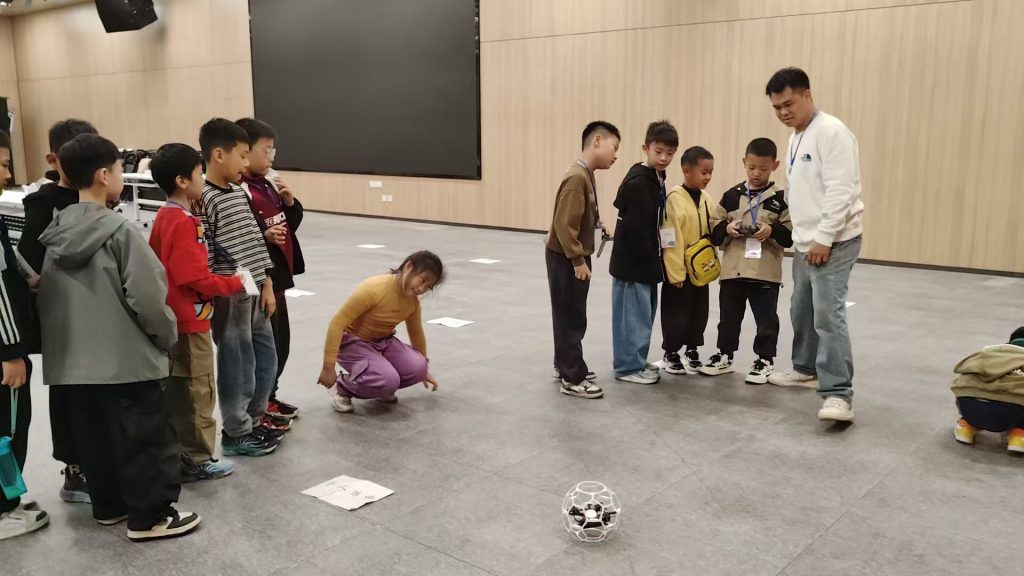
The human element is paramount. Developing proficient operators requires a dedicated drone training pipeline. This training must transcend basic piloting to encompass mission-specific medical logistics. A comprehensive drone training curriculum should include:
- Technical Proficiency: Advanced flight operations, maintenance, and data link management.
- Mission Application: Tactics for search patterns, safe delivery in dynamic environments, and coordination with ground medics.
- Data Literacy: Interpreting thermal imagery, mapping disaster zones, and reporting vital information.
The effectiveness of such drone training can be gauged by improved mission metrics, which can be modeled as a function of training hours (H) and simulation fidelity (F):
$$ \text{Proficiency Score } (S) = \alpha \cdot \ln(H) + \beta \cdot F + \gamma $$
where \(\alpha, \beta, \gamma\) are constants related to individual aptitude and training quality. Furthermore, regular, high-fidelity multi-agency exercises are non-negotiable. Integrating drone training modules into medical and emergency management education will cultivate the necessary cross-disciplinary expertise.
Strategic Recommendations for Advancing Drone Medical Rescue
Sustained progress requires concerted action across policy, collaboration, innovation, and practical validation.
1. Perfecting the Legal and Regulatory Framework
Current aviation regulations are often inadequate for the unique demands of emergency medical drone operations. Dedicated “Emergency Medical UAS Operations” regulations are needed, streamlining:
- Expedited Airspace Access: Pre-coordinated corridors and dynamic geofencing for disaster zones.
- Liability and Safety Protocols: Clear guidelines for operations in congested or controlled airspace during crises.
- Cross-sectoral Standard Alignment: Updating healthcare, transportation, and telecom regulations to accommodate and facilitate drone-based logistics.
A robust legal framework not only enables operations but also builds public and institutional trust.
2. Fostering Inter-Agency Collaboration
Drone medical response sits at the intersection of emergency management, public health, aviation authority, and meteorology. A top-down, coordinated mechanism is essential. This could take the form of a joint command council with standardized operating procedures (SOPs) for information sharing (e.g., integrating live drone feeds into hospital emergency departments) and resource pooling. Unified command ensures that during a mass casualty incident, drones are tasked based on centralized medical priority, not disparate agency agendas.
3. Accelerating Technological Innovation
Targeted R&D is required to overcome persistent limitations. Priority areas include:
- Energy Density & Payload: Developing next-generation batteries and lightweight composite materials to extend endurance and capacity.
- Autonomous Swarm Intelligence: Algorithms for collaborative search, dynamic re-tasking, and collision avoidance in GNSS-denied environments.
- Miniaturized Medical Payloads: Designing drone-portable, ruggedized versions of vital monitors and intervention tools.
- Resilient Communication: Leveraging mesh networks and satellite links to maintain connectivity when cellular networks fail.
Public-private-academic partnerships are crucial to translate lab innovations into field-ready solutions.
4. Implementing Pilot Programs and Real-World Validation
Theoretical models must be stress-tested. Strategic pilot programs should be launched in diverse settings:
- Remote & Rural Areas: Where drones can serve as a primary medical logistics link, establishing baseline service levels.
- Dense Urban Centers: Integrating drones into “Smart City” EMS for rapid AED delivery to cardiac arrest victims, optimizing response times modeled by urban density (\(\rho\)) and drone fleet size (N):
$$ \text{Avg. Response Time} \propto \frac{\sqrt{\rho}}{N} $$
These pilots must involve full-scale, multi-scenario exercises that identify procedural gaps and technical failures in a controlled yet realistic environment, iteratively refining the entire system.
Conclusion
The integration of drone technology into emergency medical response is not merely an incremental improvement but a foundational shift toward a more resilient and agile disaster healthcare system. By constructing an intelligent “Drone + Command” ecosystem, standardizing platforms and workflows, and investing deeply in specialized drone training, we can fundamentally enhance our capacity to respond to crises. This holds profound significance for protecting human life and mitigating societal disruption.
While challenges in regulation, interoperability, and technology persist, a concerted focus on strategic design, collaborative governance, and continuous innovation will pave the way for maturity. As advances in artificial intelligence, 5G/6G connectivity, and materials science converge, the potential of drone medical response will expand further. The future envisions a seamless, multi-layered rescue network where drones, ground ambulances, and manned aircraft operate in concert, forming an impenetrable technological shield for public health and a powerful catalyst for the modernization of global emergency management.