
In recent years, we have witnessed a rapid advancement in technology, and drone remote sensing has emerged as a transformative tool in the field of forest resource management. As researchers and practitioners, we recognize that accurate and timely information on forest status and dynamics is crucial for scientific management and sustainable development. Traditional methods of forest survey and monitoring often suffer from inefficiency, limited coverage, and poor timeliness. Drone remote sensing offers a new opportunity, enabling rapid, efficient, and cost-effective acquisition of high-resolution data over large forested areas. Its flexibility, low operational cost, and high spatial resolution make it a powerful asset in forestry. In this article, we explore the applications, challenges, and future directions of drone remote sensing, with a focus on enhancing drone training to address key limitations.
We begin by providing an overview of drone remote sensing technology. Essentially, it involves unmanned aerial vehicles (UAVs) equipped with various sensors, such as optical cameras, multispectral cameras, and thermal infrared cameras, to collect remote sensing data from target areas. By following pre-set flight paths and altitudes at low elevations, drones can capture detailed imagery and data from forests. Optical cameras are primarily used to obtain visible-light images, allowing us to analyze forest distribution, tree species, and quantities. Multispectral cameras capture spectral information across multiple bands, reflecting different vegetation characteristics that aid in identifying tree species, growth conditions, and pest infestations. Thermal infrared cameras monitor forest temperature, which is vital for detecting fire hazards and assessing thermal environments in ecosystems. The integration of these sensors, coupled with proper drone training for operators, ensures effective data collection and interpretation.
To summarize the key sensors and their applications, we present the following table:
| Sensor Type | Primary Function | Applications in Forestry | Key Parameters |
|---|---|---|---|
| Optical Camera | Captures visible-light imagery | Forest boundary delineation, tree count | Spatial resolution (e.g., 5 cm/pixel) |
| Multispectral Camera | Measures reflectance in multiple bands | Species identification, health monitoring | Bands (e.g., red, green, blue, NIR) |
| Thermal Infrared Camera | Detects temperature variations | Fire hazard detection, ecosystem assessment | Thermal resolution (e.g., 0.1°C) |
| LiDAR | Emits laser pulses for 3D mapping | Tree height measurement, biomass estimation | Point density (e.g., 100 points/m²) |
In forest resource inventory, drone remote sensing plays a pivotal role. For forest area and boundary determination, we utilize drones equipped with high-precision optical cameras and positioning systems. By analyzing high-resolution images, we can distinguish forested areas from other land types based on texture and color features. Image recognition algorithms enable us to quickly outline forest boundaries and calculate areas. This process reduces errors compared to manual surveys, especially in complex terrains. For tree species identification, we rely on multispectral sensors to collect reflectance data. Different tree species exhibit unique spectral signatures, which we compare against a pre-established spectral feature database. Studies have shown that drone-based species identification can achieve accuracy rates above 80%. This information supports forest planning and ecological restoration, as we can select suitable areas for planting specific species.
To estimate timber volume, a critical indicator of forest resources, we employ drones with LiDAR sensors. LiDAR measures the time taken for laser beams to reflect, providing precise three-dimensional structural data like tree height and crown width. Combining this with optical imagery, we derive tree density and apply mathematical models to estimate volume. For instance, a common formula for volume estimation is:
$$V = \sum_{i=1}^{n} f(h_i, d_i)$$
where \( V \) is the total volume, \( n \) is the number of trees, \( h_i \) is the height of tree \( i \), \( d_i \) is the diameter at breast height, and \( f \) is a species-specific allometric equation. Such approaches highlight the importance of drone training in operating LiDAR systems and interpreting point cloud data.
Forest health monitoring is another key application. Using multispectral cameras, we compute vegetation indices to assess growth conditions. The normalized difference vegetation index (NDVI) is widely used:
$$NDVI = \frac{NIR – Red}{NIR + Red}$$
where \( NIR \) is near-infrared reflectance and \( Red \) is red reflectance. Healthy vegetation typically shows high NDVI values, while stressed vegetation exhibits lower values. By monitoring NDVI trends, we can identify areas with growth anomalies and investigate causes. For pest and disease monitoring, drones capture subtle changes in leaf color and texture. For example, pine trees infected by pine wilt disease show altered infrared reflectance. Through image analysis and pre-trained models, we can locate infestation areas and assess severity. Additionally, we evaluate forest nutritional status by analyzing spectral data related to nutrients like nitrogen, phosphorus, and potassium. A simplified model for nitrogen content estimation might be:
$$N_{content} = a \cdot R_{red} + b \cdot R_{NIR} + c$$
where \( R_{red} \) and \( R_{NIR} \) are reflectance values, and \( a, b, c \) are coefficients derived from calibration data.
In forest resource monitoring, drones contribute to early warning systems. For forest fire预警, thermal infrared cameras detect temperature anomalies, while optical cameras confirm smoke presence. When a potential fire is identified, drones transmit real-time data to ground control, aiding firefighters with location and spread information. For pest and disease预警, we analyze historical data to build predictive models. By integrating drone data with meteorological information, we forecast outbreak risks. For instance, if pest-affected areas expand under favorable weather conditions, models can predict large-scale infestations, prompting preventive measures. Monitoring forest ecosystem structure changes involves comparing multi-temporal drone imagery to track tree species composition, canopy layers, and community succession. This helps us understand impacts from human activities or natural disturbances.
Despite these advantages, we face several challenges in applying drone remote sensing. Hardware limitations are a major issue. Many sensors lack the resolution needed for precise identification of small targets, such as individual diseased trees or rare species. Drone续航能力 is often limited, with most consumer-grade drones lasting 20-30 minutes and professional ones under 2 hours. This reduces efficiency in large forest areas and increases safety risks during frequent recharging. Additionally, drones are vulnerable to恶劣天气 like strong winds or rain, restricting their use. Data processing and analysis pose significant difficulties. Drones generate massive amounts of data in diverse formats—images, videos, point clouds—requiring integration across different software. Interpreting this data demands expertise in both remote sensing and forestry, and manual processing is inefficient and error-prone. Storage of海量数据 also strains systems. Flight restrictions complicate operations, as drones may be prohibited in no-fly zones like airports or military areas. Lengthy审批流程 hinder timely surveys. Safety concerns are growing, with risks from unskilled operators and collisions with other aircraft.
To illustrate these challenges and solutions, we summarize them in a table:
| Challenge Category | Specific Issues | Impact on Forest Survey | Potential Solutions |
|---|---|---|---|
| Hardware Limitations | Low sensor resolution, short battery life, poor weather resistance | Reduced accuracy and coverage, increased downtime | Develop high-resolution sensors, improve battery tech, enhance durability |
| Data Processing | Diverse formats, need for expert interpretation, storage demands | Slow analysis, high error rates, resource-intensive | Use AI for automation, adopt cloud storage, provide drone training |
| Flight Restrictions | No-fly zones, complex审批 | Limited access, delays in monitoring | Streamline regulations, establish quick审批 channels |
| Safety Concerns | Operator inexperience, collision risks | Accidents, legal liabilities | Enhance drone training, implement monitoring systems |
We propose several strategies to address these challenges. First,加强硬件设备的研发与改进 is essential. We advocate for investing in high-resolution multispectral and hyperspectral sensors to capture fine details. Improving battery technology, such as developing high-energy-density batteries, can extend flight times. Enhancing drone durability for adverse weather will broaden application scopes. Second,提升数据处理与分析能力 requires integrated platforms. We recommend using artificial intelligence and machine learning to automate data interpretation. For example, deep learning models can be trained to recognize tree species or pests from images, reducing manual effort. Cloud computing and distributed storage can manage large datasets efficiently. Critically, drone training must be emphasized to equip personnel with skills in data analysis and software use. Third,完善法律法规与飞行安全管理 involves government action. We suggest simplifying审批流程 for forestry applications and defining clear飞行规则. Strengthening operator资质管理 through mandatory drone training programs will ensure safety and compliance. Implementing飞行监控系统 can track drones in real-time to prevent违规行为.
In the context of drone training, we believe it is a cornerstone for successful implementation. Proper training encompasses not only piloting skills but also data acquisition, sensor operation, and safety protocols. For instance, operators must learn to plan optimal flight paths, calibrate sensors, and handle emergencies. Advanced drone training should include modules on data processing techniques, such as using software for image stitching and spectral analysis. By fostering a culture of continuous learning, we can mitigate risks and improve outcomes. To visualize the importance of training, consider the following figure inserted here:
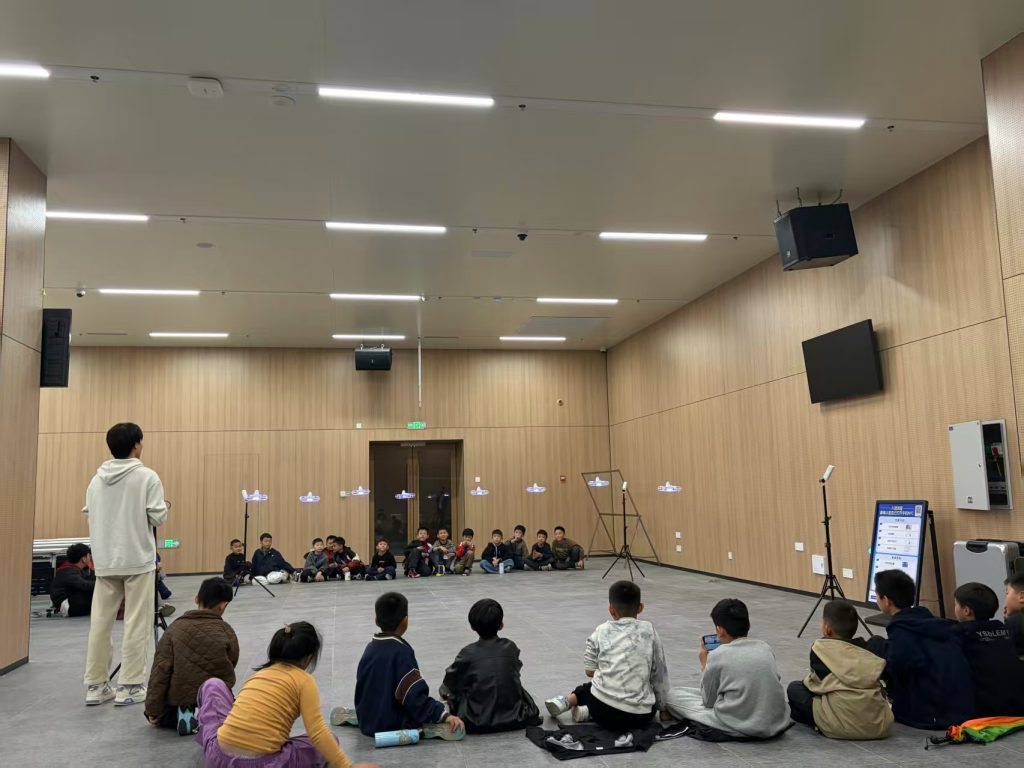
This image underscores the hands-on aspect of drone training, which is vital for field applications. Repeated emphasis on drone training throughout operations ensures that teams are prepared to tackle challenges like hardware troubleshooting or data management. Moreover, drone training programs can be tailored to forestry-specific needs, covering topics like forest ecology and remote sensing principles.
Looking ahead, we anticipate that drone remote sensing will evolve with technological trends. Multi-source data fusion, combining drone data with satellite imagery or ground sensors, will enhance accuracy.智能化与自动化 through AI will streamline workflows, from flight planning to report generation. Building low-altitude remote sensing networks could enable continuous monitoring across vast forests. However, these advancements depend on ongoing drone training to keep pace with new tools and methods. We envision a future where drones are integral to森林资源管理, supported by robust training frameworks that empower professionals.
In conclusion, as we reflect on the applications of drone remote sensing in forest resource survey and monitoring, we recognize its transformative potential. From inventory tasks to health assessments and early warning systems, drones provide valuable insights that drive sustainable management. Yet, challenges related to hardware, data, regulations, and safety persist. By prioritizing hardware innovation, data analytics, regulatory improvements, and comprehensive drone training, we can overcome these hurdles. We encourage continued research and collaboration to expand the frontiers of this technology, ensuring that forests are preserved for generations to come. Through dedicated drone training initiatives, we can build a skilled workforce capable of leveraging drones to their fullest, ultimately fostering a harmonious relationship between technology and nature.