
In modern infrastructure development, mountainous highway projects play a pivotal role in boosting local economies and facilitating resource utilization. However, the intricate topographic conditions inherent to these regions pose significant challenges for construction quality control. Traditional surveying methods often fall short in such environments, grappling with inefficiencies, data inaccuracies, and heightened operational risks. The advent of drone surveying technology has emerged as a transformative solution, offering flexibility, cost-effectiveness, and adaptability. Yet, the very nature of mountainous terrains—characterized by steep slopes, volatile weather patterns, dense vegetation, and varying operator expertise—directly compromises the accuracy of data acquired by drones, thereby impacting overall engineering quality. Therefore, it is imperative to delve into precision assurance strategies for drone surveying in mountainous highway engineering. In this article, I will explore the multifaceted factors affecting accuracy and propose comprehensive strategies, emphasizing the critical role of drone training to enhance reliability and effectiveness.
Analysis of Factors Influencing Drone Surveying Precision in Mountainous Highway Engineering
The accuracy of drone surveying in mountainous settings is contingent upon several interdependent factors. A thorough understanding of these elements is essential for devising robust precision assurance measures. Below, I categorize and analyze the primary influences.
Complex Topography and Terrain
Mountainous regions exhibit substantial relief, with abrupt changes in elevation that destabilize drone flight. As drones traverse peaks and valleys, rapid shifts in atmospheric pressure and airflow induce attitude fluctuations, leading to deviations from planned flight paths and positional inaccuracies in collected data. Moreover, signal transmission is impeded by topographic obstructions; mountains can block, reflect, or refract signals, resulting in attenuation or interruption. This causes data loss or corruption, adversely affecting surveying precision. The dynamic distance between the drone and ground targets further complicates data acquisition. The relationship can be modeled using the following formula for signal strength attenuation in obstructed environments:
$$ P_r = P_t \cdot G_t \cdot G_r \cdot \left( \frac{\lambda}{4\pi d} \right)^2 \cdot L $$
where \( P_r \) is received power, \( P_t \) is transmitted power, \( G_t \) and \( G_r \) are antenna gains, \( \lambda \) is wavelength, \( d \) is distance, and \( L \) represents loss factors due to terrain obstacles. This attenuation directly impacts sensor measurements, such as those from LiDAR or cameras, reducing accuracy in capturing true ground features.
Adverse Climatic Conditions
Weather volatility in mountains, including heavy rainfall and fog, severely degrades surveying quality. Raindrops on camera lenses cause light scattering and refraction, blurring images and diminishing clarity for feature identification. High humidity during rains attenuates LiDAR signals, leading to inaccurate distance measurements. Fog reduces visibility and contrast in imagery, while also scattering laser pulses, increasing measurement errors. The impact on visibility can be expressed using the meteorological optical range formula:
$$ V = \frac{3.912}{\sigma} $$
where \( V \) is visibility and \( \sigma \) is the extinction coefficient due to fog or rain. Lower visibility correlates with poorer image quality and increased LiDAR noise, compromising data fidelity.
Vegetation Coverage
Dense vegetation, common in mountainous areas, obstructs sensors from directly accessing ground surfaces. LiDAR systems may record canopy heights instead of terrain elevations, causing vertical errors. Similarly, optical imagery becomes dominated by green hues, masking critical ground details like topography or geology. This introduces biases in digital elevation models (DEMs) and orthophotos, affecting subsequent engineering analyses. The error in elevation due to vegetation can be approximated as:
$$ \Delta h = h_v – h_g $$
where \( \Delta h \) is the elevation error, \( h_v \) is vegetation height, and \( h_g \) is ground elevation. Effective data processing must account for such discrepancies through advanced algorithms.
Personnel Technical Proficiency
The skill level of operators is a decisive factor in surveying precision. Inadequate drone training for flight crews can result in poor route adherence, improper parameter adjustments, and suboptimal data collection. For data processing staff, insufficient expertise in software and algorithms leads to errors in image stitching, coordinate transformations, and noise filtering. This underscores the necessity for systematic drone training programs to standardize competencies across both field and office workflows.
To summarize these factors, I present a table outlining their effects and mitigation priorities:
| Factor | Impact on Precision | Key Mitigation Focus |
|---|---|---|
| Complex Topography | Flight instability, signal blockage, distance variability | Adaptive flight planning, signal enhancement |
| Adverse Climate | Image blurring, signal attenuation, reduced visibility | Weather monitoring, sensor protection |
| Vegetation Coverage | Elevation distortions, feature masking | Multi-sensor fusion, algorithmic filtering |
| Personnel Proficiency | Operational errors, processing mistakes | Comprehensive drone training and certification |
Precision Assurance Strategies Based on Drone Surveying Technology
To counteract the aforementioned challenges, I propose a multi-pronged approach centered on technological optimization, algorithmic improvements, and human resource development. These strategies are designed to elevate the accuracy of drone surveying in mountainous highway projects, ensuring reliable quality control.
Optimized Route Planning and Flight Parameter Configuration
Tailoring flight operations to mountainous terrains involves implementing terrain-following modes, where drones adjust altitude dynamically based on real-time topographic data. This minimizes blind spots and maintains consistent ground-sampling distances. Additionally, multi-pass cross-surveying from varied angles enhances data completeness. Flight parameters, such as altitude and speed, should be calibrated according to zone complexity. For instance, lower altitudes in rugged areas improve resolution, while higher altitudes in open zones expand coverage. The optimal flight height \( H \) for a desired ground sample distance (GSD) can be derived from:
$$ \text{GSD} = \frac{H \cdot s}{f} $$
where \( s \) is sensor pixel size and \( f \) is focal length. Adjusting \( H \) based on terrain undulations ensures uniform GSD. A table of recommended parameters is provided below:
| Terrain Type | Flight Altitude (m) | Speed (m/s) | Overlap Ratio |
|---|---|---|---|
| Steep Slopes | 50-100 | 3-5 | 80%-85% |
| Valleys | 70-120 | 4-6 | 85%-90% |
| Forested Areas | 60-110 | 3-4 | 90%-95% |
Application of Multi-Sensor Fusion Technology
Integrating diverse sensors on drone platforms—such as RGB cameras, LiDAR, and GNSS receivers—enriches data dimensionality and cross-validation. LiDAR captures precise 3D point clouds for terrain modeling, while cameras provide textured imagery for feature recognition. GNSS ensures georeferencing accuracy. Data fusion algorithms combine these inputs to mitigate individual sensor limitations. A common fusion model involves weighted averaging of measurements:
$$ \hat{x} = \sum_{i=1}^{n} w_i x_i, \quad \sum_{i=1}^{n} w_i = 1 $$
where \( \hat{x} \) is the fused estimate, \( x_i \) are sensor readings, and \( w_i \) are weights based on sensor reliability under given conditions. This enhances robustness against environmental干扰.
Enhanced Data Processing and Algorithm Optimization
Post-processing of raw data is crucial for precision. Noise reduction algorithms, such as wavelet transforms or median filtering, remove artifacts from wind or sensor errors. For vegetation penetration, advanced algorithms like cloth simulation filter (CSF) separate ground points from non-ground points in LiDAR data. The process can be summarized as minimizing an error function:
$$ E = \sum_{j} \left( z_j – \hat{z}_j \right)^2 + \lambda \cdot R $$
where \( z_j \) is observed elevation, \( \hat{z}_j \) is estimated ground elevation, and \( R \) is a regularization term for smoothness. Iterative optimization yields accurate DEMs. Additionally, image matching techniques, like SIFT or ORB, align overlapping images for seamless mosaics.
Strengthened Personnel Training and Technical Exchange
A cornerstone of precision assurance is comprehensive drone training for all personnel involved. I advocate for a structured curriculum encompassing theoretical knowledge, simulator-based practice, and field exercises. Training modules should cover flight dynamics in complex terrains, sensor operation, data processing software (e.g., ArcGIS, ENVI), and quality control protocols. Regular workshops and forums facilitate knowledge sharing on best practices, such as parameter tuning or error troubleshooting. This continuous learning environment fosters competency and adaptability. To illustrate the importance of hands-on experience, consider the following visual aid embedded here to emphasize practical drone training aspects:
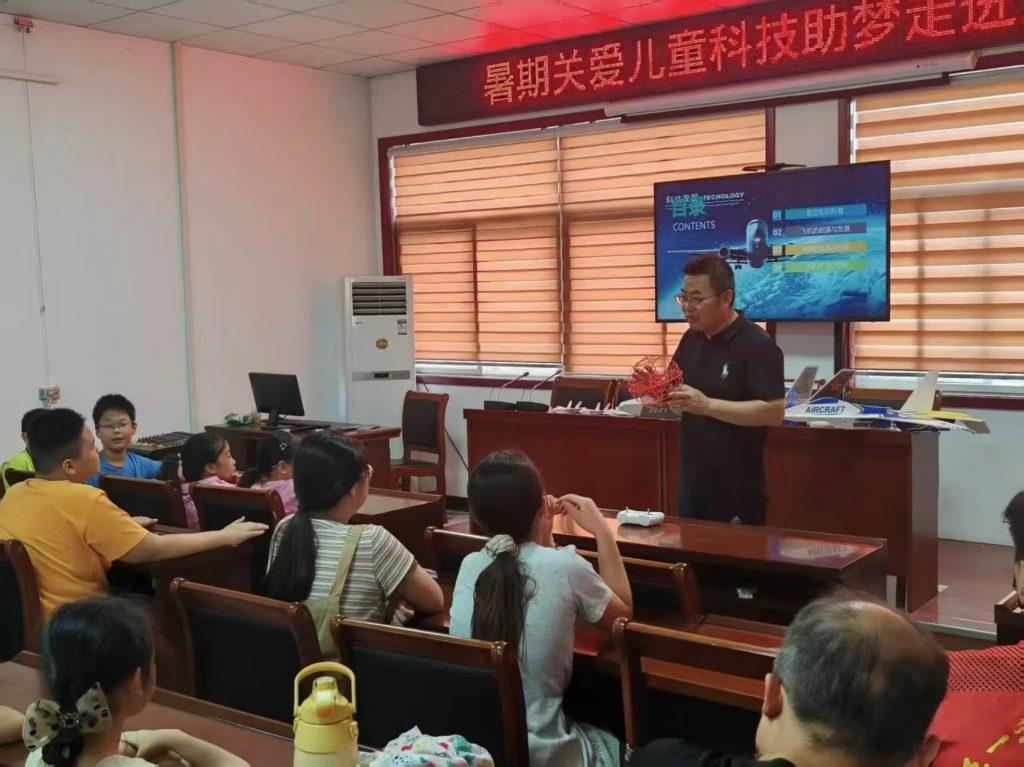
Moreover, certification programs can standardize skills, ensuring that operators and processors meet industry benchmarks. Drone training must be iterative, incorporating feedback from real projects to refine methodologies. For instance, after each mission, teams should review data quality metrics and discuss improvements, reinforcing a culture of precision.
Establishment of Precision Verification and Feedback Mechanisms
To validate and enhance accuracy, a systematic verification framework is essential. This involves periodic comparisons between drone-derived data and ground truth obtained via traditional tools like total stations or levels. Discrepancies are analyzed to identify error sources and adjust surveying parameters. A feedback loop can be formalized using control points with known coordinates; the root mean square error (RMSE) is computed as:
$$ \text{RMSE} = \sqrt{ \frac{1}{n} \sum_{k=1}^{n} \left( \hat{p}_k – p_k \right)^2 } $$
where \( \hat{p}_k \) are drone-measured positions and \( p_k \) are reference positions. If RMSE exceeds thresholds, flight plans or processing algorithms are modified. This iterative refinement, coupled with ongoing drone training on error analysis, ensures continuous improvement. The table below outlines a sample verification schedule:
| Activity | Frequency | Metrics Assessed | Corrective Actions |
|---|---|---|---|
| Control Point Comparison | Bi-monthly | Positional RMSE, Elevation Error | Adjust flight altitude or overlap |
| Data Quality Audit | After each survey | Point Cloud Density, Image Sharpness | Retrain personnel or update equipment |
| Algorithm Performance Review | Quarterly | Processing Time, Accuracy Gain | Optimize software parameters |
Conclusion
In summary, drone surveying offers immense potential for quality control in mountainous highway engineering, yet its precision is susceptible to environmental and human factors. Through strategic measures—including optimized flight planning, multi-sensor fusion, advanced data processing, rigorous drone training, and robust verification protocols—these challenges can be effectively mitigated. The integration of these strategies fosters a holistic approach to accuracy assurance, underpinning reliable project outcomes. Looking ahead, further advancements in sensor technology, intelligent algorithms, and adaptive training methodologies will continue to elevate the application of drones in complex terrains. By prioritizing precision and investing in continuous drone training, the engineering community can harness drone surveying to its fullest, ensuring that mountainous highway projects are executed with the highest standards of quality and safety.