
The evolution of modern commerce and societal needs has placed immense pressure on traditional logistics networks, particularly at the critical “last-mile” stage. Structural bottlenecks like urban congestion, high operational costs, and inaccessible terrain in remote areas severely constrain the high-quality development of logistics systems. In this context, drone-based logistics systems emerge not merely as an innovative technological pathway but as a transformative force underpinning the burgeoning low-altitude economy. This analysis, from the perspective of low-altitude economic development and unmanned aerial vehicle (UAV) application, systematically examines the prospects of this sector and delves into the critical decision-making matrix involved in drone procurement. It focuses on technical parameters, application scenario alignment, operational效益 optimization, and strategic supplier evaluation, aiming to provide a comprehensive reference for formulating robust drone acquisition strategies.
Market Landscape and Policy Impetus
The low-altitude economy has rapidly ascended to strategic national importance. Its formal inclusion in key national planning documents and government work reports has unleashed significant policy momentum. A multi-layered policy framework is now taking shape, driving explosive growth in the sector’s scale.
| Policy Level | Key Initiatives/Regulations | Primary Focus & Impact |
|---|---|---|
| National Strategic | National Comprehensive 3D Transportation Network Plan; Government Work Report | Elevated low-altitude economy to a national strategic pillar, guiding long-term development. |
| Regulatory & Administrative | Interim Regulations on Flight Management of Unmanned Aircraft; Transport Logistics Cost-Reduction and Quality-Improvement Action Plan | Establishes foundational legal and safety framework for standardized operations. |
| Local Implementation & Incentives | Municipal/Provincial Implementation Plans (e.g., Shenzhen, Anhui); R&D Subsidies (e.g., Hefei); Pilot Demonstration Zones (e.g., Shanghai) | Stimulates local industry clusters, infrastructure development, and commercial application scaling. |
This powerful policy赋能 has directly translated into remarkable market expansion. The overall low-altitude economic scale in China reached approximately ¥5059.5 billion in 2023, with projections exceeding ¥10,000 billion by 2026. The low-altitude logistics segment, as a core application, has grown from ¥27.18 billion in 2020 to ¥58.18 billion in 2023, reflecting a Compound Annual Growth Rate (CAGR) of $$CAGR = \left( \frac{V_{2023}}{V_{2020}} \right)^{\frac{1}{3}} – 1 \approx 37.41\%$$ where \(V_t\) represents the market value at year \(t\). Forecasts suggest this market will reach ¥120-150 billion by 2025 and surpass ¥450 billion by 2035.
Technological Drivers and Application-Scenario Expansion
Technological advancement serves as the core engine for low-altitude logistics. Significant leaps in payload capacity, flight endurance, and intelligence, fueled by the deep integration of Beidou navigation, 5G communication, and Artificial Intelligence (AI), have enabled systemic breakthroughs in autonomous path planning, real-time data interaction, and emergency response. Collaboration across the industrial chain, involving leaders in battery technology (e.g., CATL), flight control systems (e.g., DJI), and even automotive manufacturers (e.g., Geely) entering the field, has accelerated core component localization, enhanced supply chain security, and fostered cross-industry innovation.
The application scenarios vividly demonstrate drone logistics’ transformative potential:
- Medical Logistics: Drones establish “aerial lifelines” for critical deliveries like blood and vaccines, drastically improving transport efficiency from donation points to centers and争分夺秒 for emergency care.
- E-commerce & Express Logistics: Addressing the structural瓶颈 of traditional ground logistics amidst massive parcel volumes (132 billion件 in 2023), drones can reduce delivery times by approximately one-third. Their advantage is pronounced in remote, infrastructure-weak regions, where they have improved delivery时效 by over 80% and slashed costs to one-fifth of traditional methods.
- Cross-Border Logistics: Utilizing large unmanned transport aircraft (e.g., W5000) to开通 international routes enhances跨境 logistics capacity and competitiveness.
- Emergency Response: The strategic value of drone logistics is paramount here. Equipped with 5G-enabled thermal imaging and 3D mapping capabilities, drones significantly elevate搜救 efficiency and aid in disaster assessment and群众转移 during events like floods.
A Strategic Framework for Drone Procurement
Transitioning from market potential to operational reality hinges on effective procurement. The decision matrix extends far beyond simply purchasing a flying vehicle; it encompasses a holistic system view.
1. Strategic Considerations: Airworthiness and Technical Standards
With increasing drone density,空域冲突 and safety are paramount. Procurement must strictly adhere to evolving technical standards and airworthiness regulations. The Interim Regulations on Flight Management of Unmanned Aircraft mandate that medium and large drones must obtain airworthiness certification, while micro and light categories must comply with强制性国家标准. Prioritizing products that have passed airworthiness审定 is crucial for legal operation and risk mitigation. This process scrutinizes design, manufacturing, and performance, requiring detailed technical documentation from suppliers.
Technical parameters are the core of procurement specifications and must be场景-specific. Key metrics include payload \(P_{max}\), endurance \(T_{end}\), cruise speed \(V_{cruise}\), and wind resistance等级 \(W_{res}\). The relationship between endurance and energy is fundamental: $$E_{req} = (P_{hover} \cdot t_{hover} + P_{cruise} \cdot t_{cruise} + P_{aux}) \cdot T_{end}$$ where \(E_{req}\) is the required battery energy, \(P_{hover}\) and \(P_{cruise}\) are power draws, \(t\) represents time in each mode, and \(P_{aux}\) is auxiliary system power. Current technological bottlenecks often limit \(P_{max}\) to 10-20kg for multi-rotors and \(T_{end}\) to under 1 hour for many models, directly informing procurement choices based on range and payload needs.
2. Defining Technical Specifications and Performance Validation
The technical specification document must clearly define the system’s scope: whether it includes only the drone airframe or extends to ground control stations, software platforms,运营 services, and insurance. For logistics enterprises building initial capacity, a “Drone + Software + Operation Service” bundled procurement model is often preferred to accelerate deployment.
Critical technical parameters for logistics drones are summarized below:
| Parameter Category | Specific Metrics | Verification Method | Scenario-Specific Notes |
|---|---|---|---|
| Core Performance | Max Payload (\(P_{max}\)), Endurance (\(T_{end}\)), Cruise Speed (\(V_{cruise}\)), Service Ceiling | Third-party test reports for flight stability, hover, cruise; full payload flight validation. | Match to route distance and parcel weight profiles. |
| Reliability & Safety | Mean Time Between Failures (MTBF), Wind Resistance Level (\(W_{res}\)), Water/Dust Proofing (IP Rating) | Environmental stress testing reports; accelerated life testing reports. | Higher \(W_{res}\) and MTBF critical for reliable scheduled operations. |
| Systems & Compatibility | Data Link Range & Redundancy, GNSS (GPS/Beidou) Precision, EMI/EMC Tolerance, Hardware/Software Interface Protocols | EMC compliance certificates; interface compatibility demonstrations. | Ensures integration with existing logistics management systems. |
| Environmental Adaptation | Operational Temperature Range, Battery Low-Temp Heating Function | Thermal chamber test reports. | Essential for operations in northern寒冷 regions. |
A critical step to mitigate “paper specification” risk is implementing a flight validation环节. Conducting tests in real or simulated operational environments allows direct assessment of actual performance under varied conditions (weather, terrain), providing indispensable data for final supplier selection and contract formulation with clear performance benchmarks and remedies for non-compliance.
3. Supplier Evaluation and Total Cost of Ownership (TCO)
Supplier assessment must balance technical prowess,售后服务体系, and long-term cost效益. Evaluation criteria should extend beyond the product to include:
- Technical Solution: Innovation, compatibility with existing systems, scalability.
- Service & Support: Quality of drone training programs, maintenance plans, spare parts availability and pricing, warranty period, and geographic coverage of service network.
- Supplier Capability: Relevant past performance in logistics, financial health, and certifications (e.g., manufacturer授权, industry training accreditations like those related to drone training).
- Commercial Factors: Overall cost-effectiveness, payment terms, and proposed contract terms covering liability and insurance.
A comprehensive Total Cost of Ownership (TCO) analysis is vital, moving beyond the upfront采购成本 \(C_{acq}\).
| Cost Category | Components | Key Considerations |
|---|---|---|
| Acquisition Cost (\(C_{acq}\)) | Drone unit(s), spare batteries, ground control station, software licenses. | Negotiated price; often between $15k-$45k per unit for logistics models. |
| Infrastructure & Setup (\(C_{infra}\)) | Take-off/Landing pad construction, charging/swap stations, network integration. | Can be significant but may be shared or phased. |
| Operational Cost (\(C_{op}\)) | Electricity for charging, periodic battery replacement, insurance premiums, communication data fees. | Battery cycle life is a major driver; insurance for hull and third-party liability is essential. |
| Maintenance & Support (\(C_{maint}\)) | Routine servicing, unscheduled repairs, spare parts, software updates. | Warranty length and post-warranty parts pricing critically affect long-term TCO. |
| Personnel Cost (\(C_{personnel}\)) | Salaries for pilots, remote operators, maintenance staff. Investment in drone training. | Efficiency gains from automation must offset these. Quality drone training reduces error and downtime costs. |
The simplified TCO over a period of \(n\) years can be modeled as: $$TCO_n = C_{acq} + C_{infra} + \sum_{i=1}^{n} (C_{op,i} + C_{maint,i} + C_{personnel,i})$$ The Return on Investment (ROI) should be evaluated against the benefits: reduced ground fleet costs, faster delivery enabling premium services, access to new markets, and lower costs in remote areas (reportedly up to 60% savings in rural配送).
4. Operational Architecture and Human Capital
The shift towards integrated “turnkey” solutions—encompassing航线 development, hub建设, and full运营服务—places a premium on the supplier’s operational capability. This makes the资质审查 of their operational plan and their capacity to provide comprehensive drone training a critical part of procurement.
Effective operation requires a skilled workforce. A structured drone training curriculum is non-negotiable, covering:
- Regulatory Compliance & Safety: Airspace regulations, emergency procedures, risk assessment.
- Flight Operations: Manual and automated flight control, mission planning, beyond-visual-line-of-sight (BVLOS) procedures.
- Maintenance Proficiency: Pre- and post-flight checks, basic troubleshooting, and component replacement.
- Logistics Integration: Package handling, software platform operation, and coordination with ground teams.
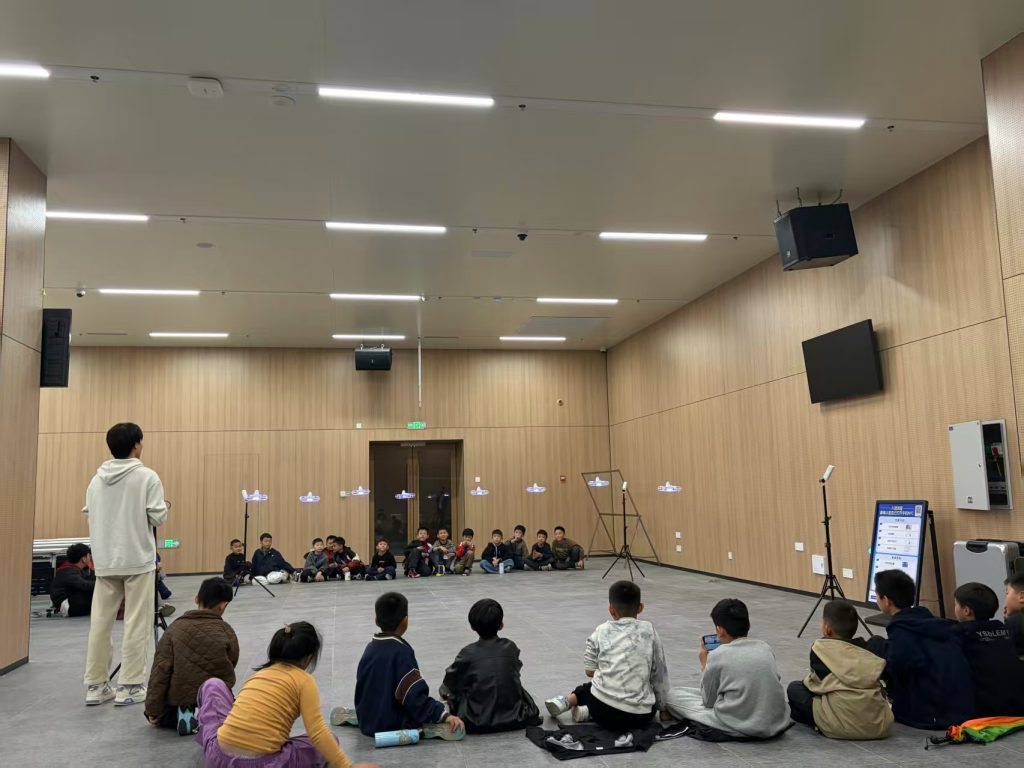
Investing in high-quality drone training ensures regulatory adherence, maximizes operational safety and efficiency, and minimizes costly accidents or downtime, directly impacting the TCO and ROI positively.
5. Procurement Strategy Aligned with Application Scenarios
Procurement strategies must be meticulously tailored to specific operational scenarios, which dictate the optimal platform type and performance priorities.
| Application Scenario | Primary Requirements | Recommended Platform Type | Key Procurement Focus | Training Emphasis (drone training) |
|---|---|---|---|---|
| Urban Last-Mile Delivery (e.g., food, retail) | High agility, small footprint, vertical take-off and landing (VTOL), frequent short trips. | Lightweight Multi-rotor | Low noise, high-density urban obstacle avoidance, quick battery swap. | Urban BVLOS operations, dense airspace management, precise landing in confined spaces. |
| Rural/Remote Area Logistics | Longer range (\(>30km\)), moderate payload (5-15kg), ability to handle varied terrain and weather. | Hybrid VTOL (Compound Wing) or Large Multi-rotor | Enhanced endurance, robust communication link for remote areas, weather resistance. | Long-range mission planning, contingency management in isolated areas, communication failover procedures. |
| Inter-City / Regional Haul (Line-haul) | Maximum range and payload efficiency, point-to-point between hubs. | Fixed-Wing or Large Hybrid VTOL | High payload capacity (40kg+), cruise efficiency, automated take-off/landing from runways. | Advanced aerodynamics knowledge, fixed-wing flight operations, hub-to-hub automated network management. |
| Medical & Emergency Logistics | Extreme reliability, potential payload conditioning (e.g., cold chain), priority airspace access, all-weather capability. | Robust Hybrid VTOL or Specialized Multi-rotor | Redundant systems, temperature-controlled payload boxes, highest等级 safety certifications. | Emergency response protocols, flying under stress, coordination with emergency services, cold chain handling. |
Future Outlook and Developmental Recommendations
To fully realize its trillion-dollar potential, the low-altitude logistics ecosystem requires concerted development across several fronts:
- Policy Innovation and Airspace Management Reform: Developing a graded and classified airspace access mechanism, similar to the FAA’s LAANC system, is essential. This should be coupled with cross-departmental legislation to clarify责任边界 and accelerate the formulation of specialized regulations (e.g., for postal drone services).
- Infrastructure Development: A coordinated “government-guide, market-operated” model can accelerate the deployment of essential infrastructure: vertiports, charging/swap networks, maintenance centers, and low-altitude traffic management (UTM) systems integrated with 5G and Beidou.
- Technology Breakthroughs and Talent Cultivation: Supplier R&D must focus on core瓶颈: energy density (batteries, hydrogen), sense-and-avoid systems, and swarm intelligence. Parallelly, a robust talent pipeline is needed through industry-academia partnerships, featuring a “theory + simulation +实战” drone training model to produce multidisciplinary professionals.
- Business Model Innovation: The value proposition should evolve from simple delivery to integrated “UAV + warehousing + data” solutions. Leveraging data analytics for dynamic route optimization, predictive maintenance, and inventory management will create new revenue streams and enhance competitiveness.
In conclusion, low-altitude logistics stands at the confluence of policy tailwinds, technological maturation, and pressing market demand. While challenges in airspace integration, safety assurance, and talent supply persist, a strategic and systematic approach to drone procurement—one that prioritizes technical standards, scenario-driven specifications, rigorous supplier evaluation, comprehensive drone training, and holistic TCO analysis—will be pivotal for organizations aiming to lead this transformation. As the ecosystem matures through policy refinement, infrastructure rollout, and continuous innovation, drone logistics is poised to reshape national and global supply chain landscapes, emerging as a powerful engine for economic growth and logistical resilience.