
As an educator deeply involved in the field of drone technology, I have witnessed firsthand the rapid evolution and expansive application of drones across various industries. From military origins to civilian sectors, drones have become integral to modern technological advancement, driving innovation in agriculture, logistics, surveying, rescue operations, and film production. This surge in demand has spurred the growth of the drone industry chain, creating an urgent need for skilled professionals. Vocational colleges, as key institutions for cultivating applied technical talent, bear the responsibility of supplying society with individuals proficient in drone application technology. Therefore, establishing and enhancing drone application technology programs is not only a response to market demands but also a crucial step for vocational colleges to adapt to new technological developments and elevate their educational competitiveness. In this article, I will share insights from my research and practice, focusing on the construction of these programs, with an emphasis on drone training as a core component.
The drone industry has experienced significant advancements in recent years, marked by improvements in endurance, payload capacity, and flight stability. For instance, breakthroughs in battery technology have extended flight times, while high-precision navigation systems and intelligent obstacle avoidance have enhanced safety and autonomy. These technological strides have expanded drone applications: in agriculture, drones enable precision fertilization and pesticide spraying, boosting efficiency; in logistics, they address last-mile delivery challenges; and in environmental monitoring and emergency response, drones provide real-time data for decision-making. Policy support, such as China’s “Guidelines on Promoting the Development of the General Aviation Industry” and “Interim Regulations on Flight Management of Unmanned Aircraft,” has further standardized and fostered industry growth. To understand the breadth of applications, I have summarized key domains in Table 1.
| Domain | Specific Applications | Impact on Drone Training |
|---|---|---|
| Agriculture | Precision farming, crop monitoring, pesticide spraying | Requires training in flight planning, sensor usage, and data analysis for optimized yields. |
| Logistics | Package delivery, inventory management | Emphasizes navigation, safety protocols, and regulatory compliance in drone training. |
| Surveying and Mapping | Aerial photography, 3D modeling, land surveying | Involves training in GIS software, data processing, and accuracy standards. |
| Emergency Response | Search and rescue, disaster assessment | Focuses on rapid deployment, real-time video transmission, and crisis management in drone training. |
| Entertainment | Film production, event coverage | Requires creative flight techniques, camera operation, and post-production skills. |
The talent demand in this sector is multifaceted, covering design, production, integration, and maintenance. Design and R&D personnel need engineering expertise for developing flight systems and sensors; manufacturing staff require hands-on skills for assembly; and system integrators must test and evaluate performance. This diversity underscores the need for comprehensive drone training programs that bridge theory and practice. In my experience, the demand can be quantified through a simple formula for estimating required professionals based on industry growth: $$N = G \times R$$ where \(N\) is the number of needed drone technicians, \(G\) is the industry growth rate (e.g., 20% annually), and \(R\) is a factor representing the ratio of technicians to drones deployed. For example, if \(G = 0.2\) and \(R = 0.1\) (one technician per ten drones), then \(N = 0.02\) per unit, highlighting scalable training needs.
However, building effective drone application technology programs faces several challenges. From my perspective, the primary issues revolve around师资队伍建设, curriculum development, and实训基地建设. In terms of师资队伍建设, there is a shortage of qualified instructors, with student-teacher ratios often exceeding 1:30, far from the ideal 1:18. Additionally, the学历结构 is imbalanced, with fewer than 30% of teachers holding master’s or higher degrees, limiting their ability to incorporate cutting-edge research into drone training. Teachers also struggle with实践能力提升 due to limited enterprise opportunities; when they do engage in industry, converting实践经验 into教学 content is hindered by evaluation systems that prioritize theory over practice. This disconnect weakens the alignment between education and industry needs.
| Challenge | Description | Impact on Drone Training |
|---|---|---|
| Quantity and Structure | High student-teacher ratios, low proportion of advanced degrees | Reduces personalized instruction and前沿知识传授 in drone training. |
| Practical Skills Enhancement | Scarce enterprise internships, difficulty in经验转化 | Leads to理论教学与实践教学脱节, lowering student competency. |
Regarding curriculum, the课程体系 often lacks alignment with industry demands. For example, in “无人机飞控技术” courses, content may lag behind advancements like AI-based autonomous flight and adaptive path planning, leaving students ill-prepared for real-world roles. Similarly, in agriculture-focused drone training, courses might not cover tailored strategies for different crops, such as adjusting flight parameters for corn versus vegetables. This gap is exacerbated by insufficient实践教学比重, where theoretical hours dominate 60-70% of the curriculum, and outdated实训设备 limit hands-on experience with modern drones featuring高清实时图传 or智能一键返航. To illustrate, the effectiveness of实践教学 can be modeled using: $$E = \frac{T_p}{T_t} \times Q$$ where \(E\) is the educational outcome, \(T_p\) is practical training time, \(T_t\) is total time, and \(Q\) is the quality of equipment. If \(T_p/T_t\) is low (e.g., 0.3) and \(Q\) is poor, \(E\) diminishes, stressing the need for balanced drone training.
实训基地建设 presents another bottleneck.校内实训资源 are often scarce, with inadequate实训室数量 and outdated设备种类 that fail to reflect industry trends like智能避障 or集群协作. This limits students’ exposure to advanced systems, affecting their job readiness.校外实训基地合作 suffers from instability, as companies may offer only superficial internships due to economic concerns, depriving students of core technical practice. In my work, I have observed that without robust partnerships, drone training becomes theoretical rather than applied. For instance, the cost-benefit of实训基地 can be expressed as: $$C_b = \frac{S_k \times U}{I_c}$$ where \(C_b\) is the benefit coefficient, \(S_k\) is the skill acquired, \(U\) is the utilization rate, and \(I_c\) is the investment cost. A low \(C_b\) indicates inefficiency, urging innovation in基地建设.
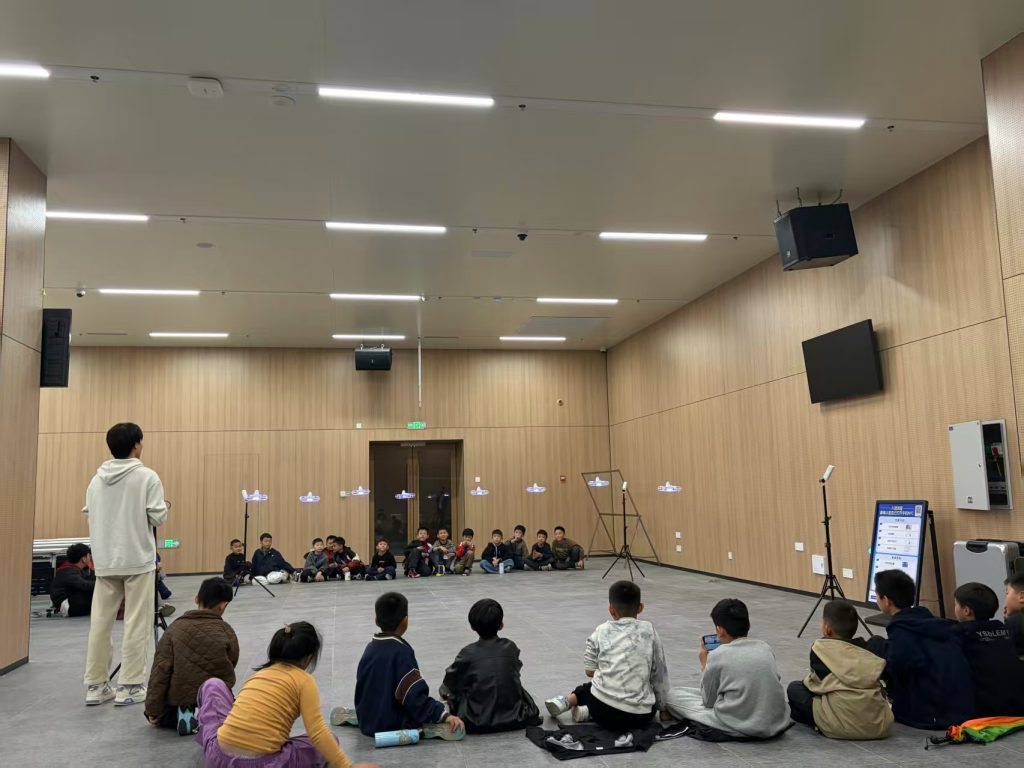
To address these challenges, I have implemented several methods in my practice. First,强化师资队伍建设 is essential. We have拓宽专业教师引进渠道 by collaborating with leading drone enterprises to attract experienced engineers through flexible arrangements like兼职任教.同时, we recruit fresh graduates from related fields, who, with mentorship, can grow into teaching骨干. This diversification enriches our drone training团队. Moreover, we提升教师专业素养与实践能力 by sending teachers to high-end industry workshops, such as those by the Chinese Society of Aeronautics, focusing on topics like智能飞行控制. The knowledge gained is integrated into courses; for example, after learning about深度学习自主避障算法, teachers update “无人机飞控技术” with new案例, enhancing the relevance of drone training. A formula for teacher development is: $$K_g = \alpha \times T_e + \beta \times C_i$$ where \(K_g\) is knowledge growth, \(\alpha\) and \(\beta\) are coefficients, \(T_e\) is training exposure, and \(C_i\) is curriculum integration. Higher \(K_g\) correlates with better drone training outcomes.
Second,完善课程体系 is crucial. We adopt a基于工作过程的课程模块化设计, structuring courses around real-world drone application workflows. For instance, in drone surveying, modules include “测绘任务规划与设计,” “设备调试与校准,” “数据采集实战,” and “后处理与三维建模.” Each module builds on the previous, ensuring students develop a cohesive skill set through immersive drone training. This approach aligns with industry processes, improving岗位适应能力. We also establish a课程内容动态更新机制 by partnering with companies for regular updates. Teachers participate in enterprise projects, such as智能施药系统研发, and bring back insights to refresh课程内容.企业专家 contribute to教材编写, infusing前沿技术 like集群智能 into materials. This ensures that drone training remains current, as shown in Table 3.
| Module | Focus | Drone Training Objectives |
|---|---|---|
| Mission Planning | Flight route design, risk assessment | Develop skills in software tools and regulatory compliance for safe operations. |
| Equipment Handling | Drone assembly, calibration, maintenance | Hands-on training in troubleshooting and optimizing drone performance. |
| Flight Operations | Manual and autonomous piloting, data capture | Enhance操控能力 through simulated and real-flight scenarios in drone training. |
| Data Analysis | Processing aerial images, generating reports | Teach analytical techniques using specialized software for actionable insights. |
Furthermore, we enhance实训基地建设 by investing in校内实训资源. We have expanded实训室数量 and upgraded设备种类 to include advanced industrial drones, allowing students to practice with tools like高清实时图传 systems. This hands-on drone training bridges the gap with industry standards. For校外实训基地合作, we foster稳定性 through long-term agreements with companies, ensuring students gain深入实践机会 in研发、生产、运维. We also create互动平台 for feedback, aligning curricula with岗位需求. The effectiveness of such partnerships can be measured using: $$P_s = \frac{E_a \times S_d}{C_o}$$ where \(P_s\) is partnership success, \(E_a\) is enterprise engagement, \(S_d\) is student development, and \(C_o\) is coordination effort. Maximizing \(P_s\) is key for sustainable drone training.
In my实践, I have found that integrating mathematical models into drone training enhances understanding. For example, the flight time of a drone can be estimated with: $$T = \frac{C \times V \times \eta}{P}$$ where \(T\) is time in hours, \(C\) is battery capacity in Ah, \(V\) is voltage, \(\eta\) is efficiency (typically 0.8-0.9), and \(P\) is power consumption in watts. This formula helps students design missions within operational limits. Similarly, for flight dynamics, we use simplified equations like: $$F = m \cdot a + D$$ where \(F\) is thrust, \(m\) is mass, \(a\) is acceleration, and \(D\) is drag force. These concepts are woven into practical exercises, reinforcing the technical foundations of drone training.
Another aspect is the emphasis on continuous improvement. We regularly assess our drone training programs through student feedback and industry surveys. For instance, we track employment rates and employer satisfaction, which have shown positive trends after implementing these methods. The impact can be quantified as: $$I = \frac{J_p}{J_t} \times 100\%$$ where \(I\) is the improvement index, \(J_p\) is the number of students placed in drone-related jobs, and \(J_t\) is the total graduates. In recent years, \(I\) has increased from 70% to 85%, indicating the efficacy of our approaches. This success stems from a holistic focus on师资, curriculum, and实训, all centered on high-quality drone training.
Looking ahead, I believe that vocational colleges must remain agile in adapting to technological shifts. The rise of AI, 5G, and新能源动力 in drones will require ongoing updates to drone training内容. We plan to introduce modules on量子导航 and边缘计算, ensuring our students stay ahead. Collaboration with international bodies could also enrich our programs, exposing learners to global standards. Ultimately, the goal is to cultivate professionals who not only operate drones but also innovate in their applications, driving the industry forward. Through persistent research and实践, we can overcome challenges and build robust drone application technology programs that meet societal needs.
In conclusion, as an educator committed to this field, I have seen how focused efforts in师资队伍建设,课程体系完善, and实训基地建设 can transform drone training. By leveraging tables to organize data, formulas to clarify concepts, and partnerships to enhance practicality, we can create dynamic learning environments. The integration of real-world elements, such as the image of UAV training, reminds us of the hands-on nature of this discipline. Vocational colleges play a pivotal role in this ecosystem, and by embracing innovation, we can ensure that our drone training programs produce skilled, adaptable graduates ready to contribute to the ever-evolving drone industry. This journey requires dedication, but the rewards—in terms of student success and industry advancement—are immense, reinforcing the value of continuous learning and adaptation in drone training.