
The concept of the “low-altitude economy” has evolved from a niche segment of general aviation into a recognized strategic emerging industry, now positioned as a quintessential representative of new quality productive forces in China. Observing its development trajectory, I find it aligns perfectly with the general logic of a technological-economic paradigm shift. This paradigm is not merely about the adoption of new aircraft; it represents a fundamental restructuring of economic activities, value creation, and societal interaction within a newly accessible three-dimensional space. The transition is driven by core technological breakthroughs that enable novel structures and forms, which in turn give rise to unprecedented value-creating activities, ultimately yielding significant economic and social results. This framework of Driving Forces, New Structures & Forms, Value-Creation Activities, and Value-Creation Results provides a robust lens through which to analyze the current state and future potential of this burgeoning sector.
Deconstructing the Low-Altitude Economy: Concept and Core Characteristics
From my analysis, the low-altitude economy can be defined as a comprehensive economic形态 centered on low-altitude flight activities—primarily involving manned and unmanned aircraft operating at relatively low altitudes. It is synergistically powered by new quality productive forces like unmanned systems and intelligent networking technologies. This ecosystem radiates outward, driving development across upstream and downstream industries including aircraft manufacturing, infrastructure development, operational services, and integrated flight support. Its core characteristics are distinct: it is highly technology-intensive, features an exceptionally long and interlinked industrial chain, boasts a vast array of application scenarios, and involves a multitude of participating entities and governing departments.
The scope of application is particularly telling. It spans from urban to non-urban settings and across different airspace classes, as summarized below:
| Scenario | Airspace Class | Primary Application Domains |
|---|---|---|
| Urban | W (0-120m) | Low-altitude + Logistics, Aerial Photography |
| G (120-300m) | Low-altitude + Logistics, Low-altitude + Inspection | |
| Non-Urban | W (0-120m) | Low-altitude + Tourism, Low-altitude + Agriculture (e.g., crop spraying) |
| G/E (120m+) | Low-altitude + Tourism, Firefighting, Patrol, Surveying |
The value proposition manifests across multiple dimensions: the information dimension (data collection, surveillance), the energy/material dimension (transportation of people and goods), and the emotional dimension (tourism, leisure).
The Driving Forces: Technology, Infrastructure, and Policy
The genesis of this paradigm is a confluence of powerful drivers. At its core is technological breakthrough. China has developed a formidable advantage in drone manufacturing, accounting for over 70% of global sales, with companies leading in consumer and industrial segments. Progress in Electric Vertical Take-Off and Landing (eVTOL) aircraft is equally significant, with models achieving world-first certifications and range records. Underpinning this are advances in new energy batteries, composite materials, and digital technologies like AI and IoT, which enable smarter, safer, and more efficient operations.
However, technology alone is insufficient. Infrastructure development is a critical parallel driver. The number of managed general aviation airports in China has seen a notable increase, a fundamental prerequisite for scaling operations.
| Year | Number of Airports | Growth Rate (%) |
|---|---|---|
| 2020 | 335 | 40.8 |
| 2021 | 375 | 11.9 |
| 2022 | 399 | 6.4 |
| 2023 | 449 | 12.5 |
Perhaps the most catalytic driver in the Chinese context has been policy and regulatory support. The journey began with airspace management reforms and has accelerated dramatically. The inclusion of “developing the low-altitude economy” in the 2024 Government Work Report marked a seminal moment, elevating it to a national strategic priority. This has unleashed a wave of supportive policies from central and local governments, covering airspace classification, industry development guidelines, and innovation application plans, creating a powerful “policy wind” effect that is accelerating investment and market entry.
Emerging Structures and Forms: Reshaping Industries and Space
The activation of these drivers is precipitating profound changes in economic structures and operational forms. A new, complex industrial structure is crystallizing. It extends beyond traditional aviation manufacturing to encompass a full spectrum of activities: R&D and production of aircraft and components, flight operations and service provision, infrastructure construction and management, and a wide array of derivative data and support services. This is not an isolated chain; it is characterized by deep industrial integration, giving rise to numerous “low-altitude +” models such as +logistics, +agriculture, and +tourism.
This leads to a fundamental reimagining of spatial structure. Economic activity is expanding from a two-dimensional plane into the three-dimensional volume of low-altitude airspace, creating a new resource domain for transportation, logistics, and services. Consequently, new market structures are emerging, with novel business entities like specialized drone logistics operators and eVTOL air taxi service providers coming to the fore.
The operational forms within this new structure are distinctly modern: they are intelligent (relying on autonomous systems and AI), networked (integrating vehicles, sensors, and control systems into a cohesive IoT fabric), and green (prioritizing electric propulsion and sustainable operations). Cities and regions are already leveraging their unique advantages to carve out distinctive positions within this new landscape, fostering specialized low-altitude economic clusters focused on R&D, manufacturing, or application services.
Value-Creation Activities: The Engine of the New Paradigm
The new structures enable specific value-creating activities. The industrial value chain itself is a primary source. A robust ecosystem of companies has emerged across key segments:
- Manufacturing: Leaders in drones, eVTOL airframes, batteries, motors, and composites.
- Services & Operations: Companies specializing in air traffic management systems, radar, ground infrastructure, and actual flight operations.
- Support & Maintenance: Firms providing critical after-market services including maintenance, repair, and notably, comprehensive drone training and certification programs.
The scale of activity is expanding rapidly. The drone sector alone comprises thousands of manufacturers and tens of thousands of operators. Logistics networks are being piloted at scale; for instance, some operators have conducted hundreds of thousands of flights, transporting millions of packages over millions of kilometers. The application scenarios solve persistent industrial pain points, creating value through efficiency gains, cost reduction, and entirely new service capabilities.
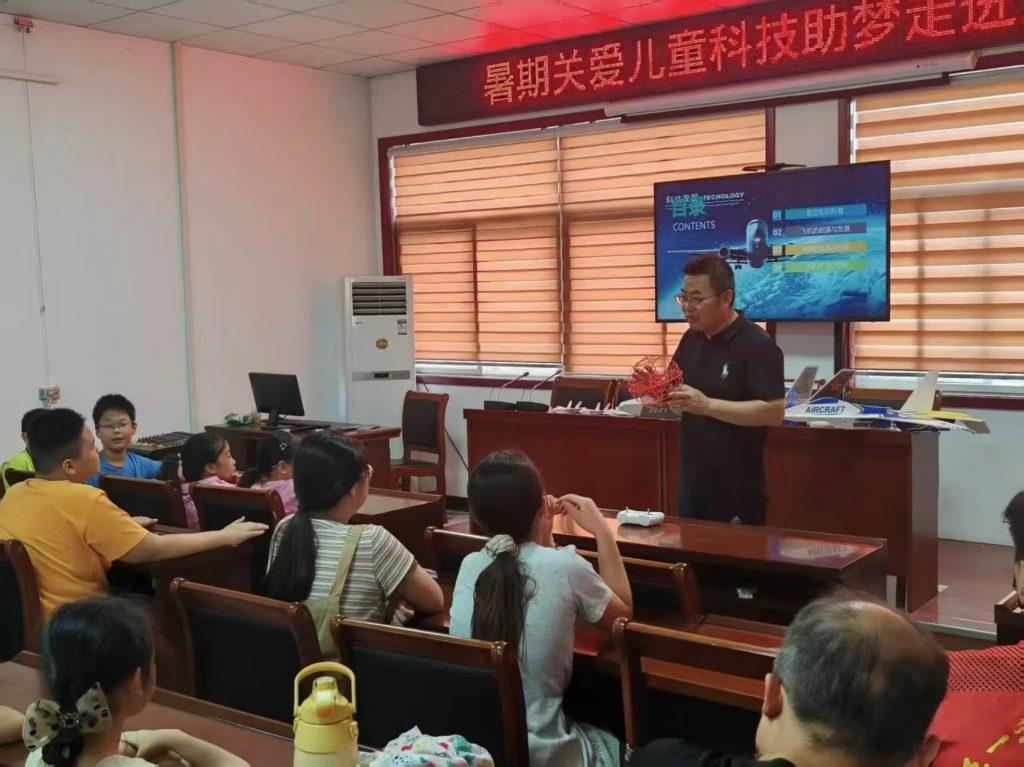
A critical and often underestimated activity within this value chain is drone training. As the sector professionalizes and scales, the demand for certified pilots, maintenance technicians, and airspace managers explodes. High-quality drone training programs are essential for ensuring safety, regulatory compliance, and operational efficiency. They are the human capital foundation upon which the entire industry’s safe growth depends. Investing in standardized and advanced drone training ecosystems is not an ancillary activity but a core value-creating investment in the industry’s sustainable future.
Value-Creation Results: Economic and Social Outcomes
The culmination of these activities is tangible value creation. Economically, the sector is on a high-growth trajectory. Estimates project the core low-altitude economy scale to grow from approximately 506 billion CNY in 2023 to over one trillion CNY by 2026, with sub-sectors like eVTOL growing at an even faster compound annual rate. This translates into direct contributions to GDP, high-tech job creation, and the stimulation of related industries.
The social value is multifaceted. It enhances public service capabilities in emergency response, medical aid, and environmental monitoring. It promotes regional coordinated development by providing transportation and logistics solutions that bypass challenging terrain. It supports green development through electric propulsion. The efficiency gains are quantifiable; for example, using drones for mountain resort logistics can replace dozens of manual porters, drastically reducing cost and time while improving reliability.
We can model the aggregate value creation ($V$) of this paradigm as a function of its core components:
$$ V = \int_{0}^{T} \left( \alpha \cdot I_{tech}(t) + \beta \cdot I_{infra}(t) + \gamma \cdot N_{scene}(t) \cdot \eta_{train}(t) \right) \cdot P_{policy}(t) \, dt $$
Where:
– $I_{tech}(t)$ represents technological innovation input.
– $I_{infra}(t)$ represents infrastructure investment.
– $N_{scene}(t)$ represents the number/depth of application scenarios.
– $\eta_{train}(t)$ represents the efficiency multiplier from skilled human capital, a direct output of effective drone training ecosystems.
– $P_{policy}(t)$ represents the enabling effect of policy and regulation.
– $\alpha, \beta, \gamma$ are contribution coefficients.
This model illustrates that value accumulates over time and is synergistically amplified by policy, with human capital training ($\eta_{train}$) acting as a critical efficiency multiplier for scaling applications.
Persisting Challenges and Strategic Countermeasures
Despite the momentum, the development of China’s low-altitude economy remains in a nascent stage compared to established markets like the United States. The gaps highlight systemic challenges:
| Challenge Category | Specific Manifestations |
|---|---|
| Top-Level Design | Lack of a unified, cross-ministerial national strategy; fragmented regulations; insufficient statistical frameworks. |
| Institutional Mechanisms | Complex airspace approval processes; multi-departmental coordination hurdles; safety oversight for dense operations. |
| Technological Innovation | Dependence on foreign sources for key general aviation components (e.g., engines); cost and safety bottlenecks for mass adoption. |
| Scenario Development & Cost | Consumer market adoption is slow; high upfront infrastructure and vehicle costs; many operators rely on subsidies. |
| Industry Ecosystem | Shortage of vertiports and digital air traffic management infrastructure; acute lack of professionals; high barriers to entry. |
Addressing these requires a systematic and strategic approach:
1. Formulate Integrated National and Regional Strategies: Develop clear, quantitative multi-year plans that align central direction with local advantages, preventing redundant, blind investments.
2. Deepen Airspace Management Reform: Further simplify flight approval processes, expand the scope of accessible low-altitude zones, and establish clear, science-based rules for mixed-traffic operations.
3. Enhance Financial and Policy Support: Utilize special funds, tax incentives, and green financing to de-risk R&D and early-stage operations. Subsidies should target both supply-side innovation and demand-side adoption.
4. Foster Holistic Industrial Chain Collaboration: Encourage cluster development and public demonstration projects. Support leading firms to drive standards and scale.
5. Accelerate Core Tech R&D and Cultivate Talent: Focus on breaking bottlenecks in aviation core technologies. Crucially, expand university programs and vocational drone training academies to build a pipeline of pilots, technicians, engineers, and managers. High-quality drone training is a strategic imperative.
6. Build Infrastructure and Robust Governance Frameworks: Plan and invest in a network of physical vertiports and digital “low-altitude cloud” control platforms. Simultaneously, develop comprehensive laws, technical standards, and safety protocols to ensure orderly and secure growth.
In conclusion, from my perspective, China’s low-altitude economy is undergoing a classic technological-economic paradigm shift. It is moving from a policy-driven, nascent phase toward a more mature, market-driven, and ecosystem-based stage of development. Its success will hinge not just on technological prowess or infrastructure, but on the systemic integration of all paradigm elements: sustained innovation, enlightened regulation, scalable business models, and—fundamentally—the development of human capital through pervasive, high-standard drone training and education. This holistic development will determine its role as a sustainable engine for new quality productive forces and long-term economic transformation.