
As the demand for electricity continues to grow and power grid scales expand, ensuring the safe and stable operation of transmission lines has become critical for reliable power supply. Traditional manual inspection methods are plagued by inefficiencies, limited coverage, and high labor intensity. The adoption of drone technology offers a promising solution to these challenges. In our operations, we have continuously optimized and innovated the management and control modes for drone-based inspection of transmission lines, significantly enhancing operational effectiveness. This article, from a first-person perspective, details our innovations in drone inspection management, covering goals, application scenarios, and pathways, with an emphasis on structured summaries using tables and formulas, and repeated emphasis on drone training.
The innovation in drone inspection management aims to achieve multiple objectives: improving inspection efficiency and quality, reducing maintenance costs, ensuring operational safety, and enhancing data management capabilities. Each of these goals is supported by specific strategies and measurable outcomes, which we will explore in depth.
To begin, let’s formalize the primary goals using a table that summarizes key objectives and corresponding metrics:
| Innovation Goal | Key Performance Indicators (KPIs) | Strategic Measures |
|---|---|---|
| Enhance Inspection Efficiency and Quality | Inspection cycle time reduction, defect detection rate | Use of high-resolution cameras, infrared thermography, optimized flight paths |
| Reduce Line Maintenance Costs | Cost savings per inspection, avoidance of outage losses | Resource optimization, decreased manual labor, preventive maintenance |
| Ensure Operational Safety | Reduction in accident rates, remote operation compliance | Remote drone操控, safety protocols, risk mitigation |
| Strengthen Data Management and Application | Data processing speed, analysis accuracy | Centralized data platforms, AI-driven analytics, decision support systems |
Mathematically, the improvement in inspection efficiency can be expressed as an increase in the area covered per unit time. Let $$E$$ represent inspection efficiency, defined as:
$$E = \frac{A}{t}$$
where $$A$$ is the total area or length of transmission lines inspected, and $$t$$ is the time required. With drones, $$E$$ increases due to faster coverage and reduced downtime. For cost reduction, the savings $$C_{savings}$$ can be modeled as:
$$C_{savings} = C_{manual} – C_{drone}$$
where $$C_{manual}$$ and $$C_{drone}$$ are the costs of manual and drone inspections, respectively. This includes factors like labor, equipment, and outage-related expenses. Safety enhancement is quantified by the risk reduction factor $$R$$:
$$R = 1 – \frac{P_{drone}}{P_{manual}}$$
where $$P_{drone}$$ and $$P_{manual}$$ are the probabilities of accidents during drone and manual inspections. Typically, $$R > 0$$ due to remote operations.
Drone inspection management finds application in various scenarios, each tailored to specific operational needs. The following table outlines these scenarios and their characteristics:
| Application Scenario | Description | Recommended Drone Type | Key Benefits |
|---|---|---|---|
| Routine Inspections | Regular, scheduled inspections to detect defects like insulator damage or conductor breakage | Multi-rotor drones for stability and precision | Consistent monitoring, early fault detection |
| Special Condition Inspections | 应急响应 to恶劣天气, natural disasters (e.g., typhoons, floods) for rapid damage assessment | Fixed-wing or hybrid drones for speed and range | Quick response, minimized downtime |
| Precision Inspections | Detailed examination of critical components (e.g., joints, towers) using high-resolution sensors | Multi-rotor drones with advanced imaging | Accurate defect diagnosis, targeted maintenance |
| Collaborative Inspections | Combination of drone and manual inspections for comprehensive coverage | Mixed fleet based on terrain and tasks | Holistic assessment, enhanced accuracy |
In routine inspections, drones operate autonomously along pre-defined routes, collecting data that is analyzed for anomalies. For special conditions, drones enable rapid deployment, with efficiency gains modeled as:
$$T_{response} = \frac{D}{v} + t_{setup}$$
where $$T_{response}$$ is the total response time, $$D$$ is the distance to the site, $$v$$ is the drone speed, and $$t_{setup}$$ is the preparation time. Compared to manual teams, drones reduce $$T_{response}$$ significantly. Precision inspections rely on sensor data fusion; for instance, infrared thermography detects heat anomalies indicative of faults, with temperature differentials $$\Delta T$$ calculated as:
$$\Delta T = T_{component} – T_{ambient}$$
where values exceeding thresholds trigger alerts.
The innovation pathways for drone inspection management encompass technological advances, process optimization, personnel development, and data intelligence. Technological innovation is driven by selecting appropriate drone platforms, integrating sensors, and ensuring reliable communication. We summarize key technological components in the table below:
| Technological Aspect | Components | Function | Impact on Inspection |
|---|---|---|---|
| Drone Platform Selection | Multi-rotor, fixed-wing, hybrid drones | Adapt to inspection range and precision needs | Optimized flight performance and coverage |
| Sensor Integration | High-definition cameras, infrared imagers, LiDAR | Multi-dimensional data capture (visual, thermal, spatial) | Enhanced defect detection accuracy |
| Communication Systems | 5G networks, real-time data links | Ensure stable control and data transmission | Improved operational reliability and speed |
The effectiveness of sensor integration can be expressed through a data quality metric $$Q$$:
$$Q = \sum_{i=1}^{n} w_i \cdot s_i$$
where $$n$$ is the number of sensors, $$w_i$$ are weights reflecting importance, and $$s_i$$ are sensor accuracy scores. For communication, latency $$L$$ must be minimized:
$$L = \frac{d}{c} + processing\ time$$
with $$d$$ as distance and $$c$$ as signal speed; 5G reduces $$L$$ to near-real-time levels.
Process optimization involves standardizing inspection tasks, workflows, and quality control. We develop detailed plans based on geographic information systems (GIS), historical data, and risk assessments. A key formula for task planning is the optimization of flight paths to minimize time and energy use, often solved using algorithms like the Traveling Salesman Problem (TSP):
$$\min \sum_{i,j} c_{ij} x_{ij}$$
subject to constraints covering all inspection points, where $$c_{ij}$$ is the cost (e.g., time) between points $$i$$ and $$j$$, and $$x_{ij}$$ are binary decision variables. Standard operating procedures (SOPs) are documented in作业指导书, ensuring consistency and safety.
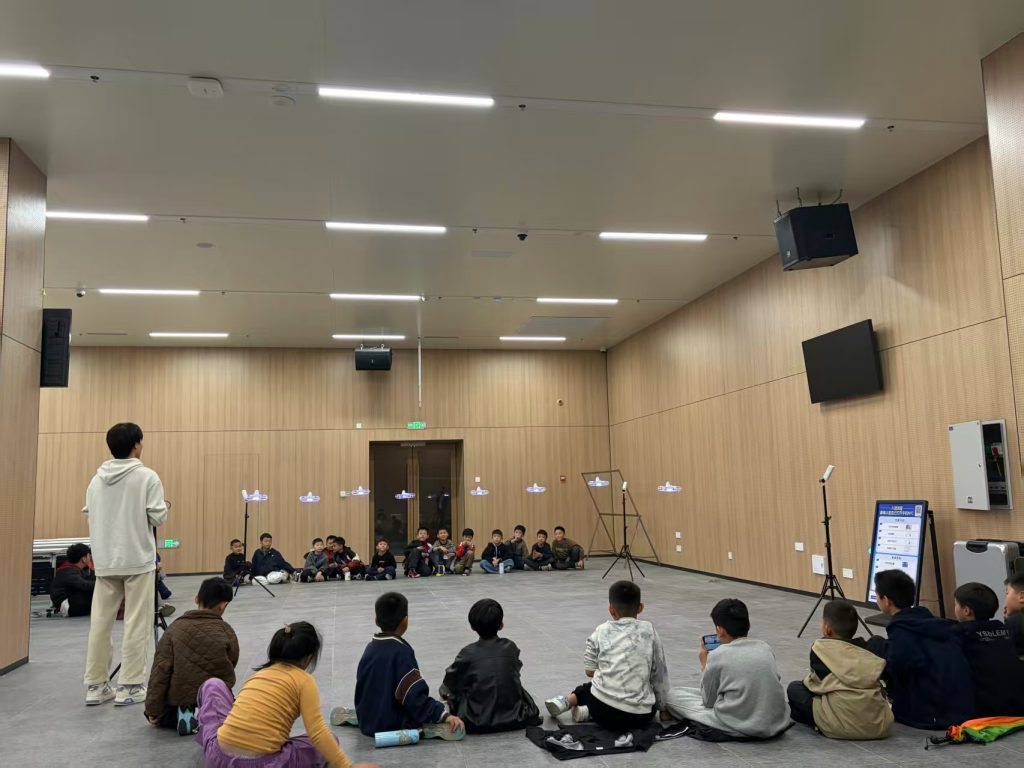
Central to our innovation is the emphasis on personnel development, particularly drone training. Effective drone training programs are essential for operational success, covering technical skills, safety protocols, and data analysis. We incorporate drone training at multiple stages, from basic操作 to advanced故障诊断. The following table outlines core drone training modules:
| Drone Training Module | Content | Duration | Outcome |
|---|---|---|---|
| Basic Flight Operations | Drone piloting, navigation, emergency procedures | 40 hours | Certified drone operators |
| Technical Maintenance | Drone assembly, sensor calibration, troubleshooting | 30 hours | Reduced downtime, improved reliability |
| Safety and Compliance | Risk assessment, regulatory adherence, incident response | 20 hours | Enhanced safety records |
| Data Handling and Analysis | Image processing, defect recognition, report generation | 50 hours | Accurate and timely insights |
Drone training is not a one-time event but an ongoing process, with refresher courses and advanced sessions to keep pace with technological advancements. We measure training effectiveness through metrics like pass rates and on-job performance improvements. For instance, the competency level $$C$$ after drone training can be modeled as:
$$C = C_0 + \alpha \cdot T$$
where $$C_0$$ is initial competency, $$T$$ is training hours, and $$\alpha$$ is a learning rate coefficient. Regular drone training ensures that our team remains proficient in handling complex inspection scenarios, thereby boosting overall efficiency and safety.
Data management and intelligent analysis form the backbone of our drone inspection system. We deploy centralized platforms that store and process vast amounts of data collected during inspections. The data volume $$D_{total}$$ from multiple flights is:
$$D_{total} = \sum_{k=1}^{m} (I_k + V_k + S_k)$$
where for each flight $$k$$, $$I_k$$ is image data, $$V_k$$ is video footage, and $$S_k$$ is sensor readings (e.g., thermal, LiDAR). Using machine learning algorithms, we automate defect detection with accuracy $$A_{detection}$$:
$$A_{detection} = \frac{TP + TN}{TP + TN + FP + FN}$$
where TP, TN, FP, FN are true positives, true negatives, false positives, and false negatives, respectively. Continuous improvement in algorithms, supported by ongoing drone training on data interpretation, enhances $$A_{detection}$$ over time.
Furthermore, we develop decision support systems that leverage analytics for predictive maintenance. For example, based on historical defect patterns, we forecast failure probabilities using statistical models like Weibull distributions:
$$F(t) = 1 – e^{-(t/\eta)^\beta}$$
where $$F(t)$$ is the cumulative failure probability at time $$t$$, $$\eta$$ is the scale parameter, and $$\beta$$ is the shape parameter. This informs maintenance scheduling, optimizing resource allocation and minimizing costs. The integration of drone training into data analysis ensures that personnel can effectively utilize these tools, turning raw data into actionable insights.
In summary, our innovative approach to drone inspection management has revolutionized transmission line maintenance. By setting clear goals, diversifying application scenarios, and pursuing multifaceted innovation pathways—especially through rigorous drone training—we have achieved substantial gains in efficiency, safety, and cost-effectiveness. The use of tables and formulas, as demonstrated throughout this article, helps encapsulate complex concepts and measurable outcomes. As drone technology evolves, we will continue to refine our practices, with drone training remaining a cornerstone for adapting to new challenges and opportunities. This comprehensive management model not only elevates our operational standards but also sets a benchmark for the industry, ensuring reliable power delivery through proactive and intelligent infrastructure monitoring.