
In recent years, the rapid advancement of drone technology has transformed various industries, from agriculture and surveying to security and logistics. As an educator and researcher in the field of vocational education, I have observed that the integration of drones into practical teaching is crucial for meeting the evolving demands of the workforce. This article explores the reform of drone training content under strategic frameworks, emphasizing the need for a multidisciplinary approach to enhance student competencies. The core of drone training lies in bridging the gap between theoretical knowledge and hands-on application, which is essential for cultivating skilled professionals who can contribute to technological innovation and economic growth.
The development of drone applications is characterized by rapid technological convergence, involving fields such as control theory, navigation, artificial intelligence, and sensor integration. In my experience, drone training must adapt to these changes by incorporating cutting-edge content that reflects real-world scenarios. The strategic background of regional initiatives, such as the “Three Highs and Four News” strategy in Hunan, China, underscores the importance of aligning educational outcomes with industrial needs. This strategy aims to foster advanced manufacturing, scientific innovation, and open economic policies, all of which rely on a skilled workforce proficient in drone technology. Therefore, reforming drone training is not just an educational imperative but a strategic necessity for regional development.
From my perspective, the current state of drone training in vocational institutions often lags behind industry trends, leading to a mismatch between graduate skills and job requirements. Through extensive research and engagement with industry partners, I have identified several critical areas for improvement. This article delves into a comprehensive reform model that focuses on practical teaching content, aiming to enhance drone training by integrating modular courses, project-based learning, and advanced simulation platforms. By doing so, we can better prepare students for diverse roles in the drone ecosystem, from assembly and operation to software development and data analysis.
Drone training must evolve to address the complexities of modern applications. For instance, the rise of low-altitude economy and integrated spatio-temporal systems necessitates a deeper understanding of navigation and communication technologies. In my work, I have advocated for a holistic approach that combines hardware experimentation with software simulation, enabling students to grasp the full spectrum of drone capabilities. This article outlines a framework for reform, including detailed strategies for curriculum design, teaching methodologies, resource development, and instructor collaboration. The goal is to create a dynamic drone training environment that fosters innovation, critical thinking, and practical expertise.
Professional Development and Demand Analysis
The drone industry has expanded from military applications to widespread civilian use, driven by advancements in intelligent technology and the proliferation of application scenarios. As a researcher, I have analyzed the drone supply chain, which spans upstream components (e.g., sensors, materials), midstream integration (e.g., flight control systems), and downstream services (e.g., surveying, delivery). This diversity necessitates a broad yet specialized drone training curriculum. In regions like Hunan, the “Three Highs and Four News” strategy emphasizes the development of advanced manufacturing and technological innovation, creating a demand for professionals who can leverage drones for industrial automation and smart infrastructure.
From my analysis, the key trends in drone applications include the integration with emerging technologies such as the BeiDou Navigation Satellite System (BDS) and artificial intelligence. For example, drones are increasingly used in precision agriculture, where they collect multispectral data for crop monitoring. The mathematical model for such applications can be represented using formulas for sensor data fusion. Consider a drone equipped with a camera and GPS; the position estimation can be refined through Kalman filtering, expressed as:
$$ \hat{x}_{k|k} = \hat{x}_{k|k-1} + K_k(z_k – H\hat{x}_{k|k-1}) $$
where $\hat{x}_{k|k}$ is the updated state estimate, $K_k$ is the Kalman gain, $z_k$ is the measurement, and $H$ is the observation matrix. This highlights the need for drone training to include algorithmic thinking and signal processing.
Moreover, policy support for low-altitude economy development has opened new avenues for drone training. In my research, I have noted that vocational institutions must align their programs with these macro-trends. The following table summarizes the core components of drone industry demand and corresponding training focus areas:
| Industry Segment | Key Technologies | Training Focus for Drone Training |
|---|---|---|
| Upstream (Components) | Sensor design, material science | Electronics, embedded systems, CAD modeling |
| Midstream (Integration) | Flight control, navigation, AI | Control theory, software development, simulation |
| Downstream (Services) | Data analysis, application-specific operations | Geographic information systems, image processing, field operations |
This table underscores the multidisciplinary nature of drone training, which requires a balance between foundational knowledge and specialized skills. In my view, effective drone training should mirror this structure, ensuring that students are exposed to both hardware assembly and software programming.
Talent Supply-Demand and Educational Model Status
In my engagement with vocational colleges, I have observed a significant gap between the supply of drone professionals and industry demand. According to reports, Hunan province has over 40,000 drone-related jobs, but the skill sets of graduates often do not match employer expectations. This mismatch stems from several factors: outdated curricula, insufficient practical exposure, and a lack of industry collaboration. From my perspective, the current educational models for drone training are often too theoretical, focusing on basic operations rather than innovative applications.
For instance, many drone training programs emphasize flight assembly and remote control, but neglect advanced topics like swarm coordination or autonomous navigation. The dynamics of a multi-rotor drone can be described using Newton-Euler equations, which are essential for understanding flight control. For a quadcopter, the thrust and torque equations are:
$$ F = k_f \omega^2 $$
$$ \tau = k_\tau \omega^2 $$
where $F$ is thrust, $\tau$ is torque, $\omega$ is motor angular velocity, and $k_f$, $k_\tau$ are constants. Incorporating such mathematical models into drone training can deepen students’ comprehension of flight mechanics.
Furthermore, the integration of “1+X” certification systems and competency-based education has shown promise in bridging this gap. In my experience, drone training should adopt a modular approach that allows students to progress from basic to advanced competencies. The following table compares traditional versus reformed drone training models:
| Aspect | Traditional Drone Training | Reformed Drone Training |
|---|---|---|
| Curriculum | Fixed, theory-heavy | Flexible, project-based |
| Practical Focus | Assembly and basic flight | Simulation, algorithm development, industry applications |
| Industry Linkage | Limited internships | Deep collaboration with enterprises, real-world projects |
| Assessment | Exam-based | Portfolio and competency evaluations |
This comparison highlights the need for a paradigm shift in drone training, where practical skills and innovation are prioritized. From my observations, successful drone training programs often involve partnerships with local companies, providing students with hands-on experience in fields like aerial surveying or infrastructure inspection.
Practical Teaching Issues and Reform Framework
Based on my research, the main issues in drone training include fragmented knowledge delivery, weak industry-education integration, outdated teaching resources, and inadequate instructor expertise. To address these, I propose a reform framework centered on “two-chain focus, four-item improvement, and multi-dimensional development.” This framework aims to align drone training with industry chains and innovation chains, while enhancing competencies in assembly, operation, application, and innovation.
In drone training, the theoretical underpinnings must be reinforced with practical experiments. For example, the PID controller, commonly used in flight stabilization, can be taught through simulation. The PID formula is:
$$ u(t) = K_p e(t) + K_i \int_0^t e(\tau) d\tau + K_d \frac{de(t)}{dt} $$
where $u(t)$ is the control output, $e(t)$ is the error, and $K_p$, $K_i$, $K_d$ are gains. By implementing this in a software-in-the-loop simulation, students can visualize the impact of tuning parameters on drone stability.
Moreover, the reform should emphasize interdisciplinary integration. Drone training must incorporate elements from computer science, electrical engineering, and geomatics. I have developed a set of guidelines for this, as summarized in the table below:
| Issue in Drone Training | Reform Strategy | Expected Outcome |
|---|---|---|
| Disconnected from industry needs | Establish industry advisory boards, update curricula annually | Graduates with relevant skills for local job markets |
| Lack of hands-on practice | Build open-source simulation platforms, increase lab hours | Students proficient in both virtual and physical drone operations |
| Insufficient instructor training | Provide industry secondments, foster dual-teacher systems | Instructors with current technical knowledge and teaching skills |
| Limited innovation culture | Introduce design thinking workshops, hackathons | Students capable of developing novel drone applications |
This framework guides the systematic overhaul of drone training, ensuring that every aspect from course design to assessment is geared towards practical excellence. From my experience, such reforms require sustained commitment from institutions and policymakers, but they yield significant benefits in graduate employability and technological advancement.
Strategies for Reforming Drone Application Technology Teaching Content
As an educator, I believe that drone training must be restructured around a “graded and classified, gradient cultivation” modular curriculum. This involves creating foundational modules for all students, followed by specialized tracks based on industry niches. For instance, a drone training program could include core courses in electronics and programming, with electives in areas like precision agriculture or urban planning. This approach ensures that students receive a broad base while allowing customization to match career aspirations.
In terms of teaching methods, I advocate for a “foundation expansion, real-post refinement” project-based strategy. Drone training should involve sequential projects that mimic real-world workflows. An example is a semester-long project where students design, build, and test a drone for a specific task, such as environmental monitoring. The project phases could include:
- Requirements analysis and design using CAD software.
- Hardware assembly and sensor integration.
- Software development for autonomous navigation.
- Field testing and data analysis.
Each phase reinforces key concepts, from mechanical design to data science. For navigation, the drone’s path planning can be modeled using graph theory algorithms, such as A* search, with the cost function:
$$ f(n) = g(n) + h(n) $$
where $g(n)$ is the cost from start to node $n$, and $h(n)$ is the heuristic estimate to the goal. Integrating such algorithms into drone training projects enhances problem-solving skills.
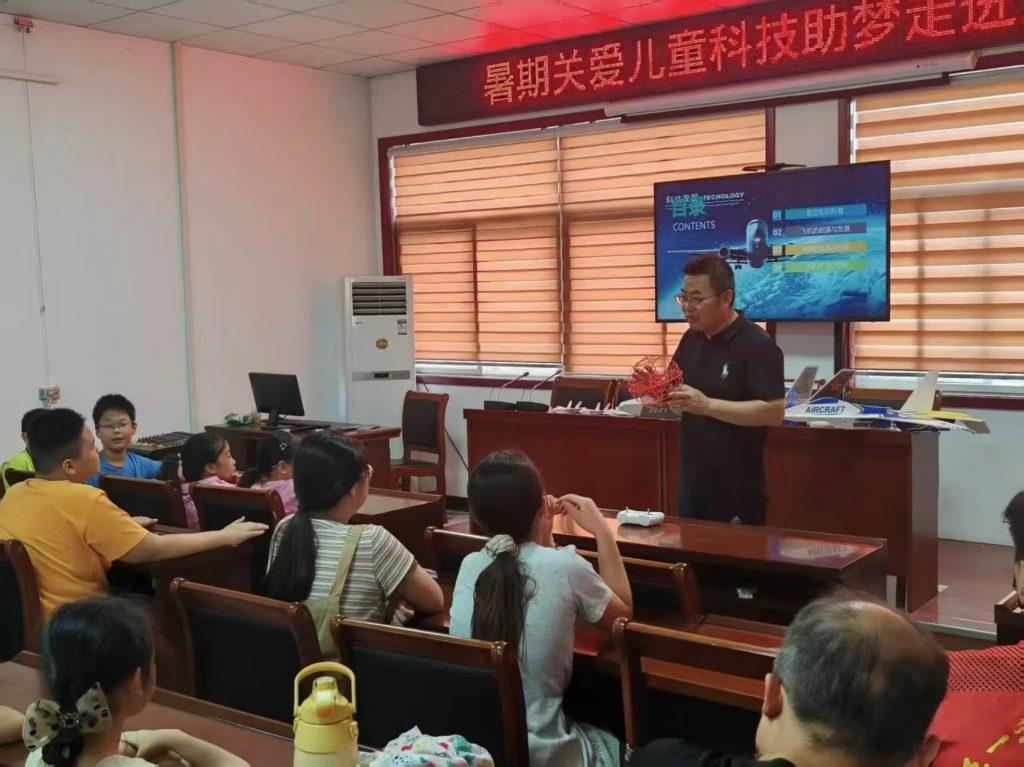
Furthermore, resource platforms for drone training should be “multi-party integrated, jointly constructed” to ensure continuous updates. I have collaborated with industry partners to develop open-source simulation tools that allow students to experiment with flight controllers without physical risks. These platforms often include libraries for common drone models, enabling students to focus on algorithm development. For example, a simulation might use the following dynamics model for a quadcopter:
$$ \begin{align*} \ddot{x} &= (\sin\psi \sin\phi + \cos\psi \sin\theta \cos\phi) \frac{U_1}{m} \\ \ddot{y} &= (-\cos\psi \sin\phi + \sin\psi \sin\theta \cos\phi) \frac{U_1}{m} \\ \ddot{z} &= -g + (\cos\theta \cos\phi) \frac{U_1}{m} \end{align*} $$
where $x, y, z$ are positions, $\phi, \theta, \psi$ are roll, pitch, yaw angles, $U_1$ is total thrust, $m$ is mass, and $g$ is gravity. By simulating this model, students can test control strategies before real-flight trials.
Another critical aspect is instructor development. I propose a “three-layer progression, industry-focused” collaborative teacher structure, where academic instructors work alongside industry experts to deliver drone training. This can be implemented through guest lectures, joint research projects, and externships. The table below outlines a sample collaboration model for drone training:
| Layer | Instructor Role | Activities in Drone Training |
|---|---|---|
| Policy | Curriculum designers, administrators | Align programs with regional strategies, secure funding |
| System | Core faculty, industry mentors | Develop teaching materials, oversee student projects |
| Practice | Technical trainers, field experts | Conduct hands-on workshops, supervise internships |
This structure ensures that drone training remains relevant and practically oriented. From my involvement, such collaborations have led to improved student engagement and higher job placement rates.
Additionally, drone training should incorporate “cultural guidance, keeping pace with the times” quality education. This involves teaching ethical considerations, such as privacy regulations and environmental impact, alongside technical skills. For example, when training for aerial photography, students should learn about no-fly zones and data protection laws. This holistic approach prepares them to be responsible professionals in the drone industry.
Multidisciplinary Integration and Practice System Platform Construction
To support the reformed drone training, I have designed an open-ended practice system platform that integrates hardware, software, theoretical models, and industry applications. This platform is essential for providing comprehensive drone training that spans from assembly to advanced analytics. The hardware component includes modular drone kits for students to build and customize, focusing on aspects like motor calibration and sensor mounting. For instance, the thrust generation for a drone motor can be calculated using:
$$ T = C_T \rho n^2 D^4 $$
where $T$ is thrust, $C_T$ is thrust coefficient, $\rho$ is air density, $n$ is rotational speed, and $D$ is propeller diameter. Hands-on experiments with these parameters deepen understanding of propulsion systems.
The software platform for drone training emphasizes simulation and development. Using tools like MATLAB/Simulink or ROS (Robot Operating System), students can create virtual environments to test flight algorithms. A common exercise involves implementing a waypoint navigation system, where the drone follows a predefined path. The control law for such a system might use proportional navigation:
$$ a_c = N V_c \dot{\lambda} $$
where $a_c$ is acceleration command, $N$ is navigation constant, $V_c$ is closing velocity, and $\dot{\lambda}$ is line-of-sight rate. Through simulation, students can analyze the performance under different conditions, such as wind disturbances.
The theoretical model platform bridges classroom learning with practical drone training. It includes interactive modules on topics like coordinate transformations, which are crucial for navigation. For example, converting between body and inertial frames involves rotation matrices:
$$ R(\phi, \theta, \psi) = R_z(\psi) R_y(\theta) R_x(\phi) $$
where $R$ is the rotation matrix, and $\phi, \theta, \psi$ are Euler angles. By visualizing these transformations, students gain intuition for drone orientation control.
Lastly, the industry application platform simulates real-world tasks, such as crop monitoring or infrastructure inspection. In drone training, this might involve using photogrammetry software to process aerial images into 3D models. The process can be summarized in a table:
| Application | Drone Training Task | Key Skills Developed |
|---|---|---|
| Precision Agriculture | Plan flight paths, capture multispectral images, analyze vegetation indices | Geospatial analysis, data interpretation, mission planning |
| Search and Rescue | Simulate emergency scenarios, use thermal cameras, coordinate with ground teams | Rapid deployment, sensor operation, teamwork |
| Construction Monitoring | Perform periodic flights, generate orthomosaics, detect structural changes | Image processing, reporting, attention to detail |
This integrated platform ensures that drone training covers the entire workflow, from data acquisition to decision-making. In my implementation, students have reported increased confidence and competence after using such systems.
Conclusion
In conclusion, the reform of drone training is a multifaceted endeavor that requires alignment with industrial trends, pedagogical innovation, and resource investment. From my research and practice, I am convinced that a modular, project-based approach combined with advanced simulation platforms can significantly enhance the quality of drone training. By focusing on practical skills, interdisciplinary knowledge, and ethical awareness, vocational institutions can produce graduates who are not only technically proficient but also adaptable to future challenges.
The integration of drone training with regional strategies, such as low-altitude economy development, further amplifies its impact. As drone technology continues to evolve, so must our educational methods. I recommend ongoing collaboration between educators, industry, and policymakers to refine drone training curricula and ensure they remain relevant. Ultimately, effective drone training will drive innovation, support economic growth, and prepare a new generation of skilled professionals for the dynamic world of unmanned systems.