
The integration of Unmanned Aerial Vehicles (UAVs), or drones, into fire investigation represents a paradigm shift, offering unprecedented access, perspective, and data. As a tool, I have witnessed drones evolve from novel gadgets to essential components of the modern fire investigator’s toolkit. Their ability to rapidly deploy, hover over dangerous terrain, and collect visual and thermal data has undeniably enhanced the initial assessment phase. However, my experience and analysis reveal that the full potential of drone technology in delivering conclusive, court-admissible evidence and deep investigative insights remains constrained by significant technical, operational, and regulatory hurdles. This article delves into the core problems plaguing current drone applications in post-fire scenarios and proposes a comprehensive framework for advancement, with particular emphasis on the critical role of systematic drone training.
The promise of drones in fire investigation is substantial. Following a major incident, I can deploy a drone to conduct an initial aerial reconnaissance within minutes, providing a broad overview of the fire’s scope and progression patterns that would be impossible to discern from ground level. This capability is crucial for planning the safe and effective entry of investigation teams. The primary applications can be summarized as follows:
| Application Phase | Drone Capability | Key Benefit |
|---|---|---|
| Initial Reconnaissance | High-resolution aerial photography & videography | Rapid scene size-up, identification of critical areas, and safe entry route planning. |
| Fire Spread Analysis | Multi-temporal image capture, photogrammetric 3D modeling | Visualizing fire progression, identifying origin and path patterns from a macro perspective. |
| Evidence Documentation | Orthomosaic maps, detailed close-up imagery of structural collapse patterns, arc faults, or specific artifacts. | Creating permanent, measurable records of the scene for later analysis and courtroom presentation. |
| Heat Source Identification | Thermal Imaging (Infrared) cameras | Detecting residual hot spots, hidden electrical faults, or unusual thermal patterns indicating potential origin. |
| Safety Enhancement | Inspecting unstable structures, voids, or hazardous material zones. | Reducing investigator exposure to collapse, toxic atmosphere, or other post-fire dangers. |
Despite these advantages, the transition from a useful reconnaissance tool to a primary forensic data collection platform is fraught with challenges that undermine the reliability and completeness of the information gathered.
Critical Limitations in Current Drone Deployment
1. Incomplete and Superficial Data Acquisition
The most pressing issue I encounter is the fundamental incompleteness of the data captured by standard investigative drones. While aerial visuals are impressive, they often lack the forensic depth required for cause determination. The problem is multi-faceted, stemming from sensor limitations, environmental degradation, and insufficient data processing.
Firstly, the sensor payload is typically inadequate. A standard visible-light camera, even in 4K, cannot capture chemical residues, gas concentrations, or microscopic structural changes. Thermal cameras have limited resolution and can be blinded by reflective surfaces or saturated by overwhelming heat from a recent blaze. The data collected is often two-dimensional and qualitative rather than quantitative and spatially precise. The relationship between data points is loosely defined, making it difficult to perform rigorous analysis. For instance, determining the exact temperature gradient across a beam or measuring the precise spalling pattern depth from a photograph is highly unreliable.
Secondly, the post-fire environment is hostile to sensors. Dense, particulate-laden smoke can occlude cameras. Intense heat plumes create atmospheric distortion (mirage effects), skewing both visual and thermal data. The equation for signal attenuation in such an environment can be modeled as:
$$ I = I_0 e^{-\beta(\lambda, \rho) d} $$
where \(I\) is the received signal intensity, \(I_0\) is the emitted intensity, \(\beta\) is the attenuation coefficient dependent on wavelength (\(\lambda\)) and particulate density (\(\rho\)), and \(d\) is the distance through the medium. High \(\rho\) from smoke drastically reduces \(I\), leading to poor image quality. Furthermore, data processing is often a post-flight affair. The lack of real-time, on-board analytics means an investigator cannot immediately know if the captured data is sufficient or if a key angle was missed, necessitating a repeat flight that may not be possible if the scene is altered.
2. Inadequate Positioning Accuracy and Flight Stability
Precise geo-referencing of every piece of evidence—a photograph, a thermal anomaly, a measurement point—is non-negotiable for forensic reconstruction. Current reliance on consumer-grade Global Navigation Satellite Systems (GNSS) is a major weakness. In urban fire scenarios or within compromised structures, GNSS signals are weak, multipathed, or entirely unavailable. The resulting positional error, often in the range of several meters, renders precise mapping useless. The error (\(\epsilon\)) in a standard GNSS reading can be thought of as:
$$ \epsilon_{total} = \epsilon_{ephemeris} + \epsilon_{ionosphere} + \epsilon_{troposphere} + \epsilon_{multipath} + \epsilon_{receiver} $$
In a fire-damaged building, the multipath error (\(\epsilon_{multipath}\)) becomes dominant and unpredictable as signals bounce off irregular, broken surfaces.
Stability is equally critical. Turbulent hot air rising from smoldering debris creates severe updrafts and unpredictable wind shear. A lightweight drone is buffeted by these forces, causing blurry images, shaky video, and an inability to hold a steady position for precise inspection. This instability not only compromises data quality but also increases the risk of a crash, potentially destroying evidence or causing further damage. The dynamic model of a drone in such turbulent conditions is highly nonlinear and challenging for standard flight controllers to compensate for:
$$ m \ddot{\mathbf{r}} = \mathbf{R} F_{thrust} – m g \mathbf{z}_W + \mathbf{F}_{drag}(\mathbf{v}_{wind}) + \mathbf{F}_{turbulence}(\mathbf{r}, t) $$
where \(\mathbf{F}_{turbulence}(\mathbf{r}, t)\) represents the spatially and temporally varying force from thermal plumes, which is difficult to measure and counteract in real-time.
3. Operational Complexity and Restrictive Legal Frameworks
Operating a drone effectively in a complex, hazardous post-fire site is not a task for a casual pilot. It requires advanced skills in manual flight control in GNSS-denied environments, understanding of sensor operation and data capture parameters, and the ability to troubleshoot technical issues under pressure. The lack of standardized, advanced drone training for fire investigators means many operators are underqualified, leading to suboptimal data collection and safety risks.
Compounding this skills gap is a thicket of aviation regulations. While necessary for general safety, these rules often hinder rapid response. Obtaining last-minute authorization to fly in controlled airspace (common near airports, which many urban areas are), near crowds, or beyond visual line of sight (BVLOS) for large-scale incident mapping is a time-consuming process. Privacy laws also create uncertainty when capturing footage that may include adjacent, undamaged properties. The regulatory environment has not kept pace with the operational needs of public safety drone use, creating a “compliance bottleneck” that delays investigations.
A Strategic Framework for Enhancement
1. Enhancing Forensic Data Acquisition Capabilities
To transform drones from cameras in the sky to flying forensic labs, a multi-pronged upgrade in data acquisition is essential. This involves advanced sensor suites, intelligent processing, and networked operations.
Multi-Sensor Payload Integration: Drones must be equipped with purpose-built, interoperable sensor packages. Beyond RGB and thermal cameras, this should include:
- Hyperspectral Imaging Sensors: To detect and map chemical residues (e.g., hydrocarbons from accelerants) based on their spectral signatures.
- Light Detection and Ranging (LiDAR): To generate millimeter-accurate 3D point clouds of the scene, penetrating light smoke and capturing structural deformation with precision. The 3D model can be the definitive spatial database for the investigation.
- Gas Detection Sensors: Miniaturized spectrometers or electrochemical sensors to sample air and map concentrations of specific gases (CO, HCN, volatile organic compounds).
On-Board and Real-Time Data Processing: Edge computing must be leveraged. The drone should run algorithms to:
- Stitch images into real-time orthomosaics.
- Fuse LiDAR, visual, and thermal data into a single annotated model.
- Use machine learning models to flag potential areas of interest (e.g., unusual thermal patterns, specific collapse mechanics) in real-time, guiding the pilot’s focus.
The data fusion can be represented as an optimization problem, finding the best fit between different data modalities:
$$ \hat{\mathbf{X}} = \arg \min_{\mathbf{X}} \left( \| \mathbf{Y}_{RGB} – \mathcal{P}_{RGB}(\mathbf{X}) \|^2 + \| \mathbf{Y}_{LiDAR} – \mathcal{P}_{L}(\mathbf{X}) \|^2 + \lambda R(\mathbf{X}) \right) $$
where \(\hat{\mathbf{X}}\) is the fused 3D scene model, \(\mathbf{Y}\) are sensor observations, \(\mathcal{P}\) are projection operators, and \(R(\mathbf{X})\) is a regularization term enforcing scene consistency.
2. Achieving Centimeter Accuracy and Robust Stability
Overcoming the positioning and stability deficit requires a hybrid technological approach.
Hybrid Positioning Systems: Drones must be equipped with Real-Time Kinematic (RTK) or Precise Point Positioning (PPP) GNSS receivers for centimeter-level accuracy when signals are available. For GNSS-denied environments, they must seamlessly switch to a fusion of:
- Visual-Inertial Odometry (VIO): Using cameras and inertial measurement units (IMUs) to track movement relative to visual features.
- Ultra-Wideband (UWB) Anchors: A portable, deployable local positioning network set up around the perimeter of the fire scene to provide indoor-grade positioning.
The fused position estimate \(\mathbf{p}_t\) at time \(t\) can be given by a Kalman Filter update:
$$ \hat{\mathbf{p}}_t = \hat{\mathbf{p}}_{t|t-1} + \mathbf{K}_t (\mathbf{z}_t – \mathbf{H}_t \hat{\mathbf{p}}_{t|t-1}) $$
where \(\mathbf{z}_t\) is the measurement vector from available sources (RTK, UWB, VIO), and \(\mathbf{K}_t\) is the optimal Kalman gain.
Advanced Flight Control and Platform Design: Flight controllers need algorithms robust to aerodynamic disturbances. This involves adaptive control that identifies the disturbance model from the drone’s state perturbations and adjusts control inputs accordingly. Furthermore, drone platforms for fire investigation may need to be larger and more powerful to carry advanced sensors and withstand mild turbulence, moving beyond the consumer quadcopter paradigm.
3. The Cornerstone: Comprehensive Drone Training and Regulatory Evolution
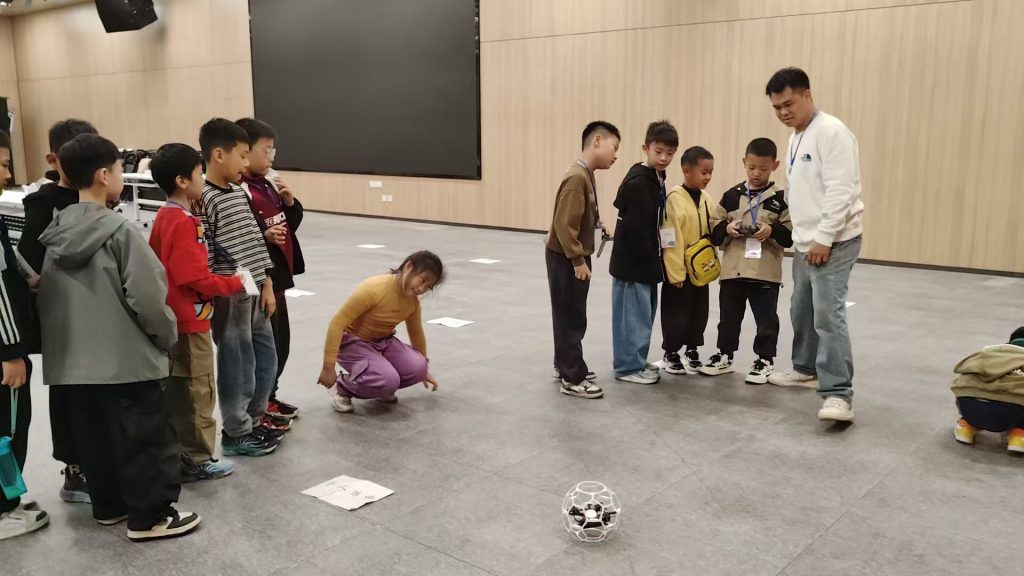
Technology is only as good as its operator. Therefore, the single most important investment is in establishing a rigorous, standardized, and continuous drone training and certification program for fire investigators. This training must extend far beyond basic flight lessons.
A comprehensive drone training curriculum should include the following core modules, blending theory with extensive practical simulation and field exercises:
| Training Module | Key Components | Objective |
|---|---|---|
| Advanced Flight Proficiency | Manual flight in GNSS-denied, high-obstacle environments; contingency management (e.g., signal loss, high wind); precision flying for sensor data capture. | Ensure the operator can reliably and safely place the drone exactly where it is needed, under all conditions. |
| Sensor Operation & Data Management | Principles of LiDAR, thermal, multispectral imaging; mission planning for optimal data coverage; in-field data quality assessment; basics of photogrammetry and 3D modeling. | Enable the operator to capture forensically valid, comprehensive, and well-documented data sets. |
| Forensic Integration & Analysis | How drone data integrates with traditional investigation methods; interpreting aerial and thermal patterns in the context of fire dynamics; preparing drone-derived evidence for reports and court. | Transform the operator from a pilot to a true investigative partner who understands the “why” behind the data collection. |
| Legal, Regulatory & Ethical Compliance | In-depth study of national and local UAV regulations for public safety; procedures for rapid airspace authorization (e.g., LAANC for public safety); privacy law considerations; evidence chain-of-custody for digital data. | Ensure all operations are legally defensible and ethically conducted, protecting the integrity of the investigation. |
Concurrently, advocacy is needed to evolve the regulatory landscape. This involves working with aviation authorities to develop:
- Pre-Approved Protocols: Standardized, pre-coordinated flight plans and BVLOS waivers for public safety agencies over their jurisdictions.
- Dynamic Geofencing: Integration of public safety drone operations into the national airspace system with temporary, incident-based dynamic restrictions rather than blanket prohibitions.
- Evidence Standards: Official guidelines establishing the protocols for capturing, processing, and storing drone-derived data to ensure its admissibility in judicial proceedings.
Conclusion
The path forward for drones in fire investigation is clear: a shift from auxiliary visual aids to primary, precision forensic data collection platforms. This transition is not merely about buying more advanced drones; it is a systemic upgrade requiring investment in three interlocked areas: technology (multi-sensor payloads, hybrid positioning, robust platforms), human capital (comprehensive, ongoing drone training), and policy (adaptive, public safety-focused regulations). The proposed framework of enhanced data acquisition, guaranteed precision and stability, and a cornerstone of elite drone training provides a roadmap. By implementing these strategies, fire investigation agencies can unlock the true potential of aerial robotics, leading to faster, more accurate cause determinations, enhanced investigator safety, and ultimately, a stronger foundation for fire prevention and justice. The future of fire investigation is not just on the ground—it is intelligently coordinated from the air, guided by highly trained experts who understand both the science of fire and the art of robotic data collection.