
As a practitioner in the field of correctional management, I have witnessed firsthand the evolving challenges in maintaining prison security and the potential of unmanned aerial vehicle (UAV) technology to address these issues. Drones, with their aerial perspective and versatility, offer transformative applications in surveillance, emergency response, and investigative tasks. This article delves into the integration of drone technology within prison environments, emphasizing the critical role of drone training in optimizing operational efficacy. Through detailed analysis, tables, and mathematical models, I explore current applications, inherent problems, and future directions, aiming to provide a robust framework for leveraging drones to enhance safety and security.
The rapid advancement of drone technology has permeated various sectors, including law enforcement and corrections. In prisons, drones serve as force multipliers, enabling real-time monitoring and rapid deployment in critical situations. However, their effective implementation hinges on overcoming technical limitations and fostering specialized expertise via comprehensive drone training programs. This discussion is structured around key themes: application scenarios, existing challenges, and strategic solutions, all underscored by the necessity for continuous skill development in drone training.
Application Scenarios of Drones in Prisons
Drones are deployed across multiple domains within prison systems, each enhancing operational capabilities. The primary applications include security supervision, emergency handling, investigative operations, and airspace countermeasures. Below, a table summarizes these scenarios with specific functionalities and outcomes.
| Scenario | Functionality | Outcome | Relevance to Drone Training |
|---|---|---|---|
| Security Supervision | Aerial patrols, perimeter monitoring, crowd control during outdoor activities | Early detection of intrusions, prevention of incidents like fights or unauthorized gatherings | Requires pilots skilled in persistent surveillance and real-time data analysis through drone training. |
| Emergency Response | Search and rescue, fire monitoring, communication relay, dispersal of crowds via non-lethal means | Rapid assessment and mitigation of crises, such as fires or riots, minimizing harm | Operators need crisis management skills honed via scenario-based drone training. |
| Investigative Operations | Evidence collection, fugitive tracking, aerial reconnaissance with thermal imaging | Enhanced case-solving efficiency, precise location of suspects or evidence in complex terrains | Forensic and tactical flying techniques are emphasized in advanced drone training. |
| Airspace Countermeasures | Detection and interception of unauthorized drones (e.g., signal jamming, tracking) | Protection against external threats, such as contraband drops or espionage | Specialized drone training in counter-UAV tactics is essential for defense teams. |
In security supervision, drones conduct regular aerial sweeps, covering vast areas that ground patrols might miss. For instance, during perimeter breaches, drones provide immediate visual feedback, allowing command centers to coordinate responses. The mathematical coverage of a drone can be modeled using the area formula for a circle: $$A = \pi r^2$$, where \(A\) is the coverage area and \(r\) is the flight radius. Given a drone’s altitude and camera capabilities, the effective \(r\) can be adjusted, but environmental factors like obstacles may reduce this. Optimizing coverage requires pilots to undergo rigorous drone training in navigation and sensor operation.
Emergency response leverages drones for swift situational awareness. In fire incidents, thermal imaging cameras detect heat sources, with temperature differentials represented as: $$\Delta T = T_{\text{source}} – T_{\text{ambient}}$$, where \(\Delta T\) guides rescue efforts. Drones equipped with loudspeakers or payloads like fire retardants can intervene directly, but this demands precise control acquired through targeted drone training. For example, in crowd management, drones disseminate warnings or non-lethal agents, with effectiveness depending on operator proficiency in low-altitude maneuvers and communication protocols.
Investigative applications rely on drones for covert surveillance and evidence gathering. The resolution of aerial imagery impacts evidence quality, governed by the formula: $$R = \frac{H \times f}{s}$$, where \(R\) is ground resolution, \(H\) is altitude, \(f\) is focal length, and \(s\) is sensor size. Higher resolution aids in identifying suspects, but achieving this necessitates advanced drone training in photographic techniques and data encryption. In manhunts, drones track fugitives using predictive algorithms, such as path estimation models: $$P(t) = P_0 + v t + \frac{1}{2} a t^2$$, where \(P(t)\) is position over time, \(P_0\) is initial position, \(v\) is velocity, and \(a\) is acceleration. Operators must interpret these models during drone training simulations.
Airspace countermeasures involve detecting and neutralizing rogue drones. The detection probability \(P_d\) can be expressed as: $$P_d = 1 – e^{-\lambda A t}$$, where \(\lambda\) is the radar cross-section density, \(A\) is scan area, and \(t\) is time. However, small drones often evade detection, highlighting the need for layered defenses. Counter-drone teams use jamming techniques, with signal strength modeled by: $$S = \frac{P_t G_t G_r \lambda^2}{(4\pi d)^2 L}$$, where \(S\) is received power, \(P_t\) is transmitted power, \(G_t\) and \(G_r\) are antenna gains, \(\lambda\) is wavelength, \(d\) is distance, and \(L\) is loss factor. Mastering these concepts requires intensive drone training in electronics and cybersecurity.
Challenges in Drone Implementation
Despite their promise, drones face significant hurdles in prison settings. These include technological limitations, inadequate counter-drone systems, and a shortage of skilled personnel. The following table outlines these challenges and their implications.
| Challenge | Description | Impact | Role of Drone Training |
|---|---|---|---|
| Technological Shortcomings | Limited battery life, poor weather resistance, unstable communications in complex environments | Reduced operational endurance and reliability, especially during emergencies | Drone training must include maintenance and adaptation techniques for harsh conditions. |
| Counter-Drone System Deficiencies | Inadequate detection of small drones, legal ambiguities in countermeasures, risk of collateral damage | Vulnerability to external threats, such as contraband smuggling or surveillance by unauthorized UAVs | Specialized drone training in legal frameworks and defensive tactics is crucial. |
| Personnel and Training Gaps | Few certified operators, lack of standardized curricula for prison-specific scenarios | Underutilization of drone capabilities, increased safety risks during operations | Comprehensive drone training programs are needed to build professional teams. |
Technologically, drones struggle with endurance. Battery life \(T\) is a critical factor, calculated as: $$T = \frac{C}{I}$$, where \(C\) is battery capacity in ampere-hours and \(I\) is current draw in amperes. For typical prison drones, \(T\) may be insufficient for prolonged missions, necessitating swaps or charging stations. Weather resistance is another issue; drones in rain or wind require robust designs, with lift force \(L\) given by: $$L = \frac{1}{2} \rho v^2 S C_L$$, where \(\rho\) is air density, \(v\) is velocity, \(S\) is wing area, and \(C_L\) is lift coefficient. Adverse conditions reduce \(C_L\), impairing stability. Through drone training, operators learn to compensate via manual controls or abort protocols.
Counter-drone systems are often underdeveloped. Detection ranges for small UAVs are limited by radar equations, and jamming can disrupt legitimate communications. The effectiveness of countermeasures \(E\) can be modeled as: $$E = \alpha D + \beta J – \gamma C$$, where \(\alpha\), \(\beta\), and \(\gamma\) are weights for detection, jamming, and collateral damage, respectively. Without clear regulations, prisons hesitate to deploy aggressive measures. Hence, drone training must cover ethical and legal aspects, ensuring compliance with laws like the Unmanned Aircraft Flight Management Interim Regulations.
Personnel shortages stem from insufficient drone training infrastructure. Many prisons lack certified pilots, leading to ad hoc operations. The skill level \(S\) of an operator can be quantified as: $$S = \sum_{i=1}^{n} w_i x_i$$, where \(w_i\) are weights for skills like navigation, data analysis, and crisis response, and \(x_i\) are proficiency scores. Current drone training programs often focus on basic flight, neglecting prison-specific tactics, resulting in low \(S\) values. Building a cadre of experts requires standardized curricula and continuous drone training evaluations.
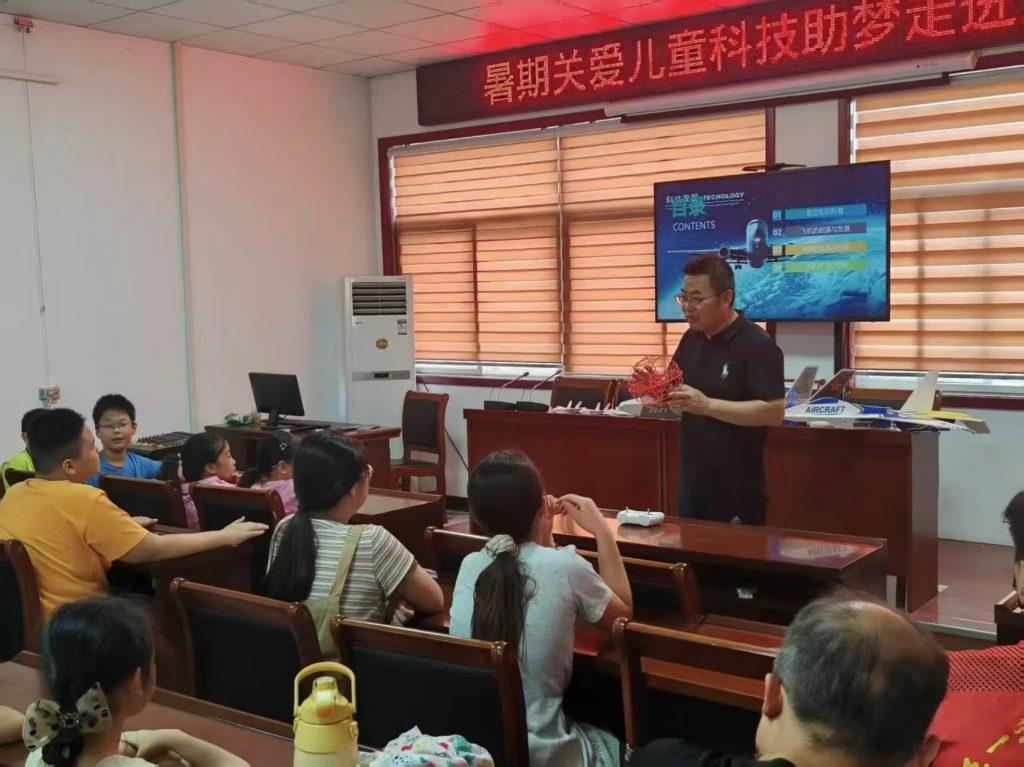
The image above illustrates a typical drone training session, where operators practice maneuvers in simulated prison environments. Such hands-on exercises are vital for developing muscle memory and decision-making skills. In prisons, drone training should encompass not only piloting but also data interpretation and coordination with ground teams. For instance, during a contraband drop scenario, trainees learn to track rogue drones using spectral analysis: $$F(\omega) = \int_{-\infty}^{\infty} f(t) e^{-i\omega t} dt$$, where \(F(\omega)\) is the frequency spectrum of drone signals, aiding in identification. Regular drone training drills enhance readiness and reduce response times.
Strategic Solutions for Enhanced Drone Integration
To overcome these challenges, prisons must adopt a multi-faceted approach centered on technological innovation, robust defense networks, and professional development through drone training. The solutions are interconnected, each reinforcing the others to create a cohesive drone ecosystem.
| Solution | Components | Expected Benefits | Drone Training Requirements |
|---|---|---|---|
| Develop Integrated Aerial Platforms | Enhanced battery systems, payload versatility (e.g., non-lethal weapons), secure data links | Extended mission capabilities, precise interventions in riots or escapes | Advanced drone training in payload management and encrypted communications. |
| Establish Offensive-Defensive Networks | Layered detection (radar, RF scanners), automated response systems, coordination with law enforcement | Proactive airspace protection, minimized false alarms and collateral damage | Specialized drone training in counter-UAV warfare and system maintenance. |
| Build Professional Drone Teams | Certification programs, tactical scenario training, continuous skill assessments | High operational readiness, reduced errors, and optimized resource use | Comprehensive drone training curricula with certifications and refresher courses. |
Integrated aerial platforms require drones with longer endurance and multifunctional payloads. Battery technology can be improved using energy density models: $$E_d = \frac{E}{m}$$, where \(E_d\) is energy density, \(E\) is energy stored, and \(m\) is mass. Higher \(E_d\) allows for longer flights, but this must be balanced with payload weight \(W_p\), related by: $$T = \frac{E_d m_b}{P + k W_p}$$, where \(T\) is flight time, \(m_b\) is battery mass, \(P\) is base power consumption, and \(k\) is a constant. Through drone training, operators learn to optimize these parameters for specific missions, such as surveillance versus intervention.
Offensive-defensive networks involve deploying detection arrays and response drones. The coverage efficiency \(CE\) of a network can be expressed as: $$CE = \frac{\sum_{i=1}^{n} A_i \cap A_{\text{target}}}{\sum_{i=1}^{n} A_i}$$, where \(A_i\) are individual drone coverage areas and \(A_{\text{target}}\) is the target zone. Automated systems use machine learning algorithms for threat classification: $$y = \sigma(Wx + b)$$, where \(y\) is the output label, \(x\) is input data (e.g., drone signature), \(W\) and \(b\) are weights and bias, and \(\sigma\) is the sigmoid function. Drone training for network operators includes interpreting these algorithms and managing real-time responses.
Building professional teams is perhaps the most critical solution. A structured drone training program should cover theoretical knowledge, practical skills, and ethical guidelines. The competency growth \(G\) over time \(t\) can be modeled as: $$G(t) = G_0 + \int_0^t r(s) ds$$, where \(G_0\) is initial competency and \(r(s)\) is the learning rate from drone training sessions. Regular assessments, such as flight simulations and written exams, ensure continuous improvement. Prisons can collaborate with academies to develop standardized modules, emphasizing scenarios like escapee pursuit or riot control. For example, in pursuit training, operators apply kinematics: $$v_f = v_i + a t$$, where \(v_f\) is final velocity, \(v_i\) is initial velocity, \(a\) is acceleration, and \(t\) is time, to intercept moving targets.
Moreover, drone training must address psychological aspects, such as stress management during emergencies. Operators learn to maintain focus under pressure, using techniques like situational awareness metrics: $$SA = \frac{N_c}{N_t}$$, where \(SA\) is situational awareness, \(N_c\) is number of correct perceptions, and \(N_t\) is total relevant elements. Through repeated drone training drills, these skills become ingrained, leading to safer and more effective operations.
Future Perspectives and Conclusion
The future of drone technology in prisons lies in smarter, more autonomous systems and deeper integration with existing security infrastructures. As drones evolve, so must the drone training paradigms that support them. Emerging trends include swarm robotics, where multiple drones collaborate, and AI-driven analytics for predictive policing.
Swarm behavior can be modeled using flocking algorithms: $$\vec{v}_i(t+1) = \vec{v}_i(t) + \sum_{j \neq i} ( \vec{f}_{ij} + \vec{g}_{ij} )$$, where \(\vec{v}_i\) is velocity of drone \(i\), and \(\vec{f}_{ij}\) and \(\vec{g}_{ij}\) are attraction and repulsion forces from drone \(j\). This requires advanced drone training in multi-agent coordination and programming. Similarly, AI models for threat prediction, such as neural networks: $$z = \sum_{i=1}^{n} w_i x_i + b$$, where \(z\) is the weighted sum for decision-making, will become integral to drone operations. Drone training will need to incorporate data science skills to leverage these tools.
In conclusion, drones represent a paradigm shift in prison management, offering unparalleled advantages in surveillance, response, and defense. However, their success is contingent upon addressing technological gaps, fortifying counter-drone measures, and, most importantly, investing in comprehensive drone training. By fostering a culture of continuous learning and innovation, prisons can harness drones to enhance safety, uphold security, and fulfill their rehabilitative missions. As I reflect on my experiences, I am convinced that strategic drone training is the cornerstone of this transformation, enabling personnel to adapt to an ever-changing landscape of challenges and opportunities.