
In the era of intelligent manufacturing and digital transformation, the drone industry has emerged as a pivotal strategic sector, driving innovation in national defense, logistics, agriculture, and infrastructure inspection. The rapid evolution of this field necessitates a new breed of technical talent: the Field Engineer. These professionals are not merely operators but are integral problem-solvers stationed at the frontline of production and service. They embody a synthesis of practical skill, theoretical understanding, and innovative capacity, essential for navigating complex, real-world technical scenarios. The cultivation of high-quality drone field engineers is, therefore, a critical mission that bridges the gap between educational output and industrial demand, serving as a cornerstone for industrial advancement and educational reform. This paper explores the value proposition, contemporary challenges, and practical pathways for cultivating drone field engineers within the framework of deep industry-education integration.
The Value Proposition of Cultivating Field Engineers in Drone Training
The concept of the Field Engineer redefines the pinnacle of technical vocational education. Their value extends across multiple dimensions, transforming both the educational landscape and the industrial ecosystem.
For the drone industry, field engineers are the linchpins of competitiveness and innovation. They translate R&D into actionable procedures, ensure operational safety and efficiency, and adapt technologies to solve unforeseen on-site challenges. A workforce proficient in advanced drone training directly enhances productivity, reduces downtime, and accelerates the adoption of new technologies like AI-powered analytics or BVLOS (Beyond Visual Line of Sight) operations. Their role is encapsulated in a core competency model that balances hard and soft skills:
$$ C_{FE} = \alpha(S_k + T_k) + \beta(P_i + C_o + M_a) + \gamma(I_n + L_r) $$
Where \(C_{FE}\) represents the Composite Competency of a Field Engineer. The equation weights three clusters:
\(S_k\) (Specialized Knowledge) and \(T_k\) (Technical Skill) form the operational core, weighted by \(\alpha\).
\(P_i\) (Process Understanding), \(C_o\) (Collaboration), and \(M_a\) (Management) form the organizational proficiency, weighted by \(\beta\).
\(I_n\) (Innovation) and \(L_r\) (Learning & Resilience) form the adaptive capacity, weighted by \(\gamma\).
For vocational education systems, focusing on field engineer cultivation represents a strategic elevation. It moves beyond basic skill transmission to fostering integrative, analytical, and innovative capabilities. This shift enhances the social status and attractiveness of vocational pathways, aligning them with the prestige of engineering roles. It demands and drives profound pedagogical reform, curriculum redesign, and stronger industry partnerships, thereby increasing the system’s responsiveness and relevance.
At a national strategic level, a robust pipeline of field engineers, particularly in high-tech sectors like drones, is fundamental to realizing “new quality productive forces” and fostering a low-altitude economy. They are the human infrastructure that supports technological sovereignty, industrial upgrading, and sustainable economic growth.
Current Challenges in Drone Field Engineer Training
Despite clear imperatives, the effective cultivation of drone field engineers faces significant systemic and practical hurdles, primarily stemming from misalignments between education and industry.
1. Misalignment Between Curriculum and Industrial Evolution: The pace of technological change in the drone sector often outstrips the pace of curricular revision. Many training programs lag behind industry needs, focusing on outdated platforms or software. There is a persistent gap between the theoretical knowledge taught in classrooms and the practical, integrated problem-solving required on the job. This “integration deficit” can be modeled as:
$$ G(t) = \int_{0}^{T} [I_r(t) – E_c(t)] \, dt $$
Where \(G(t)\) is the growing Gap over time \(T\), \(I_r(t)\) represents the dynamically changing Industrial Requirements, and \(E_c(t)\) represents the slowly evolving Educational Curriculum. Minimizing \(G(t)\) requires synchronous updating mechanisms.
2. Superficial Industry-Education Collaboration: While partnerships exist, they often lack depth and a shared strategic vision. Collaboration may be limited to guest lectures or occasional internships rather than deep co-construction of programs. Key challenges include:
| Challenge Area | Manifestation in Drone Training | Consequence |
|---|---|---|
| Mechanism | Lack of binding frameworks for resource sharing, benefit distribution, and intellectual property. | Unstable, project-based partnerships. |
| Content | Enterprise training manuals and proprietary techniques are not systematically integrated into standard curricula. | Graduates require extensive re-training. |
| Faculty | Limited mechanisms for teachers to engage in sustained, hands-on industry practice. | Teachers’ skills become theoretical and outdated. |
| Environment | College labs lack real-world operational scenarios, data streams, and maintenance challenges. | Skills are developed in a sterile, simplified context. |
3. Inadequate Pedagogical and Assessment Models: Traditional instructor-centered teaching and summative exams fail to develop the complex competencies of a field engineer. The assessment rarely captures capabilities like systematic troubleshooting, cross-functional teamwork, or iterative design thinking, which are central to advanced drone training.
A Practical Pathway: The “One Trunk, Two Branches; Four-Core Linkage” Model
To address these challenges, a holistic and integrated cultivation model is proposed. This model is grounded in deep industry-education integration and is designed for scalability and effectiveness.
1. The “One Trunk, Two Branches” Educational Blueprint: This framework structures the entire educational journey.
- The Trunk (Core Technical Proficiency): This is the central pillar, comprising a rigorous, project-based curriculum in drone systems: Aerodynamics, Flight Control, Data Link & Communication, Payload Integration, Mission Planning, and crucially, Maintenance, Repair & Overhaul (MRO). The trunk ensures “mastery of operation.”
- Branch One (Innovation & Entrepreneurship): This branch cultivates “capacity for innovation.” It involves modules on new application development, business model design for drone services, and participation in “maker” projects and innovation challenges. Case studies of startup successes are integrated.
- Branch Two (Ideological & Professional Ethos): This branch instills the “spirit of craftsmanship.” It integrates themes of safety culture, responsibility, precision, teamwork, and ethical application of technology into technical courses. It emphasizes the societal impact and responsibility of an engineer.
These three elements are not sequential but are interwoven throughout the program, creating a T-shaped professional profile with deep technical expertise and broad adaptive capacities.
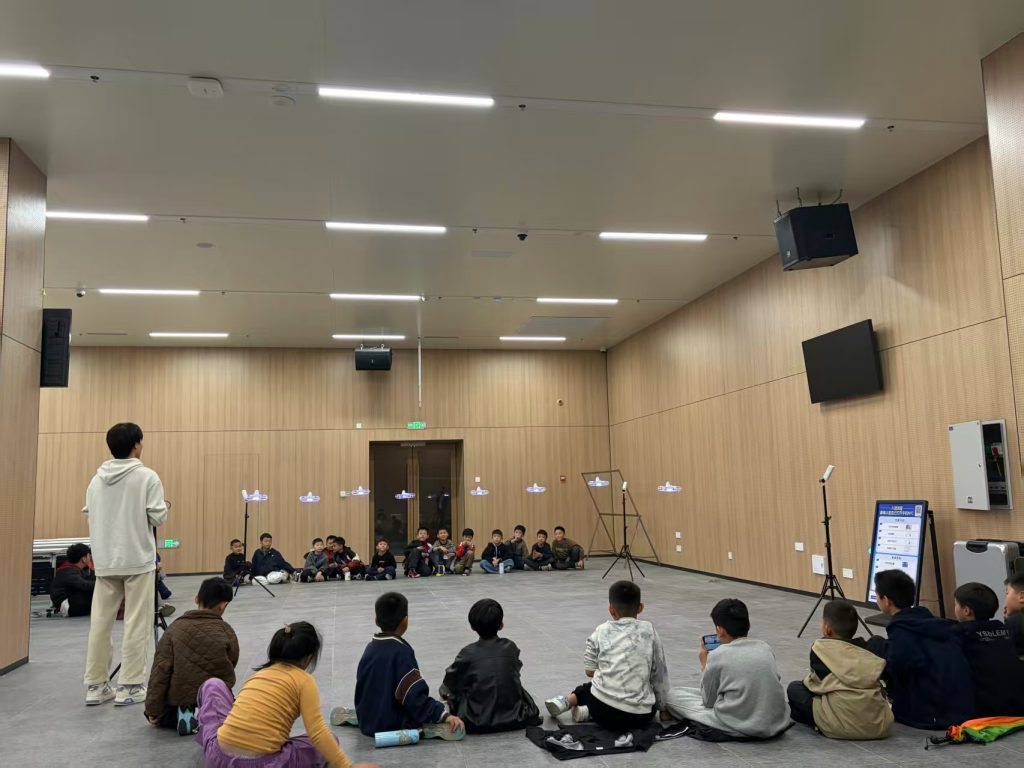
2. Creating an Ecosystem of “Four-Core Linkage”: This principle operationalizes the integration between the learning environment and the professional workplace.
| Core Linkage | Implementation Strategy | Outcome for Drone Training |
|---|---|---|
| Project Linkage Learning Tasks ↔ Work Tasks |
Develop curricula around authentic work orders: e.g., “Perform a post-flight inspection and diagnostic on Sensor Platform X,” “Plan and simulate a BVLOS infrastructure survey mission.” | Students engage with authentic complexity and stakeholder requirements from day one. |
| Process Linkage Teaching Process ↔ Work Process |
Structure modules to mirror real workflow: Requirement Analysis → Pre-flight Check → Mission Execution → Data Acquisition → Analysis & Reporting → Maintenance Debrief. | Internalizes professional rhythms and sequences, building procedural mastery. |
| Resource Linkage Educational Resources ↔ Enterprise Training Resources |
Co-develop “living” handbooks, AR/VR simulation modules for specific drone models, and shared databases of fault cases and solutions. Standardize on industry-grade software. | Closes the resource gap, providing students with tools identical to those used in industry. |
| Team Linkage Teaching Team ↔ Enterprise Mentor Team |
Establish dual-tutor systems. Enterprise experts co-teach modules, set capstone projects, and assess performance. Academic faculty conduct applied research within enterprises. | Creates a true community of practice, ensuring knowledge currency and networking. |
3. Deepening Reform via “Post-Course-Competition-Certification” Integration: This approach aligns all elements of the training system to a unified standard of competency.
- Post: Analysis of target positions (e.g., Drone Systems Technician, Mission Operations Specialist) defines the required competency matrix.
- Course: The curriculum and its learning outcomes are explicitly derived from and mapped to the position matrix.
- Competition: Skills from national/international vocational competitions (e.g., precise flight, swarm coordination, emergency response) are decomposed and injected as advanced training modules or project challenges.
- Certification: Industry-recognized credentials (e.g., specific manufacturer certifications, AUVSI Trusted Operator Program, or national remote pilot licenses) are built into the program as milestone assessments, not add-ons.
The synergy can be expressed as a convergence function:
$$ L_{effective} = f(P, C_r, C_p, C_f) \quad \text{where} \quad \frac{\partial L}{\partial t} > 0 \ \text{when} \ P \cap C_r \cap C_p \cap C_f \ \text{is maximized} $$
Where \(L_{effective}\) is the effective Learning, \(P\) is Position demand, \(C_r\) is Course content, \(C_p\) is Competition standard, and \(C_f\) is Certification requirement. Effective learning increases when the intersection of these four sets is maximized.
4. Implementing a Multi-Dimensional, Tiers-of-Evidence Evaluation System: Moving beyond simple tests, a comprehensive assessment framework is crucial for drone training.
| Evaluation Dimension | Methods & Evidence | Metrics / Formula |
|---|---|---|
| Process Evaluation (40%) | Learning platform analytics (logins, resource use), forum participation, peer reviews on teamwork, project milestone reviews, reflection journals. |
$$ P_{score} = \frac{\sum (w_i \cdot A_i)}{\sum w_i} $$ \(A_i\): Activity score (e.g., task completion, peer rating); \(w_i\): Pre-defined weight. |
| Outcome Evaluation (40%) | Performance on authentic capstone projects, comprehensive practical exams on live equipment, certification exam results, final portfolio defense. |
$$ O_{score} = \frac{\sum (w_j \cdot P_j)}{\sum w_j} $$ \(P_j\): Performance score on outcome \(j\) (e.g., flight test, report); \(w_j\): Weight. |
| Value-Added Evaluation (20%) | Pre-post assessments of technical and non-cognitive skills (problem-solving, communication), tracking of competition rankings, evidence of extracurricular innovation projects. |
$$ VA = \frac{S_{post} – S_{pre}}{S_{max} – S_{pre}} \times 100\% $$ \(S_{pre/post}\): Pre- and post-course competency scores. |
The final composite score provides a holistic profile: \( Final = 0.4P_{score} + 0.4O_{score} + 0.2(VA \times O_{score}) \). This formula rewards both absolute performance and individual growth.
Sustainable Mechanisms for Success
The implementation of this pathway requires robust institutional and policy support.
1. Policy and Incentive Frameworks: Governments should enact clear policies that incentivize enterprises to invest in co-construction, such as tax benefits for providing equipment, mentors, or internships. Funding should be directed specifically to industry-education alliance projects focused on field engineer development.
2. Building Modern Industry Colleges: The most effective vessel for this model is a deeply integrated Industry College, jointly governed, funded, and managed by a consortium of educational institutions and leading drone enterprises. This entity can natively implement the “Four-Core Linkage.”
3. “Dual-Qualified” Faculty Development: A mandatory, cyclical secondment system for teachers to work in partner enterprises (e.g., one semester every three years) must be established and resourced. Conversely, enterprise engineers should have formalized roles and career recognition within the academic system.
4. Iterative Curriculum Updates: Establish a joint curriculum committee with industry partners that meets bi-annually to review and update course content, ensuring it reflects the latest technological standards (e.g., new regulations, new sensor fusion techniques, new AI tools) essential for modern drone training.
In conclusion, cultivating high-caliber drone field engineers is a complex but vital undertaking that sits at the nexus of education reform and industrial innovation. The proposed “One Trunk, Two Branches; Four-Core Linkage” model, supported by integrated competency frameworks and multi-dimensional assessment, provides a structured pathway to bridge the current gaps. By institutionalizing deep, strategic industry-education integration, we can develop a sustainable pipeline of talent—practitioners who are not only technically adept but also innovative, responsible, and agile. This investment in human capital is fundamental to securing leadership in the rapidly evolving global drone ecosystem and unlocking the full socio-economic potential of this transformative technology.