
The rapid proliferation of Unmanned Aerial Vehicles (UAVs), or drones, has revolutionized numerous sectors including aerial photography, precision agriculture, infrastructure inspection, logistics, and emergency response. Their operational advantages—cost-effectiveness, flexibility, and access to hazardous or remote areas—are undeniable. However, this exponential growth in low-altitude air traffic introduces significant safety challenges, with the risk of mid-air collisions being a paramount concern. Ensuring safe integration of drones into shared airspace requires a deep, systemic understanding of the factors contributing to collision risk. Traditional risk assessments often focus on quantitative probabilities or specific technological solutions but may overlook the complex interrelationships between human, technical, environmental, and managerial factors. This article employs an integrated Decision Making Trial and Evaluation Laboratory (DEMATEL) and Adversarial Interpretive Structural Modeling (AISM) approach to dissect these influencing factors, identify key drivers and fundamental causes, and trace the pathways through which risk propagates within the drone operation system. A central thread throughout this analysis is the critical role of comprehensive drone training in mitigating these interconnected risks.
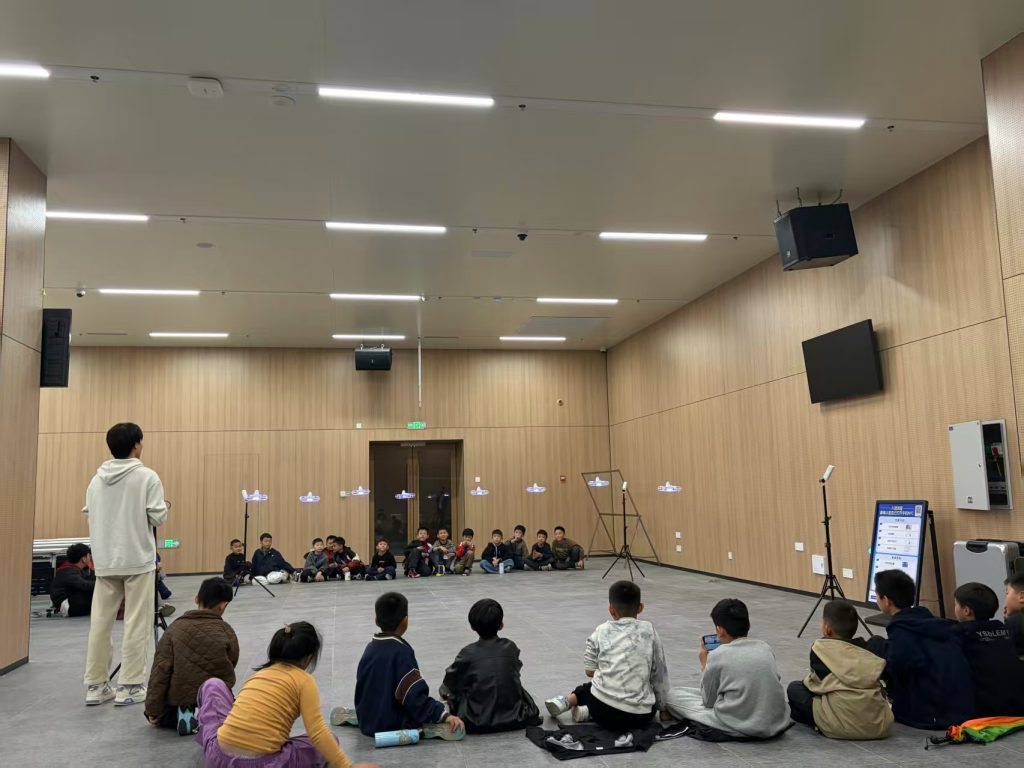
Collision risk is not an isolated event but the result of a chain of influences within a complex socio-technical system. To model this system, we first identify a comprehensive set of influencing factors. Drawing upon system safety theory and synthesizing common failure modes from operational data and research, we categorize 16 primary risk factors into four dimensions: Human, Machine, Environment, and Management (HMEM). These factors form the basis of our analytical model.
| Dimension | Factor Code | Influencing Factor | Description |
|---|---|---|---|
| Human (H) | S1 | Operator Negligence or Erroneous Operation | Mistakes like incorrect control inputs, mode confusion, or disregarding procedures. |
| S2 | Poor Operator Psychological or Physical Condition | Fatigue, stress, impairment, or illness reducing situational awareness and reaction time. | |
| S3 | Lack of Professional Drone Training or Inexperience | Insufficient knowledge of regulations, aerodynamics, emergency procedures, or system limits. | |
| S4 | Untimely Maintenance | Failure to perform scheduled checks leading to latent hardware faults. | |
| Machine (M) | S5 | GPS System Failure or Interference | Loss of positional awareness leading to navigational errors. |
| S6 | Communication System Failure or Interference | Loss of command & control (C2) link, resulting in a flyaway or uncontrolled flight. | |
| S7 | Ground Control Station (GCS) Malfunction | Failure of the hardware or software used to monitor and control the drone. | |
| S8 | Battery Fault or Depletion | Unexpected power loss leading to a crash or uncontrolled descent. | |
| Environment (E) | S9 | Adverse Weather Conditions | High winds, precipitation, fog, or icing affecting stability and control. |
| S10 | Electromagnetic Interference | Disruption of control, navigation, or data links from external sources. | |
| S11 | Congested Airspace | High density of other drones or manned aircraft, increasing probability of conflict. | |
| S12 | Low-Altitude Obstacles | Buildings, towers, trees, or power lines not accounted for in flight planning. | |
| Management (M) | S13 | Incomplete Flight Management Regulations | Unclear rules, inadequate geofencing, or poor airspace classification. |
| S14 | Inaccurate Real-Time Monitoring System | UTM or tracking system failures providing false or delayed traffic information. | |
| S15 | Inadequate Supervision and Inspection | Lax oversight of operator certification, maintenance logs, or operational compliance. | |
| S16 | Unsound Emergency Response Mechanism | Lack of clear procedures for contingency management, like lost link or imminent collision. |
The DEMATEL-AISM methodology is particularly suited for analyzing such a system. DEMATEL helps quantify the strength and direction of influence between factors, distinguishing between “cause” factors that drive the system and “effect” factors that are primarily outcomes. AISM then builds a hierarchical structural model to visualize the multi-layered relationships and propagation paths. The integrated process is shown below and involves the following key mathematical steps:
Step 1: Construct the Direct Influence Matrix (A). Experts assess the direct influence between any two factors (Si and Sj) using a scale (e.g., 0=No influence, 1=Weak, 2=Medium, 3=Strong). This yields a non-negative matrix A = [aij]n×n, where aii = 0.
Step 2: Calculate the Normalized Influence Matrix (B). Matrix A is normalized to ensure convergence:
$$ B = \lambda \cdot A, \quad \text{where } \lambda = \frac{1}{\max_{1 \leq i \leq n} \sum_{j=1}^{n} a_{ij}} $$
Thus, $$ B = [b_{ij}]_{n \times n}, \quad \text{with } 0 \leq b_{ij} \leq 1. $$
Step 3: Derive the Total Influence Matrix (C). This matrix accounts for both direct and indirect influences through iterative interactions:
$$ C = B + B^2 + B^3 + \ldots = B(I – B)^{-1} $$
where I is the identity matrix. The element cij represents the total influence of factor i on factor j.
Step 4: Compute Prominence and Relation. For each factor Si, we calculate:
- Influence Degree (Di): $$ D_i = \sum_{j=1}^{n} c_{ij} $$ (Row sum of C).
- Received Influence Degree (Ei): $$ E_i = \sum_{j=1}^{n} c_{ji} $$ (Column sum of C).
- Prominence (Mi): $$ M_i = D_i + E_i $$. A high Mi indicates the factor’s central role in the system.
- Relation (Ni): $$ N_i = D_i – E_i $$. If Ni > 0, Si is a net cause; if Ni < 0, it is a net effect.
Step 5: Establish the Reachability Matrix and Hierarchy. A threshold (λ) is set (e.g., mean + standard deviation of elements in C) to filter significant influences, creating an adjacency matrix. Through transitive operations, the reachability matrix K is derived, where kij=1 if Si can reach Sj. The hierarchical structure is then extracted using AISM’s dual rule sets:
- UP-Type (Result-First): Factors with no preceding influences (top-level effects) are placed at the top layer and removed iteratively.
- DOWN-Type (Cause-First): Factors with no subsequent influences (bottom-level causes) are placed at the bottom layer and removed iteratively.
This generates two adversarial digraphs offering a comprehensive view of the system’s structure.
Applying this methodology to the 16 factors yields the following quantitative results. The calculated Prominence (Mi) and Relation (Ni) for each factor are summarized below, sorted by Prominence.
| Factor | Description | Influence (Di) | Received (Ei) | Prominence (Mi) | Relation (Ni) | Classification |
|---|---|---|---|---|---|---|
| S1 | Operator Negligence/Error | 0.21 | 2.38 | 2.59 | -2.18 | Effect Factor |
| S2 | Poor Operator Condition | 0.38 | 1.59 | 1.97 | -1.21 | Effect Factor |
| S13 | Incomplete Flight Regulations | 1.66 | 0.10 | 1.77 | +1.56 | Cause Factor |
| S3 | Lack of Drone Training/Inexperience | 0.69 | 0.86 | 1.55 | -0.17 | Effect Factor |
| S9 | Adverse Weather | 1.21 | 0.30 | 1.51 | +0.91 | Cause Factor |
| S14 | Inaccurate Monitoring System | 0.32 | 1.03 | 1.35 | -0.71 | Effect Factor |
| S11 | Congested Airspace | 0.57 | 0.68 | 1.25 | -0.11 | Effect Factor |
| S10 | Electromagnetic Interference | 1.05 | 0.20 | 1.25 | +0.85 | Cause Factor |
| S15 | Inadequate Supervision | 0.95 | 0.26 | 1.20 | +0.69 | Cause Factor |
| S4 | Untimely Maintenance | 0.29 | 0.84 | 1.14 | -0.55 | Effect Factor |
| S12 | Low-Altitude Obstacles | 0.98 | 0.00 | 0.98 | +0.98 | Cause Factor |
| S16 | Unsound Emergency Response | 0.60 | 0.35 | 0.95 | +0.24 | Cause Factor |
| S6 | Communication Failure | 0.19 | 0.55 | 0.74 | -0.35 | Effect Factor |
| S5 | GPS Failure | 0.30 | 0.36 | 0.66 | -0.07 | Effect Factor |
| S8 | Battery Fault | 0.30 | 0.24 | 0.54 | +0.06 | Cause Factor |
| S7 | GCS Malfunction | 0.20 | 0.14 | 0.34 | +0.06 | Cause Factor |
The AISM hierarchical analysis provides the structural context for these metrics. The adversarial digraphs (UP-Type and DOWN-Type) reveal the layers of influence. The consolidated interpretation of the DEMATEL and AISM results leads to the following crucial insights:
1. Identification of Key Influencing Factors (High Prominence): The factors with the highest prominence (Mi) are the most active and interconnected elements in the risk system. The top four are:
- S1 (Operator Negligence/Error) and S2 (Poor Operator Condition): These human factors sit at the core of the risk network. Their high prominence confirms that human error remains the most significant contributor to drone incidents, acting as a central hub through which many other problems manifest as immediate causes of collision.
- S13 (Incomplete Flight Regulations): This management factor has extremely high influence (Di) and is a strong cause factor. It indicates that poorly designed or implemented rules fundamentally shape the entire operational environment, influencing everything from operator behavior to traffic management.
- S3 (Lack of Professional Drone Training or Inexperience): This factor’s high prominence underscores its systemic role. Inadequate drone training does not just create a skill gap; it amplifies other risks like poor decision-making in bad weather (S9) or inability to handle technical failures (S5, S6). Comprehensive drone training is therefore a leverage point for reducing systemic risk.
2. Identification of Fundamental Causes (Bottom Layer in DOWN-Type): The AISM DOWN-Type hierarchy identifies the root causes that initiate risk propagation chains. These are factors that influence others but are minimally influenced themselves. The fundamental causes are:
- S9 (Adverse Weather) and S12 (Low-Altitude Obstacles): These environmental factors are inherent, ever-present challenges. They are primary triggers that force reactions from the human and machine components of the system.
- S13 (Incomplete Flight Regulations) appears again here, alongside technical causes like S7 and S8. This reinforces that regulatory shortcomings are a foundational issue, not just a prominent one. Addressing these root causes requires proactive measures like improved weather forecasting integration, detailed obstacle databases, and robust regulatory frameworks, rather than just reactive controls.
3. Mapping Risk Propagation Pathways: The hierarchical model visually traces how risk flows. For example:
- A fundamental cause like Adverse Weather (S9) increases the likelihood of Operator Error (S1) or System Failure (S5, S6).
- Incomplete Regulations (S13) can lead to Inadequate Supervision (S15) and Lack of Drone Training standards (S3), which in turn directly enable Operator Negligence (S1).
- The factor Lack of Drone Training (S3) is often an indirect factor (middle layers in hierarchy). It is influenced by management decisions (S13, S15) and significantly influences direct human factors (S1, S2). This shows that investing in standardized drone training interrupts multiple risk pathways.
Based on this systemic analysis, risk mitigation must move beyond isolated technical fixes. The following integrated management strategies are proposed, with drone training as a central pillar:
1. Enhance and Standardize Drone Training Ecosystems: Given the centrality of S1, S2, and S3, a paradigm shift in drone training is essential. This goes beyond basic flight skills to include:
- Competency-Based Curricula: Training must cover weather assessment (mitigating S9), obstacle recognition (S12), emergency procedures for technical failures (S5-S8), and regulations (S13).
- Recurrent and Scenario-Based Training: Mandatory periodic drone training should use simulators to practice high-stress scenarios like lost link in congested airspace (S11, S6).
- Human Factors Training: Modules on fatigue management (S2), situational awareness, and error prevention are critical to address the core human causes.
2. Fortify Regulatory and Management Foundations: To address the fundamental cause S13 and related factors S14-S16:
- Develop dynamic, risk-based regulations that clearly define operations in complex environments.
- Mandate the use of UTM services for real-time monitoring (addressing S11, S14) and enforce digital flight approval linked to updated obstacle and weather databases.
- Establish rigorous oversight mechanisms (S15) for operator certification, equipment airworthiness, and operational compliance.
3. Promote Technological Resilience and Environmental Awareness:
- Advocate for and regulate technological standards that improve robustness against GPS/Communication interference (S5, S10) and include robust Detect-and-Avoid (DAA) systems for obstacles (S12) and other traffic (S11).
- Integrate real-time meteorological data and detailed 3D terrain/obstacle maps directly into flight planning and control systems, empowering operators to make safer decisions.
In conclusion, drone collision risk is a systemic property arising from the complex interplay of human, machine, environmental, and managerial factors. The integrated DEMATEL-AISM analysis quantitatively and structurally reveals that while factors like operator error are immediate causes, the roots of risk often lie in inadequate regulations, environmental challenges, and insufficient professional drone training. The analysis provides a clear map of risk propagation, showing how foundational issues in management and environment cascade through the system to manifest as human error or technical failure. Effective risk mitigation, therefore, requires a dual strategy: proactively strengthening the fundamental layers (regulations, environmental awareness tools) while simultaneously targeting the key central factors through comprehensive, standardized, and recurrent drone training programs. This systemic approach is vital for the sustainable and safe integration of drones into the global airspace system.