
In the landscape of contemporary agricultural advancement, the orchard industry stands as a vital pillar of the rural economy. The efficacy of pest and disease management directly governs fruit quality and, by extension, the economic viability of the entire sector. Traditional methods, reliant on manual backpack sprayers or ground-based machinery, are increasingly revealing their limitations: they are labor-intensive, inefficient, lack precision, and pose significant safety hazards to operators. These shortcomings are incompatible with the demands of modern, large-scale, and environmentally conscious orchard management. It is within this context that Unmanned Aerial Vehicle (UAV) spraying technology has emerged as a transformative force. From my extensive field experience, I have witnessed its potential to revolutionize orchard protection. This article delves into the inherent value of this technology, the substantial challenges it faces in real-world application, and proposes a strategic framework for its sustainable integration, with a particular emphasis on the indispensable role of systematic drone training.
The Transformative Value of UAV Spraying Technology
The adoption of UAV technology for orchard spraying is not merely a substitution of tools; it represents a fundamental shift in agricultural methodology. Its core value propositions are multifaceted, addressing the critical pain points of traditional practices.
Firstly, the gain in operational efficiency is nothing short of revolutionary. A typical multi-rotor agricultural drone, with its pre-programmed flight paths and swath widths, can cover vast areas in a fraction of the time required by manual labor. While a worker might manage a few acres per day, a single drone operator can efficiently service dozens of acres per hour. This rapid response capability is crucial for containing the spread of aggressive pathogens or pest infestations during critical outbreak windows.
Secondly, and perhaps more importantly, is the advancement in application precision. Modern spray drones are equipped with sophisticated systems, including Real-Time Kinematic (RTK) positioning and LiDAR terrain-following sensors. These allow the drone to maintain a consistent altitude relative to the complex, undulating canopy of an orchard, ensuring uniform spray coverage. Furthermore, variable-rate application technology enables the modulation of spray volume based on prescription maps derived from multispectral imagery, which can identify zones of stress or infection. This targeted approach minimizes chemical wastage on healthy areas and maximizes deposition on target zones, a principle governed by the fundamental objective of optimizing the effective deposition rate $D_{eff}$:
$$D_{eff} = \frac{V_{deposited}}{V_{applied}} \times 100\%$$
where a higher $D_{eff}$ signifies less drift and runoff, leading to both economic and environmental benefits. The safety dimension cannot be overstated. By removing the human operator from direct and prolonged exposure to chemical aerosols, UAV spraying drastically reduces the risk of pesticide poisoning, a chronic occupational hazard in conventional farming.
The following table summarizes the qualitative and quantitative leap offered by drone technology compared to legacy methods:
| Parameter | Manual Spraying | Tractor Spraying | UAV Spraying |
|---|---|---|---|
| Operational Efficiency (acres/hr) | 0.5 – 2 | 5 – 15 | 15 – 50 |
| Precision & Uniformity | Low (Highly operator-dependent) | Medium (Limited by terrain access) | High (GPS-guided, terrain following) |
| Water/Chemical Usage | High | Medium-High | Low-Medium (Can be ultra-low volume) |
| Operator Safety Risk | Very High | High | Low |
| Terrain Adaptability | Good | Poor (Slopes, wet soil) | Excellent |
Confronting the Multifaceted Challenges
Despite its compelling advantages, the widespread adoption of drone spraying in orchards is impeded by a constellation of technical, operational, and environmental challenges that must be candidly addressed.
1. Technical Performance Bottlenecks
The most immediate constraints lie in the physical capabilities of the drones themselves. Endurance and payload capacity form a critical bottleneck. A common agricultural drone might carry 10-20 liters of spray mixture and fly for 20-30 minutes per battery charge. In a large, contiguous orchard, this necessitates frequent return-to-base cycles for reloading and recharging, severely disrupting workflow continuity and eroding the efficiency advantage. The effective field capacity $C_{eff}$ is thus diminished:
$$C_{eff} = \frac{P}{\frac{D}{S} + T_{turn}}$$
where $P$ is payload (liters), $D$ is distance to refill point, $S$ is drone speed, and $T_{turn}$ is time spent on the ground per cycle. Maximizing $C_{eff}$ requires either increasing $P$ or minimizing $T_{turn}$ and $D/S$, highlighting the need for better batteries and strategic field logistics.
Adapting to complex orchard architectures is another hurdle. Dense, closed canopies generate turbulent airflows that disrupt the downward spray plume, reducing its penetration to the inner branches and undersides of leaves where pests often reside. In hilly terrain, maintaining optimal spray height above each tree becomes computationally intensive, and standard flight controllers can struggle, leading to inconsistent application. Moreover, the promise of intelligent, vision-based pest detection remains largely unfulfilled at a commercial scale. Differentiating early-stage fungal spots from natural blemishes or identifying tiny insects like spider mites under variable lighting conditions requires advanced multispectral imaging and artificial intelligence algorithms that are still cost-prohibitive for most end-users.
2. The High Bar of Operational Expertise
Operating a spray drone effectively is not akin to flying a toy; it is a professional discipline that synthesizes agronomy, mechatronics, and meteorology. This is where the most significant gap exists, and why comprehensive drone training is non-negotiable. The skill deficit manifests in several areas:
Flight Operation & Mission Planning: Simply knowing the controls is insufficient. Operators must understand how to design efficient flight paths that account for wind direction, obstacle avoidance, and battery management. They need to interpret weather data to make real-time decisions about whether to fly, pause, or abort a mission. Poor flight planning directly results in missed rows, over-application, or unsafe flight conditions.
Agrochemical Knowledge: The choice of chemical, its formulation (e.g., susceptibility to drift), appropriate concentration, and compatibility with ultra-low-volume (ULV) application methods are critical. An operator without foundational agrochemical knowledge may use the wrong adjuvant, mix incompatible products, or apply at an ineffective droplet size, leading to phytotoxicity, control failure, or excessive environmental drift. The drift potential, for instance, can be conceptually modeled by the Weber number $We$ and Ohnesorge number $Oh$ relationship governing droplet breakup:
$$We = \frac{\rho v^2 d}{\sigma}, \quad Oh = \frac{\mu}{\sqrt{\rho \sigma d}}$$
where $\rho$ is density, $v$ is velocity, $d$ is droplet diameter, $\sigma$ is surface tension, and $\mu$ is viscosity. Drone training must cover such principles to empower operators to select nozzles and settings that generate droplets in the optimal size spectrum (e.g., 100-300 microns) for canopy penetration and retention while minimizing fines prone to drift.
Maintenance & Troubleshooting: Drones are complex machines requiring regular maintenance of propulsion systems, nozzles, pumps, and sensors. The ability to diagnose basic issues in the field is essential to minimize downtime. A lack of this practical knowledge leads to over-dependence on distant service centers and operational delays.
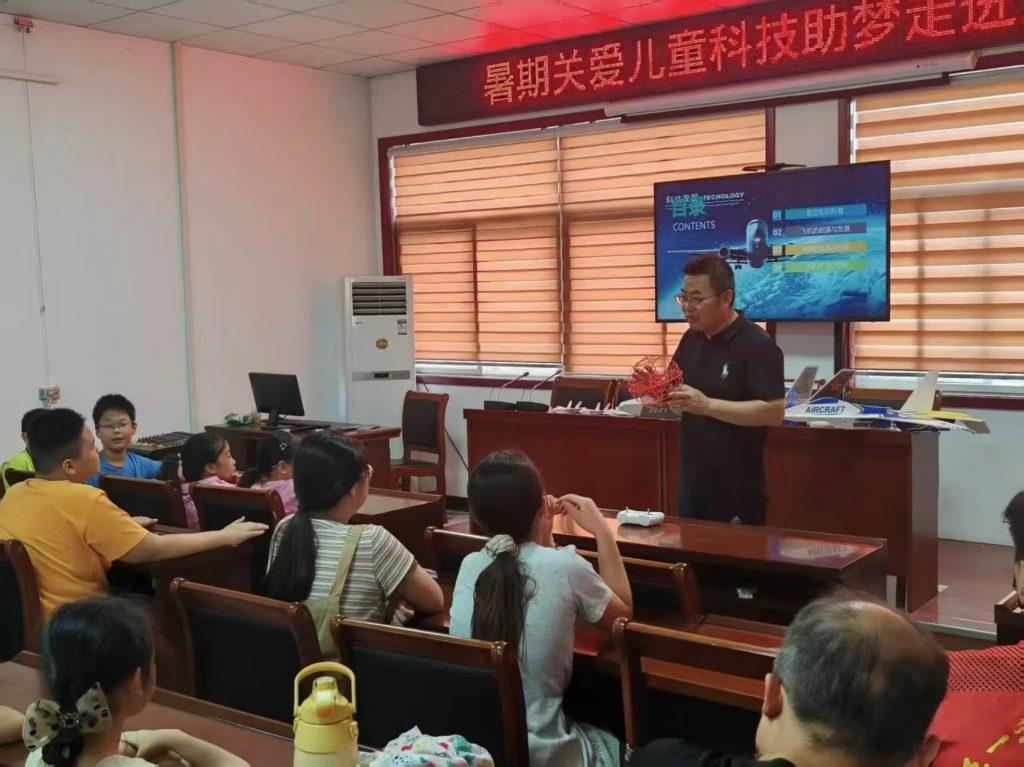
This image underscores the necessity of hands-on, practical drone training sessions that go beyond theory.
3. Environmental and Regulatory Constraints
The orchard environment itself presents dynamic challenges. Wind is the primary adversary. Even moderate breezes can displace fine spray droplets, causing off-target drift that contaminates adjacent crops, water bodies, or sensitive areas. Operational wind speed limits are therefore strict, often grounding drones on days when spraying might otherwise be deemed necessary. Temperature and humidity also affect droplet evaporation and plant uptake. Furthermore, electromagnetic interference from power lines, communication towers, or radar installations can disrupt GPS signals and flight controller stability, posing a significant risk.
Regulatory frameworks, while necessary for safety and accountability, add another layer of complexity. Pilots often require specific licenses or certifications. Regulations governing flight over people, near airports, and the use of certain chemicals via aerial application are evolving and can vary by region, demanding constant vigilance and legal awareness from operators and service providers.
Strategic Pathways for Integration and Advancement
To transition from a promising technology to a cornerstone of integrated pest management (IPM) in orchards, a multi-pronged strategic approach is required, focused on technological evolution, human capital development, and systemic support.
1. Driving Technological Innovation and Hardware Evolution
The industry must continue to push the boundaries of drone capability. Research and development should be aggressively directed towards:
- Next-Generation Power Systems: Investing in high-energy-density battery chemistries (e.g., solid-state) or hybrid power systems to extend flight time to 45-60 minutes and increase payload capacity to 30+ liters.
- Advanced Sensing and AI: Making multispectral and hyperspectral cameras coupled with edge-computing AI models more affordable and robust. This will enable true real-time, spot-specific spraying based on accurate disease detection, moving beyond blanket coverage.
- Spray System Optimization: Developing intelligent spray systems that dynamically adjust flow rate, droplet spectrum, and fan speed in response to real-time sensor data on canopy density and local wind conditions at the spray head.
The performance target for a next-generation orchard spray drone can be summarized as follows:
| Technical Feature | Current Standard | Near-Future Target |
|---|---|---|
| Flight Endurance | 20-30 min | > 45 min |
| Payload Capacity | 10-20 L | 25-35 L |
| Terrain Following Accuracy | ± 0.5 m | ± 0.2 m |
| AI Pest Detection Accuracy | < 75% (for early stages) | > 90% |
| Operational Wind Speed Limit | 5-6 m/s (Beaufort 4) with stabilized spray |
2. Building a Robust Ecosystem for Professional Drone Training and Support
Technology is only as good as its operator. Therefore, the single most important investment is in human capital. A tiered, standardized, and accessible drone training ecosystem must be established. This should be a collaborative effort involving:
- Government & Agricultural Extension Services: To set curriculum standards, provide subsidies for training, and integrate UAV technology into official IPM guidelines.
- Educational Institutions: To develop certified courses that blend agronomy, data science, and remote piloting skills. These courses should offer progressive certification levels (Basic Operator, Advanced Agronomist-Pilot).
- Drone Manufacturers & Distributors: To provide product-specific technical drone training, maintenance workshops, and access to simulation software for risk-free practice.
- Private Service Providers: To offer apprenticeship models, where novice pilots can learn alongside experienced professionals in real orchard settings.
The core curriculum for a comprehensive drone training program must cover, but not be limited to, the modules outlined below:
| Training Module | Key Learning Objectives | Outcome for Trainee |
|---|---|---|
| Regulations & Safety | Airspace law, licensing, operational risk assessment, emergency procedures. | Legal compliance and safe flight operation mindset. |
| Drone Flight Mastery | Manual control, automated mission planning, pre-flight checks, in-flight diagnostics. | Proficient piloting skills under various conditions. |
| Agro-Chemical Application Science | Droplet dynamics, chemical selection, tank mixing, calibration, variable-rate technology. | Ability to translate agronomic need into precise drone application parameters. |
| Data Acquisition & Analysis | Using drone-mounted sensors, generating NDVI/other indices, creating prescription maps. | Skills to conduct crop scouting and derive actionable insights from aerial data. |
| Field Logistics & Business | Job planning, cost calculation, client communication, service contract management. | Competence to run a professional, efficient, and profitable spraying service. |
This structured approach to drone training ensures that operators are not just remote pilots, but true “Aerial Agronomists.”
3. Enhancing Environmental Adaptability and Risk Management
To mitigate external constraints, we must develop smarter, more adaptive systems and protocols:
- Hyper-Local Weather Integration: Drones and ground control stations should be networked with local micro-weather stations. AI algorithms can then predict short-term, location-specific weather windows and even suggest optimal application parameters (e.g., droplet size) for the forecasted conditions, maximizing the number of operable days.
- Advanced Navigation Resilience: Implementing sensor-fusion navigation (combining GPS, vision, and inertial measurement units) to maintain stable flight and continue operations in areas with temporary GPS signal degradation.
- Drift Mitigation Technologies: Promoting the use of low-drift nozzles, anti-drift adjuvants, and electrostatic charging systems that improve droplet attraction to plant surfaces. The collection efficiency $E_c$ can be modeled as a function of charge-to-mass ratio:
$$E_c \propto \frac{q}{m}$$
where a higher charge-to-mass ratio ($q/m$) typically increases droplet attraction to the usually grounded plant target.
In conclusion, UAV spraying technology represents a paradigm shift in orchard management, offering a path towards precision, efficiency, and sustainability. The journey from a novel gadget to a reliable agricultural tool is fraught with challenges rooted in technology limits, human skill gaps, and environmental realities. However, by relentlessly pursuing innovation in drone hardware and AI, by making comprehensive, standardized drone training the bedrock of adoption, and by developing intelligent systems to manage external risks, we can integrate this technology seamlessly. Its future lies not in isolated use, but as the aerial component of a connected “Smart Orchard” ecosystem, where data from drones, soil sensors, and weather stations converge to inform holistic crop management decisions. Through this strategic integration, drone technology will fully mature into an indispensable asset, safeguarding orchard health, ensuring food safety, and securing the economic future of fruit cultivation.