
As a researcher deeply immersed in the intersection of technology and cultural preservation, I have witnessed firsthand the transformative impact of Unmanned Aerial Vehicle (UAV) technology on heritage conservation. The relentless passage of time, coupled with environmental degradation and human activity, poses a continuous threat to our shared cultural patrimony. Traditional methods of documentation, monitoring, and preservation often fall short, being labor-intensive, costly, and sometimes invasive. In this context, drone technology has emerged not merely as a novel gadget, but as a revolutionary suite of tools that is redefining the protocols of heritage science. This article details my perspective on the applications, the underlying technical principles, the significant challenges, and the imperative for comprehensive drone training to harness this technology’s full potential for safeguarding our past.
Historical Context and Technological Evolution
The quest to document and preserve heritage sites is ancient, but the tools have evolved from hand sketches and ground photography to sophisticated remote sensing. The advent of manned aerial photography marked a significant leap, yet it was constrained by cost, logistical complexity, and limited accessibility. The proliferation of commercial UAV platforms, equipped with miniaturized high-resolution sensors and advanced flight controllers, has democratized aerial data acquisition. A modern drone is a convergence of several technologies: lightweight composite materials for airframes, Global Navigation Satellite System (GNSS) for positioning, inertial measurement units (IMU) for stability, and, crucially, a payload suite that can include RGB cameras, multispectral sensors, LiDAR scanners, and thermal imagers. The evolution can be summarized by the improvement in key performance parameters, which directly influence their application in heritage contexts, as shown in the table below.
| Performance Parameter | Early Commercial Drones (circa 2010-2015) | Current State-of-the-Art (circa 2024) | Impact on Heritage Applications |
|---|---|---|---|
| Flight Time | 15-25 minutes | 40-90 minutes (with specific payloads) | Enables larger site coverage and higher-resolution data capture in a single mission. |
| Sensor Payload | Primarily basic RGB cameras | Interchangeable: RGB, Multispectral, Thermal, LiDAR, Hyperspectral | Facilitates multi-modal data acquisition (visual, structural, thermal) for holistic analysis. |
| Positional Accuracy | ~5-10 meters (GNSS only) | < 2 cm with PPK/RTK GNSS + GCPs | Critical for generating survey-grade maps and precise 3D models for conservation planning. |
| Data Processing | Manual, offline, computationally limited | AI-assisted, cloud-based, near real-time analytics | Accelerates damage detection, change monitoring, and automated feature extraction. |
| Regulatory Framework | Nascent or highly restrictive | Maturing, with specific categories for commercial operations | Emphasizes the need for formal drone training and certification for legal and safe operations. |
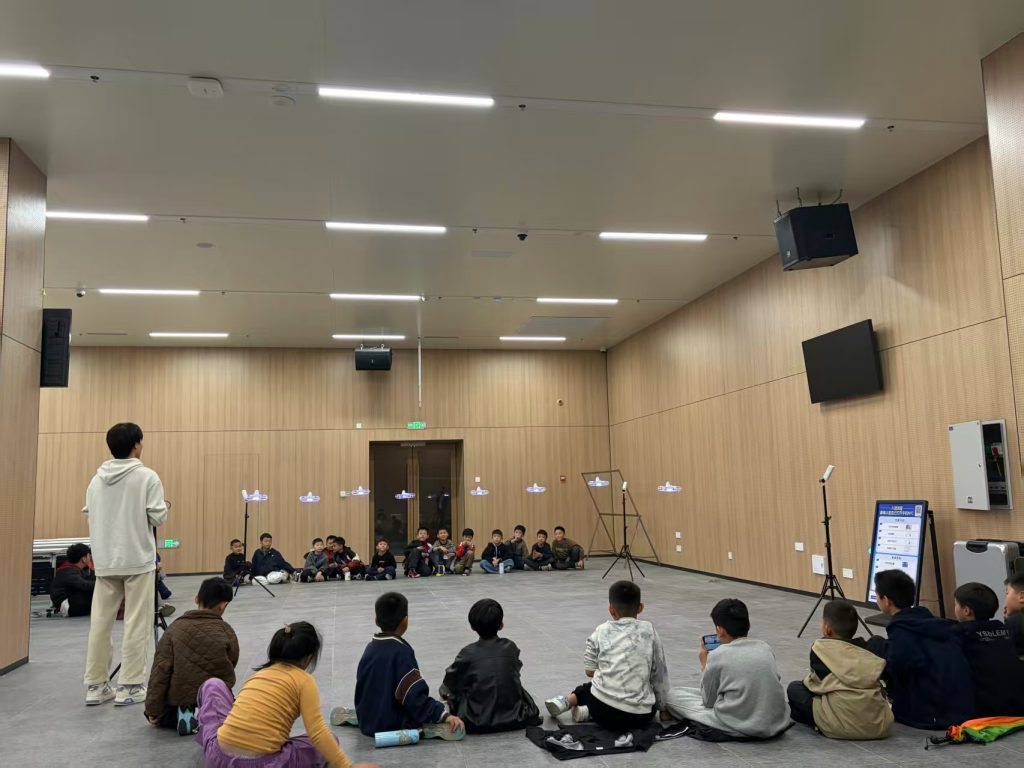
A modern drone system for heritage work is a sophisticated tool. The airframe must be stable and capable of carrying the necessary sensor payload. The flight controller and navigation system are the core, allowing for precise, repeatable automated flight paths, which are essential for photogrammetry. The choice of sensor—whether a high-resolution optical camera for photogrammetry, a LiDAR for penetrating vegetation, or a thermal camera for detecting subsurface anomalies—defines the type of information gathered. Crucially, the operator is an integral part of this system. Effective drone training must, therefore, cover not only piloting skills but also mission planning, sensor selection, and data management principles.
Core Technical Principles and Methodologies
The power of drones in heritage conservation lies in their ability to systematically capture georeferenced data. The foundational principle for most optical applications is photogrammetry, specifically Structure from Motion (SfM). A drone follows a pre-programmed flight path, capturing hundreds or thousands of overlapping high-resolution images of a site from different angles. Using SfM algorithms, software identifies common points (tie points) across these images and triangulates their positions in 3D space, creating a sparse point cloud. This is densified into a dense point cloud, from which a 3D mesh and finally a photorealistic textured model can be generated. The spatial accuracy of this model depends on the Ground Sample Distance (GSD)—the real-world size of one pixel in an image—which is a function of sensor resolution, focal length, and flying altitude:
$$ GSD = \frac{(Sensor\ Width\ (mm) \times Flight\ Height\ (m) \times 1000)}{(Focal\ Length\ (mm) \times Image\ Width\ (pixels))} $$
For instance, to achieve a GSD of 1 cm/pixel for detailed masonry analysis, one must carefully calculate the required flight altitude based on their specific camera specs.
For terrain modeling and mapping under dense vegetation, LiDAR (Light Detection and Ranging) is superior. A drone-mounted LiDAR sensor emits rapid laser pulses and measures the time for their return. By calculating the distance to the ground or object for each pulse, it generates an extremely accurate “point cloud” of the surface topography. The ability of some laser wavelengths to partially penetrate vegetation allows for the creation of Digital Terrain Models (DTMs) of hidden archaeological features. The point density $ρ$ of a LiDAR survey is key and is given by:
$$ ρ = \frac{(PRF × Scan\ Frequency × Number\ of\ Returns)}{Aircraft\ Speed} $$
where PRF is the pulse repetition frequency. Higher point density yields more detailed models but requires slower flight speeds or higher-performance sensors.
Thermal imaging introduces another dimension. Materials decay, moisture ingress, and subsurface voids create thermal anomalies—differences in surface temperature that are invisible to the naked eye. A thermal camera detects infrared radiation, and these anomalies can be quantified. For example, a damp area in a stone wall will cool down and heat up at a different rate than dry stone. By analyzing thermal time-series data, one can model heat transfer and identify potential problem areas. The basic heat flux equation, $q = -k \nabla T$, where $q$ is heat flux, $k$ is thermal conductivity, and $\nabla T$ is the temperature gradient, underpins the interpretation of these images, though real-world analysis is far more complex due to environmental factors.
Applications in the Heritage Conservation Workflow
The integration of drone-derived data fundamentally enhances every stage of the heritage conservation process, from discovery to long-term monitoring. The following table outlines a typical workflow and the corresponding drone-based deliverables.
| Conservation Phase | Drone Application & Sensor Used | Key Deliverables & Analysis | Value Proposition |
|---|---|---|---|
| 1. Discovery & Assessment | High-altitude prospecting (RGB, Multispectral). Detailed site mapping (RGB, LiDAR). | Orthomosaic maps, Digital Surface/Terrain Models (DSM/DTM). Identification of crop marks, soil marks, or topographic anomalies. | Non-invasive, rapid survey of large areas. Reveals features not visible from the ground. |
| 2. Documentation & Modeling | Close-range photogrammetry (RGB). Aerial LiDAR for complex structures. | Millimeter-accurate 3D textured models. Point clouds with RGB and intensity values. Cross-sections and architectural drawings. | Creates a permanent, precise digital record (“digital twin”). Basis for condition assessment and virtual reconstruction. |
| 3. Condition Assessment & Diagnostics | Thermal imaging. High-resolution optical inspection. | Thermograms highlighting moisture, delamination, or voids. Detailed imagery for crack mapping and material analysis. | Enables proactive maintenance by identifying hidden defects. Quantifies damage for prioritization. |
| 4. Monitoring & Change Detection | Repeat surveys at regular intervals (RGB, Thermal). | Time-series analysis of 3D models and orthomosaics. Volumetric change calculations (e.g., erosion). | Objectively measures decay rates and impacts of environmental factors or interventions. |
| 5. Public Engagement & Visualization | Cinematic aerial videography. Interactive 3D models. | Virtual tours, educational content, immersive experiences. | Raises public awareness and support for conservation projects. |
For documentation, the 3D models generated are not just visual aids; they are analytical platforms. From a photogrammetric model, one can extract precise measurements of crack widths, compute volumes of material loss, or analyze structural deformations by comparing the as-built model to a theoretical geometric primitive. In one project involving a historical fortress, repeat LiDAR surveys over three years allowed us to calculate the rate of wall bulging using cloud-to-cloud distance analysis with a precision of $$Δd < 5\ mm$$, providing critical data for structural engineers.
Thermal diagnostics offer a powerful, non-destructive testing method. On a cathedral survey, thermal imaging conducted at dawn (when thermal contrast is highest) revealed distinct “cool” patterns on the interior vaults, correlating precisely with known areas of moisture infiltration from the roof. This directed restorative efforts efficiently, avoiding unnecessary exploratory probing. The data analysis often involves statistical processing of thermal pixel values across different surface materials to establish baseline signatures and flag outliers.
Challenges and the Centrality of Specialized Training
Despite its promise, the integration of drone technology into heritage conservation faces multifaceted challenges. These are not merely technical but span regulatory, ethical, and operational domains. I argue that the common thread in addressing most of these challenges is rigorous, context-specific drone training.
1. Regulatory Compliance and Operational Safety: Airspace regulations are complex and vary by jurisdiction. Flying near historic urban centers often involves controlled airspace, proximity to people, and privacy considerations. A comprehensive drone training program for heritage professionals must extend beyond basic flight skills to include:
- Air law and specific operational authorizations (e.g., flying over assemblies of people for public site monitoring).
- Advanced risk assessment and mitigation planning for sensitive environments.
- Fail-safe procedures and contingency planning to prevent accidents that could damage the very heritage being surveyed.
2. Data Fidelity and Scientific Rigor: The adage “garbage in, garbage out” is particularly apt. Poorly planned flights yield unusable data. Drone training must instill a scientific methodology:
- Mission Planning: Calculating the correct GSD, front and side overlap (typically 70%-80% for SfM), and sun angle for optimal data capture.
- Ground Control: The use and accurate surveying of Ground Control Points (GCPs) is essential for georeferencing and scaling models to survey-grade accuracy. The error $σ$ in final model coordinates can be approximated by: $$ σ_{model} ≈ \sqrt{σ_{GCP}^2 + σ_{photogrammetry}^2} $$, highlighting the need for precise GCP placement.
- Data Management: Handling large datasets (often terabytes), ensuring metadata integrity, and establishing reproducible processing workflows.
3. Interpretation and Integration: A thermal anomaly is not automatically a “void”; it could be a moisture patch, a different material, or an artifact of sunlight. Effective drone training must bridge the gap between data acquisition and heritage science. Operators need foundational knowledge in:
- Principles of remote sensing and sensor limitations.
- Basic material science and decay pathology to interpret findings correctly.
- How to integrate drone data with other sources (historical archives, geophysical surveys, on-site inspections) for a holistic understanding.
4. Ethical and Community Engagement: Drones can be perceived as intrusive. Flying over sacred sites or private land requires cultural sensitivity and community consultation. Drone training should encompass ethical guidelines, communication strategies, and protocols for engaging with local communities and stakeholders to build trust and ensure the work is collaborative and respectful.
Future Trajectories and the Path Forward
The future of drones in heritage conservation is tied to convergence with other emerging technologies and the establishment of global standards.
Technological Convergence: We are moving towards integrated sensor pods and automated analysis. Imagine a drone that simultaneously captures RGB, thermal, and multispectral data, processes it onboard using edge computing, and uses machine learning algorithms to classify materials and flag potential defects in near real-time. The fusion of data from different sensors can be formulated as an optimization problem to maximize information gain $I$:
$$ I_{fusion} = \sum_{i=1}^{n} w_i \cdot H(S_i) – λ \cdot R $$
where $H(S_i)$ is the information entropy from sensor $i$, $w_i$ is a weight based on relevance to the conservation question, $λ$ is a regularization parameter, and $R$ represents redundancy between sensor data.
Standardization and Knowledge Sharing: There is a pressing need for international standards for data acquisition, processing, and archiving specific to cultural heritage. This will ensure interoperability and long-term usability of datasets. A global digital repository for heritage site “digital twins,” built using standardized drone protocols, would be an invaluable resource for research, monitoring, and virtual tourism.
The Indispensable Role of Advanced Training: None of this future is possible without a corresponding investment in human capital. The next generation of drone training must evolve into certified, interdisciplinary programs that produce “Heritage Drone Specialists.” These professionals would be fluent in aviation regulation, geomatics, data science, and conservation principles. Their core competency would be translating conservation questions into effective drone missions and deriving actionable insights from complex datasets.
Conclusion
In my view, drone technology has irrevocably altered the landscape of heritage conservation, offering unprecedented capabilities for documentation, analysis, and monitoring. However, the technology itself is only a tool. Its efficacy, ethical application, and long-term value are entirely dependent on the skill and understanding of the operator. The greatest challenge—and opportunity—lies not in developing more advanced drones, but in cultivating a global community of rigorously trained practitioners. Comprehensive, science-driven drone training is the critical linchpin that will ensure this powerful technology fulfills its promise: to preserve the tangible memory of human civilization for generations to come with the highest standards of accuracy, safety, and respect. The future of our past depends on this investment in knowledge and skill.