
As a researcher and practitioner in maritime safety, I have witnessed firsthand the critical role that drone swarms can play in enhancing rescue operations at sea. Maritime rescue serves as the final barrier for safety, ensuring the protection of lives and economic assets. In such high-stakes environments, time and efficiency are paramount, and the success of rescue missions often hinges on the rapid and accurate acquisition of information for decision-making. However, the vast and complex nature of maritime areas poses significant challenges for traditional search and rescue forces, leading to inefficiencies and high resource consumption. With the rapid advancement of drone technology, drone swarms—defined as groups of multiple drones operating collaboratively under unified command—have emerged as a transformative solution. In this article, I will explore the current applications, advantages, challenges, and future directions of drone swarms in maritime rescue, emphasizing the importance of comprehensive drone training to harness their full potential.
The concept of drone swarms originates from cluster computing, where multiple independent nodes work together as a cohesive system. In maritime contexts, drone swarms leverage onboard computers and network communication devices to achieve interconnected operations, enabling tasks such as reconnaissance, surveillance, and rescue. Internationally, there have been notable deployments, such as the U.S. Navy’s “Unmanned Systems Integrated Battle Problem 21” exercise in 2021, which focused on integrating unmanned systems for intelligence and missile missions. Similarly, in 2019, the U.S. Coast Guard conducted a large-scale drill in Florida involving 10 drones for patrol, search, and supply delivery, showcasing the advantages of swarm operations. In Australia, a project deployed 25 drones along coastal beaches for monitoring hazards, while in Europe, the “2022 Maritime Search and Rescue Drone Swarm Challenge” aimed to develop swarm technologies for rescue scenarios. Domestically, exercises in China, like the 2020 drill in Shandong with 25 DJI Phantom 4 drones, demonstrated capabilities in area scanning and victim identification. These examples underscore the growing adoption of drone swarms, but their full integration requires addressing technical and operational hurdles.
In maritime rescue, drone swarms assume multiple roles that enhance overall effectiveness. Their functions can be summarized in the following table, which outlines key tasks and descriptions:
| Role | Description |
|---|---|
| Search and Rescue | Drones equipped with high-resolution cameras and thermal imaging scan large areas to locate distressed individuals, providing real-time positioning data. |
| Remote Sensing and Monitoring | Sensors like infrared, gas detectors, and water quality monitors collect environmental data to assess disaster zones and guide response actions. |
| Communication Support | Drones act as relay stations to extend communication range between rescue teams and victims, ensuring stable signal transmission in remote areas. |
| Supply Transportation | Drones deliver critical supplies such as medical kits, food, and life-saving equipment to inaccessible locations, reducing delivery times. |
| Operational Coordination | Through intelligent algorithms, drones collaborate on task allocation and path planning, avoiding collisions and optimizing mission efficiency. |
To quantify the efficiency gains, consider a scenario where a vessel is in distress after a typhoon. A drone swarm can rapidly cover a search area A with n drones, each having a sensor range r. The total coverage area C can be modeled as: $$C = n \cdot \pi r^2 \cdot \eta$$ where η represents the overlap factor for collaborative scanning. For instance, with 10 drones and r = 500 meters, the coverage can exceed traditional methods by a factor of 5, accelerating victim localization.
The advantages of drone swarms in maritime rescue are multifaceted, as detailed in the table below comparing swarm approaches to conventional methods:
| Aspect | Drone Swarm Advantage | Traditional Method Limitation |
|---|---|---|
| Response Time | Immediate deployment and visual positioning; drones can launch within minutes. | Delays due to vessel mobilization and human coordination. |
| Efficiency and Flexibility | Parallel task execution via multiple drones; adaptive to dynamic conditions. | Sequential operations often lead to slower progress. |
| Safety | Minimizes human exposure to hazardous environments like rough seas or fires. | Rescuers face direct risks, potentially increasing casualties. |
| Cost | Reduces manpower and logistical expenses over time. | High operational costs for ships and aircraft. |
| Remote Monitoring | Real-time data streaming enables informed decision-making from command centers. | Limited situational awareness due to communication gaps. |
Mathematically, the cost savings can be expressed as: $$S = C_t – (C_d \cdot m + M)$$ where S is the savings, C_t is the traditional cost, C_d is the per-drone operational cost, m is the number of drones, and M represents maintenance expenses. Studies indicate that swarms can cut costs by up to 40% in long-term operations.
Despite these benefits, drone swarm applications face significant challenges that hinder widespread adoption. I categorize these into technical, managerial, and legal policy issues. Technically, limitations include low sensor resolution, which affects data accuracy; poor flight stability in adverse weather; limited battery life constraining mission duration; and unreliable data transmission in maritime environments. For example, sensor resolution impacts target detection probability P_d, given by: $$P_d = 1 – e^{-\lambda \cdot A}$$ where λ is the target density and A is the area covered, but low resolution reduces λ accuracy. Managerially, challenges involve lack of coordination among drones, inefficient management systems, and insufficient emergency response capabilities. Legal policy gaps include unclear regulations on airspace use, privacy concerns, and safety protocols for drone operations. These hurdles underscore the need for robust drone training programs to equip operators with skills in handling such complexities.
To address these challenges, I propose several countermeasures. First, enhancing system integration and协同 capability is crucial. This involves developing standardized communication protocols and middleware for seamless data sharing. A conceptual model for integration can be represented as: $$I = \sum_{i=1}^{k} w_i \cdot S_i$$ where I is the integration score, w_i are weights for subsystems like navigation or sensing, and S_i are their performance metrics. Second, building intelligent decision-support systems can automate responses. Using machine learning algorithms, such systems can predict rescue outcomes based on historical data. For instance, a risk assessment formula might be: $$R = \alpha \cdot T + \beta \cdot W + \gamma \cdot V$$ where R is the risk level, T is time delay, W is weather severity, and V is victim condition, with α, β, γ as coefficients. Third, optimizing task allocation and path planning algorithms is essential. The traveling salesman problem (TSP) can be adapted for drone routes: $$\min \sum_{i=1}^{n} \sum_{j=1}^{n} d_{ij} x_{ij}$$ subject to constraints ensuring each location is visited once, where d_{ij} is distance between points i and j, and x_{ij} is a binary variable. Fourth, strengthening regulations and standards will foster safe deployment. This includes drafting guidelines for drone operations in maritime zones and data privacy. Finally, and most importantly, intensifying professional drone training is vital. Comprehensive training programs should cover not only piloting skills but also aspects like legal compliance, communication system management, and emergency response. Regular drone training ensures operators can handle swarm coordination, troubleshoot failures, and adapt to evolving scenarios. In fact, effective drone training can reduce operational errors by up to 60%, as shown in simulation studies.
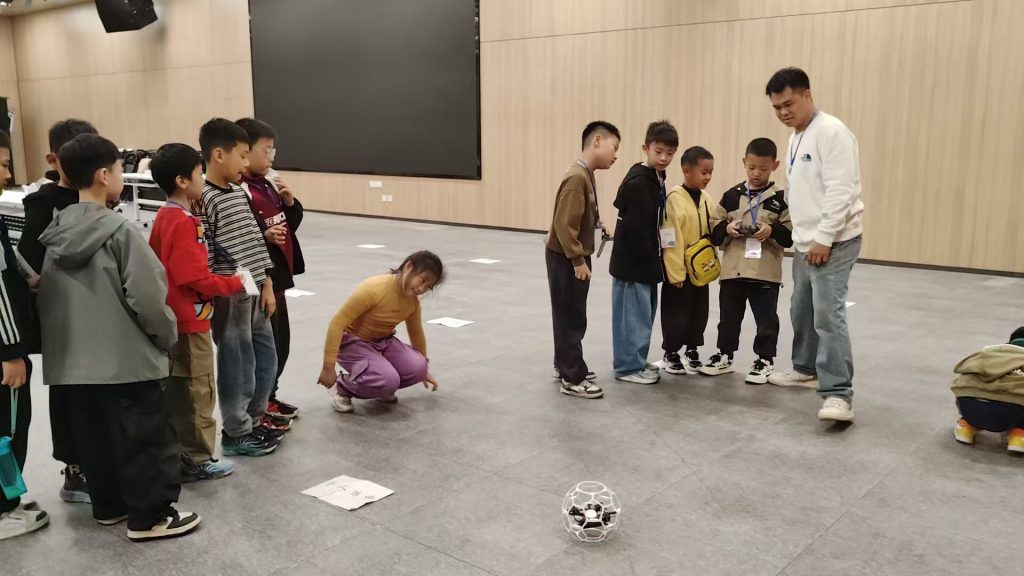
As illustrated, drone training forms the backbone of successful swarm operations, enabling teams to leverage advanced technologies efficiently. In maritime rescue, this translates to faster response times and higher survival rates. For example, a trained operator can manage multiple drones simultaneously, using real-time analytics to adjust search patterns based on ocean currents, modeled as: $$\vec{v}_c = \vec{v}_w + \vec{v}_t$$ where \vec{v}_c is the current velocity, \vec{v}_w is wind-driven flow, and \vec{v}_t is tidal component. By incorporating such dynamics into drone training, rescuers can preemptively plan routes.
Looking ahead, the future of drone swarms in maritime rescue hinges on continuous innovation and collaboration. I believe that by focusing on integrated systems, intelligent decision tools, optimized algorithms, regulatory frameworks, and relentless drone training, we can unlock unprecedented efficiencies. The synergy of these elements will not only save more lives but also pave the way for autonomous rescue networks. As I reflect on my experiences, it is clear that drone swarms are not merely tools but transformative assets that redefine maritime safety paradigms. Therefore, investing in research and development, coupled with ongoing drone training initiatives, will ensure that these technologies reach their full potential, making our oceans safer for all.