
As a seasoned practitioner in the film and media industry, I have observed firsthand the seismic shift brought about by the proliferation of consumer-grade drone aerial photography. What was once a niche, high-cost endeavor reserved for major productions has now become an accessible tool, revolutionizing how we capture and create visual content. From news reporting and documentaries to blockbuster films and social media snippets, drones have permeated every facet of our work, offering perspectives that were previously unimaginable. This article delves into the current state, challenges, and future trajectory of drone aerial photography in film and television production, emphasizing the critical role of structured drone training in navigating this evolving landscape.
The integration of drones has fundamentally altered the filmmaking process. Its impact can be categorized into three primary areas: creative enhancement, operational efficiency, and cost reduction. To quantify these changes, let’s examine them systematically.
First, the creative liberation offered by drones is unparalleled. They transcend the limitations of terrestrial filming, providing a true three-dimensional canvas for storytelling. The so-called “God’s eye view” allows audiences to experience scenes with unprecedented depth and scope. Moreover, the ability to execute high-speed, low-altitude maneuvers enables the capture of dynamic, flowing shots that inject immense energy into narratives. This represents a paradigm shift from two-dimensional, planar thinking to fully realized spatial creativity. The creative benefits can be summarized by the following conceptual formula, where Visual Impact (VI) is a function of Angular Freedom (α), Spatial Coverage (S), and Kinetic Energy (K) of the shot:
$$ VI = \int (\alpha \cdot S \cdot K) \, dt $$
Here, dt represents the time element of the shot, and drones maximize the parameters α, S, and K simultaneously.
Second, operational efficiency has seen dramatic improvements. Drones can rapidly access hazardous or inaccessible locations—be it disaster zones, mountainous terrain, or large-scale public events—significantly reducing the time lag in acquiring footage. This is crucial for time-sensitive work like news journalism and live sports broadcasting. The efficiency gain can be modeled by comparing traditional setup time (T_t) with drone deployment time (T_d). The time efficiency ratio (η_t) is:
$$ η_t = \frac{T_t}{T_d} $$
Typically, η_t >> 1, indicating substantial time savings. Furthermore, drones mitigate personnel risk, enhancing safety for crew members.
Third, cost savings are multifaceted. Drones often replace cumbersome equipment like camera cars, large cranes, and track systems, reducing the need for extensive crew and logistics. The economic equation is straightforward. Let C_eq be the cost of traditional equipment rental and operation, C_crew be the associated labor cost, and C_drone be the operational cost of the drone (including pilot). The cost saving ΔC is:
$$ ΔC = (C_{eq} + C_{crew}) – C_{drone} $$
In most scenarios, ΔC is positive, denoting cost reduction. Compared to traditional helicopter aerial photography, the savings in logistical coordination, permits, and fuel are even more pronounced, as I recall from my early experiences with complex helicopter shoots.
The following table encapsulates the core advantages drone aerial photography introduces to film production:
| Aspect | Traditional Methods | Drone Aerial Photography | Quantitative Benefit |
|---|---|---|---|
| Perspective & Mobility | Limited to ground or costly aerial platforms | Full 3D mobility, “God’s eye view”, dynamic shots | Angular freedom α → 4π steradians (theoretically) |
| Setup Time | Hours for rigging cranes, tracks | Minutes for drone deployment | η_t often > 5x improvement |
| Access to Locations | Limited, often risky for crew | High, reduces personnel danger | Risk factor R ∝ 1 / Accessibility |
| Operational Cost | High (equipment, crew, fuel) | Relatively low (drone, pilot, batteries) | ΔC often 30-70% savings per shot |
| Creative Flexibility | Constrained by physical setup | High, enables rapid iteration of ideas | Creative iterations per day ↑ significantly |
However, the very accessibility that fuels this revolution has introduced a new set of challenges. The democratization of aerial filming has led to an influx of operators with varying skill levels, highlighting a pressing need for comprehensive drone training.
One of the most significant issues is the uneven competency among practitioners. As barriers to entry lower, many individuals enter the field without robust technical knowledge or safety protocols. This increases the risk of flight incidents, endangering both people and property. The probability of an incident (P_incident) can be loosely expressed as a function of pilot skill level (S), environmental factors (E), and equipment reliability (R):
$$ P_{incident} = 1 – (S \cdot R \cdot \frac{1}{E}) $$
Here, low skill level S drastically increases P_incident. This underscores why standardized drone training is not optional but essential.
Compounding this problem is the lack of uniform industry standards and regulatory frameworks. Multiple entities offer certifications with divergent curricula, exams, and recognition, leading to confusion and high learning costs. The current regulatory environment, while necessary for airspace safety, can sometimes be overly restrictive for media professionals, applying blanket rules that don’t account for the nuanced needs of film production. The need for a coherent framework is urgent.
Furthermore, drone technology, while advanced, remains susceptible to environmental and technical variables. Performance can be affected by weather conditions (wind, precipitation), electromagnetic interference, and inherent hardware failure rates. The reliability of a drone system for a given shoot can be modeled as a product of individual component reliabilities, emphasizing the need for meticulous pre-flight checks—a core component of any serious drone training program.
There’s also a psychological dimension to consider. The ease of obtaining stunning aerial shots can lead to overreliance and aesthetic laziness among some creators. The temptation to overuse drone footage without proper narrative justification results in visually disjointed content that lacks coherent cinematic language. Additionally, the portability of drones should empower creativity, not encourage complacency in planning and execution.
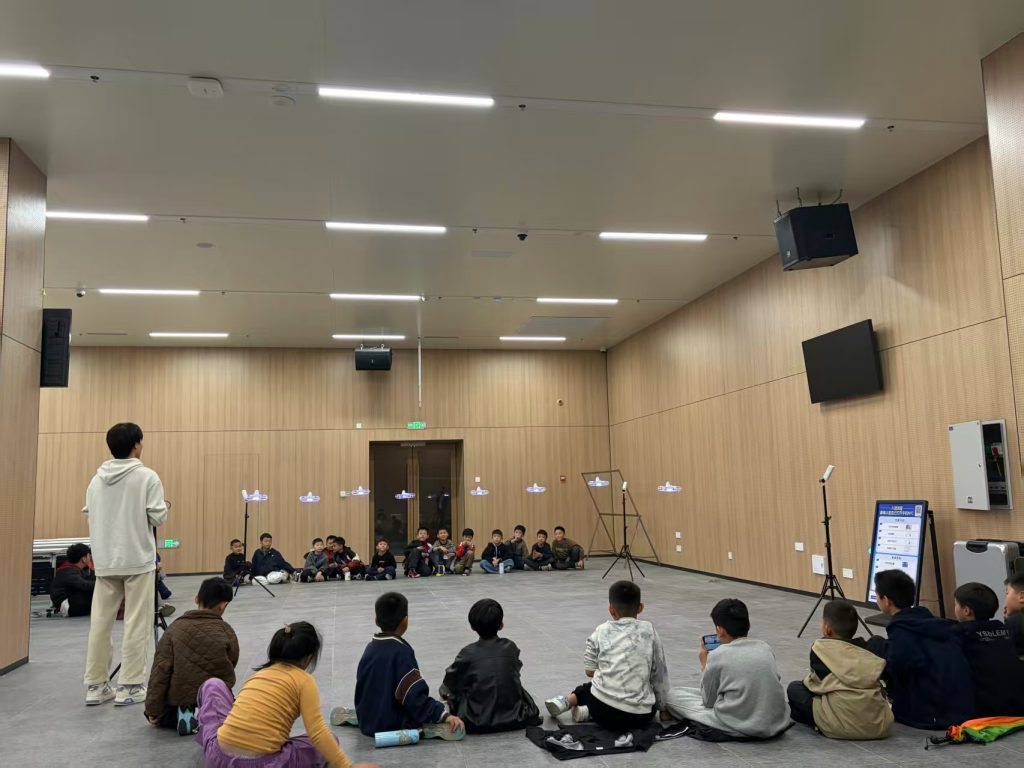
Looking ahead, the sustainable and professional development of drone aerial photography in film production hinges on several key advancements, all deeply interconnected with the concept of drone training.
First and foremost, establishing a unified, standardized pathway for learning, assessment, and certification is paramount. A centralized system with regulated curricula, affordable fees, and universally recognized credentials would elevate the entire industry’s professionalism. This system must cover not only flight mechanics and safety but also the artistic principles of aerial cinematography. The goal is to ensure every operator is well-versed in both the “flight” and the “film” aspects. The competency level C after training could be represented as:
$$ C = \int_{0}^{T} [L_t(t) + L_p(t)] \, dt $$
Where T is the training duration, L_t is theoretical learning (regulations, physics, planning), and L_p is practical learning (flight control, shot composition). Effective drone training maximizes this integral.
Second, regulations must evolve to better serve the media industry. While safety is non-negotiable, a more nuanced approach is needed. For accredited media organizations with certified pilots, streamlined approval processes for specific operational zones would balance oversight with operational flexibility. This requires collaboration between aviation authorities and media bodies to design a risk-based regulatory model.
Third, a robust and accessible insurance ecosystem is critical. Given the non-zero probability of equipment failure or damage, insurance provides a necessary safety net. Current offerings are often complex and expensive. Future models should be as straightforward as mandatory motor insurance, with premiums potentially linked to pilot certification levels from formal drone training programs. This creates a virtuous cycle: better training leads to lower risk, which could lead to lower insurance costs.
Finally, the onus is on individual practitioners to commit to continuous improvement. This involves two core capacities: “flying” and “filming.” Superior piloting skill, honed through relentless practice and advanced drone training, ensures safety and precise maneuver execution. Equally important is the cinematic eye—the ability to plan flight paths for narrative impact, choose compelling compositions, and maintain stable, meaningful footage within the technical constraints of battery life and signal range. The relationship between skill sets can be visualized in the following table, which maps required competencies against outcomes:
| Skill Domain | Core Competencies | Acquisition Method | Measurable Outcome |
|---|---|---|---|
| Flight Mastery (The “Drone” in Drone Training) | Pre-flight planning, manual piloting dexterity, emergency procedures, airspace law, weather assessment. | Simulator hours, graded practical flights, written exams. | Incident rate ↓, Mission success rate ↑, Regulatory compliance = 100%. |
| Cinematic Mastery (The “Training” in Drone Training) | Shot composition, lens language, movement choreography, lighting awareness, editing continuity. | Cinematography theory, storyboard analysis, practical shooting assignments. | Visual coherence score ↑, Client satisfaction ↑, Creative contribution ↑. |
| Integrated Operation | Simultaneously managing flight parameters and artistic intent under pressure. | Scenario-based training, on-set mentorship. | Efficiency η_t maintained under creative constraints. |
The future of drone aerial photography is incredibly promising. We are likely to see further technological integration, such as AI-assisted flight for complex shots, improved collision avoidance, and longer endurance batteries. However, technology alone is not the answer. The human element, fortified by rigorous, continuous, and standardized drone training, will remain the most critical factor. It is the bridge that transforms a potentially hazardous gadget into a powerful, reliable, and creative partner in visual storytelling. As the industry matures, a shared commitment to education and professionalism will ensure that the aerial perspective continues to enrich our narratives safely, ethically, and breathtakingly. My own journey from early adopter to advocate for structured learning has convinced me that the next chapter of this revolution will be written by those who invest not just in the latest drone model, but in mastering the craft through dedicated drone training.