
As an expert in the field of agricultural technology, I have witnessed the rapid evolution of agricultural UAVs, which are transforming modern farming practices. These unmanned aerial vehicles, specifically designed for plant protection, offer unprecedented efficiency and precision in crop management. In this article, I will delve into the research progress, industry development, and future prospects of agricultural UAVs, drawing from global experiences and domestic trends. The integration of advanced technologies, such as AI and IoT, into agricultural UAVs is paving the way for smarter agriculture, and I aim to provide a comprehensive analysis that highlights key advancements and challenges.
Agricultural UAVs, commonly referred to as plant protection drones, are equipped with pesticide spraying systems and are primarily used for crop spraying operations. They consist of components like the flight platform, chemical tank, and flight control system. Based on structure, agricultural UAVs can be classified into single-rotor and multi-rotor types, while driven by power sources, they are categorized into electric and fuel-powered variants. Currently, the market in many regions is dominated by electric multi-rotor agricultural UAVs, due to their ease of use and lower operational costs. Compared to traditional ground-based sprayers, agricultural UAVs excel in efficiency and accuracy, significantly reducing pesticide and water usage. This aligns with sustainable agriculture goals, such as zero-growth in pesticide use initiatives. Moreover, agricultural UAVs offer benefits like minimal crop damage, uniform spray coverage, enhanced safety through remote operation, labor savings, and capability for night operations, making them a focal point in agricultural mechanization.
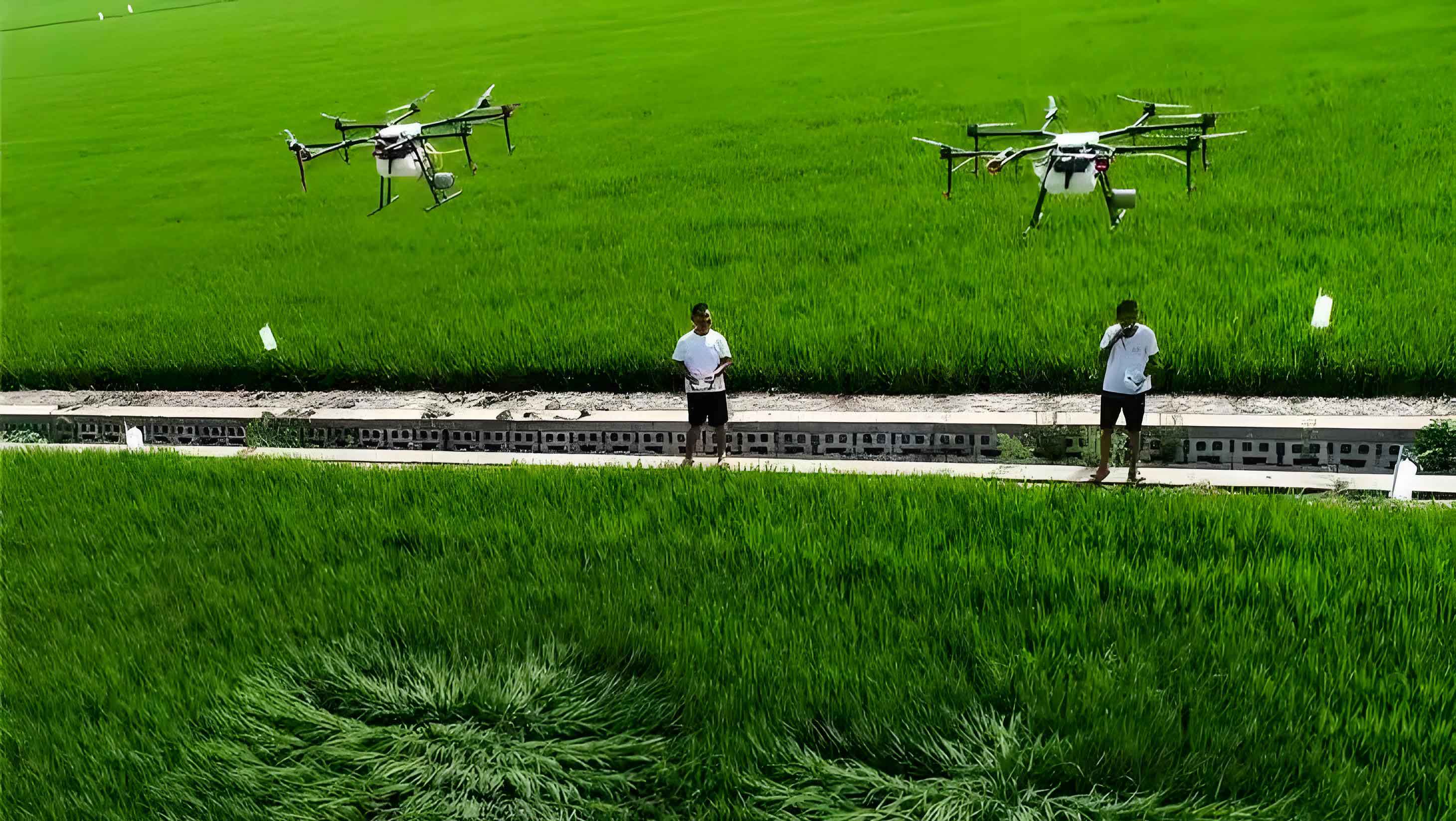
The development of agricultural UAVs has been influenced by global trends. In developed countries like the United States and Europe, large fixed-wing aircraft are often used for agricultural tasks, but Japan stands out as a pioneer in agricultural UAV adoption. With decades of experience, Japan has成熟的技术和培训体系, primarily using fuel-powered single-rotor agricultural UAVs for rice paddies. This model offers valuable lessons in regulation and application. In contrast, the adoption of agricultural UAVs in other regions is growing, driven by technological innovations. For instance, the integration of GPS and sensors has enhanced the precision of agricultural UAVs, allowing for variable-rate application based on crop health data. I have observed that the global market for agricultural UAVs is expanding, with increasing exports from manufacturing hubs, indicating a shift towards more automated and efficient farming solutions.
In recent years, the production and application of agricultural UAVs have surged. Numerous companies have entered the market, with leading firms developing advanced models that incorporate AI for autonomous flight and real-time monitoring. The number of agricultural UAVs in operation has grown exponentially, as evidenced by surveys showing substantial increases in fleet size and作业面积. For example, data from 2016 indicated that over 4,800 agricultural UAVs with a payload capacity above 5 liters were in use across various provinces, covering millions of hectares. This growth is fueled by a young user base, predominantly in their 20s and 30s, who are tech-savvy and eager to adopt innovative tools. The competitiveness of agricultural UAVs in international markets, such as in South Korea, underscores their potential to become world-leading agricultural machinery products.
To better understand the performance metrics of agricultural UAVs, we can use mathematical models. For instance, the spraying efficiency E can be expressed as the area covered per unit time, given by the formula: $$E = \frac{A}{t}$$ where A is the area sprayed in square meters, and t is the time in minutes. Another key parameter is the续航时间 T for electric agricultural UAVs, which depends on battery capacity C (in ampere-hours) and power consumption P (in watts): $$T = \frac{C \times V}{P}$$ where V is the voltage. For cost-benefit analysis, the benefit B can be calculated as the ratio of revenue R to cost C: $$B = \frac{R}{C}$$ where revenue includes savings from reduced pesticide use and labor, and cost encompasses purchase, maintenance, and operational expenses. These formulas help in optimizing the design and deployment of agricultural UAVs, ensuring they meet economic and environmental standards.
The standard system for agricultural UAVs is crucial for ensuring quality and safety. Initially, the industry lacked unified regulations, leading to variability in product performance. However, with the introduction of technical specifications and quality evaluation standards, such as those颁布 by agricultural authorities, the production of agricultural UAVs has become more standardized. These standards cover aspects like flight stability, spray accuracy, and safety protocols, facilitating wider adoption. Additionally, policies like purchase subsidies have been instrumental in promoting agricultural UAVs. Several provinces have implemented subsidy programs, which vary based on drone specifications like payload capacity. Below is a table summarizing subsidy details from selected regions, highlighting the financial incentives that drive the adoption of agricultural UAVs.
| Region | Drone Type | Subsidy Amount (10,000 CNY) | Pilot Fund (10,000 CNY) |
|---|---|---|---|
| Gansu Province | Electric Multi-rotor Agricultural UAV | 1.60 | 1000 |
| Hubei Province | Electric Multi-rotor Agricultural UAV (10-20L) | 1.50 | 1000 |
| Chongqing City | Multi-rotor Agricultural UAV | 1.60 | N/A |
| Shandong Province | Multi-rotor Agricultural UAV (≥15L) | 1.60 | 1000 |
| Jiangxi Province | Electric Agricultural UAV (15-20L) | 2.00 | 1000 |
| Zhejiang Province | Electric Multi-rotor Agricultural UAV | 1.70 | N/A |
Despite the progress, challenges remain in the研发 and推广 of agricultural UAVs. In some regions, such as Liaoning Province, issues like limited product awareness, training deficiencies, and technical hurdles in flight precision and reliability have been observed. The adoption rate of agricultural UAVs varies, with room for improvement in areas with vast crop lands like corn and rice fields. To address these, I propose several strategies. First, implementing purchase subsidy policies can incentivize farmers to adopt agricultural UAVs, as seen in other provinces. Second, enhancing inspection and certification capabilities is essential; dedicated laboratories and trained personnel are needed to evaluate agricultural UAV performance against standards. Third, fostering innovation in high-precision products is critical. Current agricultural UAVs often rely on fixed-rate spraying, but future models should incorporate variable-rate technology based on crop sensing. Research into longer battery life and厘米-level飞行精度 can further advance agricultural UAVs, making them more efficient and cost-effective.
The technological advancements in agricultural UAVs are driven by continuous research. For example, the integration of machine learning algorithms allows agricultural UAVs to analyze crop images and adjust spray patterns in real-time. The effectiveness of such systems can be modeled using a decision function: $$D(x) = \sum_{i=1}^{n} w_i \cdot f_i(x)$$ where x represents crop parameters (e.g., color, height), f_i are feature functions, and w_i are weights optimized through training data. This enables agricultural UAVs to perform targeted spraying, reducing chemical usage by up to 30% in some cases. Additionally, swarm technology, where multiple agricultural UAVs operate collaboratively, can be optimized using coordination algorithms: $$C = \min \sum_{j=1}^{m} d_j$$ where d_j is the distance between drones, minimizing overlap and maximizing coverage. These innovations position agricultural UAVs as key tools in precision agriculture, contributing to sustainable farming practices.
Looking at the global landscape, the competition in the agricultural UAV industry is intensifying. Countries like Japan have long dominated with mature products, but emerging markets are catching up due to lower costs and adaptability. The export of agricultural UAVs from manufacturing hubs is growing, with models gaining popularity in Asia and beyond. This trend is supported by comparative advantages in technology and pricing. Below is a table that highlights key differences in agricultural UAV adoption across selected countries, emphasizing the role of政策 and innovation in shaping the industry.
| Country | Primary UAV Type | Adoption Rate | Key Features |
|---|---|---|---|
| Japan | Fuel-powered Single-rotor | High (≈50% in rice) | Established training systems |
| United States | Large Fixed-wing | Moderate | Used for large-scale farms |
| China | Electric Multi-rotor | Rapidly Growing | Cost-effective, tech-integrated |
| South Korea | Electric Multi-rotor | Increasing | High market penetration |
In my analysis, the future of agricultural UAVs hinges on addressing technical and regulatory barriers. For instance, improving battery technology is paramount; the energy density ρ of batteries impacts flight time, modeled as: $$T \propto \frac{\rho}{P_{avg}}$$ where P_{avg} is the average power draw. Research into solid-state batteries or hybrid systems could extend the operational range of agricultural UAVs. Moreover, standardizing data protocols for agricultural UAVs will enable better integration with farm management software, facilitating decision-making based on aerial imagery and sensor data. The development of autonomous navigation systems, using SLAM (Simultaneous Localization and Mapping) techniques, allows agricultural UAVs to operate in complex environments without human intervention, enhancing their applicability in diverse crops like orchards or vineyards.
The economic impact of agricultural UAVs is significant. By reducing labor costs and increasing crop yields, they offer a compelling return on investment. A simplified profit model for an agricultural UAV operation can be expressed as: $$\Pi = (Y \cdot P – C_{op}) \cdot S – C_{inv}$$ where Π is profit, Y is yield increase per hectare, P is crop price, C_{op} is operational cost per hectare, S is area covered, and C_{inv} is initial investment. Studies show that agricultural UAVs can improve yield by 5-10% through timely and precise spraying, making them viable for small and large farms alike. Additionally, the environmental benefits, such as reduced chemical runoff, contribute to ecosystem health, aligning with global sustainability goals like the UN’s SDGs.
To promote the widespread use of agricultural UAVs, I recommend a multi-faceted approach. Governments should expand subsidy programs and include agricultural UAVs in national农机补贴 catalogs. Training initiatives for operators are essential to ensure safe and effective use; certification courses can cover flight skills, maintenance, and regulatory compliance. Collaboration between academia and industry can accelerate研发, focusing on AI-driven features for agricultural UAVs, such as disease detection algorithms. For example, a health index H for crops can be computed from drone-captured images: $$H = \frac{N_{healthy}}{N_{total}} \times 100\%$$ where N represents pixel counts, guiding spray decisions. Furthermore, international partnerships can facilitate knowledge exchange, helping regions adopt best practices from leaders in agricultural UAV technology.
In conclusion, agricultural UAVs represent a transformative force in agriculture, with ongoing advancements in technology, policy, and market adoption. From their origins in countries like Japan to the booming industry in manufacturing hubs, agricultural UAVs have proven their value in enhancing productivity and sustainability. Challenges such as standardization and technical limitations persist, but through concerted efforts in研发,补贴, and training, the potential of agricultural UAVs can be fully realized. As I reflect on the industry’s trajectory, I am optimistic that agricultural UAVs will continue to evolve, integrating more smart features and expanding into new applications, ultimately reshaping how we approach crop protection and farm management in the 21st century.