
The modernization of agriculture stands as a pivotal pillar for national food security and rural revitalization. In recent years, alongside the deepening implementation of rural revitalization strategies, China’s comprehensive agricultural capabilities have significantly improved. A wave of innovation has swept through cultivation methods, planting techniques, and notably, plant protection technologies. Plant protection, the practice of managing pests, diseases, and weeds, is a critical determinant of crop yield and quality. Traditional methods, often reliant on manual backpack sprayers or tractor-mounted equipment, face increasing challenges: labor intensity, inefficiency, uneven chemical distribution, and difficulty operating in complex terrains. To fundamentally enhance the efficiency and efficacy of plant protection operations, mitigate the threats posed by pests and diseases, and reduce the environmental footprint of farming, the proactive adoption of agricultural UAV (Unmanned Aerial Vehicle) technology presents a transformative solution. This article, from my perspective as an observer and advocate of agricultural technological advancement, delves into the strategies for accelerating the promotion and application of agricultural UAV-based plant protection technology, aiming to provide a comprehensive reference for its widespread integration and optimization within the sector.
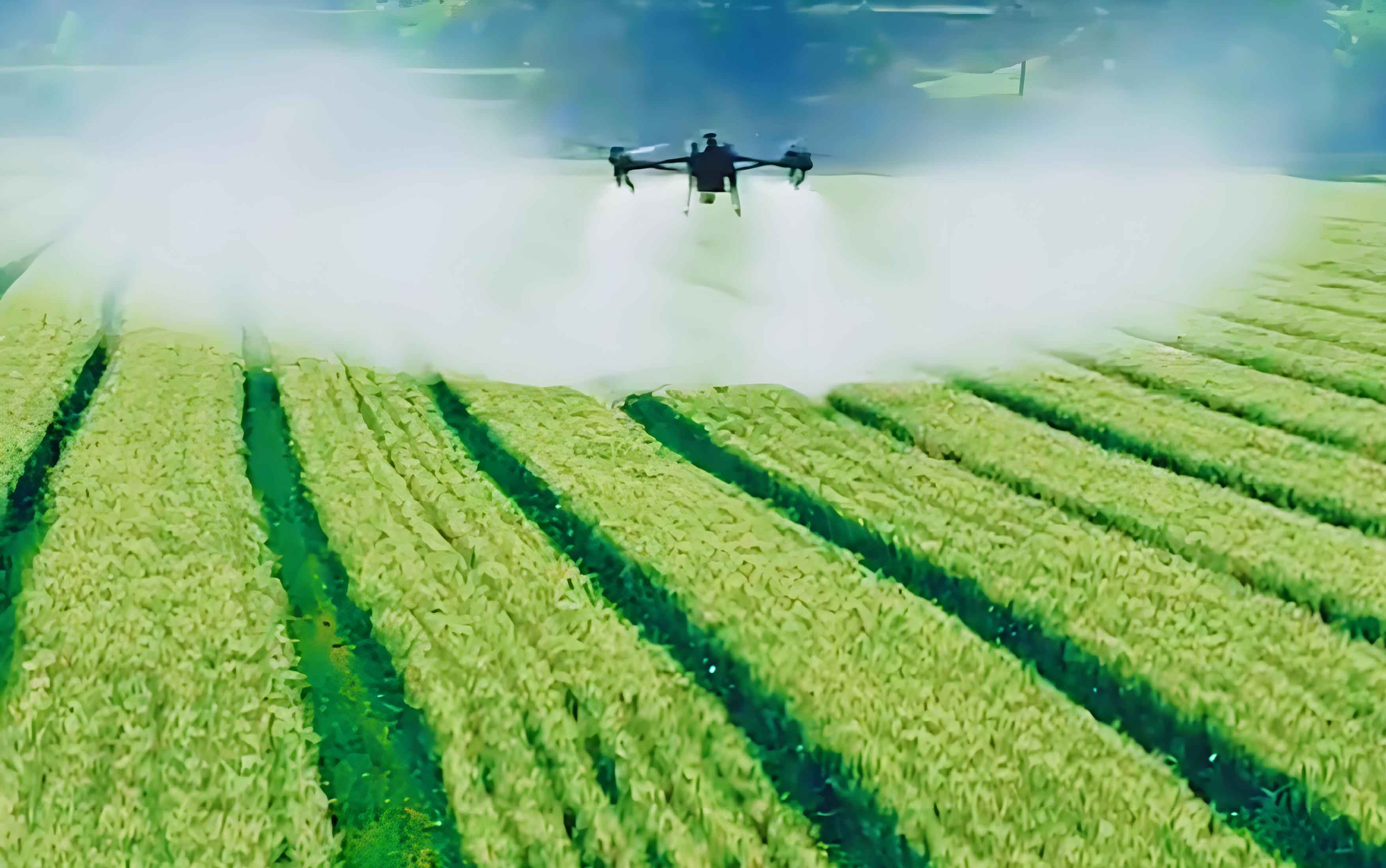
The emergence of the agricultural UAV marks a significant leap towards precision agriculture. This technology involves using unmanned aerial systems, typically multi-rotor drones, equipped with specialized tanks, pumps, and spraying systems to perform targeted application of pesticides, fertilizers, or other agrochemicals. Its integration into standard farming practice is not merely an upgrade of equipment but a fundamental shift in operational philosophy, moving from blanket coverage to data-informed, site-specific management.
Core Advantages of Agricultural UAV Plant Protection Technology
The adoption of agricultural UAV technology confers a multitude of strategic advantages over conventional methods, fundamentally reshaping the economics and ecology of crop protection.
1. Precision Application and Enhanced Efficiency: The foremost advantage lies in precision. Agricultural UAVs are integrated with high-degree-of-freedom gimbals and ultra-low volume (ULV) spraying systems featuring high-mist nozzles. Operators can pre-set parameters such as flight altitude, speed, and spray rate based on crop canopy structure, pest pressure, and chemical requirements. This ensures a scientifically calibrated dosage, meeting agronomic needs while drastically reducing chemical drift and over-application. The result is a significant minimization of pesticide residue on crops, addressing critical consumer health concerns. Furthermore, the downdraft generated by the UAV’s rotors assists in propelling droplets through the crop canopy, ensuring better coverage on the underside of leaves and reaching the plant’s base, thereby improving chemical utilization efficiency and overall protection efficacy.
2. Superior Terrain Adaptability and Operational Safety: Topography often constrains agricultural mechanization. Mountainous, hilly, or waterlogged fields are inaccessible to large ground machinery. The agricultural UAV effortlessly overcomes these barriers. It can be transported to the field edge by a light vehicle, quickly assembled, and deployed for automated operation. By programming the flight path, the agricultural UAV autonomously covers the designated area, starting and terminating operations without constant manual intervention in the treated zone. This drastically reduces direct exposure of personnel to hazardous chemicals, enhancing operational safety. Its adaptability ensures consistent application quality across diverse landscapes, eliminating issues of missed spots or overlapping sprays common in manual operations.
3. Resource Conservation and Economic Viability: The efficiency of agricultural UAVs translates into substantial savings. They use up to 90% less water compared to traditional sprayers, a crucial benefit in water-scarce regions. The reduced volume of chemical concentrate needed per hectare lowers input costs. Most importantly, they save the most valuable resource: time. An agricultural UAV can cover hectares in minutes, a task that would take hours manually. This timeliness is critical during disease outbreaks or pest invasions, allowing for rapid response to protect yield potential.
The table below summarizes a comparative analysis between traditional methods and agricultural UAV technology:
| Parameter | Manual Backpack Sprayer | Tractor-Mounted Sprayer | Agricultural UAV |
|---|---|---|---|
| Application Efficiency (ha/hr) | 0.3 – 0.5 | 3 – 6 | 8 – 15 |
| Water Consumption (L/ha) | 300 – 600 | 200 – 400 | 15 – 30 |
| Terrain Adaptability | Moderate (Labor-intensive) | Poor (Requires flat, clear fields) | Excellent |
| Operator Safety | Low (Direct exposure) | Medium (Proximity exposure) | High (Remote operation) |
| Precision & Uniformity | Low (Inconsistent) | Medium | High (Digitally controlled) |
| Timeliness of Response | Slow | Moderate | Fast |
Key Challenges in the Promotion and Application of Agricultural UAV Technology
Despite its compelling advantages, the widespread adoption of agricultural UAV plant protection technology encounters several systemic and technical hurdles.
1. High Barriers to Adoption and Skilled Labor Shortage: Promotion efforts are often fragmented and lack a cohesive national or regional strategy. The effectiveness of demonstration projects varies, and many farmers remain skeptical, preferring familiar manual methods due to perceived risks or a lack of tangible, localized success stories. A critical bottleneck is the acute shortage of skilled, certified UAV operators. Many current operators lack formal training, leading to suboptimal application techniques, safety hazards, and an inability to perform basic troubleshooting or maintenance. This skills gap erodes trust in the technology’s reliability. Furthermore, the initial capital investment for a high-quality agricultural UAV system can be prohibitive for smallholder farmers, creating a significant economic barrier to entry.
2. Limitations in Core Technological Performance: While rapidly evolving, some core aspects of agricultural UAV technology still require maturation. Battery energy density remains a primary constraint, limiting effective flight times to typically 15-30 minutes per charge for heavy-lift models, necessitating frequent battery swaps and impacting operational continuity. Spraying systems, although improved, may lack dynamic, real-time adjustment capabilities based on variable-rate prescription maps or real-time sensor feedback. The intelligence of the flight control system is another area; some models lack advanced obstacle sensing and avoidance systems, posing risks in complex environments. The software ecosystem for mission planning, data management, and fleet coordination can be underdeveloped, hindering seamless integration into broader farm management systems.
3. Regulatory and Insurance Complexities: The regulatory framework for operating agricultural UAVs, encompassing licensing, airspace restrictions, and operational protocols, can be ambiguous or burdensome. Farmers and service providers often navigate a maze of regulations, which stifles innovation and scaling. Additionally, insurance products tailored for agricultural UAV operations—covering liability, hull damage, and crop damage from potential application errors—are not universally available or are prohibitively expensive, adding to the perceived risk.
The economic decision-making for a farmer can be modeled as a function of perceived risk, cost, and expected yield benefit. Let $A$ represent the decision to adopt the agricultural UAV. The farmer will adopt if the expected utility of adoption $E[U(A)]$ exceeds the utility of the status quo $U(S)$.
$$E[U(A)] = P_s \cdot U(Y_a – C_a – R_a) + (1-P_s) \cdot U(-C_a – R_a – L)$$
$$U(S) = U(Y_s – C_s)$$
Where:
$P_s$ = Probability of successful operation (skill/tech dependent),
$Y_a, Y_s$ = Yield with UAV and status quo,
$C_a, C_s$ = Operational cost of UAV and status quo,
$R_a$ = Regulatory/compliance cost of UAV,
$L$ = Potential loss from failure (e.g., crop damage, fines).
High $R_a$, low $P_s$ (due to skill gap), and high potential $L$ (due to lack of insurance) can make $E[U(A)] < U(S)$, explaining adoption resistance.
Comprehensive Strategies for Accelerating Promotion and Application
To overcome these challenges and unlock the full potential of agricultural UAV technology, a multi-faceted, coordinated strategy is essential.
1. Establishing Robust and Accessible Service Ecosystems: Rather than focusing solely on selling hardware to individual farmers, a more sustainable model involves building a comprehensive service ecosystem. Agricultural UAV manufacturers and distributors should partner with local agri-businesses, cooperatives, and entrepreneurs to establish Certified Application Service Provider (CASP) networks. These CASPs own and operate fleets of agricultural UAVs, offering plant protection as a service (PPaaS) to farmers on a per-hectare basis. This model drastically lowers the entry barrier for farmers, transferring the burdens of capital investment, maintenance, and operator training to the service provider. The government can incentivize the formation of such cooperatives among farmers to collectively contract these services, ensuring affordability and access even for small plots.
2. Leveraging Digital and Internet-Based Promotion Models: The power of digital platforms must be harnessed for effective promotion. Dedicated online portals, mobile applications, and social media campaigns can disseminate success stories, technical tutorials, and cost-benefit analyses. Virtual reality (VR) or augmented reality (AR) simulations can allow farmers to “experience” agricultural UAV operations remotely. Furthermore, integrating agricultural UAV data into cloud-based Farm Management Information Systems (FMIS) is crucial. This creates a digital thread from scouting (using UAVs for mapping) to prescription (creating spray maps) to execution (UAV application) and verification (post-application assessment). Demonstrating this closed-loop, data-driven workflow through online platforms showcases the tangible value beyond just spraying—it positions the agricultural UAV as a central tool for precision farm management.
| Promotion Channel | Target Audience | Core Message/Content | Expected Outcome |
|---|---|---|---|
| Social Media Campaigns | Younger Farmers, Agri-enthusiasts | Short videos of efficient operations, testimonials, time-lapse comparisons. | Awareness generation, myth-busting, creating aspirational value. |
| Webinars & Online Workshops | Progressive Farmers, Cooperatives | Deep-dive into economics, case studies on ROI, regulatory updates. | Lead generation for service providers, building technical credibility. |
| Integrated FMIS Platform Demos | Large-scale Farms, Agri-corporates | Showcasing data flow from UAV scouting to precise application to yield analytics. | Positioning UAV as a strategic management tool, driving high-value sales. |
3. Implementing Hierarchical and Practical Training Programs: A tiered training and certification framework is non-negotiable. This should target different stakeholder levels:
- Level 1 (Professional Pilots & Technicians): Intensive programs covering advanced flight operations, mission planning for complex fields, preventative maintenance, emergency procedures, and basic repair. Certification should be mandatory for commercial operators.
- Level 2 (Farm Managers & Service Coordinators): Training focused on agronomy-integrated use: interpreting crop health maps, calibrating application parameters for different chemicals/crops, and integrating UAV data into decision-making.
- Level 3 (Farmers & Landowners): Awareness and basic familiarization workshops to help them understand the technology, evaluate service providers, and communicate their field requirements effectively.
Hands-on, field-based training modules are far more effective than purely theoretical ones. Partnerships between vocational schools, agricultural universities, and agricultural UAV companies can standardize and scale this training.
4. Developing Flexible Financial Models and Support Infrastructure: To address the cost barrier, innovative financial instruments are needed. Manufacturers and dealers should offer flexible financing plans, leasing options, or “pay-as-you-spray” models linked to the service ecosystem. Governments can introduce targeted subsidy schemes for the purchase of agricultural UAVs by cooperatives or for smallholders’ first adoption. Crucially, a decentralized maintenance and repair network must be established. This involves setting up local service hubs, stocked with common spare parts and staffed with Level 1 certified technicians. These hubs can also function as rental centers and bases for mobile service teams, ensuring quick turnaround for repairs and minimizing downtime during critical spraying windows.
5. Fostering R&D for Next-Generation Technology and Favorable Policies: Continuous investment in research and development is vital to address current technical limitations. Focus areas include:
– Advanced battery technologies (e.g., hydrogen fuel cells, rapid-swap systems) to extend endurance.
– AI-powered vision systems for real-time target detection (weeds, pests) and variable-rate spraying.
– Swarm intelligence for coordinating multiple agricultural UAVs on large fields.
– Robust, lightweight sensors for on-the-go droplet density measurement.
Concurrently, advocating for clear, science-based, and supportive regulatory policies is essential. This includes streamlined licensing processes, defined operational corridors for agricultural UAVs, and the development of affordable, comprehensive insurance products. Public-private partnerships can pilot these frameworks in designated “smart agriculture” zones.
The technological evolution can be seen as an optimization problem. Let the performance $P$ of an agricultural UAV system be a function of multiple variables: Endurance ($E$), Payload ($L$), Intelligence ($I$), and Spraying Accuracy ($A$). We aim to maximize $P$ under cost constraints $C_{max}$.
$$P = f(E, L, I, A) = \alpha \cdot \ln(E) + \beta \cdot L + \gamma \cdot I^2 + \delta \cdot \frac{1}{RMSE(A)}$$
Subject to: $$c_E(E) + c_L(L) + c_I(I) + c_A(A) \leq C_{max}$$
where $RMSE(A)$ is the root mean square error of spray deposition, and $\alpha, \beta, \gamma, \delta$ are weighting coefficients. Current R&D focuses on improving the cost-performance ratio for each variable.
Conclusion and Future Perspective
The integration of agricultural UAV technology into mainstream plant protection practices is an inevitable and positive trajectory for modern, sustainable agriculture. Its ability to enhance precision, efficiency, safety, and environmental stewardship is unparalleled. The path to widespread adoption, however, requires moving beyond viewing it as a mere spraying tool. It must be embedded within a holistic system encompassing accessible service models, digital integration, skilled human capital, supportive finance and infrastructure, and forward-looking policies. By addressing the existing challenges through the coordinated strategies outlined—building service ecosystems, leveraging digital promotion, instituting rigorous training, creating flexible financial access, and fostering continuous R&D—the full potential of agricultural UAV plant protection technology can be realized. This will not only elevate agricultural productivity and economic resilience but also contribute profoundly to the goals of resource conservation, food safety, and the broader vision of rural revitalization and agricultural modernization. The future farm will undoubtedly have the hum of the agricultural UAV as a familiar and essential sound, orchestrating a new era of intelligent and responsive crop management.