
As I reflect on the rapid adoption of smart agricultural machinery, particularly agricultural UAVs, I am struck by both the potential and the challenges in this evolving field. With policies promoting subsidies for agricultural UAVs, there has been a surge in their use for tasks like spraying, seeding, and pest control. However, the quality of these agricultural UAVs varies widely, impacting user experience and effectiveness in crop protection. In my experience, it is crucial to integrate rigorous quality testing and certification as key criteria for subsidy eligibility. Currently, many manufacturers rely on self-selected testing agencies, leading to inefficiencies for regulatory bodies. To address this, a field testing approach was implemented, which I will detail from my first-person perspective as an observer and analyst in such initiatives.
My involvement in a comprehensive field trial aimed to evaluate the performance of agricultural UAVs through practical tests. This trial focused on key operational metrics, providing insights into quality issues that affect real-world applications. Below, I outline the methodology, results, and analysis, emphasizing the importance of standardizing assessments for agricultural UAVs.
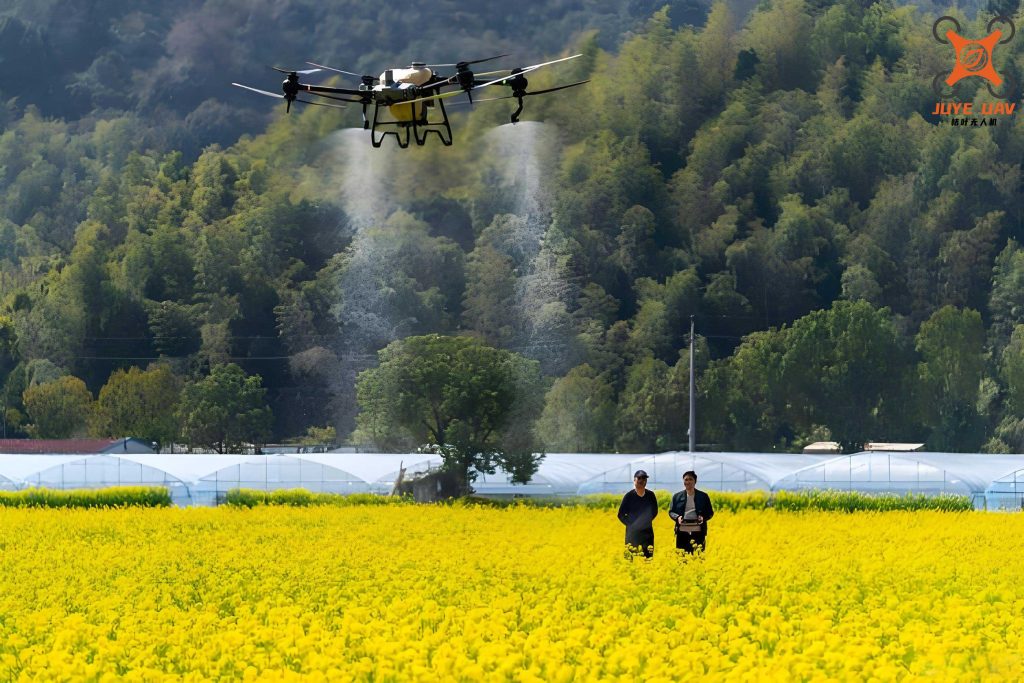
The trial involved 59 models of agricultural UAVs from 38 manufacturers, all subjected to a series of tests designed to simulate actual field conditions. The process began with pre-flight inspections, followed by specific performance evaluations. As I observed, the goal was to identify weaknesses in agricultural UAVs that could hinder their adoption and safety.
Test Samples and Methodology
From my perspective, the methodology was structured into four main phases: pre-flight review, hovering screening, flight testing, and post-flight verification. Each phase targeted critical aspects of agricultural UAV performance.
First, the pre-flight review involved visual checks and measurements. I noted that inspectors verified unique identifiers, operator credentials, electronic fence settings, and platform integration. Key parameters included empty weight, full-load weight, and tank capacity. This step ensured that only properly configured agricultural UAVs proceeded to subsequent tests.
Second, the hovering screening required agricultural UAVs to take off vertically to 3 meters and hover for 10 minutes under full load. Any agricultural UAV that landed or crashed during this period was disqualified. This test assessed basic stability and control, which are fundamental for safe operations of agricultural UAVs.
Third, flight testing simulated spraying over an 8-acre area with obstacles and water-sensitive paper. The spray volume was set at 1 liter per acre. During flight, parameters like speed, altitude, and trajectory were monitored via an intelligent management system. Obstacle avoidance was also tested by placing barriers in the path. As I watched, this phase revealed how well agricultural UAVs handled real-time navigation and spraying tasks.
Fourth, post-flight verification included checks on spraying system functionality, spray volume deviation, flight control accuracy, and speed error. For example, spray volume deviation was calculated using the formula:
$$ \text{Spray Volume Deviation} = \frac{\text{Theoretical Spray Volume} – \text{Actual Spray Volume}}{\text{Theoretical Spray Volume}} $$
A deviation exceeding 5% was considered unacceptable. Flight control accuracy was measured as the horizontal deviation between takeoff and landing points, with a threshold of 0.5 meters. Speed error was assessed by comparing set speed to displayed speed, with a maximum allowable deviation of 0.5 m/s.
To summarize the test setup, I present the following table outlining the key metrics evaluated for agricultural UAVs:
| Test Phase | Key Metrics for Agricultural UAVs | Acceptance Criteria |
|---|---|---|
| Pre-flight Review | Unique identifiers, weight, capacity | Verification of compliance |
| Hovering Screening | Stability under full load | 10-minute hover without landing |
| Flight Testing | Spraying accuracy, obstacle avoidance | No collisions, proper spraying |
| Post-flight Verification | Spray volume deviation, control accuracy, speed error | Deviation ≤5%, accuracy ≤0.5 m, error ≤0.5 m/s |
Throughout the trial, representatives from manufacturers acted as supervisors to ensure transparency. After testing, all parties signed off on the results, reinforcing the credibility of the process for evaluating agricultural UAVs.
Typical Quality Issues and Analysis
From my analysis, several common quality issues emerged among the agricultural UAVs tested. These problems highlight areas where improvements are needed to enhance the reliability and safety of agricultural UAVs.
First, crashes and collisions occurred in 4 out of 59 agricultural UAVs. Specifically, 3 agricultural UAVs crashed during flight—one due to obstacle impact and two from control failures—while another collided but managed to complete the task. Crashes represent severe safety hazards in agricultural UAVs, potentially causing damage or injuries. They often stem from flaws in obstacle avoidance systems, navigation precision, sensor accuracy, or flight control algorithms. The incidence rate of 1:15 in this trial underscores the urgent need for stricter safety监管 in agricultural UAVs.
Second, spraying system functionality was a major concern. Among the agricultural UAVs, 9 exhibited issues like dripping or missed spraying. This affects the efficiency of agricultural UAVs, leading to pesticide waste or inadequate crop protection. The problem can arise from poor sealing, unstable systems, or inefficient integration with flight paths. As I assessed, ensuring consistent spraying is critical for the effectiveness of agricultural UAVs.
Third, spray volume deviation was a prevalent issue. The statistical results showed that two-thirds of the agricultural UAVs failed to meet the 5% deviation standard. This indicates a lack of precise control in spray application, which can compromise crop health and protection. The deviation depends on both flight path planning and the accuracy of flow meters in agricultural UAVs. To quantify this, consider the distribution of deviations among agricultural UAVs, as summarized in the table below:
| Spray Volume Deviation Range | Number of Agricultural UAVs | Percentage |
|---|---|---|
| ≤5% (合格) | 20 | 33.9% |
| >5% (不合格) | 39 | 66.1% |
The formula for deviation, as mentioned earlier, is essential for evaluating agricultural UAVs. In practice, optimizing this metric requires better hardware and software integration in agricultural UAVs.
Fourth, flight control accuracy was another key metric. Using RTK technology, many agricultural UAVs achieve centimeter-level precision, but in this trial, one-third failed to meet the 0.5-meter deviation threshold. This impacts the efficiency and safety of agricultural UAVs, especially in precise operations like automated return. The horizontal deviation can be expressed as:
$$ \text{Horizontal Deviation} = \sqrt{(x_{\text{land}} – x_{\text{takeoff}})^2 + (y_{\text{land}} – y_{\text{takeoff}})^2} $$
where \( x \) and \( y \) are coordinates. For agricultural UAVs, lower deviation values correlate with better performance. The results are tabulated here:
| Flight Control Accuracy (Deviation) | Number of Agricultural UAVs | Status |
|---|---|---|
| ≤0.5 m | 40 | Qualified |
| >0.5 m | 19 | Unqualified |
Fifth, speed deviation was less problematic, with only 1 agricultural UAV exceeding the 0.5 m/s error limit. However, even small deviations in agricultural UAVs can affect spraying uniformity and control匹配. The speed error \( \Delta v \) is given by:
$$ \Delta v = | v_{\text{set}} – v_{\text{displayed}} | $$
where \( v_{\text{set}} \) is typically 4 m/s for agricultural UAVs. Maintaining accurate speed is vital for consistent operation of agricultural UAVs.
Sixth, other issues included inconsistencies in serial codes, missing labels, and non-standardized electronic fence settings among agricultural UAVs. These reflect a lack of uniform production standards, complicating regulatory oversight for agricultural UAVs. From my viewpoint, addressing these through certification can streamline the adoption of agricultural UAVs.
Comprehensive Insights and Recommendations
Based on my observations, this field testing approach offers a robust path for quality screening of agricultural UAVs. It highlights critical weaknesses that laboratory tests might miss, such as real-world environmental interactions. The use of quantitative metrics—like spray volume deviation and control accuracy—provides objective criteria for evaluating agricultural UAVs.
To further analyze the performance of agricultural UAVs, I derived an overall quality score \( Q \) for each agricultural UAV based on key parameters. This score can be expressed as a weighted sum:
$$ Q = w_1 \cdot S_1 + w_2 \cdot S_2 + w_3 \cdot S_3 + w_4 \cdot S_4 $$
where \( S_1 \) represents spray volume deviation (normalized), \( S_2 \) flight control accuracy, \( S_3 \) speed error, and \( S_4 \) safety performance (e.g., crash occurrence). Weights \( w_i \) can be adjusted based on priority—for instance, safety might carry higher weight for agricultural UAVs. Applying this to the trial data could help rank agricultural UAVs, though detailed calculations are beyond this report’s scope.
Moreover, the integration of intelligent systems in agricultural UAVs, such as cloud platforms and北斗 navigation, enhances monitoring but also introduces variability. As I see it, standardizing these interfaces is crucial for reliable data from agricultural UAVs. The table below summarizes the impact of key issues on agricultural UAV operations:
| Quality Issue in Agricultural UAVs | Potential Impact | Recommended Improvement |
|---|---|---|
| Crashes/Collisions | Safety risks, equipment damage | Enhanced obstacle avoidance algorithms |
| Spraying System Failures | Pesticide waste, poor coverage | Better密封 and flow control |
| Spray Volume Deviation | Ineffective or harmful application | Precision flow meters and calibration |
| Flight Control Inaccuracy | Reduced efficiency, safety concerns | Advanced RTK and stabilization systems |
| Speed Deviations | Uneven spraying | Improved speed sensors and control |
| Identification Inconsistencies | Regulatory challenges | Standardized coding and labeling |
From a broader perspective, this trial underscores the importance of field-based quality鉴定 for agricultural UAVs. As subsidies drive adoption, robust testing ensures that only reliable agricultural UAVs receive support, fostering sustainable use. I believe that extending such approaches nationwide can elevate the overall standard of agricultural UAVs.
Conclusion
In conclusion, my experience with this field testing initiative reinforces that quality assessment is pivotal for the success of agricultural UAVs. By implementing practical tests—like those described—we can identify and mitigate flaws in agricultural UAVs, guiding manufacturers, regulators, and users. The methods outlined here, including the use of formulas and tables, provide a replicable framework for evaluating agricultural UAVs. As the industry evolves, continuous refinement of these standards will be essential to harness the full potential of agricultural UAVs in modern agriculture. Ultimately, investing in rigorous quality control for agricultural UAVs not only enhances performance but also safeguards investments and promotes ecological balance through precise agrochemical application.
Looking ahead, I recommend that similar trials be conducted regularly, with expanded metrics to cover emerging technologies in agricultural UAVs. Collaborative efforts among stakeholders can drive innovation while ensuring safety and efficacy. As I reflect on this process, it is clear that agricultural UAVs represent a transformative tool, but their value hinges on unwavering commitment to quality—a principle that should guide all endeavors in this dynamic field.