
As a researcher focused on sustainable agriculture and pest management, I have long been intrigued by the challenges faced by litchi growers, particularly in controlling pests like the litchi looper while minimizing environmental impact. Litchi, a vital tropical fruit crop, holds significant economic importance globally, but its production is threatened by pests such as the litchi looper, which damages tender shoots and reduces yield. Traditional control methods rely heavily on chemical pesticides, leading to issues like resistance development and ecological disruption. In recent years, the advent of agricultural UAV (unmanned aerial vehicle) technology has revolutionized crop protection, offering efficient and precise application methods. This study explores the integration of agricultural UAV with Bacillus thuringiensis (Bt) formulations, a environmentally friendly biopesticide, to manage litchi looper infestations. My aim is to provide a comprehensive analysis of the field efficacy, cost-effectiveness, and practical implications of using agricultural UAV for Bt application, thereby contributing to the advancement of precision agriculture in fruit orchards.
The global litchi industry, especially in regions like South China, grapples with labor shortages and rising production costs, making manual pesticide application increasingly untenable. Agricultural UAV, often referred to as drones, present a promising solution due to their high operational efficiency, flexibility, and ability to cover large areas quickly. However, the efficacy of agricultural UAV in applying biopesticides like Bt against specific pests such as the litchi looper remains underexplored. Bt formulations, including suspensions and oil suspensions, are known for their safety and specificity, but their performance when delivered via agricultural UAV needs validation. In this article, I detail my investigations into the indoor toxicity of Bt suspensions against litchi looper larvae and the field control efficacy achieved through agricultural UAV applications. I will employ tables and mathematical models to summarize data, ensuring a robust and informative presentation. Throughout, I emphasize the role of agricultural UAV in modernizing pest control, and I will integrate key findings to guide growers and policymakers.
To begin, I conducted indoor toxicity tests using an 8,000 IU/mg Bt suspension against 2nd to 3rd instar larvae of Thalassodes immissaria, the litchi looper. The larvae were collected from litchi orchards and reared under controlled conditions. I prepared serial dilutions of the Bt suspension, with active ingredient concentrations ranging from 4 to 256 IU/mg, and applied them to litchi shoots using a handheld sprayer. A control group received only water. Mortality was assessed at 1, 3, 5, and 7 days post-application, and data were used to calculate corrected mortality rates and median lethal concentrations (LC50). The toxicity regression equations were derived using probit analysis, a standard method in toxicology. The relationship between concentration and mortality can be expressed as a logistic function, which I model using the following formula for probit analysis:
$$ P = \Phi(a + b \log C) $$
where \( P \) is the probability of mortality, \( \Phi \) is the cumulative distribution function of the standard normal distribution, \( a \) and \( b \) are parameters, and \( C \) is the concentration. From this, the LC50 is calculated as:
$$ LC50 = 10^{\left(\frac{5 – a}{b}\right)} $$
My results indicated that Bt toxicity increased over time, with higher concentrations yielding greater mortality. For instance, at 256 IU/mg, corrected mortality rose from 31.03% at day 1 to 100% by day 5. The LC50 values decreased significantly from 458.12 IU/mg at day 1 to 18.14 IU/mg at day 7, demonstrating the time-dependent action of Bt. This slow onset of efficacy is characteristic of biopesticides and must be considered in field applications. To summarize these findings, I present Table 1, which details the toxicity regression equations, correlation coefficients, LC50 values, and 95% confidence intervals across different post-application periods.
| Post-Application Time (days) | Toxicity Regression Equation | Correlation Coefficient (R) | LC50 (IU/mg) | 95% Confidence Interval (IU/mg) |
|---|---|---|---|---|
| 1 | \( y = 2.2480 + 1.0342x \) | 0.9949 | 458.12 | 84.29 – 2489.99 |
| 3 | \( y = 2.1970 + 1.3240x \) | 0.9699 | 130.96 | 63.89 – 268.44 |
| 5 | \( y = 2.6733 + 1.2885x \) | 0.9746 | 63.95 | 39.51 – 103.49 |
| 7 | \( y = 1.8069 + 2.5369x \) | 0.9802 | 18.14 | 14.45 – 22.78 |
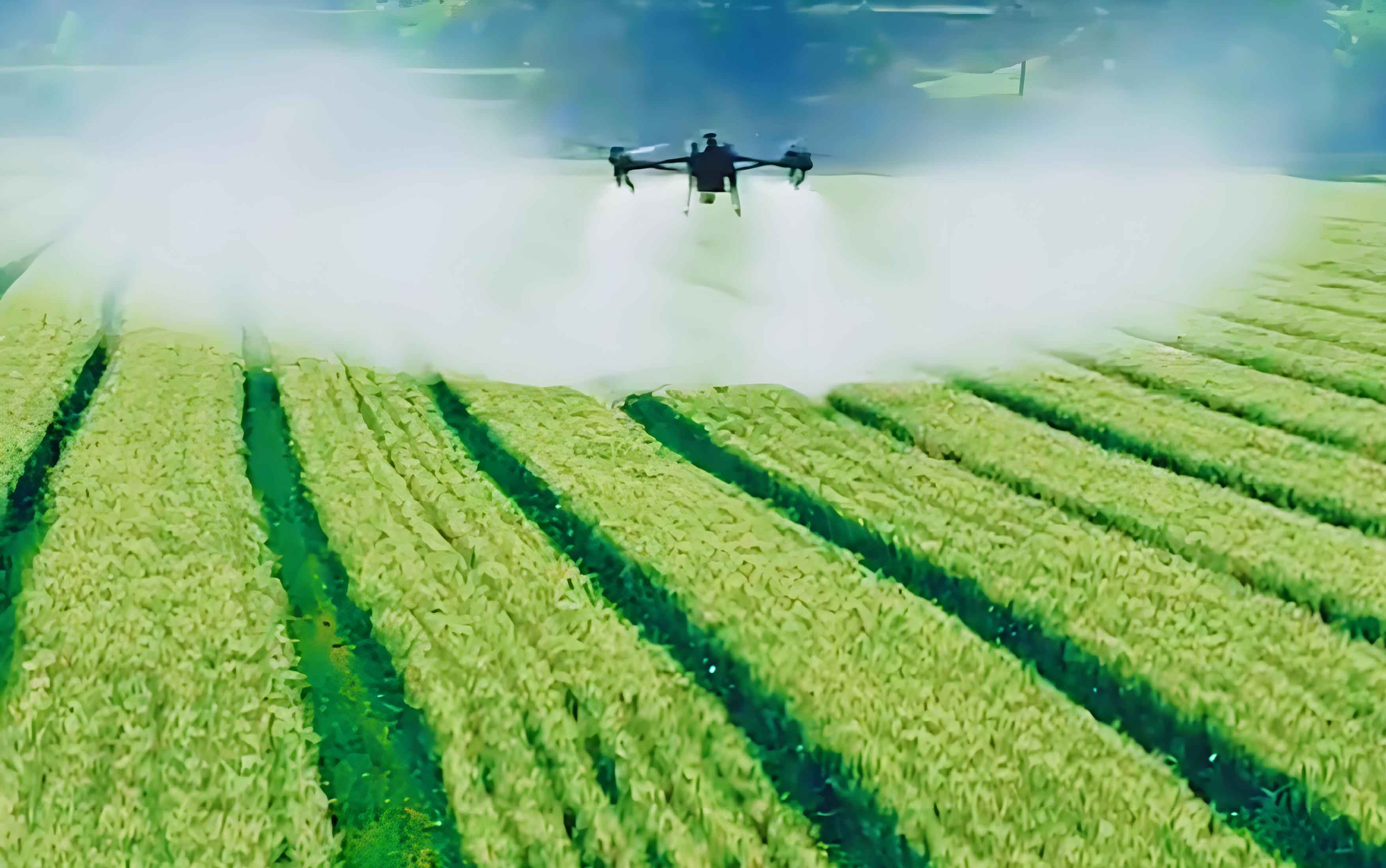
Following the indoor assays, I proceeded to field trials to evaluate the efficacy of agricultural UAV in applying Bt formulations. The trials were conducted in a litchi orchard with trees aged 25-30 years, during the autumn shoot growth stage. I used a DJI T30 six-rotor electric agricultural UAV, which has a maximum payload of 30 L and a spray width of 9 m. The Bt oil suspension (8,000 IU/μL) was diluted 30-fold and mixed with a low-volume spray adjuvant to enhance droplet deposition. I compared three application methods: agricultural UAV with a single-pass operation, agricultural UAV with a double-pass operation (where passes were perpendicular to each other to improve coverage), and manual spray application using a Bt suspension diluted 300-fold. A control plot received water spray. The operational parameters for the agricultural UAV were optimized based on preliminary tests: flight speed of 1.2 m/s for single-pass and 1.3 m/s for double-pass, flight height of 2.5 m, and row spacing of 5 m. The spray volumes were set at 6.6 L/667 m² for single-pass, 16.2 L/667 m² for double-pass, and 160 L/667 m² for manual application.
The field efficacy was assessed by monitoring litchi looper larval populations before and after application at 3, 7, and 10 days. I used a five-point sampling method, examining two trees per point and two shoots per tree from five orientations. The number of live larvae was recorded, and control efficacy was calculated using the following formulas. First, the population reduction rate (\( PRR \)) is given by:
$$ PRR = \frac{N_0 – N_t}{N_0} \times 100\% $$
where \( N_0 \) is the initial population density and \( N_t \) is the population at time \( t \). Then, the corrected control efficacy (\( CE \)) accounts for natural mortality in the control group:
$$ CE = \frac{PRR_t – PRR_c}{100 – PRR_c} \times 100\% $$
Here, \( PRR_t \) is the reduction rate in the treatment, and \( PRR_c \) is the reduction rate in the control. Statistical analysis was performed using SAS 9.4 software, with ANOVA and Duncan’s multiple range test for significance at \( p < 0.05 \). The results revealed distinct differences among application methods. The agricultural UAV double-pass operation achieved control efficacies of 35.27%, 49.66%, and 87.57% at days 3, 7, and 10, respectively, which were comparable to manual application (32.66%, 57.40%, and 90.78%). In contrast, the agricultural UAV single-pass operation yielded lower efficacies of 19.31%, 38.40%, and 41.59%, indicating insufficient droplet coverage. This underscores the importance of spray volume and operational strategy when using agricultural UAV for pest control.
To further analyze these outcomes, I compiled Table 2, which summarizes the field control efficacies across different methods and time points. The data highlight that both agricultural UAV double-pass and manual application provided effective control, with efficacies peaking at day 10. The slower action of Bt, as seen in indoor tests, is reflected here, with significant improvements only after 7 days. This temporal dynamic is crucial for scheduling applications in integrated pest management programs.
| Application Method | Control Efficacy at Day 3 (%) | Control Efficacy at Day 7 (%) | Control Efficacy at Day 10 (%) |
|---|---|---|---|
| Agricultural UAV Single-Pass | 19.31 ± 2.1a | 38.40 ± 3.5a | 41.59 ± 4.2a |
| Agricultural UAV Double-Pass | 35.27 ± 2.8b | 49.66 ± 3.9b | 87.57 ± 5.1b |
| Manual Application | 32.66 ± 3.0b | 57.40 ± 4.1c | 90.78 ± 4.8b |
Note: Values are mean ± standard error. Different lowercase letters within columns indicate significant differences (p < 0.05).
Beyond efficacy, I evaluated the cost-effectiveness of using agricultural UAV compared to manual methods. This involved quantifying inputs such as Bt formulation usage, spray volume, operational time, and service costs. For the agricultural UAV, service fees were calculated based on spray volume at a rate of 2 CNY per liter, while manual labor was estimated at 200 CNY per person per 8-hour day. The Bt formulation usage was derived from dilution ratios and spray volumes. I present a comprehensive comparison in Table 3, which includes metrics per 667 m². The agricultural UAV double-pass operation required only 10.1% of the spray volume and 12.8% of the operational time compared to manual application, showcasing the efficiency of agricultural UAV. However, the Bt formulation usage was similar between these two methods, and service costs were higher for agricultural UAV due to equipment and operational expenses. This cost-benefit analysis is vital for growers considering adoption of agricultural UAV technology.
| Parameter | Agricultural UAV Single-Pass | Agricultural UAV Double-Pass | Manual Application |
|---|---|---|---|
| Spray Volume (L) | 6.6 | 16.2 | 160.0 |
| Bt Formulation Usage (mL) | 13.20 | 32.40 | 24.00 |
| Operational Time (minutes) | 2.4 | 4.9 | 38.4 |
| Service Cost (CNY) | 13.2 | 32.4 | 24.0 |
The data in Table 3 reveal that agricultural UAV applications, particularly double-pass, drastically reduce labor and time inputs, which is critical in addressing agricultural labor shortages. However, the higher service costs for agricultural UAV may be offset by savings in labor and potential yield gains from timely pest control. To model the economic impact, I can use a simple profit function that incorporates these factors. Let \( Y \) be the yield, \( P \) the price per unit yield, \( C_{lab} \) the labor cost, \( C_{uav} \) the agricultural UAV service cost, and \( C_{bt} \) the cost of Bt formulation. The net profit (\( \pi \)) for a given area can be expressed as:
$$ \pi = Y \cdot P – (C_{lab} + C_{uav} + C_{bt}) $$
By substituting values from my study, growers can estimate the break-even points for adopting agricultural UAV. For instance, if agricultural UAV reduces labor costs by 80% but increases service costs by 35%, as observed, the overall profitability depends on yield protection. This economic perspective is essential for widespread adoption of agricultural UAV in litchi orchards.
In discussing the broader implications, I must emphasize the role of agricultural UAV in enhancing the sustainability of litchi production. The use of Bt formulations via agricultural UAV aligns with integrated pest management (IPM) principles by reducing chemical pesticide reliance and minimizing environmental footprint. Agricultural UAV enable precise application, reducing drift and off-target effects, which is particularly important in biodiverse orchard ecosystems. Moreover, the ability of agricultural UAV to operate in challenging terrains and during critical growth stages, such as the autumn shoot period, ensures timely interventions that manual methods might miss due to labor constraints.
My findings also highlight the need for optimizing agricultural UAV operational parameters to maximize efficacy. The double-pass operation, with its higher spray volume, improved droplet deposition and coverage, leading to better pest control. This can be explained by the relationship between spray volume (\( V \)), droplet density (\( D \)), and coverage (\( C \)):
$$ D = \frac{V \cdot A}{N \cdot d} $$
where \( A \) is the area, \( N \) is the number of droplets per unit volume, and \( d \) is the droplet diameter. Increasing \( V \) enhances \( D \), which in turn improves \( C \), as evidenced by the higher efficacy in double-pass operations. Future research should focus on fine-tuning parameters like flight speed, height, and nozzle configurations to achieve optimal droplet dynamics with agricultural UAV. Additionally, the integration of sensors and mapping technologies with agricultural UAV could enable site-specific applications, further improving resource efficiency.
Another aspect worth exploring is the compatibility of Bt formulations with agricultural UAV systems. The Bt oil suspension used in this study performed well, but other formulations, such as emulsifiable concentrates or granules, might offer different advantages. The physical properties of formulations, like viscosity and stability, affect their atomization and deposition when sprayed by agricultural UAV. I recommend conducting formulation-specific trials to develop guidelines for agricultural UAV applications. Furthermore, combining Bt with other biopesticides or synergists via agricultural UAV could enhance control and delay resistance development in pest populations.
The slow action of Bt, as observed in both indoor and field tests, necessitates careful timing of applications. Growers using agricultural UAV should apply Bt at the early stages of larval infestation, allowing sufficient time for the biopesticide to take effect. This can be integrated with phenological models that predict pest outbreaks based on environmental data. Agricultural UAV can then be deployed proactively, leveraging their speed and flexibility. In my study, the peak efficacy at day 10 suggests that follow-up monitoring is essential to assess the need for additional treatments. This iterative approach, supported by agricultural UAV technology, can lead to more resilient pest management strategies.
From a practical standpoint, the adoption of agricultural UAV in litchi orchards requires addressing barriers such as initial investment costs, technical training, and regulatory frameworks. However, the long-term benefits—including reduced labor dependency, improved spray uniformity, and environmental benefits—make agricultural UAV a viable investment. Governments and agricultural extension services can play a role by subsidizing agricultural UAV purchases or offering training programs. My research demonstrates that agricultural UAV can achieve control efficacies comparable to manual methods while saving time and resources, providing a strong case for their integration into mainstream agriculture.
To conclude, this study underscores the potential of agricultural UAV in applying Bt formulations for litchi looper control. The agricultural UAV double-pass operation achieved high field efficacy similar to manual spraying, with significant reductions in spray volume and operational time. Although service costs were higher for agricultural UAV, the overall economic and environmental advantages position agricultural UAV as a key tool for sustainable litchi production. I encourage further research into optimizing agricultural UAV parameters, exploring new formulations, and conducting long-term studies on resistance management. As agricultural UAV technology continues to evolve, its synergy with biopesticides like Bt will pave the way for more efficient and eco-friendly pest control in orchards worldwide.
In future work, I plan to investigate the droplet deposition patterns of agricultural UAV in litchi canopies using fluorescent tracers and imaging techniques. This will provide insights into how droplet distribution affects efficacy and how to further refine agricultural UAV operations. Additionally, expanding trials to other pests and crops will help generalize the findings. The integration of artificial intelligence with agricultural UAV for real-time pest detection and targeted spraying is another exciting frontier. By embracing these innovations, we can harness the full potential of agricultural UAV to transform agriculture into a more precise, productive, and sustainable enterprise.
Throughout this article, I have endeavored to present a detailed and data-driven perspective on the use of agricultural UAV for biopesticide application. The tables and formulas included summarize key findings and facilitate understanding. As an advocate for advanced agricultural technologies, I believe that agricultural UAV will play an increasingly central role in global food security, and studies like this one contribute to building the evidence base for their effective deployment. Whether for large-scale commercial orchards or smallholder farms, agricultural UAV offer a pathway to overcome labor challenges and enhance pest management, ultimately supporting the vitality of the litchi industry and similar horticultural sectors.