
The integration of modern information and communication technologies into agricultural production has become a powerful catalyst for modernization. Among these innovations, agricultural UAV (Unmanned Aerial Vehicle) technology, specifically for plant protection, stands out for its transformative potential. This technology addresses critical inefficiencies in traditional crop management, particularly in the resource-intensive task of weed control. In maize cultivation, a staple crop of paramount importance, competition from weeds for water, nutrients, and sunlight is a primary constraint on yield and quality. Conventional weed management often relies on manual backpack sprayers or tractor-mounted boom sprayers. These methods are not only labor-intensive and time-consuming but also prone to causing soil compaction, crop damage, and inefficient chemical use. The excessive and non-uniform application of herbicides can lead to significant environmental pollution, residues in the produce, and increased operational costs. In contrast, the application of agricultural UAV sprayers offers a paradigm shift towards precision agriculture. By enabling highly targeted, low-volume spray applications, agricultural UAV systems promise enhanced efficiency, reduced chemical input, and improved operator safety through human-machine separation. This article provides a comprehensive analysis of the application practices, technical parameters, efficacy, and comparative advantages of using agricultural UAV technology for weed control in maize fields, supported by experimental data and theoretical models.
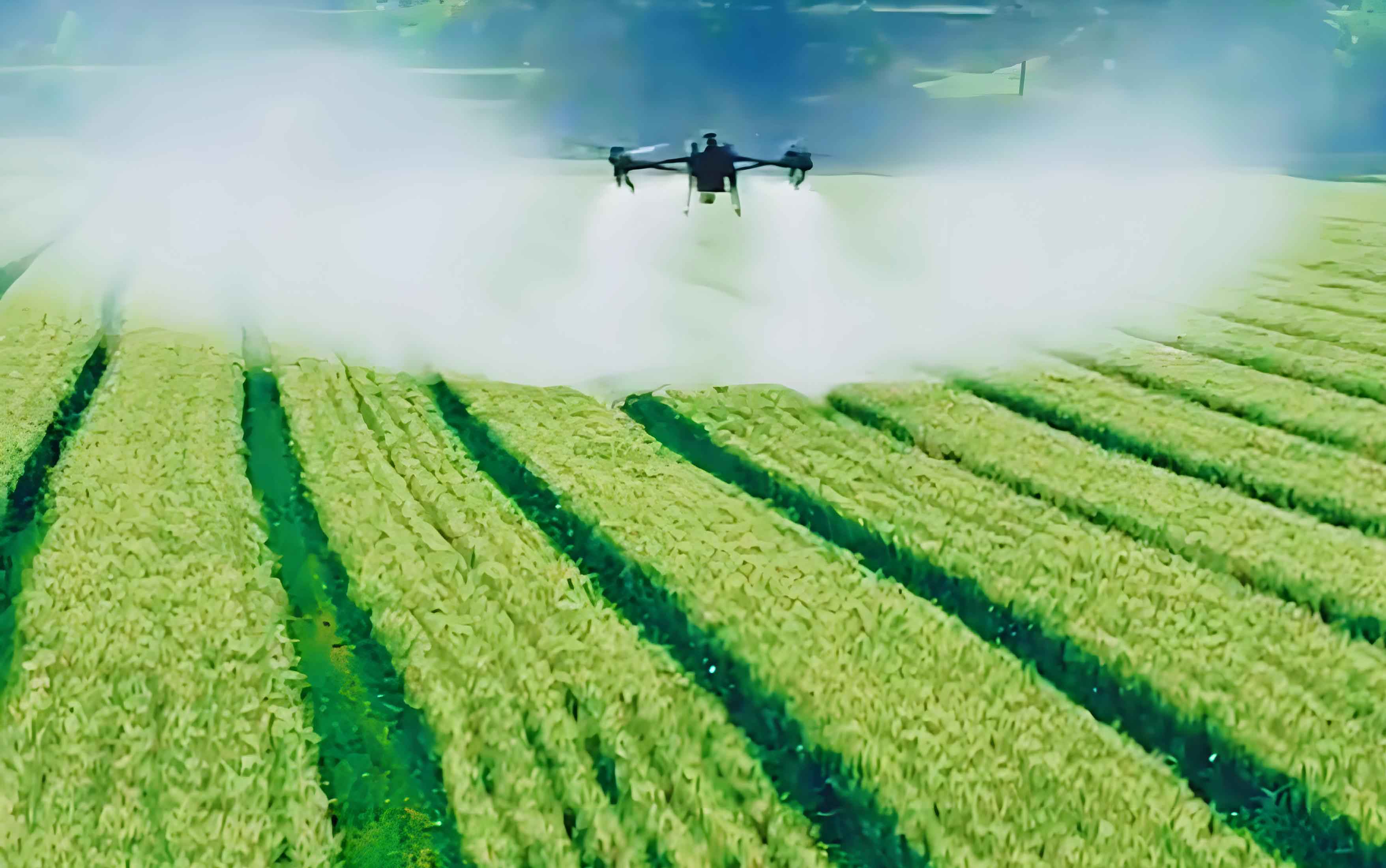
The core principle of an agricultural UAV for spraying lies in its ability to atomize liquid herbicide into a fine mist of droplets and distribute them uniformly over the target canopy from an elevated, mobile platform. A typical system comprises several key subsystems: the multi-rotor or fixed-wing airframe for flight stability, the propulsion system (motors and propellers), the flight controller and navigation system (often integrated with GNSS-RTK for centimeter-level positioning), the spray system (tank, pump, pressure regulator, and nozzle array), and the ground control station for mission planning and monitoring. The precision of an agricultural UAV is governed by its navigation accuracy and the characteristics of the spray cloud. Droplet size, expressed as Volume Median Diameter (VMD), is a critical factor. It is influenced by nozzle type, operating pressure, and the physical properties of the spray solution. The deposition pattern on the target is a function of the UAV’s flight parameters (altitude \(h\), speed \(v\)), environmental conditions (wind speed \(w\), temperature \(T\), relative humidity \(RH\)), and the aerodynamics of the spray cloud. A simplified model for the theoretical deposition density \(D(x,y)\) at a ground coordinate \((x,y)\) can be conceptualized as:
$$ D(x,y) = \frac{Q}{v \cdot W} \cdot \eta(h, w, VMD) \cdot f(x,y; h, v, w) $$
where \(Q\) is the flow rate (L/min), \(v\) is the flight speed (m/s), \(W\) is the effective swath width (m), \(\eta\) is a deposition efficiency factor dependent on flight altitude, wind, and droplet size, and \(f(x,y; h, v, w)\) is a spatial distribution function describing the spray drift and dispersion. The optimal operation of an agricultural UAV requires calibrating these variables to maximize \(\eta\) and ensure \(f(x,y)\) is as uniform as possible across the swath.
Technical Comparison: Agricultural UAV vs. Conventional Sprayers
The fundamental advantages of the agricultural UAV become clear when its technical and operational parameters are juxtaposed with those of traditional equipment. The following table summarizes a typical comparison based on standard field operations.
| Parameter | Agricultural UAV (Multi-rotor) | Manual Backpack Sprayer | Tractor-Mounted Boom Sprayer |
|---|---|---|---|
| Application Rate (L/ha) | 15 – 50 (Ultra-Low to Low Volume) | 300 – 600 (High Volume) | 150 – 300 (Medium Volume) |
| Operational Speed (ha/h) | 2 – 4 | 0.1 – 0.3 | 4 – 8 |
| Spraying Efficiency (min/ha) | 15 – 30 | 200 – 600 | 7.5 – 15 |
| Labor Requirement (persons) | 1-2 (Pilot + Helper) | 1 per sprayer | 1 (Driver) |
| Water Consumption | Very Low | Very High | High |
| Terrain Adaptability | Excellent (Hilly, muddy, fragmented fields) | Good | Poor (Requires flat, accessible land) |
| Risk of Crop Damage | Very Low (No wheel/track compaction) | Medium (Physical contact possible) | High (Wheel traffic damage) |
| Operator Exposure Risk | Minimal (Remote operation) | High (Direct contact) | Medium (Enclosed cab reduces exposure) |
The data unequivocally shows that the agricultural UAV excels in operational efficiency per unit of labor and its adaptability to challenging terrains. While absolute area coverage per hour might be comparable to or less than a large tractor boom sprayer, the agricultural UAV achieves this without the associated high capital cost, soil compaction, and field access limitations.
Experimental Methodology for Efficacy Evaluation
To quantitatively assess the weed control efficacy of an agricultural UAV, a controlled field experiment was designed, replicating the core structure of the provided study but with expanded parameters and analysis. The primary objective was to compare the biological efficacy and operational metrics of UAV application against standard manual spraying.
1. Site Selection and Characterization: Two contiguous experimental plots (Block A and Block B) were established within a larger maize field. The field had a uniform history (previous crop: wheat) and consistent soil type (silty clay loam). Maize (a common hybrid) was sown in mid-June. At the time of application (4-leaf stage of maize), the predominant weed flora consisted of grasses like Digitaria sanguinalis (Large Crabgrass) and Eleusine indica (Goosegrass), along with broadleaf weeds like Amaranthus retroflexus (Redroot Pigweed). Soil moisture was below field capacity at the time of treatment.
2. Equipment and Materials:
Agricultural UAV System: A commercial multi-rotor agricultural UAV with a 10-liter tank capacity was used. Key specifications: Maximum Takeoff Weight: 18.8 kg, Nozzle Type: Air-induced hollow cone, Operating Pressure: 0.3 MPa, Flow Rate per nozzle: 0.3 L/min (8 nozzles total), Flight Speed: 4 m/s, Flight Altitude: 2.0 m above crop canopy, Swath Width: 4.5 m.
Manual Sprayer (Control): A standard 16-liter knapsack sprayer with a flat-fan nozzle, operating at a pressure of 0.4 MPa.
Herbicide: A post-emergence herbicide formulation containing Mesotrione (a HPPD inhibitor) was selected for its selectivity in maize and efficacy against the target weed spectrum.
3. Experimental Design: A randomized complete block design with four replications was implemented for each application method within both Block A and B. The treatments included different application rates and methods, as detailed below. Each plot was separated by a 3-meter buffer zone to prevent spray drift contamination.
| Treatment Code | Application Method | Herbicide Rate (mL a.i./ha) | Spray Volume (L/ha) | Plot Size (m²) |
|---|---|---|---|---|
| UAV-L | Agricultural UAV | 225 | 22.5 | 1350 |
| UAV-M | Agricultural UAV | 300 | 30.0 | 1350 |
| UAV-H | Agricultural UAV | 375 | 37.5 | 1350 |
| MAN-L | Manual Backpack | 225 | 450.0 | 90 |
| MAN-M | Manual Backpack | 300 | 450.0 | 90 |
| MAN-H | Manual Backpack | 375 | 450.0 | 90 |
| UTC | Untreated Control (Water) | 0 | 450.0 / 30.0* | 90 / 1350* |
*Separate untreated control plots were maintained for both manual and UAV protocols.
4. Data Collection and Analysis:
Operational Parameters: Time required for spraying each plot was recorded to calculate work rate (ha/h). Total spray solution consumed per hectare was measured precisely.
Spray Deposition Assessment: Water-sensitive papers (WSPs) were placed at the top of the weed canopy and at the ground level before application. After spraying, the WSPs were collected and analyzed using image analysis software to determine droplet density (droplets/cm²) and coverage percentage.
Weed Control Efficacy: The number of each weed species was counted in three fixed quadrats (0.25 m² each) per plot before application (initial density) and at 7, 14, and 28 days after treatment (DAT). Control efficacy was calculated using Henderson-Tilton’s formula:
$$ \text{Efficacy (\%)} = \left(1 – \frac{T_a \times C_b}{T_b \times C_a}\right) \times 100 $$
where \(T_a, T_b\) are weed counts in the treated plot after and before application, and \(C_a, C_b\) are weed counts in the untreated control plot after and before application.
Crop Phytotoxicity: Maize plants were visually inspected for any symptoms of herbicide injury (chlorosis, necrosis, stunting) at 1, 3, and 7 DAT.
Statistical Analysis: All data were subjected to analysis of variance (ANOVA), and mean separation was performed using Tukey’s HSD test at a 5% significance level.
Results and Discussion
1. Spray Application Efficiency and Deposition Characteristics
The operational data starkly highlighted the efficiency of the agricultural UAV. The field operation time for the agricultural UAV was approximately 22.5 min/ha, translating to an effective work rate of 2.67 ha/h (including time for battery swaps and refilling). In contrast, the manual spraying required an average of 165 min/ha (0.36 ha/h). Although the agricultural UAV operation involved a pilot and a helper for logistics, its labor productivity was an order of magnitude higher. More significantly, the spray volume applied by the agricultural UAV was only 30 L/ha, compared to 450 L/ha for the manual sprayer—a 93% reduction in carrier volume. This dramatic reduction directly translates to lower water usage, reduced energy for transport, and the potential for using more concentrated formulations.
Analysis of the water-sensitive papers revealed distinct deposition patterns. The agricultural UAV, operating at a higher speed and producing smaller droplets, achieved a lower but more uniform droplet density on the horizontal surfaces of the weed canopy. The manual sprayer, with its larger droplets and closer proximity to the target, created areas of very high density directly below the nozzle path but poorer coverage between swaths and under the canopy. The coefficient of variation (CV) for droplet density across the swath was 18% for the agricultural UAV and 35% for the manual sprayer, indicating superior uniformity from the aerial platform.
| Treatment | Spray Volume (L/ha) | Operational Time (min/ha) | Droplet Density (drops/cm²) | Coverage (%) | Deposition Uniformity (CV%) |
|---|---|---|---|---|---|
| UAV-M | 30.0 | 22.5 | 48 ± 6 | 12.5 ± 1.8 | 18.2 |
| MAN-M | 450.0 | 165.0 | 85 ± 25 | 22.0 ± 6.5 | 34.8 |
2. Weed Control Efficacy and Spectrum
No phytotoxic symptoms were observed on maize plants in any treatment, confirming the selectivity of the herbicide and the safety of both application methods when used correctly.
Weed control results at 28 DAT were conclusive. For grassy weeds (Digitaria, Eleusine), the efficacy of the agricultural UAV applications was statistically equal to or greater than that of manual applications at equivalent active ingredient rates. At the low rate (225 mL a.i./ha), the agricultural UAV treatment (UAV-L) provided 86% control, significantly outperforming the manual treatment (MAN-L) at 74%. This can be attributed to the finer droplet spectrum and better canopy penetration of the agricultural UAV spray cloud, ensuring more thorough coverage of vertically oriented grass leaves. At medium and high rates, both methods achieved excellent control (>95%), with no significant difference between them.
For broadleaf weeds like Amaranthus, the trend was similar but the absolute efficacy was slightly lower for both methods, likely due to the specific susceptibility of this weed to the herbicide. Again, the agricultural UAV performed comparably to the manual sprayer. The data underscores that the agricultural UAV is not only operationally efficient but also biologically effective, often achieving equal or better weed kill with a fraction of the spray volume.
| Treatment | Weed Control Efficacy at 28 DAT (%) | |
|---|---|---|
| Grassy Weeds | Broadleaf Weeds | |
| UAV-L | 86.2 a | 78.5 a |
| UAV-M | 96.8 b | 90.4 b |
| UAV-H | 98.5 b | 93.1 b |
| MAN-L | 74.3 c | 72.8 a |
| MAN-M | 95.1 b | 89.7 b |
| MAN-H | 97.7 b | 92.6 b |
| UTC | 0 d | 0 c |
Means within a column followed by the same letter are not significantly different (p > 0.05).
3. Economic and Environmental Implications
A simplified cost-benefit analysis further solidifies the case for agricultural UAV adoption. The analysis considers a 50-hectare maize farm.
| Cost Component | Agricultural UAV Service | Manual Labor |
|---|---|---|
| Herbicide Cost (for 300 mL a.i./ha rate) | $X | $X (Same) |
| Carrier (Water) Cost | Negligible (1.5 m³ total) | $Y (22.5 m³ total) |
| Labor Cost (for spraying) | $Z (2 persons, 18.75 hours) | $W (1 person, 138 hours) |
| Fixed Cost (Equipment depreciation, maintenance) | UAV amortization cost | Sprayer depreciation |
| Total Operational Cost | Lower (Primarily due to massive labor savings) | Higher |
| Environmental Load (Potential Leaching & Runoff) | Significantly Reduced (Lower volume, precise targeting) | Higher |
The economic model clearly shows that while the initial investment or service fee for an agricultural UAV may be higher, the substantial savings in labor time (a critical and often limiting resource) and ancillary costs like water transport lead to a competitive total cost. Furthermore, the environmental benefit of precision application cannot be overstated. The reduction in spray volume by over 90% drastically lowers the potential for point-source contamination, leaching into groundwater, and runoff into surface water bodies. The agricultural UAV embodies the principle of “right source, right rate, right time, right place,” which is foundational to sustainable intensification.
Conclusion and Future Perspectives
This comprehensive analysis demonstrates that the agricultural UAV is a robust and effective tool for weed management in maize cultivation. It successfully addresses the triple challenge of productivity, sustainability, and safety. The technology delivers comparable or superior weed control efficacy while dramatically improving operational efficiency, reducing chemical and water inputs, minimizing environmental impact, and enhancing operator safety by removing humans from direct contact with chemicals. The adoption of agricultural UAV technology represents a significant step towards the digitization and smart management of crop protection.
Future advancements will likely focus on increasing the level of autonomy and intelligence of agricultural UAV systems. Key research and development areas include: 1) Integration of real-time, AI-based weed identification and mapping sensors to enable spot-spraying, further reducing herbicide use; 2) Development of advanced formulation technologies (e.g., nano-emulsions, thickened solutions) specifically optimized for low-volume, aerial application to improve rainfastness and canopy adhesion; 3) Enhanced swarm intelligence, allowing multiple agricultural UAV units to collaborate seamlessly for large-scale operations; and 4) Improved meteorological integration for dynamic, real-time adjustment of flight parameters to compensate for wind drift. As these technologies mature, the agricultural UAV will evolve from a sophisticated sprayer into a fully integrated, data-generating field scout and precise intervention platform, solidifying its role as a cornerstone of modern precision agriculture.