
As an observer and analyst of modern agricultural technological trends, I will explore the rapid integration of unmanned aerial vehicles (UAVs) into farming practices, specifically focusing on their role in plant protection. The term ‘agricultural UAV’ has evolved from a novel concept to a cornerstone of precision agriculture, representing a significant leap in mechanized production. The application of these systems for spraying pesticides, known as plant protection UAVs or simply agricultural UAVs, has seen exponential growth. From a limited experimental fleet, the operational scale has expanded dramatically, covering vast areas and fundamentally altering pest management strategies. This analysis delves into the classification, current state, technical nuances, and multifaceted benefits of agricultural UAV technology, drawing upon application data and economic models to present a comprehensive picture.
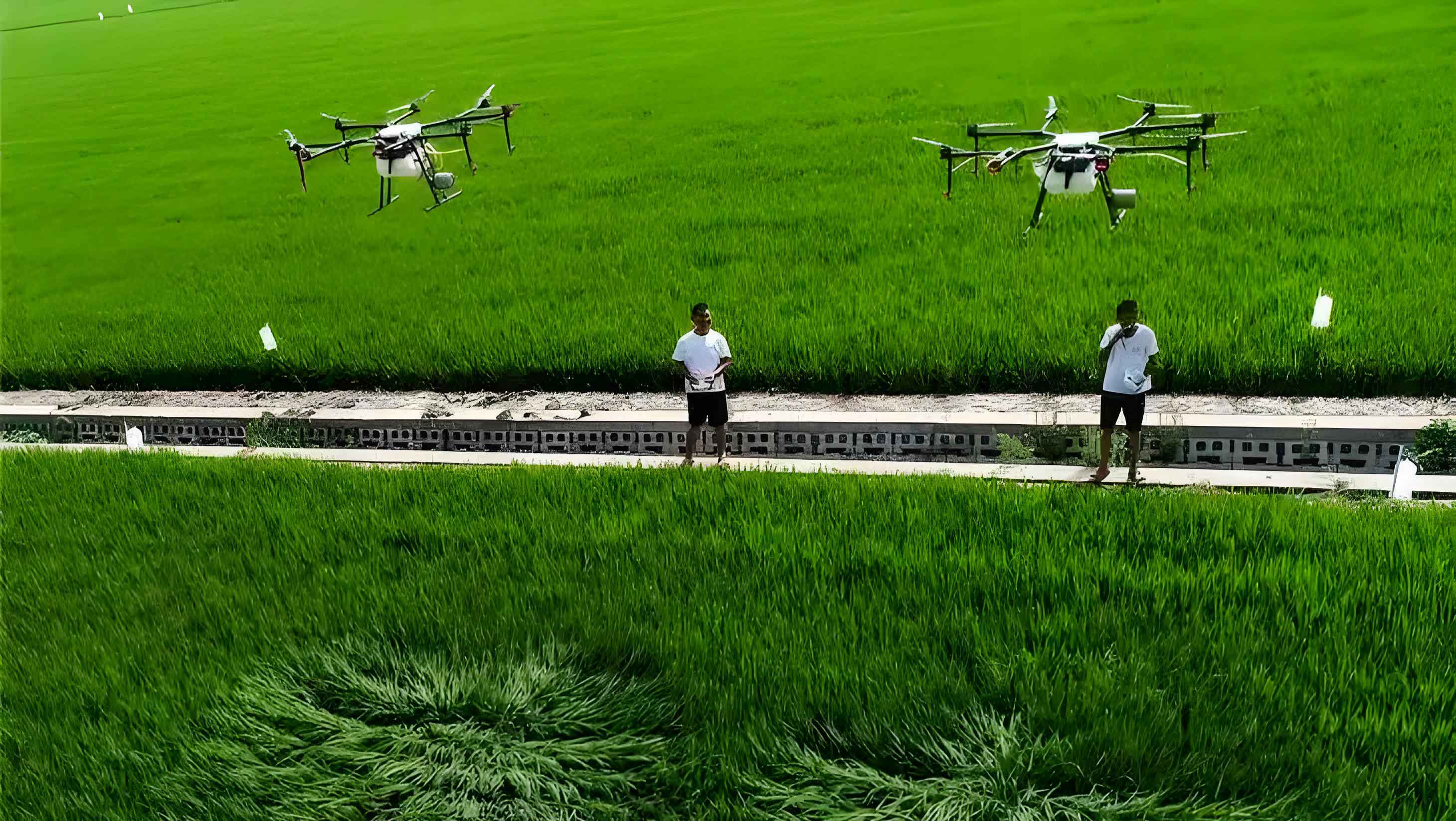
The foundation of understanding agricultural UAVs lies in a clear classification system. UAVs can be categorized through multiple lenses, each relevant to their design and operational scope.
| Classification Basis | Category | Key Parameters / Description |
|---|---|---|
| Platform Configuration | Fixed-Wing UAV | Efficient for long-range, large-area mapping. |
| Rotary-Wing UAV (Multirotor) | The dominant configuration for agricultural UAVs, offering VTOL and precise hovering. | |
| Others (Airship, Para-wing, Flapping-wing) | Specialized configurations with niche applications. | |
| Purpose | Civilian UAV | Includes the critical subcategory of agricultural UAVs for spraying, monitoring, and surveying. |
| Scale (Mass) | Micro UAV | $$ m \leq 7 \text{ kg}$$ |
| Light UAV | $$ 7 \text{ kg} < m \leq 116 \text{ kg}$$ (Typical for many agricultural UAVs) | |
| Small UAV | $$ 116 \text{ kg} < m \leq 5,700 \text{ kg}$$ | |
| Large UAV | $$ m > 5,700 \text{ kg}$$ | |
| Operational Radius | Ultra-Close Range | $$ R < 15 \text{ km}$$ |
| Close Range | $$ 15 \text{ km} \leq R < 50 \text{ km}$$ | |
| Short Range | $$ 50 \text{ km} \leq R < 200 \text{ km}$$ | |
| Medium Range | $$ 200 \text{ km} \leq R < 800 \text{ km}$$ | |
| Long Range | $$ R \geq 800 \text{ km}$$ | |
| Mission Altitude | Ultra-Low Altitude | $$ h < 100 \text{ m}$$ (Standard operational height for agricultural UAV spraying) |
| Low Altitude | $$ 100 \text{ m} \leq h < 1,000 \text{ m}$$ | |
| Medium Altitude | $$ 1,000 \text{ m} \leq h < 7,000 \text{ m}$$ | |
| High Altitude | $$ 7,000 \text{ m} \leq h < 18,000 \text{ m}$$ | |
| Ultra-High Altitude | $$ h \geq 18,000 \text{ m}$$ |
The development trajectory of the agricultural UAV industry has been steep, heavily influenced by national subsidy policies aimed at modernizing agriculture. Initially limited to pilot provinces, subsidy programs have expanded significantly, encompassing numerous regions. These policies typically target agricultural service organizations rather than individual farmers, incentivizing professional, large-scale adoption. This policy framework has catalyzed rapid market penetration. In one representative region, annual adoption figures showcased explosive growth, increasing from single digits to hundreds of units within a few years, reflecting the soaring demand driven by land consolidation and the rise of new agricultural business entities like cooperatives and large-scale farms. The core mission of extension services has consequently shifted towards promoting and providing technical guidance for these sophisticated agricultural UAV systems.
Mastering the technical operation and maintenance of an agricultural UAV is paramount, as it operates in a demanding chemical environment. Proper upkeep ensures efficiency, safety, and longevity. The workflow can be broken down into key subsystems:
1. Ground Control Station (Remote Controller): This is the pilot’s interface. It requires careful handling—keeping it clean and dry, protecting its antenna, and regularly calibrating the control sticks. A critical pre-flight check is verifying the control mode to prevent catastrophic misoperation.
2. Airframe and Structure: The physical integrity of the agricultural UAV is fundamental. It must be handled correctly (lifting from the main body, not the arms) and cleaned with care, using damp cloths instead of direct water jets to protect internal electronics. Regular inspection and tightening of fasteners with appropriate thread-locking compounds are essential preventive measures.
3. Propulsion and Power System: This high-stress system demands meticulous attention.
- Motors: Daily cleaning of external surfaces to remove chemical residue is mandatory. Internal damage often manifests as abnormal noise (bearing failure) or excessive vibration (damaged balance). Motor rotation direction is also a critical check.
- Electronic Speed Controllers (ESCs): Sealed within the frame, their primary enemy is moisture. Waterproofing is crucial.
- Propellers: These are consumable items. Any crack, chip, or imbalance requires immediate replacement to avoid severe vibration. Correct installation (tight fit, correct orientation for clockwise/counter-clockwise rotation) is vital for stable flight.
- Lithium-Polymer (LiPo) Batteries: High-value and safety-critical. They require disciplined care: avoiding high-temperature charging, performing periodic balance charging, and regular storage charge-discharge cycles. Physical damage or swelling must be addressed immediately.
- Connectors: Power and balance connectors must be fully seated to prevent high-resistance connections that lead to overheating and fire risk. They must be kept free of moisture and corrosion.
4. Spraying System: The subsystem that defines the agricultural UAV’s purpose. Post-operation cleaning is non-negotiable. The tank, pump, lines, filters, and nozzles must be thoroughly flushed with clean water. Using inappropriate pesticide formulations (e.g., certain powders or concentrated emulsifiers) can clog filters and nozzles. Regular soaking and cleaning of nozzles and filters are necessary to maintain consistent droplet spectrum and flow rate.
| Subsystem | Symptom/Failure | Probable Cause |
|---|---|---|
| Motor | Grinding noise, high resistance | Bearing failure due to liquid ingress. |
| Excessive vibration without propellers | Impact damage disrupting rotor balance. | |
| Vehicle flips or spins uncontrollably | Incorrect motor rotation direction. | |
| Propeller | Severe airframe vibration | Cracked, chipped, or unbalanced propeller. |
| Battery | Swelling/puffing | Prolonged storage at full charge voltage. |
| Failure, possible thermal event | Internal short circuit from physical damage. | |
| Spray System | Reduced or no flow, uneven spray pattern | Clogged filter or nozzle from chemical residue. |
The adoption of agricultural UAVs is justified by compelling economic and social benefits. The efficiency gains are monumental. Let us quantify the operational superiority. If we define field efficiency $\eta$ as the area covered per unit time, the relationship is clear:
$$ \eta_{UAV} \gg \eta_{Ground\ Machine} \approx 10 \times \eta_{Manual} $$
$$ \text{Where: } \eta = \frac{A}{t} $$
($A$ = Area treated, $t$ = time spent)
Economically, the service model is robust. A typical agricultural UAV operation charges a fee per unit area ($C_{service}$). For a machine servicing an area $A_{annual}$, the annual revenue $R$ is:
$$ R = A_{annual} \times C_{service} $$
Considering multiple applications per season for crops like wheat and rice, a single agricultural UAV can generate significant income. The return on investment (ROI) can be modeled. The payback period $T$ (in years) for an initial investment $I$ (UAV cost) generating net annual revenue $R_{net}$ is:
$$ T = \frac{I}{R_{net}} $$
Where $R_{net} = R – C_{operating}$ (Operating costs: maintenance, batteries, insurance). With typical figures, the payback period for a standard agricultural UAV can be less than two years, often within a single active season, making it a highly attractive investment for service providers.
| Metric | Manual Knapsack Sprayer | Ground-based Sprayer | Agricultural UAV |
|---|---|---|---|
| Relative Field Efficiency (Base) | 1x (Base) | ~5-10x | ~40-60x |
| Water Consumption | High (300-500 L/ha) | Medium-High (100-200 L/ha) | Very Low (10-30 L/ha) |
| Pesticide Utilization Rate | Low (~30-40%) | Medium (~35-45%) | High (~45-60%) |
| Soil Compaction/Crop Damage | Low (foot traffic) | High (wheel traffic) | None |
| Operator Safety Risk | Very High (direct exposure) | High (proximity, drift) | Low (remote operation) |
The social and environmental benefits are profound and align with sustainable development goals. The enhanced pesticide utilization rate, often exceeding 50%, is a direct result of the agricultural UAV’s ability to perform targeted, low-volume spraying. This can be expressed as:
$$ U_{UAV} = \frac{P_{effective}}{P_{applied}} \approx 0.5 – 0.6 $$
Compared to traditional methods where $U_{traditional} \approx 0.3 – 0.4$. This increase directly implies a proportional reduction in the total chemical load introduced into the agro-ecosystem per unit area, minimizing residue and pollution. Furthermore, the removal of humans from the direct path of pesticide spray virtually eliminates the risk of acute operator poisoning, a major occupational health concern in agriculture. The ultra-low volume application also conserves water resources, a critical advantage in arid regions. Finally, the non-contact nature of agricultural UAV operations prevents soil compaction and physical crop damage, preserving soil health and maximizing yield potential.
In conclusion, the agricultural UAV is far more than a simple tool; it is a transformative technology platform reshaping plant protection. Its evolution from a classified curiosity to a mainstream agricultural asset underscores a global shift towards precision, efficiency, and sustainability. The technical mastery required for its operation is well-defined, focusing on rigorous maintenance of its flight and spraying systems. The economic calculus, supported by formulas for efficiency and return on investment, demonstrates clear viability for service-based business models. Most importantly, the societal benefits—from safeguarding farmer health and conserving resources to reducing environmental impact—present a compelling case for its continued integration and support. As sensing, automation, and data analytics capabilities advance, the future agricultural UAV will likely become the central node in a fully integrated, data-driven crop management system.