
The integration of high-technology equipment into modern agricultural practices has become a cornerstone for enhancing productivity and efficiency. Among these innovations, the agricultural UAV, or unmanned aerial vehicle, specifically designed for plant protection, has revolutionized crop management strategies. These systems offer unparalleled advantages in pest and disease control, fertilizer application, and field monitoring. However, the operational envelope of an agricultural UAV is intrinsically bounded by the atmospheric environment in which it flies. Meteorological factors pose significant, and often deterministic, constraints on flight safety, application efficacy, and equipment longevity. This analysis delves into the influence of key meteorological elements on the flight operations of agricultural UAV systems, providing a detailed examination to inform operational planning and risk mitigation.
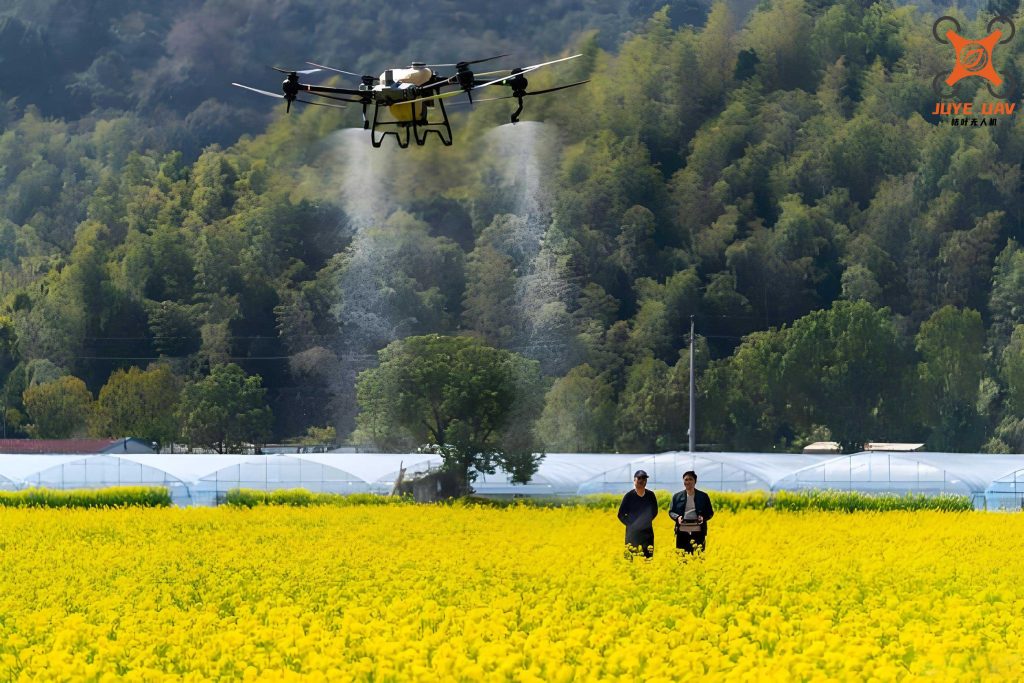
The core components of an agricultural UAV—including its flight control system, propulsion units, spraying mechanism, and power supply—are highly sensitive to environmental conditions. Unlike manned aircraft with larger inertia and more robust systems, the small-scale, multi-rotor platforms commonly used in agriculture are acutely vulnerable to atmospheric disturbances. A comprehensive understanding of these interactions is not merely academic but a practical necessity for ensuring the economic and safety outcomes of UAV-based operations.
Fundamental Meteorological Elements and UAV Interaction
Meteorology defines the state of the atmosphere through measurable parameters and observable phenomena. For agricultural UAV operations, the most critical elements are wind, temperature, humidity, precipitation, visibility, atmospheric electricity (lightning), and cloud cover. Each factor interacts with the UAV’s physics, its spraying system, and its mission objectives in distinct ways. The following sections provide a systematic breakdown of these influences, supported by quantitative thresholds and physical principles.
1. Influence of Wind on Flight Dynamics and Spray Efficacy
Wind is arguably the most critical and dynamic meteorological factor affecting agricultural UAV operations. Its impact is twofold: on the vehicle’s flight stability and navigation, and on the fate of the sprayed droplets.
Flight Stability and Navigation: An agricultural UAV must maintain precise positioning and altitude to ensure uniform chemical application. Wind exerts force on the airframe, causing displacement (leeway) and increasing the power required to maintain course and ground speed. The relationship between wind speed ($V_w$), UAV airspeed ($V_a$), and ground speed ($V_g$) is vectorial:
$$ \vec{V_g} = \vec{V_a} + \vec{V_w} $$
Strong or gusty winds can lead to significant track error, reduced battery endurance due to higher energy consumption, and in extreme cases, loss of control. A common operational limit for multi-rotor agricultural UAV is a sustained wind speed not exceeding 8-10 m/s (approximately 5 Beaufort force), with gusts no more than 12 m/s.
Spray Drift and Application Quality: The primary operational concern is droplet drift. Wind carries fine droplets away from the intended target area, reducing deposition efficacy on the crop and posing risks of environmental contamination and damage to adjacent sensitive areas. The downwind displacement ($X_d$) of a droplet can be modeled simplistically as:
$$ X_d \approx \frac{V_w \cdot H}{V_{ts}} $$
where $H$ is the release height and $V_{ts}$ is the droplet terminal settling velocity. This demonstrates that lower flight heights and larger droplet sizes (higher $V_{ts}$) mitigate drift. For typical operations, wind speeds above 3-4 m/s are considered sub-optimal, and operations are often suspended above 5-6 m/s to ensure application accuracy and safety.
| Wind Speed (m/s) | Beaufort Scale | Operational Impact on Agricultural UAV | Recommended Action |
|---|---|---|---|
| 0 – 3 | 0-2 (Light Air-Breeze) | Minimal drift. Optimal conditions for precise application and stable flight. | Proceed with operations. |
| 3 – 5 | 3 (Gentle Breeze) | Moderate drift potential. Spray swath may become inconsistent. Increased battery drain. | Exercise caution. Reduce flight altitude, adjust nozzle settings for larger droplets. |
| 5 – 8 | 4-5 (Moderate-Fresh Breeze) | Significant drift and flight instability. Difficult to maintain accurate flight lines. High risk of poor application. | Borderline. Consider postponing. If operating, use extreme caution and accept reduced efficacy. |
| > 8 | >6 (Strong Breeze+) | High risk of loss of control, catastrophic battery failure, or crash. Unacceptable drift. | Suspend all operations. |
2. Temperature and Humidity Effects
Ambient temperature and relative humidity significantly influence both the agricultural UAV platform and the physicochemical behavior of the spray mixture.
Battery Performance: Lithium-polymer (LiPo) batteries, the standard power source for agricultural UAV, have an optimal operating temperature range of approximately 20°C to 30°C. Performance degrades outside this range. At low temperatures ($T < 10°C$), internal resistance increases, leading to voltage sag, reduced effective capacity ($C_{eff}$), and shortened flight time. The capacity can be empirically related to temperature:
$$ C_{eff}(T) \approx C_{25} \cdot [1 – \alpha (25 – T)] \quad \text{for } T < 25^\circ C $$
where $C_{25}$ is capacity at 25°C and $\alpha$ is a battery-specific coefficient (~0.005 to 0.01 per °C). Conversely, high temperatures ($T > 40°C$) accelerate chemical degradation within the battery, posing a fire risk and shortening its overall lifespan.
Spray Evaporation and Microclimate: High temperatures combined with low relative humidity promote rapid evaporation of spray droplets before they reach the canopy. This reduces droplet size, increasing drift potential and potentially reducing biological efficacy. Furthermore, on hot days, strong thermal updrafts can develop, disrupting the downward spray plume and making it difficult for the agricultural UAV to maintain a stable altitude in auto-mode.
| Temperature Range | Impact on Battery | Impact on Spray | Mitigation Strategy |
|---|---|---|---|
| < 10°C | Severe capacity loss, risk of permanent damage if charged cold. | Liquids may become more viscous. Minimal evaporation. | Keep batteries warm before use (e.g., in insulated case). Plan for shorter flight times. |
| 10°C – 30°C | Optimal performance range. | Controllable evaporation. Stable atmospheric conditions typical. | Ideal operational window. |
| 30°C – 40°C | Reduced cycle life, increased risk of swelling. | Increased droplet evaporation, potential for spray drift. | Operate in early morning/late evening. Use drift-reducing adjuvants. Monitor battery temperature. |
| > 40°C | High risk of thermal runaway and fire. Severe performance degradation. | Extreme evaporation, strong thermals likely. | Avoid operations. Extreme hazard to equipment. |
3. Precipitation, Humidity, and Electrical Systems
Liquid water is a primary adversary of electronic systems. While some agricultural UAV models boast water-resistant ratings, most are not designed for operation in rain.
Direct Physical Damage: Precipitation can short-circuit electronic speed controllers (ESCs), flight controllers, and GPS modules. Water ingress into motors can cause corrosion and bearing failure. Even light drizzle can accumulate on lenses (for obstacle avoidance or mapping cameras), blinding the system’s sensors.
Chemical Application Efficacy: Rainfall occurring shortly after application can wash off non-systemic pesticides from leaf surfaces, a phenomenon known as “rainfastness.” The loss of efficacy not only wastes resources but may also lead to chemical runoff, polluting waterways. Operational planning must consider weather forecasts to ensure a rain-free period post-application, typically 4-8 hours depending on the product.
Humidity and Corrosion: Consistently high relative humidity (above 80-90%) can promote condensation inside electronic compartments and accelerate corrosion of metal parts, especially in coastal or tropical regions. Proper storage in dry, climate-controlled conditions is essential for the longevity of the agricultural UAV.
4. Visibility and Ceiling (Cloud Base)
Visual Line of Sight (VLOS) regulations, which govern most agricultural UAV operations, mandate that the pilot must maintain unaided visual contact with the aircraft. Meteorological visibility directly limits operational range and safety.
Low Visibility: Conditions like fog, mist, haze, or heavy precipitation reduce visibility. If visibility falls below 1-2 km, it becomes challenging for the pilot to accurately judge the aircraft’s orientation, distance, and proximity to obstacles (like trees or power lines). This significantly increases collision risk. Furthermore, many agricultural UAV rely on visual positioning systems when GPS signal is weak; fog or low light degrades their performance.
Low Cloud Ceiling: The cloud base height effectively defines the maximum allowable flight altitude for an agricultural UAV. Entering a cloud is prohibited and extremely dangerous. The pilot loses VLOS instantly, and the agricultural UAV can experience icing (if temperatures are low), loss of GPS signal, and severe turbulence. Operations should be planned with knowledge of the cloud base height, ensuring a safe buffer between the maximum planned flight altitude and the cloud base.
5. Atmospheric Electricity (Lightning) and Severe Weather
Thunderstorms represent an absolute no-fly condition for agricultural UAV operations due to multiple, compounding hazards.
Lightning Strike: While the small size of a UAV makes it a less likely direct target than a tall tree or building, the risk is non-zero. A direct strike would destroy the electronics completely. More probable is induced current from a nearby strike, which can fry sensitive circuits.
Associated Severe Phenomena: Thunderstorms are accompanied by severe turbulence, wind shear, microbursts, and often hail. The sudden, violent changes in wind speed and direction associated with a thunderstorm’s outflow can easily overwhelm the flight controller of an agricultural UAV, leading to an irrecoverable crash. Gust fronts can arrive several minutes before the rain, catching operators off guard.
Operational Protocol: A strict rule must be enforced: if thunder is heard, or lightning is seen, or a severe weather warning is issued, operations must cease immediately, and the agricultural UAV must be retrieved and grounded. The “30-30 Rule” is a useful guideline: if the time between lightning and thunder is 30 seconds or less (indicating the storm is within 10 km), seek shelter and do not resume operations until 30 minutes after the last observed lightning or thunder.
6. The Special Case of Low Cloud and Convective Activity
Cumuliform clouds, particularly cumulus congestus and cumulonimbus, signal unstable atmospheric conditions. Even if they appear isolated and not yet producing thunder, they indicate strong vertical development.
Thermals and Turbulence: These clouds are fueled by strong updrafts. An agricultural UAV flying near or under such a cloud can encounter powerful, localized updrafts that may cause it to suddenly gain altitude unexpectedly, followed by potentially rough air in the surrounding downdrafts. This makes maintaining a consistent spray height very difficult.
Rapid Weather Deterioration: A seemingly harmless fair-weather cumulus cloud can rapidly develop into a more dangerous convective cell. Operators must be trained to recognize the signs of developing convection and err on the side of caution by landing the agricultural UAV if clouds show vigorous vertical growth.
Synthesis and Operational Decision Matrix
Effective agricultural UAV fleet management requires integrating meteorological data into daily decision-making. The following matrix synthesizes the critical limits and actions for key factors.
| Meteorological Factor | Green (Go) | Yellow (Caution / Modify) | Red (No-Go) |
|---|---|---|---|
| Wind Speed | < 3 m/s | 3 – 5 m/s. Reduce altitude, use coarser spray. | > 5 m/s (or gusts > 8 m/s) |
| Temperature | 10°C – 35°C | 5°C – 10°C or 35°C – 40°C. Shorten sorties, monitor batteries. | < 5°C or > 40°C |
| Precipitation | None forecast for 6+ hours. | Light rain ended >1 hour ago. Check all systems for moisture. | Current rain, drizzle, or forecast within 1 hour. |
| Visibility | > 3 km | 1 km – 3 km. Reduce flight distance, enhance visual markers. | < 1 km (fog, heavy mist) |
| Lightning/Thunderstorms | None within 50 km forecast. | Storms possible later in day. Plan for early finish. | Storms present or imminent (any lightning/thunder). |
| Cloud Ceiling | > 300 m above max planned altitude. | Cloud base within 150 m of max altitude. Monitor closely. | Cloud base at or below planned flight altitude. |
Conclusion and Future Perspectives
The successful deployment of an agricultural UAV hinges on respecting the profound influence of meteorological factors. Wind dictates application quality and flight stability; temperature governs power system reliability and spray physics; precipitation threatens both hardware and chemical efficacy; while visibility, thunderstorms, and convective clouds define the fundamental boundaries of safe flight. Operators must cultivate “weather intelligence,” leveraging local forecasts, real-time observations, and an understanding of microclimates within their operational areas.
Technological advancements are gradually expanding the operational window. More weather-resistant airframes, advanced flight controllers capable of compensating for turbulence, and lidar-based spray systems that adjust for wind drift in real-time are on the horizon. Furthermore, the integration of hyper-local, high-resolution weather prediction models directly into fleet management software will enable dynamic, condition-based mission planning. However, the fundamental physical constraints imposed by the atmosphere will remain. Therefore, a rigorous, weather-aware operational protocol is not an option but an essential component of professional, safe, and effective agricultural UAV deployment. By systematically analyzing and mitigating these meteorological risks, the full potential of this transformative technology in precision agriculture can be reliably and sustainably realized.