
In recent years, the application of agricultural UAVs (Unmanned Aerial Vehicles) has rapidly advanced, becoming a pivotal tool in modern agriculture for managing pests and diseases. As technology evolves, more innovations are integrated into various sectors, including agriculture, where agricultural UAV spraying has revolutionized pest control methods. This approach enhances precision and efficacy while reducing the labor burden on farmers. From my perspective as a researcher in this field, I have observed that agricultural UAVs are not only transforming traditional practices but also driving economic and structural upgrades in farming communities. This article emphasizes the critical role of agricultural UAV spraying, analyzes its distinctive features, examines current applications in pest and disease management, discusses factors affecting control efficiency, and outlines future directions. These insights aim to foster the continued development and adoption of agricultural UAVs in sustainable agriculture.
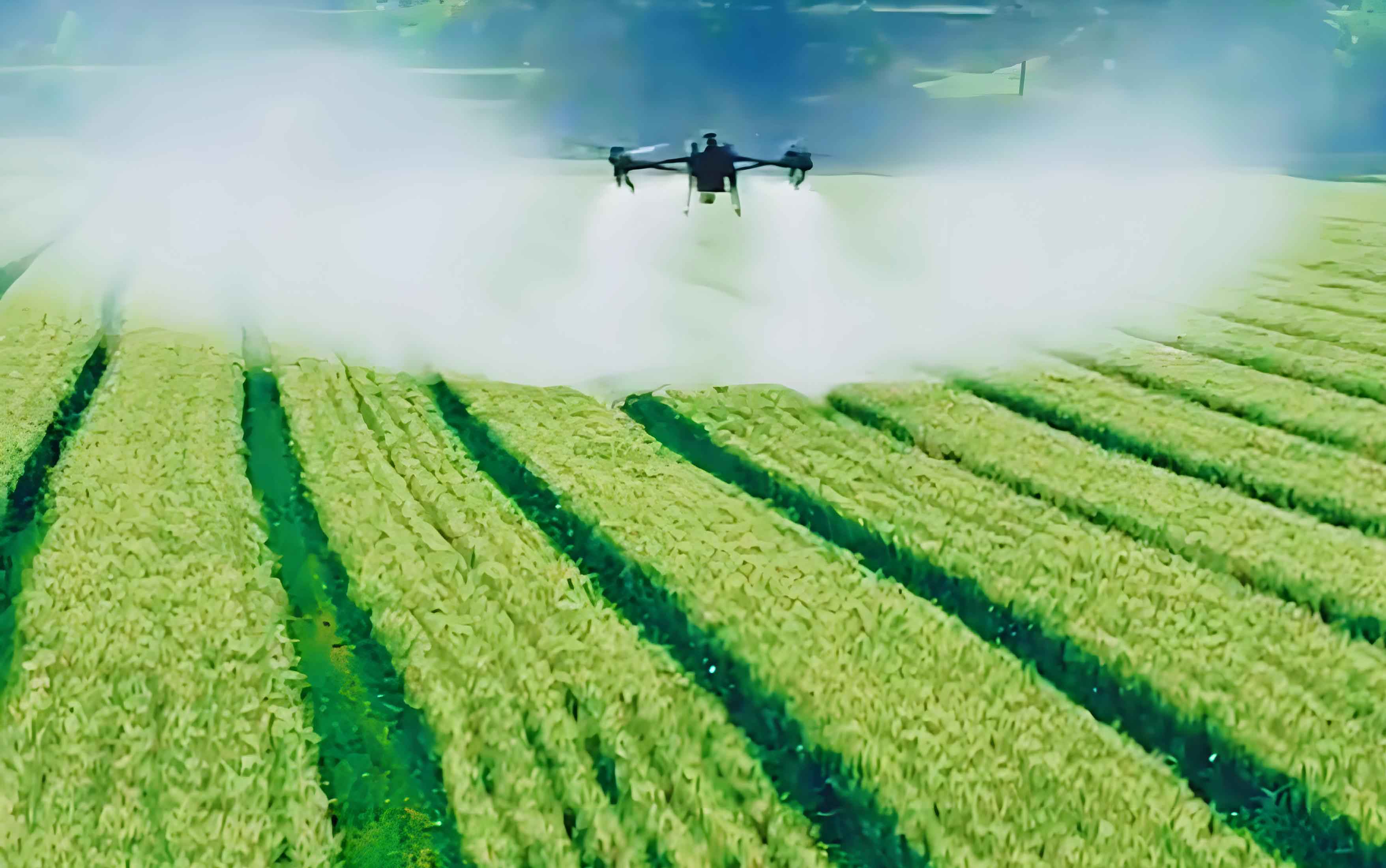
The importance of agricultural UAV spraying cannot be overstated. It directly contributes to increased crop yields and improved quality, aligning with the growing demand for high-quality food. By effectively mitigating pest and disease damage, agricultural UAVs help farmers achieve better economic returns. For instance, in regions like Meizhou, where crops such as golden pomelo and rice are prevalent, the use of agricultural UAVs has demonstrated significant benefits in unified pest control, leading to enhanced productivity. This technology represents a shift toward more efficient and environmentally friendly practices, reducing reliance on manual labor and minimizing chemical usage. As I delve into this topic, I will explore how agricultural UAVs are shaping the future of agriculture through their unique characteristics and applications.
Characteristics of Agricultural UAV Spraying
Agricultural UAV spraying offers several key features that set it apart from conventional methods. These include excellent spraying efficacy, cost savings in labor, strong adaptability, and precise chemical application. Each characteristic plays a vital role in optimizing pest control outcomes.
Firstly, the spraying effect is highly effective due to low-altitude operations. Agricultural UAVs can be controlled at specific heights, allowing for tailored coverage. For example, lower飞行 heights result in smaller spray ranges, while higher heights expand coverage. This adjustability enables farmers to target crops and pests accurately, as seen in applications for rice pests or fruit tree diseases. The relationship between飞行 height (H) and spray coverage (C) can be modeled as:
$$ C = k \cdot H $$
where k is a constant dependent on UAV parameters and environmental conditions. This linear approximation highlights how operators can manipulate飞行 parameters to achieve desired deposition.
Secondly, agricultural UAVs significantly reduce human labor costs. By enabling remote操控, they eliminate the need for direct human involvement in spraying, thereby minimizing exposure to chemicals and freeing up workforce for other tasks. This is particularly beneficial in large-scale farming operations where manual spraying is time-consuming and hazardous.
Thirdly, agricultural UAVs exhibit strong adaptability, performing well in diverse terrains such as农田, hills, and uneven landscapes. Traditional methods often struggle in复杂地形, but agricultural UAVs overcome these challenges through agile maneuverability and advanced navigation systems. This adaptability ensures consistent pest control across various agricultural settings.
Lastly, precision in chemical application is a hallmark of agricultural UAV spraying. By optimizing droplet distribution and reducing drift, these UAVs minimize pesticide usage, lowering costs and environmental impact. The精准性 can be quantified through雾滴沉积 density (D), which depends on factors like飞行 speed (V) and nozzle type. A common formula is:
$$ D = \frac{Q}{A \cdot V} $$
where Q is the flow rate and A is the spray area. This underscores how agricultural UAVs enhance efficiency by delivering chemicals exactly where needed.
Current Applications in Pest and Disease Control
The utilization of agricultural UAVs in pest and disease management has seen substantial progress, particularly in key crops like rice, corn, and wheat. Current applications focus on technological advancements and practical防控 strategies.
In terms of核心技术, significant improvements have been made in spraying systems and remote control. For example, companies like VARIO have developed multifunctional agricultural UAVs with enhanced remote management and雾化喷雾 systems, achieving superior droplet dispersion. Researchers have also integrated ground control units and variable spraying systems equipped with microprocessors, enabling precise chemical application based on real-time data. This aligns with the trend toward smart agriculture, where agricultural UAVs are part of interconnected systems.
For pest control, studies have yielded valuable insights. In rice cultivation, agricultural UAVs have been used to combat pests like the brown planthopper. Research indicates that侧向喷洒 (sideways spraying) is more effective than压顶喷洒 (top-down spraying) in eliminating these pests, with efficacy rates improving by up to 30%. Similarly, in corn fields, investigations into droplet deposition patterns reveal that a飞行 height of 7 meters optimizes雾滴沉积量, enhancing pest management. For wheat白粉病 prevention, experiments show that a作业高度 of 0.5 meters maximizes雾滴沉积 density, leading to the best control outcomes. These findings are summarized in the table below, which compares agricultural UAV applications across different crops.
| Crop | Target Pest/Disease | Optimal UAV Parameters | Control Efficacy |
|---|---|---|---|
| Rice | Brown Planthopper | Sideways spraying, height 1-2 m | High (up to 95% reduction) |
| Corn | General pests | Height 7 m, speed 4 m/s | Moderate to high |
| Wheat | Powdery Mildew | Height 0.5 m, low volume spray | Very high |
These applications demonstrate how agricultural UAVs are tailored to specific agricultural contexts. Moreover, the integration of sensors and AI algorithms allows for real-time monitoring of crop health, enabling proactive pest management. As I assess these developments, it is clear that agricultural UAVs are becoming indispensable tools in modern integrated pest management (IPM) strategies.
Factors Influencing Control Efficiency of Agricultural UAVs
The effectiveness of agricultural UAV spraying in pest and disease control is influenced by multiple factors. Understanding these variables is crucial for optimizing performance. Based on research and field observations, I categorize them into four main areas: chemical selection, UAV operational parameters, adjuvants and application rates, and environmental conditions.
Firstly, the choice of pesticides and formulations is fundamental. Different chemicals and剂型 exhibit varying efficacy against specific pests and diseases. For optimal results, it is essential to select药剂 based on the target organism, crop type, and application environment. Using inappropriate chemicals can lead to poor control or even phytotoxicity. To prevent resistance, rotating or combining pesticides is recommended. Studies have shown that water-soluble formulations often yield better results with agricultural UAVs due to their compatibility with low-volume spraying. The efficacy (E) can be expressed as:
$$ E = f(C, F, E_v) $$
where C is the chemical type, F is the formulation, and E_v is the environmental factor. This emphasizes the need for careful chemical management in agricultural UAV operations.
Secondly, operational parameters of the agricultural UAV play a critical role. These include飞行 speed, height, spray width, and nozzle configuration. These parameters directly affect droplet deposition and coverage. For instance, research on rice planthopper control indicates that within a飞行高度 range of 0.8 to 1.5 meters and a速度 range of 3 to 5 m/s,雾滴覆盖率 increases with both height and speed. Additionally, multi-spray overlap modes can prevent gaps or over-application. The relationship between deposition density (D_d) and these parameters can be modeled as:
$$ D_d = \alpha \cdot \frac{H}{V} + \beta $$
where α and β are constants derived from empirical data. This formula helps in setting optimal飞行 parameters for agricultural UAVs.
Thirdly, the use of飞防助剂 (spray adjuvants) and application rates significantly impacts control efficiency. Adjuvants improve药液 properties, such as viscosity and surface tension, enhancing droplet spread and penetration on leaves. They also reduce evaporation and increase抗漂移能力. Proper adjuvant selection can boost pesticide efficacy by up to 20%, as observed in studies on wheat赤霉病 control using prothioconazole. The effective dose (D_e) can be calculated as:
$$ D_e = D_a \cdot (1 + A_e) $$
where D_a is the base application rate and A_e is the adjuvant enhancement factor. This highlights the value of adjuvants in agricultural UAV spraying.
Lastly, environmental and climatic conditions must be considered. Factors like temperature, wind, and humidity affect droplet behavior and pesticide performance. Agricultural UAV operations should avoid adverse weather, such as high temperatures above 30°C, rain, or strong winds, to ensure optimal results. Ideal conditions include temperatures between 20-30°C and calm winds. Operators should also account for obstacles like power lines to prevent UAV damage. The table below summarizes these influencing factors.
| Factor Category | Key Variables | Impact on Efficiency | Recommendations |
|---|---|---|---|
| Chemical Selection | Pesticide type, formulation | Directly affects pest kill rate | Use targeted, water-soluble chemicals; rotate modes of action |
| UAV Parameters | 飞行 height, speed, spray width | Influences droplet deposition and coverage | Optimize based on crop and pest; use overlap modes |
| Adjuvants and Rates | Adjuvant type, application volume | Enhances spray performance and efficacy | Select adjuvants to reduce drift and improve adhesion |
| Environmental Conditions | Temperature, wind, humidity | Affects droplet evaporation and drift | Operate in mild weather; avoid extremes |
By addressing these factors, agricultural UAV spraying can achieve higher efficiency and reliability. From my experience, integrating sensor data and predictive models can further refine these parameters, making agricultural UAVs more adaptive to dynamic field conditions.
Future Directions and Conclusion
Looking ahead, the future of agricultural UAVs in pest and disease control is promising, driven by technological advancements and growing adoption. Key发展方向 include the integration of artificial intelligence, improved battery life, and enhanced precision through real-time data analytics. As agricultural UAVs become more sophisticated, they will likely incorporate multispectral imaging for early pest detection and automated decision-making systems. This aligns with the broader trend of digital agriculture, where agricultural UAVs serve as essential data collection and application platforms.
Moreover,专业化服务 organizations are expected to play a central role in scaling agricultural UAV operations. These entities can provide trained pilots, maintenance, and customized spraying solutions, ensuring consistent and effective pest management. This shift toward service-based models will democratize access to agricultural UAV technology, especially for smallholder farmers. In regions like Meizhou, such services have already shown potential in unifying pest control efforts across diverse crops.
In conclusion, agricultural UAV spraying represents a transformative approach to crop protection. Its characteristics—such as precision, adaptability, and efficiency—make it a valuable tool in modern agriculture. Current applications demonstrate its efficacy in various crops, while factors like chemical selection and operational parameters require careful management to optimize results. As research progresses, agricultural UAVs will continue to evolve, offering more智能 and sustainable solutions. I believe that by embracing these innovations, we can enhance global food security and promote environmentally responsible farming practices. The ongoing development of agricultural UAVs underscores their critical role in shaping the future of agriculture, and I am optimistic about their potential to address emerging challenges in pest and disease control.
To summarize the mathematical relationships discussed, here are key formulas relevant to agricultural UAV spraying:
- Spray coverage: $$ C = k \cdot H $$
- Droplet deposition density: $$ D = \frac{Q}{A \cdot V} $$
- Efficacy function: $$ E = f(C, F, E_v) $$
- Deposition density model: $$ D_d = \alpha \cdot \frac{H}{V} + \beta $$
- Effective dose with adjuvants: $$ D_e = D_a \cdot (1 + A_e) $$
These equations provide a framework for understanding and optimizing agricultural UAV operations. As we move forward, continued research and collaboration will be essential to unlock the full potential of agricultural UAVs in sustainable agriculture.