
As a crucial staple crop, maize cultivation faces persistent challenges in weed management, which directly impacts yield and quality. Traditional methods, often reliant on manual labor or tractor-mounted sprayers, are increasingly scrutinized for their inefficiency, environmental footprint, and operational risks. In my analysis of modern agricultural practices, the integration of agricultural UAV technology presents a paradigm shift. This article explores the application, technical underpinnings, economic implications, and future trajectory of using agricultural UAV systems for weed control in maize fields from a first-person perspective of an agricultural systems analyst.
The core advantage of employing an agricultural UAV lies in its foundational principle of precision aerial application. Unlike blanket spraying, a well-calibrated agricultural UAV can execute targeted interventions. The operational framework is built upon several key technological pillars: Global Navigation Satellite System (GNSS) for georeferenced flight planning, inertial measurement units (IMUs) for stability, sophisticated flow control systems for liquid discharge, and increasingly, machine vision for real-time weed detection and discrimination. The synergy of these components allows the agricultural UAV to translate a digital prescription map into a precise physical application over the crop canopy.
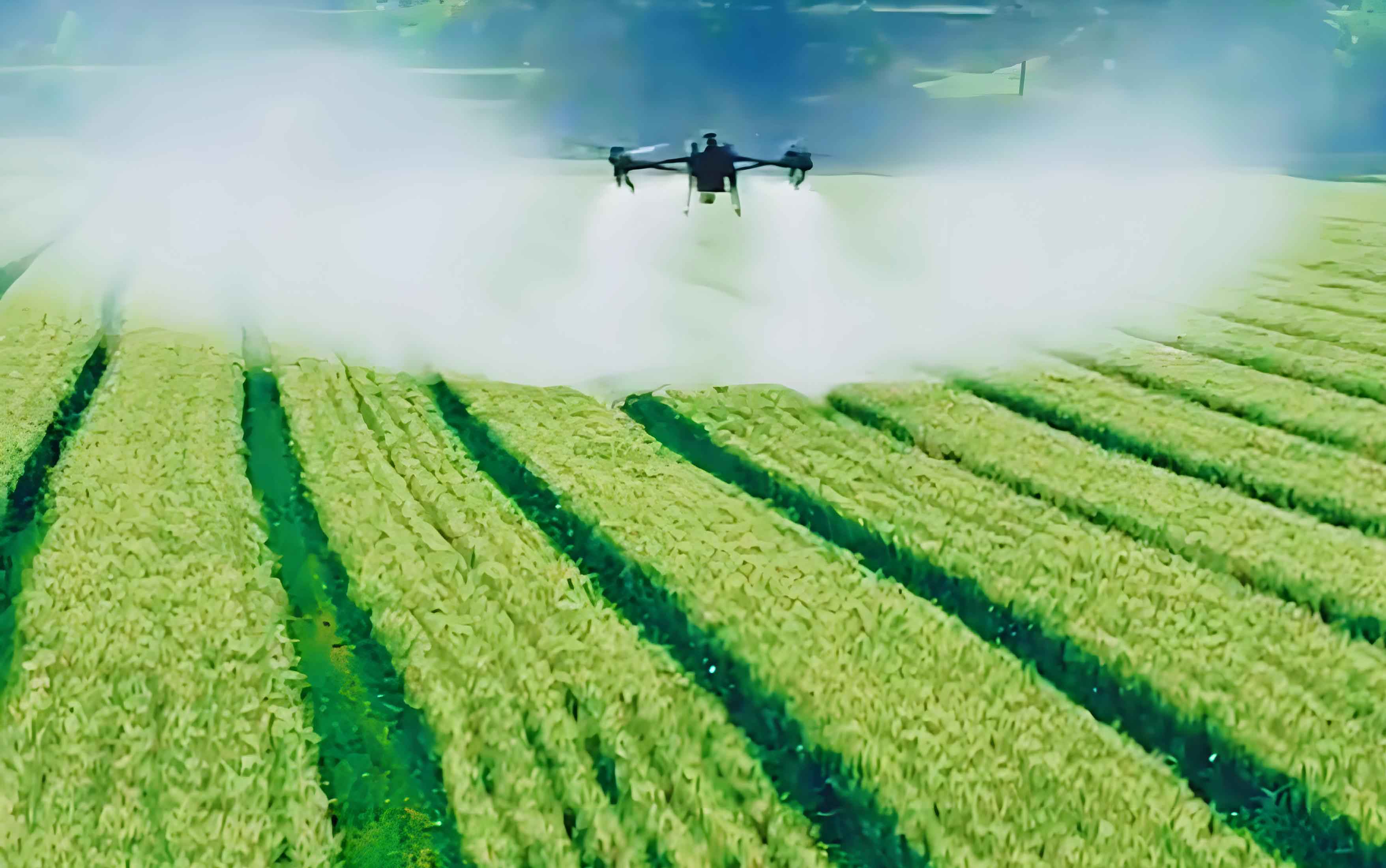
The workflow begins with mission planning. Using field boundary data, I create a flight path that ensures complete coverage while considering factors like battery life and payload capacity. For a standard multi-rotor agricultural UAV, critical parameters include flight altitude (A), swath width (W), and forward speed (V). The theoretical area coverage rate (ACR) can be modeled as:
$$ ACR = W \times V $$
However, effective swath width (W_eff) is a function of altitude and nozzle configuration, influenced by droplet spectrum and wind conditions. A more practical model accounting for operational efficiency (η) is:
$$ ACR_{operational} = \eta \times (W_{eff} \times V) $$
where η represents the efficiency factor incorporating turn-around time and refilling pauses. The following table contrasts key operational parameters between a typical agricultural UAV and conventional methods.
| Parameter | Agricultural UAV (Multi-rotor) | Tractor-mounted Boom Sprayer | Manual Knapsack Sprayer |
|---|---|---|---|
| Effective Work Rate (ha/hr) | 4 – 8 | 10 – 20 | 0.3 – 0.5 |
| Application Uniformity (CV%) | 10 – 25 | 15 – 30 | > 40 |
| Water Carrier Volume (L/ha) | 10 – 30 | 100 – 300 | 300 – 500 |
| Operator Exposure Risk | Very Low | Moderate | Very High |
| Terrain Adaptability | Excellent | Poor | Good |
Beyond efficiency metrics, the mechanistic action of an agricultural UAV enhances efficacy. The downwash airflow generated by the rotors creates a vortex that pushes the crop canopy, improving penetration and deposition on lower leaf surfaces and the base of maize plants where weeds often compete. This phenomenon increases the effective deposition ratio (DR). If C0 is the initial concentration of active ingredient in the tank, and Cd is the deposited concentration per unit leaf area, the deposition efficiency can be conceptualized as:
$$ DR = \frac{C_d}{C_0} \times 100\% $$
The downwash effect, a unique feature of multi-rotor agricultural UAV platforms, significantly increases DR compared to non-assisted aerial spraying, leading to more effective herbicide contact with target weeds.
Technical Specifications and Operational Framework
Delving deeper into the technical specifications, a modern agricultural UAV for herbicide application is a complex system. The heart of the system is the spraying module, comprising a pump, pressure regulator, flow meter, and an array of nozzles. Nozzle selection is critical; flat fan or air-induction nozzles are common to produce droplets in a size range (e.g., 200-400 microns) that balances drift potential with coverage. The required flow rate (Q) for a given application rate (AR in L/ha) is dynamically calculated by the flight controller:
$$ Q = \frac{AR \times W_{eff} \times V}{600} $$
where Q is in liters per minute, Weff in meters, and V in meters per second. The factor 600 is used for unit conversion. This real-time adjustment ensures consistent application despite variations in flight speed.
For weed control, the integration of real-time sensing is the next frontier. An agricultural UAV equipped with multispectral or RGB cameras can perform scouting flights to generate Normalized Difference Vegetation Index (NDVI) or other indices maps to identify weed patches. The NDVI is calculated from reflectance in the red (R) and near-infrared (NIR) bands:
$$ NDVI = \frac{NIR – R}{NIR + R} $$
Weeds often exhibit a different spectral signature from maize, especially in early growth stages, allowing for the creation of a binary prescription map. This map is then uploaded to the agricultural UAV, enabling spot-spraying instead of whole-field application, which can lead to dramatic reductions in herbicide volume—a concept known as Variable Rate Application (VRA). The potential herbicide savings (HS) can be estimated as:
$$ HS = 1 – \frac{A_{weed}}{A_{total}} $$
where Aweed is the area identified as infested and Atotal is the total field area. In fields with patchy weed distribution, savings of 40-70% are plausible.
Mathematical Modeling of Spray Deposition and Efficacy
To quantitatively predict and optimize the performance of an agricultural UAV, we can develop models for spray deposition. The density of droplets on a target surface (D, in droplets/cm²) is a function of the application parameters:
$$ D = \frac{Q \times 10^7}{V \times W \times d^3 \times \pi / 6} $$
Here, Q is the flow rate (ml/min), V is speed (m/s), W is swath (m), and d is the Volume Median Diameter (VMD) of the droplet spectrum (µm). This equation highlights the inverse cubic relationship with droplet size; halving the droplet size increases the number of droplets eightfold for the same volume, which can improve coverage but also increase drift risk.
The biological efficacy of a herbicide application is often linked to the critical droplet density (Dc) required on the weed surface. The probability of effective weed control (P) can be modeled using a dose-response relationship, which for many herbicides follows a sigmoidal curve. A simplified logistic model can be expressed as:
$$ P = \frac{1}{1 + e^{-k(D – D_{50})}} $$
where D is the actual deposited dose, D50 is the dose required for 50% efficacy, and k is a slope factor. The role of the agricultural UAV is to maximize the spatial uniformity of D to ensure P approaches 1 across the entire field. The coefficient of variation (CV) of deposition is a key performance indicator for any agricultural UAV spraying system. Optimizing flight path, altitude, and nozzle configuration to minimize CV is essential for reliable weed control.
Economic and Logistical Analysis
While the technical benefits are clear, adoption is driven by economics. The total cost of ownership (TCO) for an agricultural UAV service includes capital expenditure (CapEx), operational expenditure (OpEx), and labor. A detailed breakdown for a medium-scale maize farming operation (200 hectares) over a 5-year period is illustrative.
| Cost Component | Agricultural UAV Service (Per Ha Basis) | Notes |
|---|---|---|
| Capital Cost (Amortized) | $15 – $25 | Includes UAV, spare batteries, charger, RTK base station. |
| Herbicide Cost | $20 – $35 | Potential 20-40% saving due to precise application and reduced volume. |
| Labor Cost | $5 – $10 | Primarily for supervision and logistics. |
| Energy & Maintenance | $3 – $7 | Electricity for charging, parts replacement, insurance. |
| Total Estimated Cost/ha | $43 – $77 | |
| Traditional Method Cost/ha | $55 – $90 | Higher herbicide volume, significant labor, and machinery fuel/maintenance. |
The economic viability of the agricultural UAV becomes pronounced when considering indirect benefits: the ability to spray during narrow optimal windows (e.g., post-emergence when fields are too wet for tractors), reduced soil compaction, and the value of data (scouting maps) generated as a byproduct. The return on investment (ROI) timeframe for a farmer-owned agricultural UAV typically ranges from 2 to 4 seasons, depending on scale and utilization rate.
Challenges and Limitations in Current Deployment
Despite the compelling advantages, the widespread deployment of agricultural UAV technology for weed control faces several hurdles, which I have observed as significant adoption barriers.
1. Regulatory and Policy Framework: Aviation regulations for unmanned aircraft are often complex and not fully harmonized with agricultural needs. Restrictions on flight beyond visual line of sight (BVLOS), over people, and in controlled airspace can limit operational flexibility. Furthermore, explicit subsidies for agricultural UAV procurement are not as established as those for traditional machinery in many regions, increasing the financial entry barrier.
2. Technical and Knowledge Gaps: Optimal parameters for herbicide application via agricultural UAV—such as droplet size, adjuvant use, and volume rates for different weed species and growth stages—are still an active area of research. There is a lack of standardized operating procedures and efficacy data that farmers can trust. The performance of an agricultural UAV is highly sensitive to weather, particularly wind speed, which can restrict operational hours.
3. Scalability and Infrastructure: While perfect for small, fragmented, or topographically challenging fields, treating very large contiguous areas (e.g., >500 ha) with a single agricultural UAV can be logistically challenging due to battery swap and refill frequency. This necessitates a fleet operation or hybrid models combining agricultural UAV with ground rigs for large-scale efficiency.
4. Data Management and Decision Support: The full potential of an agricultural UAV is unlocked only when integrated with agronomic decision-support systems. Many farmers lack the digital infrastructure or expertise to process NDVI maps and translate them into actionable spraying prescriptions, limiting the transition from blanket to true variable rate application.
Integration with Precision Agriculture and Future Directions
The future of agricultural UAV in weed management lies in its deep integration into the Internet of Things (IoT) and Artificial Intelligence (AI) ecosystem of the farm. I envision a system where:
- Autonomous Scouting and Identification: AI models trained on vast image datasets will enable an agricultural UAV to not only detect weeds but also classify species (e.g., broadleaf vs. grass, resistant biotypes) in real-time, allowing for species-specific herbicide mixture selection.
- Swarm Technology: Coordinated fleets of agricultural UAV will work simultaneously to cover large areas rapidly, managed by a central algorithm that optimizes the flight paths of each unit to avoid collision and minimize overall job time.
- Advanced Spray Formulations: Development of ultra-low volume (ULV) concentrates and specialized adjuvants compatible with agricultural UAV nozzle systems will further reduce carrier volume and enhance leaf adhesion and uptake.
- Closed-Loop Systems: The agricultural UAV will become a node in a closed-loop system: it applies treatment, monitors crop response, and feeds data back to the farm management software to assess efficacy and update future management strategies automatically.
The evolution of the platform will also involve hardware improvements: longer endurance through hydrogen fuel cells or hybrid power systems, larger payloads for single-sortie coverage of bigger areas, and enhanced obstacle avoidance for fully autonomous operation in complex environments.
Conclusion
In my comprehensive assessment, the agricultural UAV is far more than a simple spraying tool; it is a data-centric platform that redefines the spatial and temporal dynamics of crop protection. For weed control in maize, it offers a compelling combination of operational efficiency, environmental stewardship, and economic rationality. The precision enabled by this technology—quantifiable through deposition models, spectral indices, and application uniformity metrics—aligns perfectly with the principles of sustainable intensification. While challenges related to regulation, technical optimization, and knowledge transfer persist, the trajectory is unequivocally toward greater autonomy, intelligence, and integration. The widespread adoption of agricultural UAV technology represents a critical step forward in building resilient, productive, and sustainable maize production systems for the future.