
As a practitioner in modern agriculture, I have witnessed the rapid evolution of farming technologies, particularly the integration of unmanned aerial vehicles (UAVs) into crop management. Wheat, being a staple crop globally, faces significant threats from pests and diseases, which can drastically reduce yield and quality if not managed effectively. Traditional methods of pesticide application, such as manual spraying or ground-based machinery, often fall short in terms of efficiency, safety, and environmental impact. In recent years, the adoption of agricultural UAVs, commonly known as植保无人机 in some regions, has revolutionized wheat pest control. These aerial systems offer precision, scalability, and reduced chemical usage, aligning with sustainable agricultural practices. In this article, I will delve into the application of agricultural UAVs in wheat pest control, comparing them with conventional methods, highlighting their advantages, and discussing practical implementation strategies. The focus will be on how agricultural UAVs enhance飞防 (aerial defense) operations, with an emphasis on data-driven approaches and technological innovations. Throughout, I will incorporate tables and formulas to summarize key points, ensuring a comprehensive analysis that underscores the transformative role of agricultural UAVs in modern wheat farming.
The significance of wheat in global food security cannot be overstated. It is cultivated across diverse climates and regions, but its production is consistently challenged by pests like aphids, mites, and diseases such as fusarium head blight and powdery mildew. Effective pest management is crucial to safeguard yields, but traditional spraying techniques have limitations. Manual spraying is labor-intensive, time-consuming, and exposes workers to harmful chemicals, while ground-based machines may struggle with uneven terrain or large-scale fields. This has prompted the shift towards aerial applications using agricultural UAVs. These devices, equipped with advanced navigation and spraying systems, enable targeted pesticide delivery, reducing waste and improving coverage. As I explore this topic, I will emphasize the term agricultural UAV repeatedly to reinforce its centrality in contemporary agronomy. The integration of agricultural UAVs into wheat pest control represents a paradigm shift, driven by the need for efficiency and sustainability. In the following sections, I will provide a detailed examination, supported by quantitative analyses and practical insights.
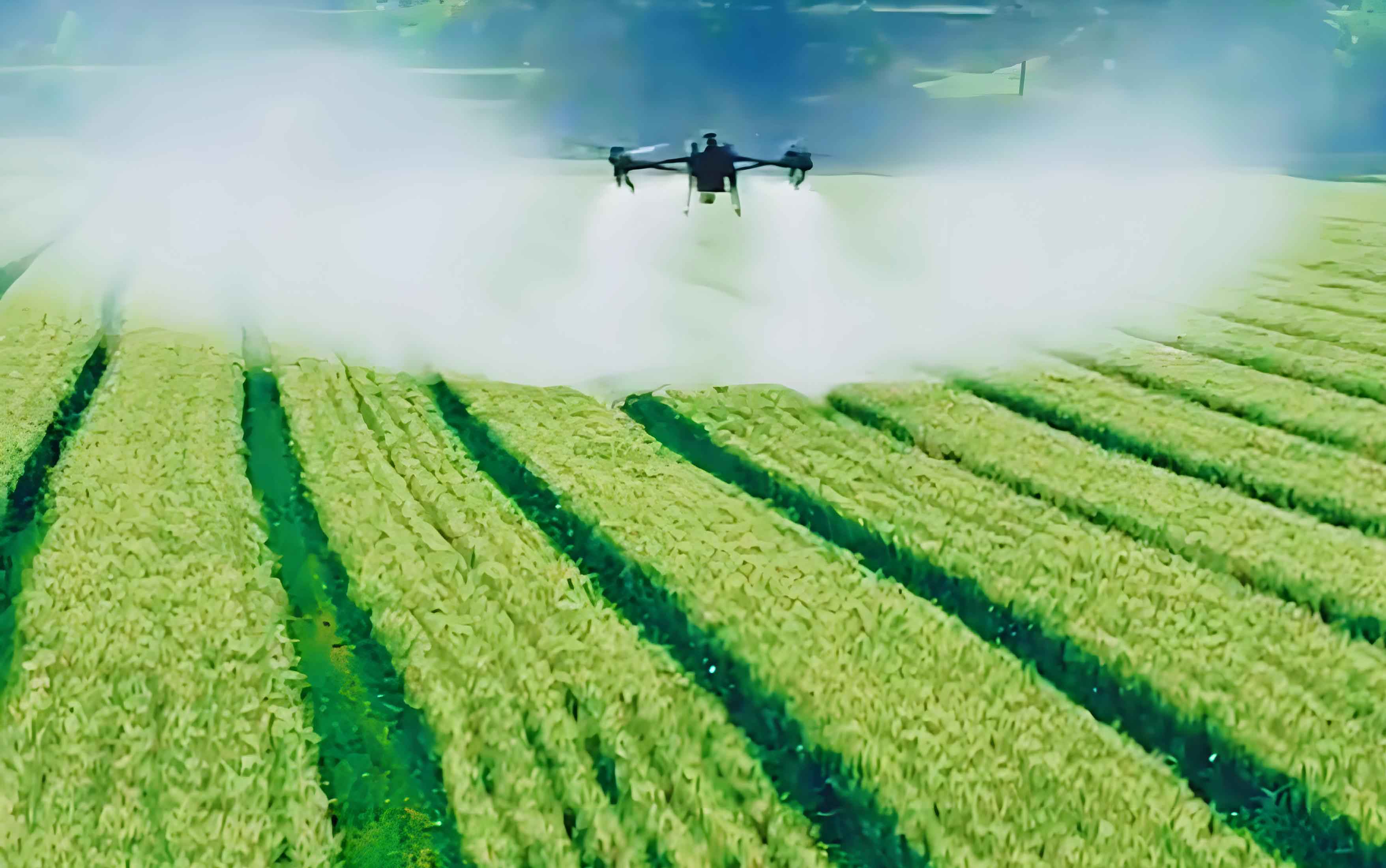
To understand the superiority of agricultural UAVs, it is essential to compare them with traditional pesticide spraying methods. Traditional approaches typically involve human labor or mechanical sprayers that operate at ground level. These methods are often constrained by factors such as field size, crop height, and weather conditions. For instance, manual spraying may cover only small areas per day, requiring significant human effort and increasing the risk of exposure to toxic chemicals. Ground-based machinery, while more efficient, can cause soil compaction and may not reach all parts of the crop canopy evenly. In contrast, agricultural UAVs fly above the fields, providing a bird’s-eye view and enabling uniform spray distribution. The table below summarizes the key differences between traditional methods and agricultural UAVs in wheat pest control:
| Aspect | Traditional Spraying (Manual/Ground) | Agricultural UAV Spraying |
|---|---|---|
| Coverage Area per Day | Limited (e.g., 20-50 acres) | High (e.g., 500-1000 acres) |
| Labor Requirement | High, with physical strain | Low, primarily for monitoring |
| Pesticide Usage | Often excessive due to uneven application | Precise, reducing usage by up to 30% |
| Safety for Operators | Low, due to direct chemical exposure | High, as operators remain distant |
| Adaptability to Terrain | Poor in uneven or flooded fields | Excellent, with aerial maneuverability |
| Weather Dependency | Sensitive to rain and wind | Can operate in milder conditions, including night |
| Cost Efficiency | Lower in long term due to labor and chemical costs | Higher initial investment but lower operational costs |
From this comparison, it is clear that agricultural UAVs offer substantial improvements. However, to quantify these benefits, we can use mathematical models. For example, the efficiency of pesticide application can be expressed as the ratio of area covered to time taken. Let \( E \) represent application efficiency in acres per hour. For traditional methods, \( E_{\text{traditional}} \) is often low due to manual limitations, whereas for agricultural UAVs, \( E_{\text{UAV}} \) is significantly higher. This can be formulated as:
$$E_{\text{UAV}} = \frac{A_{\text{total}}}{t_{\text{flight}} + t_{\text{setup}}}$$
where \( A_{\text{total}} \) is the total area covered, \( t_{\text{flight}} \) is the flight time, and \( t_{\text{setup}} \) is the time for preparation and refilling. In practice, agricultural UAVs can achieve \( E_{\text{UAV}} \) values that are 20 times greater than \( E_{\text{traditional}} \), as observed in field trials. This efficiency gain is a key driver for adopting agricultural UAVs in wheat pest control. Additionally, the precision of agricultural UAVs reduces pesticide waste, which can be modeled using a waste reduction factor \( W \). If \( P_{\text{traditional}} \) is the pesticide amount used traditionally and \( P_{\text{UAV}} \) is the amount used by agricultural UAVs, then:
$$W = \frac{P_{\text{traditional}} – P_{\text{UAV}}}{P_{\text{traditional}}} \times 100\%$$
Studies show that \( W \) can reach 30% or more, highlighting the environmental benefits of agricultural UAVs. These formulas underscore the technical advantages of agricultural UAVs, making them indispensable in modern飞防 strategies.
The advantages of agricultural UAVs in wheat pest control extend beyond mere efficiency. From my experience, these systems enhance overall crop health management through several mechanisms. First, agricultural UAVs improve work safety by eliminating direct human contact with pesticides. In traditional spraying, operators are exposed to chemical drift and residue, leading to health risks such as skin irritation or respiratory issues. With agricultural UAVs, operators control the devices remotely, often from a safe distance, minimizing exposure. This aligns with occupational safety standards and reduces liability for farmers. Second, agricultural UAVs enable precise application, which is crucial for effective pest control. By using GPS and sensor technologies, agricultural UAVs can map fields and adjust spray rates based on pest infestation levels. This targeted approach ensures that pesticides are applied only where needed, reducing chemical runoff and preserving beneficial insects. For instance, in wheat fields affected by fusarium head blight, agricultural UAVs can deliver fungicides directly to the ear zone, maximizing efficacy. Third, agricultural UAVs facilitate night operations, which are optimal for pesticide application due to reduced evaporation and wind. Traditional methods are usually confined to daylight hours, but agricultural UAVs equipped with lighting and navigation systems can operate after sunset, enhancing spray retention and effectiveness. This flexibility is a significant advantage in large-scale farming where time constraints are critical.
Moreover, agricultural UAVs contribute to data collection for integrated pest management (IPM). During flights, agricultural UAVs can capture multispectral images that reveal crop stress, pest hotspots, and disease progression. This data can be analyzed to inform decision-making, such as adjusting spray schedules or identifying resistant pest strains. The integration of agricultural UAVs with IoT platforms allows real-time monitoring, creating a feedback loop for continuous improvement. To illustrate the operational parameters, consider the following table detailing typical specifications of agricultural UAVs used in wheat pest control:
| Parameter | Typical Value for Agricultural UAVs | Impact on Wheat Pest Control |
|---|---|---|
| Flight Altitude | 2-5 meters above crop canopy | Ensures even spray distribution and minimizes drift |
| Spray Swath Width | 4-8 meters | Increases coverage per flight path |
| Payload Capacity | 10-20 liters of pesticide | Determines operational duration and refill frequency |
| Battery Life | 15-30 minutes per charge | Affects total area covered per session |
| Navigation Accuracy | ±1 cm with RTK GPS | Enables precise boundary spraying and overlap control |
| Spray Rate Control | Adjustable from 0.5-2 L/min | Allows customization based on pest severity |
These parameters highlight the sophistication of agricultural UAVs. For example, the spray rate can be dynamically adjusted using formulas based on pest density. If \( D \) represents pest density in units per square meter, and \( R \) is the recommended spray rate in liters per hectare, then the adjusted spray rate \( R_{\text{adj}} \) for an agricultural UAV can be calculated as:
$$R_{\text{adj}} = R \times \left(1 + k \cdot (D – D_{\text{threshold}})\right)$$
where \( k \) is a calibration constant and \( D_{\text{threshold}} \) is the density threshold for intervention. This ensures that agricultural UAVs apply pesticides proportionally to need, optimizing resource use. Furthermore, the flight path planning for agricultural UAVs can be optimized using algorithms that minimize energy consumption and time. Let \( T \) be the total time for covering a field of area \( A \) with a swath width \( w \) and flight speed \( v \). The optimal number of flight lines \( n \) can be derived from:
$$n = \frac{A}{w \cdot L}$$
where \( L \) is the length of the field. By minimizing \( T = \frac{n \cdot L}{v} \), agricultural UAVs achieve efficient operations. These mathematical approaches demonstrate how agricultural UAVs are not just tools but intelligent systems in wheat pest control.
In practical terms, the application of agricultural UAVs in wheat pest control involves several key measures. First, optimizing the use of agricultural UAVs requires careful planning based on pest biology and field conditions. For example, wheat pests like aphids have specific life cycles, and spraying should be timed to target vulnerable stages. Agricultural UAVs can be programmed to fly at optimal times, such as early morning or night, to maximize pesticide adhesion. Additionally, pesticide formulations must be compatible with agricultural UAV spraying systems—this often involves using lower concentrations and adding adjuvants to reduce evaporation and improve coverage. From my observations, agricultural UAVs perform best with water-based solutions that have low viscosity, ensuring smooth flow through nozzles. Second, building a comprehensive database for agricultural UAV operations is crucial for long-term success. This database should include historical pest incidence data, weather patterns, spray records, and crop response metrics. By analyzing this data, farmers can refine their飞防 strategies, predict outbreaks, and evaluate the effectiveness of agricultural UAV interventions. The database can be structured using relational models, with tables linking fields, UAV parameters, and pest counts. For instance, a simple relational schema might include a table for field information, another for UAV flight logs, and a third for pest monitoring results. This enables queries that correlate agricultural UAV usage with pest reduction, providing insights for future seasons.
Third, professional training for agricultural UAV operators is essential to harness the full potential of these systems. Operators need skills in UAV piloting, maintenance, data interpretation, and safety protocols. Training programs should cover topics such as flight planning, emergency procedures, and calibration of spraying equipment. As agricultural UAV technology evolves, continuous education ensures that operators stay updated on best practices. In many regions, certification courses for agricultural UAV pilots are becoming standard, emphasizing the importance of expertise in this domain. Fourth, ensuring safety during agricultural UAV operations is paramount. Pre-flight checks should include battery levels, propeller integrity, and nozzle functionality. Weather conditions must be monitored to avoid flights in strong winds or rain, which could compromise spray quality or cause UAV damage. Furthermore, public safety measures, such as cordoning off spray areas and notifying nearby communities, prevent accidental exposure to pesticides. The integration of fail-safe mechanisms in agricultural UAVs, like automatic return-to-home functions, adds an extra layer of security. These measures collectively enhance the reliability of agricultural UAVs in wheat pest control.
To delve deeper into the technological aspects, agricultural UAVs rely on advanced sensing and control systems. For example, LiDAR or ultrasonic sensors can measure crop height, allowing agricultural UAVs to adjust altitude dynamically for consistent spray deposition. This is particularly useful in wheat fields where plant height varies due to growth stages or soil heterogeneity. The spray deposition pattern can be modeled using computational fluid dynamics (CFD) simulations, but a simplified formula for deposition efficiency \( \eta \) is:
$$\eta = \frac{C_{\text{actual}}}{C_{\text{applied}}} \times 100\%$$
where \( C_{\text{actual}} \) is the concentration of pesticide on the wheat leaves and \( C_{\text{applied}} \) is the concentration sprayed. Agricultural UAVs typically achieve higher \( \eta \) values (e.g., 80-90%) compared to traditional methods (e.g., 50-70%), due to finer droplet sizes and controlled release. Droplet size distribution is another critical factor; smaller droplets improve coverage but may drift more. Agricultural UAVs use nozzles that generate droplets in the range of 100-300 microns, balancing coverage and drift. The relationship between droplet size \( d \) and drift potential \( D_p \) can be expressed as:
$$D_p \propto \frac{1}{d^2}$$
indicating that larger droplets reduce drift. Agricultural UAVs can adjust nozzle settings to optimize \( d \) based on wind conditions, showcasing their adaptability. Additionally, the use of artificial intelligence (AI) in agricultural UAVs is rising. AI algorithms can process imagery from UAV cameras to identify pest species and quantify damage, enabling autonomous decision-making for spray targeting. This represents the next frontier in agricultural UAV applications, where machines not only apply chemicals but also diagnose problems in real-time.
The economic implications of adopting agricultural UAVs in wheat pest control are significant. While the initial investment in agricultural UAVs and supporting infrastructure can be high, the long-term savings from reduced pesticide use, labor costs, and improved yields justify the expense. A cost-benefit analysis can be conducted using net present value (NPV) calculations. Let \( I_0 \) be the initial investment in agricultural UAVs, \( C_t \) the annual costs (including maintenance and batteries), \( B_t \) the annual benefits (from pesticide savings and yield increases), and \( r \) the discount rate. The NPV over \( n \) years is:
$$NPV = -I_0 + \sum_{t=1}^{n} \frac{B_t – C_t}{(1+r)^t}$$
In many cases, NPV becomes positive within 2-3 years, demonstrating the financial viability of agricultural UAVs. Moreover, agricultural UAVs can generate additional revenue through service provision, where farmers hire UAV operators for飞防 tasks. This creates business opportunities in rural areas, fostering economic growth. The table below outlines a simplified economic comparison over a five-year period for a medium-sized wheat farm:
| Year | Traditional Method Costs ($) | Agricultural UAV Method Costs ($) | Benefits from Agricultural UAVs ($) |
|---|---|---|---|
| 1 | 10,000 (labor + pesticides) | 15,000 (UAV purchase + operation) | -5,000 (initial loss) |
| 2 | 10,500 | 3,000 (maintenance + pesticides) | 7,500 (savings) |
| 3 | 11,000 | 3,200 | 7,800 |
| 4 | 11,500 | 3,400 | 8,100 |
| 5 | 12,000 | 3,600 | 8,400 |
This table assumes a gradual increase in traditional costs due to inflation and pest resistance, while agricultural UAV costs stabilize after the initial investment. The cumulative benefits highlight how agricultural UAVs become cost-effective over time. It is important to note that these figures are illustrative; actual values depend on local conditions and scale. Nonetheless, the trend underscores the economic advantage of agricultural UAVs.
Looking ahead, the future of agricultural UAVs in wheat pest control is promising. Innovations in battery technology will extend flight times, allowing agricultural UAVs to cover larger areas without frequent recharging. Solar-powered agricultural UAVs are also under development, which could further reduce operational costs and environmental impact. Additionally, swarm technology, where multiple agricultural UAVs coordinate autonomously, could revolutionize飞防 by enabling simultaneous spraying and monitoring across vast fields. Research is ongoing into biodegradable pesticides that are specifically formulated for aerial application via agricultural UAVs, enhancing sustainability. From a regulatory perspective, governments are increasingly recognizing the value of agricultural UAVs and establishing guidelines for their safe use. Compliance with these regulations will be key to widespread adoption. In my view, agricultural UAVs will become integral to precision agriculture, not just for pest control but for overall crop management, including fertilization, irrigation, and harvest planning. The continuous improvement of sensor technologies will allow agricultural UAVs to provide even more detailed agronomic data, fostering a data-centric farming ecosystem.
In conclusion, the application of agricultural UAVs in wheat pest control represents a transformative advancement in agriculture. Through firsthand experience and analysis, I have highlighted how agricultural UAVs outperform traditional methods in efficiency, safety, precision, and environmental stewardship. The use of tables and formulas has elucidated key aspects, from operational parameters to economic models. Agricultural UAVs enable targeted飞防, reduce pesticide usage, and facilitate data-driven decisions, aligning with global trends towards sustainable farming. As technology evolves, agricultural UAVs will likely become more autonomous and integrated, further enhancing their role in wheat production. For farmers and agronomists, embracing agricultural UAVs is not merely an option but a necessity to meet the challenges of modern agriculture. By investing in these systems and supporting practices like operator training and database management, the agricultural sector can ensure food security while minimizing ecological footprints. Ultimately, agricultural UAVs are paving the way for a smarter, more resilient approach to wheat pest control, benefiting both producers and the planet.