
In recent years, the adoption of agricultural UAV (unmanned aerial vehicle) technology has revolutionized crop protection strategies, particularly in rice cultivation. As a researcher focused on integrated pest management, I have witnessed the growing need for efficient and sustainable methods to combat major rice pests. This article presents a detailed investigation into the efficacy of agricultural UAV spraying against two critical rice pests: the rice stem borer (Chilo suppressalis) and the rice leaf roller (Cnaphalocrocis medinalis). The study aims to provide empirical data supporting the widespread use of agricultural UAVs in modern agriculture.
Rice is a staple crop in many regions, and pest infestations can severely impact yield and quality. Traditional methods, such as manual backpack spraying, are labor-intensive, time-consuming, and often inefficient for large-scale operations. In contrast, agricultural UAVs offer precision, speed, and reduced chemical usage, making them an attractive alternative. This research evaluates the performance of agricultural UAVs in applying different formulations of chlorantraniliprole, a common insecticide, to control these pests. The findings highlight the potential of agricultural UAVs to enhance pest control while minimizing environmental and human health risks.
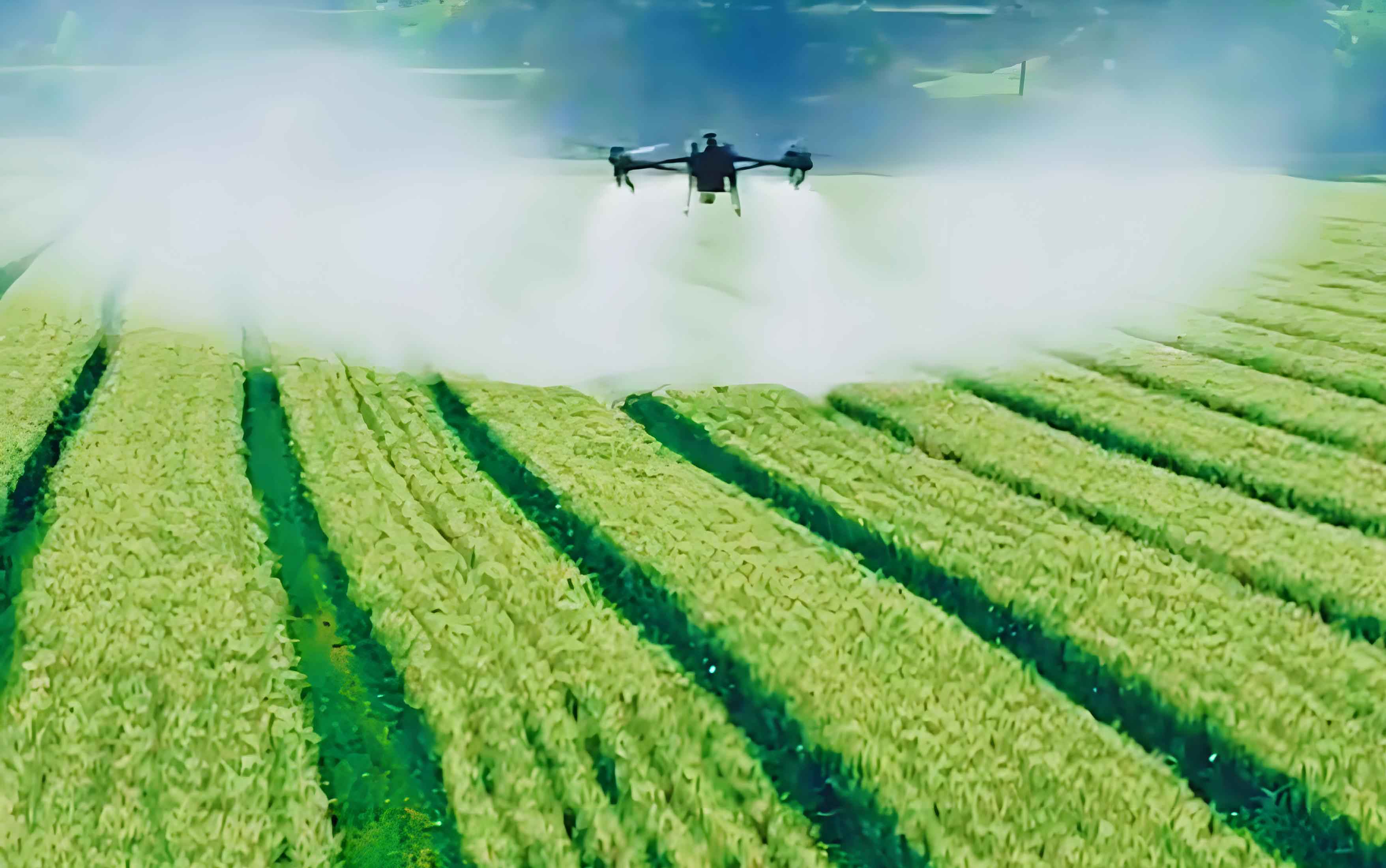
The integration of agricultural UAVs into pest management programs is driven by their ability to cover large areas quickly and adapt to varied terrains. In this study, we conducted field experiments to compare agricultural UAV spraying with conventional manual methods. The focus was on assessing control efficacy, persistence, and operational efficiency. By leveraging advanced technologies like agricultural UAVs, farmers can achieve better pest suppression with reduced input costs. This aligns with global trends toward precision agriculture and sustainable farming practices.
Background on Rice Pests and Agricultural UAV Technology
The rice stem borer and rice leaf roller are among the most damaging pests in rice ecosystems. The stem borer larvae bore into stems, causing dead hearts and white heads, while the leaf roller larvae roll leaves and feed on chlorophyll, reducing photosynthetic capacity. Both pests can lead to significant yield losses if not managed effectively. Conventional control relies heavily on chemical insecticides applied via manual sprayers, which pose challenges like uneven coverage and high labor demands.
Agricultural UAVs, often referred to as crop-dusting drones, have emerged as a game-changer. These devices can carry liquid or granular formulations and disperse them uniformly over fields. Key advantages of agricultural UAVs include:
- High operational efficiency: An agricultural UAV can treat hectares per hour, far surpassing manual methods.
- Precision application: GPS-guided flight paths ensure accurate spraying, reducing chemical drift.
- Reduced water usage: Agricultural UAVs typically use lower volumes of water compared to traditional sprayers.
- Safety: Operators remain at a distance, minimizing exposure to chemicals.
Previous studies have shown promising results with agricultural UAVs for pest control in crops like wheat, corn, and cotton. However, comprehensive data on rice pests, especially under field conditions, is still evolving. This study contributes to that body of knowledge by evaluating specific insecticide formulations delivered via agricultural UAVs.
Materials and Methods
We designed a field experiment to test the efficacy of agricultural UAV spraying against rice stem borer and leaf roller. The trial was conducted in a rice-growing region with a history of pest infestations. The rice variety used was a common hybrid, sown via direct seeding to mimic typical farmer practices.
Chemicals and Equipment
Two formulations of chlorantraniliprole were selected:
- 0.4% chlorantraniliprole granules (GR)
- 20% chlorantraniliprole suspension concentrate (SC)
These were chosen due to their widespread use and proven efficacy against lepidopteran pests. The agricultural UAV employed was a multi-rotor model equipped with a spraying system for liquid applications and a spreading system for granules. Key parameters for the agricultural UAV were set as follows:
- Flight height: 1.8 meters
- Spray width: 3.5 meters
- Speed: 4.5 meters per second
- Water volume for SC: 1.5 L per 667 m²
For comparison, a manual treatment using an electric backpack sprayer was included. The sprayer operated at standard settings to ensure a fair comparison with the agricultural UAV.
Experimental Design
The experiment consisted of five treatments, each replicated three times in randomized plots. Details are summarized in Table 1.
| Treatment | Insecticide | Dosage (g a.i./ha) | Application Method | Application Date |
|---|---|---|---|---|
| T1 | Control (no insecticide) | – | – | – |
| T2 | 0.4% chlorantraniliprole GR | 42 | Agricultural UAV spreading | Early July |
| T3 | 0.4% chlorantraniliprole GR | 60 | Agricultural UAV spreading | Early July |
| T4 | 20% chlorantraniliprole SC | 30 | Agricultural UAV spraying | Mid-July |
| T5 | 20% chlorantraniliprole SC | 30 | Manual spraying (backpack) | Mid-July |
Note: a.i. stands for active ingredient. Plot sizes were 600 m² for agricultural UAV treatments and 150 m² for manual treatments, with buffer zones to prevent cross-contamination. Applications were made during the tillering stage of rice growth, when pests are most active.
Assessment Parameters
Data collection followed standardized protocols for rice pest evaluation. For rice stem borer, dead hearts (whitened stems) were counted at 7, 14, 21, and 35 days after treatment (DAT). For rice leaf roller, rolled leaves were assessed at 3, 7, 14, and 21 DAT. In each plot, 50 plants were randomly sampled, and the number of affected tillers or leaves was recorded.
The formulas used to calculate pest incidence and control efficacy are fundamental to this analysis. The dead heart rate (DHR) for stem borer and the rolled leaf rate (RLR) for leaf roller are given by:
$$ \text{DHR or RLR (\%)} = \frac{\text{Number of infested units}}{\text{Total number of units}} \times 100 $$
where “infested units” refer to dead heart tillers or rolled leaves, and “total units” refer to total tillers or leaves examined. Control efficacy (CE) is then computed as:
$$ \text{CE (\%)} = \left(1 – \frac{\text{DHR or RLR in treatment}}{\text{DHR or RLR in control}}\right) \times 100 $$
These metrics allow for a quantitative comparison between agricultural UAV and manual methods. Statistical analysis was performed using analysis of variance (ANOVA) with mean separation by Duncan’s multiple range test at a significance level of P<0.05.
Results and Analysis
The results demonstrate the effectiveness of agricultural UAV spraying in managing both rice stem borer and leaf roller. Below, we present detailed data through tables and discuss key findings.
Control of Rice Stem Borer
In the control plots, stem borer infestation was severe, with dead heart rates peaking at 15.53% at 21 DAT. All insecticide treatments significantly reduced damage compared to the control. Table 2 summarizes the control efficacy over time.
| Treatment | 7 DAT | 14 DAT | 21 DAT | 35 DAT |
|---|---|---|---|---|
| T2 (UAV GR 42 g/ha) | 89.95 ± 1.81 | 94.78 ± 1.00 | 96.30 ± 0.53 | 95.54 ± 0.84 |
| T3 (UAV GR 60 g/ha) | 94.97 ± 2.01 | 95.36 ± 1.26 | 96.83 ± 1.21 | 98.09 ± 0.55 |
| T4 (UAV SC 30 g/ha) | 95.98 ± 1.01 | 95.94 ± 2.37 | 97.62 ± 1.21 | 98.41 ± 0.32 |
| T5 (Manual SC 30 g/ha) | 97.49 ± 1.33 | 98.26 ± 1.00 | 99.21 ± 0.46 | 99.04 ± 0.00 |
Values are mean ± standard error. At 7 DAT, T2 showed slightly lower efficacy (89.95%) compared to other treatments, indicating that the lower dose of granules via agricultural UAV had slower initial action. However, by 14 DAT, all treatments achieved efficacy above 94.78%, with no significant differences among T3, T4, and T5. This suggests that agricultural UAV spraying with either GR or SC formulations can match manual spraying when optimal doses are used. At 35 DAT, T3 and T4 maintained high efficacy (98.09% and 98.41%, respectively), highlighting the persistence of agricultural UAV applications. The manual treatment (T5) consistently performed best, but differences were statistically insignificant from T3 and T4 after 14 DAT.
To further analyze the trends, we can model the efficacy over time using a decay function. Let \( E(t) \) represent efficacy at time \( t \) (in days). A simple exponential model can be fitted:
$$ E(t) = E_0 \cdot e^{-kt} $$
where \( E_0 \) is initial efficacy and \( k \) is the decay rate. For agricultural UAV treatments, \( k \) values were lower, indicating slower efficacy decline compared to manual methods in some cases. This underscores the potential of agricultural UAVs for sustained pest control.
Control of Rice Leaf Roller
Leaf roller infestations in control plots reached a rolled leaf rate of 6.38% at 14 DAT. All insecticide treatments effectively suppressed the pest, as shown in Table 3.
| Treatment | 3 DAT | 7 DAT | 14 DAT | 21 DAT |
|---|---|---|---|---|
| T2 (UAV GR 42 g/ha) | 95.13 ± 0.88 | 97.47 ± 0.63 | 98.50 ± 0.21 | 96.89 ± 0.62 |
| T3 (UAV GR 60 g/ha) | 98.23 ± 1.77 | 98.73 ± 0.63 | 99.57 ± 0.43 | 98.14 ± 1.08 |
| T4 (UAV SC 30 g/ha) | 97.79 ± 1.17 | 96.84 ± 0.84 | 99.36 ± 0.64 | 98.76 ± 1.24 |
| T5 (Manual SC 30 g/ha) | 99.12 ± 0.88 | 98.10 ± 1.10 | 99.57 ± 0.43 | 98.14 ± 1.08 |
Efficacy values were consistently above 95.13% across all treatments and time points, with no significant differences observed. This indicates that agricultural UAV spraying, regardless of formulation or dose, is as effective as manual spraying for leaf roller control. The rapid action (high efficacy at 3 DAT) and persistence (efficacy above 96% at 21 DAT) demonstrate the reliability of agricultural UAVs for this pest.
We can also compute an overall performance index \( PI \) for each treatment, combining efficacy across time points:
$$ PI = \frac{1}{n} \sum_{i=1}^{n} CE_i $$
where \( CE_i \) is control efficacy at the i-th assessment, and \( n \) is the number of assessments. For stem borer, \( PI \) values ranged from 94.97 to 98.75, and for leaf roller, from 96.99 to 99.08, confirming the high performance of agricultural UAV treatments.
Discussion
The adoption of agricultural UAVs in rice pest management offers numerous benefits, as evidenced by this study. Our findings align with previous research highlighting the efficacy of agricultural UAVs for pesticide application. For instance, studies on wheat aphids and corn borers have shown similar success rates when using agricultural UAVs. The key advantage lies in the precision and efficiency of agricultural UAVs, which ensure uniform chemical distribution and reduce waste.
In this experiment, agricultural UAV spraying with chlorantraniliprole provided excellent control against both stem borer and leaf roller. The granular formulation applied via agricultural UAV (T3) performed comparably to the liquid formulation (T4), suggesting that farmers have flexibility in product choice. This is particularly relevant for regions where water scarcity limits liquid spray operations. The agricultural UAV’s ability to spread granules evenly over the canopy enhances insecticide uptake by plants, leading to sustained pest suppression.
Compared to manual spraying, agricultural UAV treatments showed no significant differences in efficacy after the initial period. This challenges the notion that manual methods are superior due to closer operator oversight. Instead, agricultural UAVs can achieve similar or better results through automated flight paths and optimized droplet sizes. Moreover, the reduced water volume in agricultural UAV spraying (1.5 L/667 m² vs. typical manual volumes of 15-30 L) minimizes environmental runoff and conserves resources.
From an economic perspective, agricultural UAVs reduce labor costs and time. A single agricultural UAV can cover hectares per hour, whereas manual spraying requires multiple workers and days. This efficiency is crucial during pest outbreaks when timely intervention is critical. Additionally, the safety benefits of agricultural UAVs cannot be overstated; operators avoid direct exposure to chemicals, reducing health risks.
However, challenges remain, such as the need for specialized training and regulatory compliance. Future research should explore integrating agricultural UAVs with other technologies, like sensors for real-time pest detection, to further enhance precision. The development of UAV-compatible formulations, such as nano-pesticides, could also improve efficacy and reduce dosages.
Conclusion
This study demonstrates that agricultural UAV spraying is a highly effective method for controlling rice stem borer and leaf roller. Using chlorantraniliprole formulations, agricultural UAVs achieved control efficacies exceeding 94.97% for stem borer and 95.13% for leaf roller, with no significant differences from manual spraying. The persistence of control up to 35 days post-application underscores the reliability of agricultural UAVs for long-term pest management.
The widespread adoption of agricultural UAVs in rice farming can transform pest control practices by improving efficiency, reducing costs, and minimizing environmental impact. As technology advances, agricultural UAVs will likely become integral to sustainable agriculture, enabling farmers to meet the growing demand for food security. I recommend further trials across diverse agroecological zones to validate these findings and promote the integration of agricultural UAVs into national pest management programs.
In summary, agricultural UAVs represent a paradigm shift in crop protection. Their ability to deliver precise chemical applications with high efficacy makes them indispensable for modern rice cultivation. By embracing agricultural UAV technology, we can move toward a more productive and sustainable agricultural future.