
As urbanization accelerates globally, the importance of urban greening has gained widespread recognition. Traditional methods in urban greening often rely heavily on manual labor, resulting in high costs and inefficiencies that hinder the expansion and quality improvement of green spaces. In this context, the advent of advanced technologies, particularly small agricultural UAVs (unmanned aerial vehicles), offers transformative potential. From my perspective as a professional in this field, I believe that integrating these drones into urban greening initiatives can significantly reduce labor costs, enhance operational efficiency, and minimize human errors, thereby boosting overall economic benefits. This article delves into the application prospects of small agricultural UAVs in urban greening, examining their structure, advantages, future potentials, challenges, and strategies for improvement.
The foundation of any effective technology lies in its design. Small agricultural UAVs are highly integrated systems, packing numerous components into a compact frame to ensure stability and reliability. Typically, these drones consist of a fuselage frame, internal motors, electronic speed controllers, propeller systems, integrated batteries, landing gear and gimbal systems, remote control modules, and control units. These elements work in tandem to create a precise electronic instrument capable of performing complex tasks in urban environments. To better understand, consider the following table summarizing key components and their functions:
| Component | Function | Material/Example |
|---|---|---|
| Fuselage Frame | Carrier for all systems; provides structural integrity | Carbon fiber for lightweight strength |
| Internal Motors | Drive propellers or fans for lift and thrust | Brushless DC motors |
| Electronic Speed Controllers | Regulate motor speed based on signals | PWM-based controllers |
| Propeller Systems | Convert motor power into aerodynamic lift | Multi-blade designs for efficiency |
| Integrated Batteries | Supply electrical energy from chemical storage | Lithium-polymer (LiPo) batteries |
| Landing Gear & Gimbal | Support during landing; mount cameras or tools | Adjustable carbon fiber legs |
| Remote Control Modules | Receive wireless signals for operation | RF or Bluetooth transceivers |
| Control Units | Process sensor data for stable flight | IMU sensors and flight controllers |
This intricate design enables the small agricultural UAV to operate efficiently in varied urban settings. For instance, the fuselage’s lightweight yet robust construction allows it to withstand minor impacts, which is crucial in densely populated areas. Moreover, the integration of advanced sensors facilitates autonomous functions, reducing the need for constant manual control. In my experience, the reliability of these components directly impacts the drone’s performance in greening tasks—any failure can lead to downtime and increased costs.
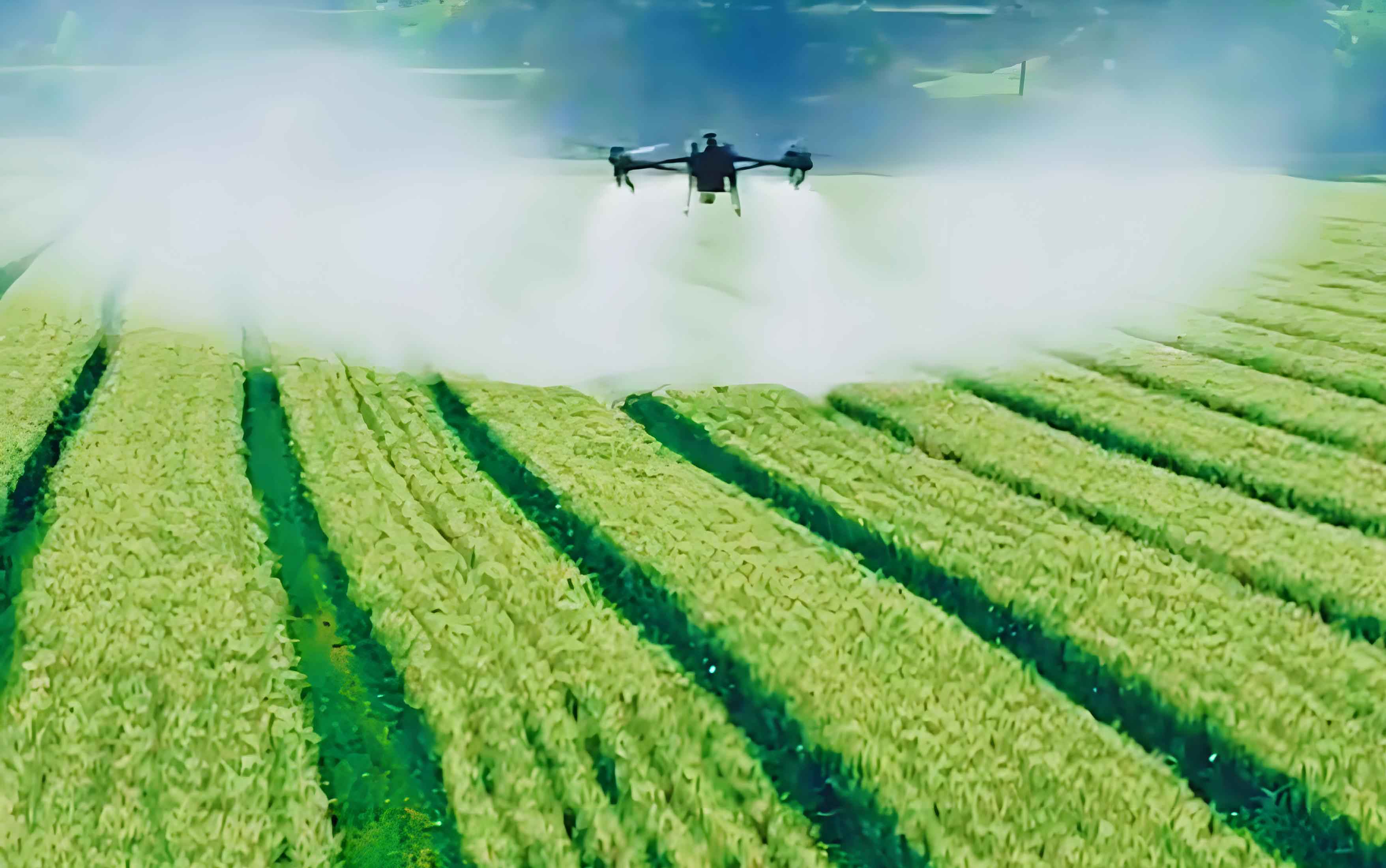
When comparing small agricultural UAVs to traditional methods, their advantages in urban greening are manifold. Firstly, their aerial capability allows them to hover above green spaces, performing tasks like spraying or debris removal without ground-based obstacles. This not only improves efficiency but also ensures uniform coverage, which is often challenging with manual approaches. Secondly, these drones operate contactlessly, minimizing mechanical damage to plants—a common issue with heavy machinery. From an economic standpoint, a single operator can manage multiple drones, drastically cutting labor expenses. In fact, I’ve observed that one small agricultural UAV can replace up to 20 workers in spraying operations, highlighting its productivity. Additionally, the precision of drone spraying reduces chemical runoff, lowering environmental pollution. This aligns with sustainable urban development goals, making agricultural UAVs a valuable tool for modern cities.
To quantify these benefits, consider the efficiency formula for spraying coverage. The area covered \(A\) by a small agricultural UAV can be expressed as:
$$A = v \times w \times t$$
where \(v\) is the drone’s velocity (in m/s), \(w\) is the effective spray width (in meters), and \(t\) is the operation time (in seconds). For a typical small agricultural UAV, \(v = 5 \, \text{m/s}\), \(w = 3 \, \text{m}\), and \(t = 3600 \, \text{s}\) (1 hour), yielding \(A = 5 \times 3 \times 3600 = 54,000 \, \text{m}^2\) per hour. In contrast, manual spraying might cover only \(500 \, \text{m}^2\) per hour per person, underscoring the drone’s superiority. Furthermore, the uniformity of spray deposition \(U\) can be modeled using a coefficient of variation:
$$U = 1 – \frac{\sigma}{\mu}$$
where \(\sigma\) is the standard deviation of droplet density and \(\mu\) is the mean density. Drones typically achieve \(U > 0.9\), ensuring even application, while manual methods often fall below \(0.7\). Such mathematical insights reinforce why agricultural UAVs are gaining traction in urban greening.
Looking ahead, the application prospects for small agricultural UAVs in urban greening are vast and multifaceted. In planning and design, drones equipped with测绘 equipment can conduct detailed surveys of proposed green areas. They capture high-resolution imagery and topographic data, enabling accurate mapping of terrain, existing structures, and underground utilities through non-invasive means. This enhances the precision of绿化 designs, reducing the risk of conflicts with urban infrastructure. I foresee that future integrations with AI will allow drones to generate 3D models automatically, streamlining the planning process. For example, a drone can scan a park area and identify optimal planting zones based on sunlight exposure and soil moisture, all while avoiding buried pipes.
In maintenance and养护, agricultural UAVs excel at tasks like pesticide spraying, fertilization, and irrigation. Their ability to fly at consistent speeds ensures uniform distribution of agents, improving plant health. Moreover, the downdraft from propellers helps penetrate dense foliage, reaching hidden pests or diseases. This is particularly useful in urban forests or vertical gardens, where access is limited. From my observations, drones can reduce chemical usage by up to 30% compared to traditional methods, thanks to targeted application. The table below summarizes key maintenance applications:
| Application | Description | Benefits |
|---|---|---|
| Pesticide Spraying | Precise delivery of insecticides/fungicides | Reduces environmental impact; increases efficiency |
| Fertilization | Even distribution of nutrients | Enhances plant growth; minimizes waste |
| Irrigation Monitoring | Using sensors to assess water needs | Conserves water; prevents overwatering |
| Disease Detection | Multispectral imaging for early signs | Enables proactive treatment; saves costs |
Resource inventory and统计 represent another promising area. Drones can rapidly survey绿化 resources, collecting data on tree species, health status, and spatial distribution. This information populates databases that support decision-making for urban forestry management. For instance, a drone fleet can map an entire city’s green cover in weeks, a task that would take months manually. I envision that integrating IoT sensors with agricultural UAVs will enable real-time monitoring, allowing authorities to respond quickly to issues like pest outbreaks or drought stress.
In outreach and宣传, small agricultural UAVs offer unique opportunities. By capturing aerial footage of绿化 projects, they can create engaging content that raises public awareness about urban ecology. High-quality videos and photos from drone perspectives highlight the beauty and scale of green initiatives, fostering community support. In my work, I’ve used drone imagery to showcase before-and-after transformations of degraded areas, which helped secure funding for further projects. Thus, the role of agricultural UAVs extends beyond operational tasks to communication and advocacy.
Despite these bright prospects, several challenges hinder the widespread adoption of small agricultural UAVs in urban greening. Firstly, there is a lack of standardized regulations for drone manufacturing, operation, and safety. Inconsistent policies across regions create confusion and increase risks, such as mid-air collisions or privacy violations. Secondly, operator skills are often inadequate; flying an agricultural UAV requires technical proficiency, which is scarce due to limited training programs. I’ve encountered situations where poor piloting led to accidents, damaging both the drone and绿化 assets. Thirdly, the service economy for agricultural UAVs remains underdeveloped, with low profit margins and high staff turnover. This instability affects the quality and reliability of绿化 services. Additionally, the high upfront cost of drones—often exceeding $10,000 per unit—deters many urban绿化 teams, especially without insurance options to mitigate financial risks. Lastly, the range of compatible chemicals for drone spraying is limited, restricting their utility in specialized treatments.
To address these issues and enhance future applications, I propose a multi-pronged strategy. Training and certification programs must be established to improve飞行 skills. Governments and industry bodies should collaborate on standardized curricula, covering aspects like navigation, maintenance, and safety protocols. For example, a certification exam could include practical tests on spraying accuracy in simulated urban environments. Moreover, research into施药 technologies is crucial. Developing new formulations tailored for agricultural UAVs, such as ultra-low-volume concentrates, can expand their applicability. The effectiveness of a spray \(E\) can be optimized by adjusting droplet size \(d\) and release height \(h\), as given by:
$$E = k \cdot \frac{1}{d^2} \cdot e^{-h/H}$$
where \(k\) is a constant and \(H\) is a scaling factor. By experimenting with these parameters, we can achieve better adhesion and coverage, reducing chemical waste.
Cost reduction and quality improvement are also vital. Advances in battery technology and mass production can lower drone prices. For instance, using solid-state batteries could extend flight times while reducing weight. Additionally, implementing insurance schemes for agricultural UAVs would encourage adoption by mitigating financial losses from accidents. Policymakers could subsidize such programs to support绿化 initiatives. Finally, fostering innovation through public-private partnerships can accelerate the development of smart features, like autonomous swarming for large-scale operations. I believe that by tackling these challenges, small agricultural UAVs will become indispensable in urban greening.
In conclusion, the integration of small agricultural UAVs into urban greening holds immense promise. From planning and maintenance to resource management and public engagement, these drones offer efficiency, precision, and cost-effectiveness. While hurdles like regulatory gaps and high costs exist, focused efforts on training, research, and policy can overcome them. As cities continue to grow, leveraging technology like agricultural UAVs will be key to creating sustainable, vibrant green spaces. I am optimistic that with continued innovation, the future will see widespread adoption of these tools, transforming urban landscapes for the better. The journey ahead requires collaboration among technologists, urban planners, and communities, but the potential rewards—healthier environments and resilient cities—make it a worthwhile pursuit.