
From the vantage point of hands-on field application and promotion, the integration of agricultural UAV technology into hybrid rice seed production represents a paradigm shift in agricultural management. As an implement deeply involved in this transition, I have witnessed firsthand how these sophisticated tools have evolved from novel gadgets to indispensable assets on modern seed farms. The core of this transformation lies not just in replacing manual labor but in redefining the precision, efficiency, and scope of critical agronomic operations.
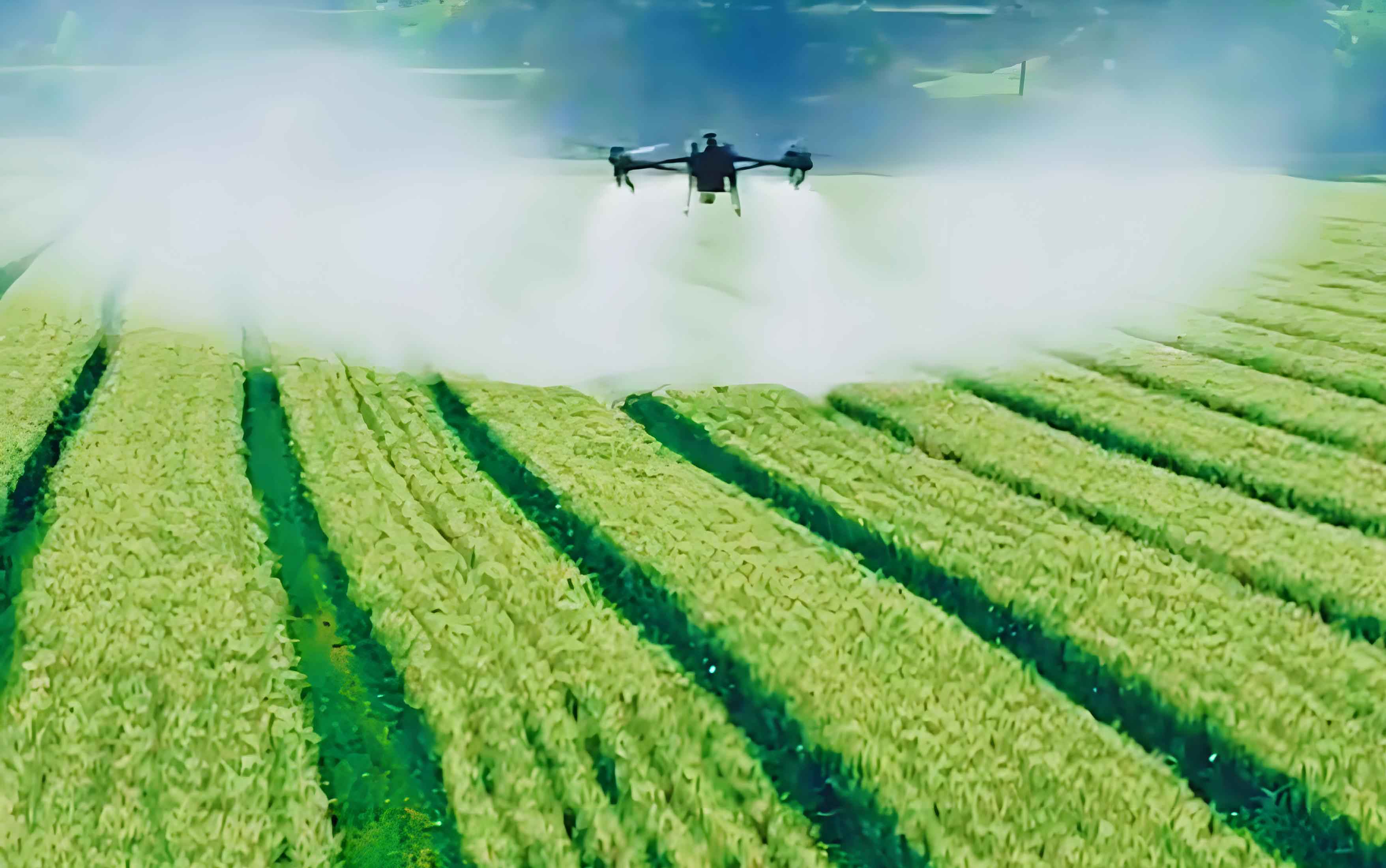
The modern agricultural UAV is characterized by several key attributes that make it uniquely suited for the complex terrain and delicate requirements of seed production. These platforms are typically electric multi-rotor systems, prized for their compact size, lightweight design, and exceptional maneuverability. Advanced models feature centimeter-level RTK positioning for flawless route execution, intelligent obstacle avoidance systems, and automated flight planning software that allows a single operator to manage multiple units simultaneously. This technological foundation is crucial for operations in the fragmented and often sloped fields typical of hybrid rice seed growing regions.
Systematic Application in the Seed Production Cycle
The application of agricultural UAV technology permeates the entire hybrid rice seed production cycle. Its use extends far beyond simple pesticide application, encompassing a systematic approach to crop management across distinct phenological stages.
1. Precision Plant Protection Across Growth Stages
Phytosanitary control is the most established use case. The parameters for agricultural UAV operations must be meticulously adjusted for each growth phase to optimize droplet deposition, coverage, and penetration, ensuring effective pest and disease management while minimizing chemical usage.
| Growth Stage | Primary Targets | Recommended UAV Parameters | Key Agronomic Objective |
|---|---|---|---|
| Seedling Revival | Stem borers, Planthoppers, Blast | Spray Volume: 7.5-12 L/ha Height: ~2.0 m Speed: 8-10 m/s Droplet Size: 100-150 μm |
Establish healthy stand; uniform coverage on sparse canopy. |
| Tillering | Stem borers, Planthoppers, Blast | Spray Volume: 15-18 L/ha Height: ~1.5 m Speed: 6-8 m/s Droplet Size: 100-150 μm |
Control early infestations; ensure penetration into developing canopy. |
| Booting | Leaf rollers, Planthoppers, Sheath Blight, False Smut | Spray Volume: >18 L/ha Height: 2.0-2.5 m Speed: ≤ 5 m/s Droplet Size: 100-150 μm |
Protect the developing panicle; achieve deep canopy penetration. |
| Flowering | Stem borers, Planthoppers, Sheath Blight, False Smut | Spray Volume: >22.5 L/ha Height: ≥ 2.5 m Speed: 4-5 m/s Droplet Size: >150 μm |
Safe application during pollination; avoid physical damage to flowers from downdraft. |
The operational efficiency of an agricultural UAV for spraying can be modeled to understand its field capacity. The effective field work rate (FWR) in hectares per hour is given by:
$$
\text{FWR} = \frac{Q \times \eta}{V \times 10}
$$
Where:
$Q$ is the flow rate of the spray system (liters/minute),
$\eta$ is the efficiency coefficient (accounting for turns, loading, typically 0.7-0.8),
$V$ is the application volume (liters/hectare),
and the factor 10 converts liters/min·ha to hectares/hour for a standard calculation. For an agricultural UAV with a flow rate of 2 L/min applying 15 L/ha, the theoretical FWR is approximately 0.8-0.96 ha/hr. The droplet coverage density ($D_c$ in droplets/cm²) is a critical measure of efficacy, calculated from the application rate and droplet spectrum:
$$
D_c = \frac{V \times 10^9}{A_d \times 10^4}
$$
Where $A_d$ is the average volume of a single droplet in nanoliters, derived from the droplet size. This quantifies the precision unattainable with conventional sprayers.
2. Foliar Nutrition and Growth Regulation
A pivotal application in hybrid rice seed production is the aerial application of Gibberellic Acid (GA3). This plant growth regulator is essential for promoting panicle exertion and synchronizing the flowering of male (pollen parent) and female (seed parent) lines. The agricultural UAV executes this task with remarkable precision. The standard protocol involves two applications: the first at approximately 10% panicle emergence, and the second 24 hours later. A typical dose is 30 grams of GA3 per hectare. The operation must be conducted in the early morning or late evening under high humidity conditions, with a shallow water layer maintained in the field to maximize absorption. The agricultural UAV parameters mirror those of the flowering-stage spray to ensure gentle, even coverage without damaging the delicate reproductive structures.
3. Mechanized Pollination Assistance
Perhaps the most innovative and challenging application is using the agricultural UAV for assisted pollination. Traditional manual rope-pulling is labor-intensive and time-sensitive. The UAV method utilizes the controlled downdraft from the rotors to disturb the male panicles, releasing pollen clouds that drift over the female line. This is typically applied in specific planting configurations, such as wide-row layouts. Operations are confined to a specific daily window (e.g., 10:30-11:30 AM) when humidity drops, temperatures are optimal (around 30°C), and the male line enters peak anthesis. The UAV, often carrying only water for optimal weight and flight time, flies precisely over the male rows at a low speed (~4.5 m/s) and set height (~2.5 m). This process is repeated at 20-30 minute intervals for 8-10 consecutive days. The physics of pollen dispersal via UAV downdraft can be simplified as enhancing the natural wind vector ($\vec{W}$) with a localized, forced vertical air velocity ($\vec{V_d}$) to create a resultant pollen trajectory vector ($\vec{P}$):
$$
\vec{P} = \vec{W} + k\vec{V_d}
$$
Where $k$ is an efficiency factor dependent on UAV design, flight parameters, and crop architecture. This represents a significant step towards full mechanization of the seed production process.
A Quantitative Analysis of Advantages
The adoption of agricultural UAV technology confers a multifaceted advantage profile, measurable in terms of input savings, efficacy, and safety.
| Performance Metric | Agricultural UAV | Traditional Knapsack Sprayer | Improvement / Advantage |
|---|---|---|---|
| Work Rate | 0.8 – 1.2 ha/hour | 0.05 – 0.1 ha/hour | 10x to 20x faster |
| Water Consumption | 15 – 30 L/ha | 300 – 600 L/ha | Saves 90-95% |
| Chemical Utilization | Optimized dose via precision | Higher volume, prone to waste | Reduces usage by 15-30% |
| Operator Safety | Remote operation, no exposure | Direct contact, dermal exposure risk | Eliminates poisoning risk |
| Canopy Penetration | Enhanced by downdraft vortex | Relies on pressure & spray angle | Superior lower-leaf coverage |
| Terrain Accessibility | Excellent (flies over obstacles) | Poor (requires physical access) | Enables treatment of all field areas |
The economic benefit can be summarized by a simplified operational benefit function $B$ per hectare:
$$
B = (S_L + S_C + S_W) – (C_{dep} + C_{bat} + C_{lab})
$$
Where:
$S_L$ = Savings from reduced labor costs,
$S_C$ = Savings from reduced chemical costs,
$S_W$ = (Negligible) savings from water,
$C_{dep}$ = UAV depreciation cost per ha,
$C_{bat}$ = Battery charging/operation cost per ha,
$C_{lab}$ = Skilled pilot cost per ha.
In practice, the sum of savings $S$ significantly outweighs the specialized costs $C$ at scale, making the agricultural UAV operation economically viable and attractive.
Operational Challenges and Mitigation Strategies
Despite the clear advantages, the effective deployment of agricultural UAV systems is not without its challenges. Acknowledging and addressing these is key to sustainable integration.
| Challenge Category | Specific Issue | Practical Mitigation Strategy |
|---|---|---|
| Economic & Logistic | High initial capital investment. | Leverage government subsidy programs; promote cooperative or service-model ownership. |
| Technical | Limited flight endurance (10-15 min/battery). | Deploy multiple battery packs with fast field-charging stations; optimize flight paths to minimize non-spray time. |
| Technical | Limited payload capacity (20-40L). | Establish efficient field reloading stations with pre-mixed solutions; use concentrated formulations. |
| Human Resource | Need for highly skilled pilots/operators. | Invest in structured training and certification programs covering agronomy, aviation, and data management. |
| Agronomic | Risk of crop damage from downdraft (e.g., during flowering). | Strictly adhere to recommended flight heights and speeds for each growth stage; avoid hovering directly over fragile canopies. |
| Environmental | Potential spray drift to non-target areas. | Operate in optimal weather conditions (low wind); use adjuvants to reduce drift; employ boundary zone mapping in flight software. |
Conclusion and Future Trajectory
The journey of the agricultural UAV from an experimental tool to a cornerstone of modern hybrid rice seed production is a testament to the power of precision agritech. Its ability to perform targeted pesticide application, foliar feeding, and even assisted pollination with unmatched efficiency and safety has redefined operational paradigms. The quantifiable benefits in resource savings, application efficacy, and labor safety present a compelling case for wider adoption. The future lies in continued technological refinement—increasing battery energy density, enhancing AI for real-time crop health assessment, and improving swarm coordination for large-scale operations. Furthermore, the integration of agricultural UAV data with farm management information systems will unlock true data-driven decision-making, optimizing every input for maximum seed quality and yield. The path forward is clear: the intelligent, precise, and sustainable management of our seed production systems will be increasingly orchestrated by these autonomous aerial platforms, ensuring food security and agricultural resilience.