
From my vantage point working directly in the field of agricultural mechanization, the advent and integration of the agricultural drone represent one of the most significant shifts in modern farming practices. The transition from traditional, labor-intensive methods to precise, aerial application is not merely an incremental improvement; it is a fundamental rethinking of plant protection. This account draws from extensive observation and analysis of pilot operations to dissect the profound impact, the lingering challenges, and the immense potential of this technology.
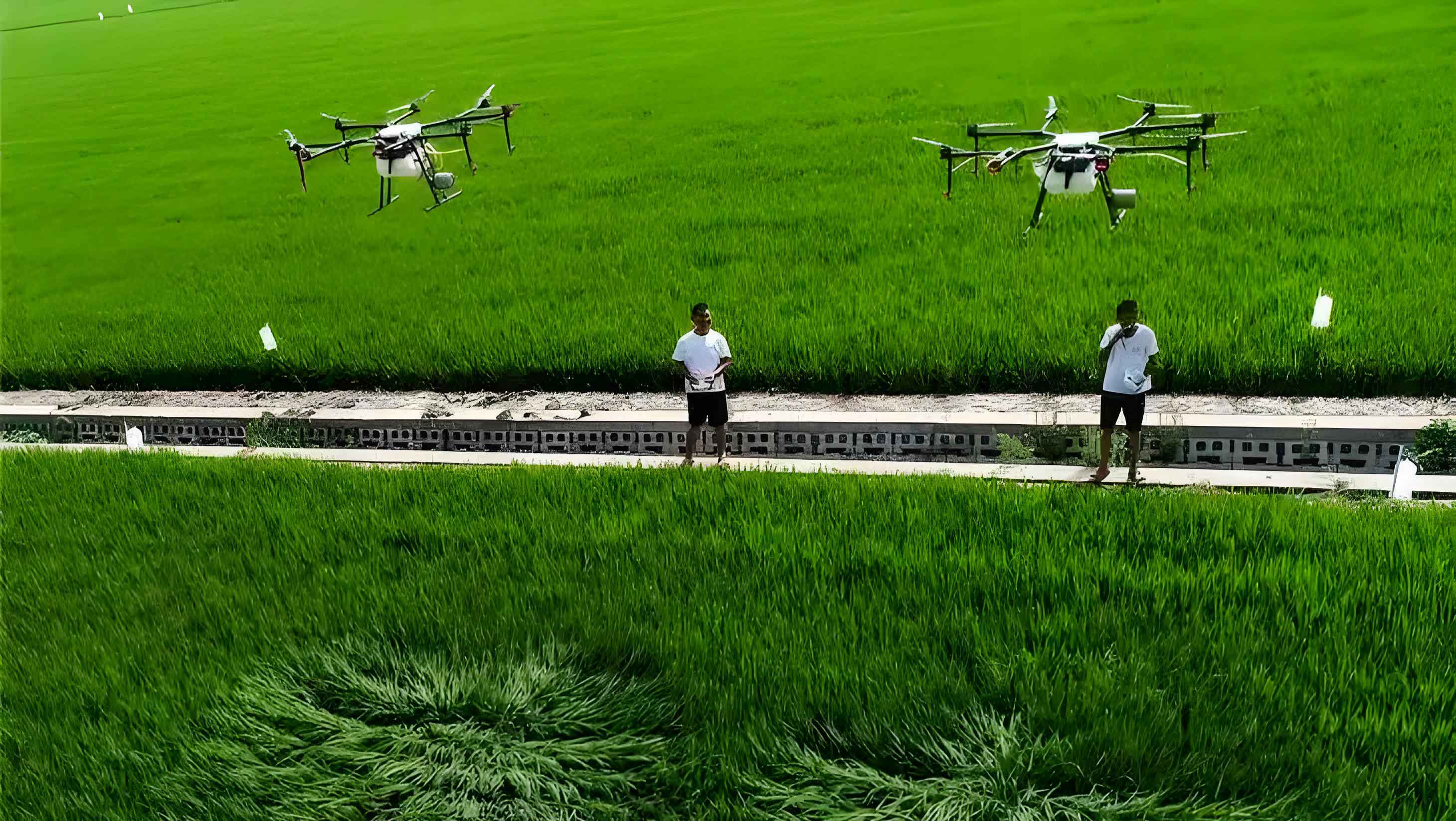
The foundational context for this revolution is the ongoing consolidation and modernization of farmland. Large-scale, contiguous fields managed by cooperatives and agribusinesses have created the perfect canvas for the agricultural drone. These entities demand efficiency, uniformity, and scalability—qualities that ground-based machinery often struggles to deliver, especially in sensitive growth stages or challenging terrain. The traditional paradigm of manual backpack spraying or even tractor-mounted sprayers is increasingly seen as a bottleneck, both economically and logistically.
Technical Superiority and Operational Analysis
The core advantage of the agricultural drone lies in its synthesis of precision, speed, and intelligence. Let us quantify this superiority. Traditional manual spraying might achieve a rate of 0.5 hectares per hour. A modern high-clearance sprayer can cover 20-25 hectares per day. In contrast, a single agricultural drone, piloted by a skilled operator, can consistently cover 40 hectares in a single day. This represents a 40 to 80-fold increase in productivity compared to manual labor.
This efficiency, \( E \), can be modeled as a function of swath width \( w \), flight speed \( v \), and operational time \( t \), accounting for a logistical efficiency factor \( \eta \) (for battery swaps, refilling):
$$ E = \eta \cdot w \cdot v \cdot t $$
For a typical agricultural drone with a 5-meter swath, flying at 5 m/s, operating for 6 hours at an \(\eta\) of 0.7, the daily coverage is:
$$ E = 0.7 \times 5 \, \text{m} \times 5 \, \text{m/s} \times (6 \times 3600 \, \text{s}) = 0.7 \times 5 \times 5 \times 21600 \, \text{m}^2 = 378,000 \, \text{m}^2 \approx 37.8 \, \text{hectares} $$
This mathematical model aligns closely with observed field data.
Beyond raw speed, precision is paramount. Advanced agricultural drone systems employ RTK or PPK GNSS for centimeter-level positioning. This allows for exact flight path repetition and, crucially, the creation of exclusion zones. The spray application rate \( R \) (in liters per hectare) is no longer a manual guess but a digitally controlled variable, governed by the formula linking flow rate \( Q \) to ground speed \( v_s \) and swath width \( w \):
$$ R = \frac{10,000 \cdot Q}{v_s \cdot w} $$
The flight control system dynamically adjusts \( Q \) to maintain a constant \( R \) even as \( v_s \) varies, ensuring uniform chemical distribution. This level of control minimizes chemical usage, reduces environmental drift, and maximizes efficacy.
The market for these tools is diverse. Pilot programs have seen a variety of models, each with specific capabilities. The following table categorizes some prevalent types observed in operational service:
| Manufacturer | Representative Model | Typical Payload (L) | Key Technology Focus |
|---|---|---|---|
| DJI Agriculture | Agras T40 / T30 | 40-50 (Spray), 70 kg (Spreader) | Active Phased Array Radar, Binocular Vision, High-Payload |
| XAG (Extreme Gravity) | V40 / P100 | 40 (Liquid) / 25 kg (Solid) | Co-axial Rotor Design, Ultra-Low Volume (ULV) Spraying |
| Hanhe Aviation | 3WYD Series | 10-16 | Hybrid Gas-Electric Powertrain for Endurance |
The Intelligence Layer: From Automation to AI
The modern agricultural drone is evolving from a remotely piloted spray vehicle into an intelligent data-collection and execution node. Pre-flight, mission planning software allows operators to upload field boundaries, designate no-spray zones (e.g., ponds, organic plots), and automatically generate optimal flight paths that minimize turnarounds and overlap. This digital pre-planning eliminates guesswork.
More significantly, the frontier lies in real-time adaptation. The next generation of agricultural drone is being equipped with multispectral and RGB sensors. These can perform in-field analytics. A simple vegetation index, like the Normalized Difference Vegetation Index (NDVI), can be calculated from captured imagery:
$$ \text{NDVI} = \frac{(\text{NIR} – \text{Red})}{(\text{NIR} + \text{Red})} $$
Maps generated from this data can reveal variability in crop health. In the future, this will enable prescription spraying, where the agricultural drone modulates application rates on-the-fly, targeting only areas of pest infestation or nutrient deficiency, a concept known as Variable Rate Application (VRA). This represents the ultimate fusion of the agricultural drone with precision agriculture principles.
Economic and Social Impact Assessment
The economic rationale for adopting agricultural drone technology is compelling. The savings are multi-faceted. First, labor costs are drastically reduced. A task requiring 20-30 people for manual spraying can be accomplished by a single drone team of 2-3 individuals (pilot, spotter, logistics). Second, chemical savings of 20-30% are routinely reported due to precise targeting and reduced drift. Third, the speed of operation allows for treatment within optimal, narrow disease or pest windows, which can be the difference between a salvaged crop and a significant loss.
A simplified cost-benefit model for a 100-hectare rice farm treating for blast disease illustrates this:
| Cost Component | Traditional Manual Method | Agricultural Drone Service |
|---|---|---|
| Labor (Person-days) | 40 days @ $25/day = $1,000 | 3 days @ $80/day (skilled) = $240 |
| Chemical Usage | 100 liters @ $50/L = $5,000 | 75 liters @ $50/L = $3,750 (25% saving) |
| Service Fee / Depreciation | N/A | $15/hectare = $1,500 |
| Total Direct Cost | $6,000 | $5,490 |
| Indirect Benefit | Higher crop damage risk from delayed treatment. | Timely treatment, potential yield preservation of 5-10%. |
Socially, the agricultural drone mitigates a major health hazard. It removes farmers from direct exposure to chemical aerosols, a leading cause of health issues in rural communities. Furthermore, it makes precise farming accessible to a younger, tech-savvy generation, helping to modernize the image of agriculture and potentially slowing rural-urban migration.
Significant Constraints and Systemic Hurdles
Despite its promise, the integration of the agricultural drone is not without formidable obstacles. These challenges are systemic and require coordinated solutions.
1. Technological and Service Reliability: The market has seen an influx of manufacturers. While leading brands offer robust platforms, lower-tier products can suffer from reliability issues. The complexity of an agricultural drone—encompassing flight controllers, precision spray systems, and advanced sensors—demands high manufacturing standards. A critical constraint remains battery energy density. Endurance per flight is limited, necessitating complex logistics of multiple batteries and charging stations in the field. The operational efficiency factor \( \eta \) in our earlier model is heavily dependent on this logistic chain.
2. The “Service Desert”: A high-tech agricultural drone is useless without support. Many regions lack authorized service centers. The wait for a critical spare part can span weeks, effectively missing an entire treatment season. Comprehensive training for pilots is non-negotiable but not always provided. This goes beyond basic flight controls to include knowledge of nozzle types, droplet spectra, meteorological effects on spray (e.g., inversion conditions), and calibration procedures to ensure the actual application rate matches the digital command.
3. The Regulatory and Standardization Vacuum: This is perhaps the most significant barrier. There is a glaring absence of universally accepted:
- Operation Standards: Minimum safe flight altitudes, distances from sensitive areas, pilot certification requirements.
- Application Standards: Certified methodologies for calibrating spray systems, defining appropriate weather windows, and verifying droplet deposition.
- Liability and Insurance Frameworks: Clear guidelines for incidents involving chemical drift, damage to property, or non-performance.
- Integrated Subsidy Policies: While purchase subsidies exist in some areas, they are often fragmented. Support for operator training, insurance, and even electricity infrastructure for field charging stations is lacking.
This regulatory ambiguity fosters distrust, leads to disputes between service providers and farmers, and stifles large-scale, professional adoption of the agricultural drone.
A Multifaceted Path Forward: Recommendations
Addressing these constraints requires action from all stakeholders in the ecosystem.
For Manufacturers: The focus must shift from selling hardware to delivering a reliable, end-to-end solution. This includes:
- Developing drones with greater operational simplicity and durability.
- Investing in expansive, responsive service and parts networks.
- Providing deep, accredited training programs that cover agronomy and application science alongside piloting skills.
- Pioneering AI-driven features that simplify operation and decision-making for the farmer.
For Government and Agricultural Authorities: They must act as enablers and regulators:
- Formalize a national or regional certification scheme for agricultural drone pilots and service organizations.
- Fund and promote training through existing agricultural extension networks and vocational programs.
- Develop and enforce clear operational and application safety standards.
- Design holistic subsidy programs that incentivize not just purchase, but also training, service development, and adoption by cooperatives.
- Establish impartial testing protocols to generate publicly available data on the efficacy and efficiency of different agricultural drone systems under local conditions.
For Farmers and Service Providers (The End-Users): Success depends on informed adoption:
- Prioritize reputable manufacturers with proven local service support. The initial cost savings of a cheaper unit are quickly erased by downtime.
- Invest relentlessly in training and continuous learning. Understanding the science of aerial application is as important as stick skills.
- Maintain meticulous records: flight paths, application rates, weather conditions, and outcomes. This data is invaluable for optimization and defense in case of disputes.
- Work towards consolidated field management within communities to create the large, regular blocks of land where the agricultural drone delivers maximum efficiency and value.
Conclusion: An Inevitable Transformation
The analysis of pilot operations leaves no doubt: the agricultural drone is not a passing trend but a cornerstone of the future farm. Its ability to deliver precision at scale, enhance environmental and human safety, and integrate with digital farming systems is unmatched. The journey from its current state—often characterized by fragmented adoption and regulatory growing pains—to its mature role as a ubiquitous, intelligent tool requires concerted effort. The challenges in technology, service, and regulation are real but surmountable. As these hurdles are gradually overcome, the agricultural drone will transition from being a novel piece of equipment to an indispensable component of resilient, productive, and sustainable agricultural systems worldwide. The transformation has begun, and its trajectory points toward a smarter, more efficient horizon for global food production.