
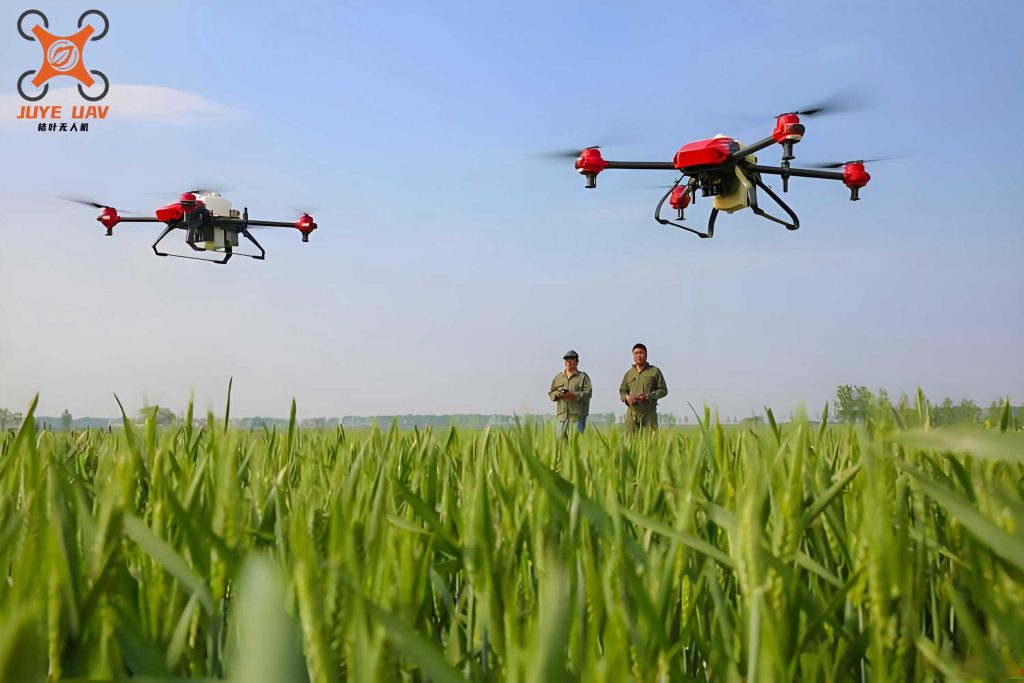
In contemporary agricultural practices, the application of pesticides and other agrochemicals predominantly relies on manual or semi-mechanized operations. This conventional approach often results in excessive chemical usage, high labor costs, significant environmental pollution, and potential health risks to operators due to exposure. The emergence and integration of agricultural drone technology present a transformative solution to these challenges. Unmanned Aerial Vehicles (UAVs) designed for crop protection offer distinct advantages, including low-altitude operation, minimal environmental impact, high operational flexibility, and reduced overall cost. Consequently, research and development in the field of UAV-based aerial spraying are accelerating globally.
The efficacy of spray application from an agricultural drone is governed by numerous factors, with droplet size spectrum being one of the most critical. Droplet size directly influences deposition efficiency, coverage uniformity, drift potential, and ultimately, the biological effectiveness of the applied product. Therefore, a fundamental understanding of the parameters affecting droplet size generated by spray systems onboard agricultural drones is essential for optimizing application protocols.
Field experiments, wind tunnel tests, and computational simulations are the primary methodologies for studying spray drift and characteristics. While field trials offer real-world conditions, they are susceptible to uncontrollable environmental variables such as unpredictable wind gusts, temperature fluctuations, and humidity changes, which can compromise the accuracy and repeatability of results. Numerical simulations, though powerful, still face difficulties in perfectly modeling complex turbulent airflows and droplet-air interactions. In contrast, wind tunnel testing provides a controlled environment where parameters like wind speed and direction can be precisely regulated and maintained. This control allows for accurate, repeatable measurements and isolates the effect of specific variables, making it a preferred method for foundational research. Numerous studies have utilized wind tunnels to investigate the performance of various nozzle types, such as flat-fan, twin-fluid, and rotary atomizers, under different operational conditions. However, detailed investigation into the droplet size characteristics of centrifugal nozzles, commonly used on electric agricultural drones, remains relatively limited.
This study, therefore, was conducted to systematically investigate the spray characteristics of a specific centrifugal nozzle (model P20) designed for use on agricultural drones. The experiments were performed in a state-of-the-art wind tunnel laboratory. The objectives were threefold: 1) to analyze the influence of flow rate, rotational speed, and release height on the spray swath width; 2) to determine the effects of flow rate, rotational speed, vertical and horizontal measurement distance, and wind speed on droplet size distribution; and 3) to evaluate the spray deposition and drift pattern under different wind speeds using water-sensitive paper. The findings aim to provide crucial data support for parameter selection during UAV spray operations and to facilitate the further optimization of centrifugal nozzle systems for agricultural drone applications.
1. Materials and Methods
1.1 Experimental Setup
The experiments were conducted in a composite high-low speed wind tunnel, designed according to the ISO22856-2012 standard. The wind tunnel test section dimensions were 20 m (length) × 2 m (width) × 1.1 m (height), with a controllable wind speed range of 2 to 52 m/s. This controlled environment is ideal for studying agricultural drone spray phenomena.
The spray system consisted of a commercially available P20 centrifugal nozzle and its associated drive and control units (pump controller, DC motor, battery, and ground station software). The nozzle flow rate and rotational speed were precisely controlled via a dedicated mobile application. A laser diffraction particle size analyzer (OMEC DP-02) was positioned outside the wind tunnel, with its laser beam directed through a window into the test section to measure droplet size spectra in real-time. For deposition studies, an array of rods and clips was installed inside the wind tunnel to hold water-sensitive paper (WSP) cards at specified locations. All tests used tap water at ambient temperature as the spray fluid.
1.2 Evaluation Metrics and Methodology
The following key metrics were used to evaluate spray performance:
- Spray Swath Width: The outer and inner diameters of the deposition pattern were measured manually using a tape measure. The effective spray area was calculated as the area between the concentric circles defined by the average outer and inner diameters.
$$ A_{\text{effective}} = \pi (R_{\text{outer}}^2 – R_{\text{inner}}^2) $$
where \( R_{\text{outer}} \) and \( R_{\text{inner}} \) are the average radii of the outer and inner deposition boundaries, respectively. - Droplet Size Distribution: The laser analyzer provided the volumetric droplet size distribution. Key parameters extracted were:
- \( D_{v10} \): Droplet diameter at which 10% of the total spray volume is contained in droplets smaller than this value.
- \( D_{v50} \) or VMD (Volume Median Diameter): Droplet diameter at which 50% of the total spray volume is contained in droplets smaller and 50% in droplets larger than this value. This is a primary indicator of droplet fineness.
- \( D_{v90} \): Droplet diameter at which 90% of the total spray volume is contained in droplets smaller than this value.
- Relative Span (S): A dimensionless index describing the uniformity of the droplet size spectrum. A lower value indicates a more uniform (narrower) distribution.
$$ S = \frac{D_{v90} – D_{v10}}{D_{v50}} $$ - Deposition Density: Water-sensitive papers collected after spray tests were scanned and analyzed using ImageJ software to determine droplet density (droplets per cm²) and coverage percentage.
1.3 Experimental Design
A single-factor experimental design was employed to isolate the effect of each parameter.
1.3.1 Spray Swath Tests: Conducted under static (no wind) conditions.
| Factor Varied | Levels | Constant Parameters |
|---|---|---|
| Flow Rate (Q) | 150, 250, 350, 450, 550, 650 ml/min | Speed (N)=9000 rpm, Height (H)=0.5 m |
| Rotational Speed (N) | 5000, 7000, 9000, 11000, 13000, 15000 rpm | Flow Rate (Q)=350 ml/min, Height (H)=0.5 m |
| Release Height (H) | 0.5, 1.0, 1.5, 2.0 m | Flow Rate (Q)=350 ml/min, Speed (N)=9000 rpm |
Each test lasted 90 seconds, with three replications.
1.3.2 Droplet Size Tests: The laser analyzer was positioned at a fixed point. Parameters were varied sequentially under static and dynamic (wind) conditions.
| Test Objective | Levels | Constant Parameters |
|---|---|---|
| Effect of Flow Rate (Q) | 150, 250, 350, 450, 550, 650 ml/min | N=9000 rpm, ΔV=3 cm, ΔH=40 cm, Wind=0 m/s |
| Effect of Vertical Distance (ΔV) | 3, 13, 23, 33 cm | Q=350 ml/min, N=9000 rpm, ΔH=40 cm, Wind=0 m/s |
| Effect of Rotational Speed (N) | 5000, 7000, 9000, 11000, 13000, 15000 rpm | Q=350 ml/min, ΔV=3 cm, ΔH=40 cm, Wind=0 m/s |
| Effect of Horizontal Distance (ΔH) | 0, 20, 40, 60, 70 cm | Q=350 ml/min, N=9000 rpm, ΔV=13 cm, Wind=0 m/s |
| Effect of Wind Speed (U) | 0, 2, 4, 6 m/s | Q=350 ml/min, N=9000 rpm, ΔV=3 cm, ΔH=40 cm |
(ΔV: Nozzle height above laser beam; ΔH: Horizontal distance from nozzle axis to laser beam).
1.3.3 Deposition and Drift Tests: Wind tunnel wind speed (U) was set at 2, 4, and 6 m/s. The nozzle was fixed at a height of 0.65 m. Two sets of WSP samplers were deployed: a vertical array at 2 m downwind, and a horizontal array at a height of 0.4 m extending further downwind. Deposition patterns were analyzed to assess drift potential.
2. Results and Analysis
2.1 Spray Swath Analysis
The results for spray swath under static conditions are summarized below.
| Factor | Trend in Outer Diameter | Trend in Inner Diameter | Trend in Effective Area (A_effective) | Key Observation |
|---|---|---|---|---|
| Flow Rate (Q) ↑ | Marked Increase (136.5 to 209 cm) | Minor increase then decrease | Significant Increase (9417 to 29650 cm²) | Swath width is highly sensitive to flow rate. |
| Rotational Speed (N) ↑ | Minor Fluctuation | Minor Fluctuation | Fluctuation (~13000-18000 cm²) | Limited influence on swath; peak area at N=9000 rpm. |
| Release Height (H) ↑ | Decrease (178 to 156.5 cm) | Decrease (95.5 to 81.5 cm) | Decrease (17722 to ~14000 cm²) | Increased height leads to narrower, more concentrated swath. |
The data indicates that for an agricultural drone operator, adjusting the flow rate is the most direct way to modify swath width on the ground. The inverse relationship between height and swath width suggests that flight altitude must be carefully calibrated to achieve the desired overlap between adjacent swaths during agricultural drone operation.
2.2 Droplet Size Distribution Analysis
2.2.1 Influence of Flow Rate and Release Height (Static)
Under windless conditions, varying the flow rate from 150 to 650 ml/min showed no statistically significant or consistent trend on the VMD (\(D_{v50}\)), which fluctuated around a mean value. However, the relative span (S) increased with flow rate, indicating a broadening of the droplet size spectrum and reduced uniformity.
$$ S \propto Q \quad \text{(under tested conditions)} $$
Similarly, increasing the vertical measurement distance (ΔV) from 3 to 33 cm resulted in only minor, non-monotonic changes in \(D_{v50}\). Notably, the relative span (S) decreased consistently with height, suggesting that droplet size distribution becomes more uniform farther from the nozzle, possibly due to the evaporation of the smallest droplets or spatial sorting.
2.2.2 Influence of Rotational Speed (Static)
Rotational speed (N) exhibited a strong and inverse relationship with droplet size. As the speed of the centrifugal nozzle increased, the \(D_{v50}\) decreased steadily. This is a fundamental principle of centrifugal atomization, where higher rotational energy imparted to the liquid film results in finer droplets. The relationship can be approximated as:
$$ D_{v50} \propto \frac{1}{N^{\alpha}} $$
where \( \alpha \) is a positive constant dependent on nozzle geometry and fluid properties. The relative span (S) first increased and then slightly decreased with speed, showing a peak near 11000 rpm, indicating the uniformity was poorest at mid-range speeds under these conditions.
2.2.3 Influence of Measurement Location (Static)
Moving the measurement point horizontally away from the nozzle axis (ΔH increase from 0 to 70 cm) led to a clear increase in measured \(D_{v50}\). This is attributed to the spatial sampling characteristic of the laser and droplet trajectory dynamics. Larger droplets, possessing greater momentum, tend to travel farther in a straight line, dominating the measurement at the periphery, while smaller droplets may drift away or settle closer to the axis. This highlights that droplet size is not uniform across the swath of an agricultural drone spray.
2.2.4 Influence of Wind Speed
The introduction of wind in the wind tunnel altered the droplet dynamics. As wind speed (U) increased from 0 to 6 m/s, the measured \(D_{v50}\) showed a slight overall decreasing trend. This could be due to the enhanced shear and secondary breakup of droplets in the airstream. The relative span (S) decreased initially and then increased slightly, but remained within a relatively narrow range, suggesting wind did not drastically degrade uniformity at these low to moderate speeds. This data is critical for modeling the spray output of an agricultural drone moving forward at cruising speed, as it simulates the effect of the drone’s forward airspeed relative to still air.
| Wind Speed U (m/s) | Mean \(D_{v50}\) (μm) | Relative Span (S) | Interpretation |
|---|---|---|---|
| 0 | 130.0 | 0.65 | Baseline (hover condition) |
| 2 | 123.5 | 0.60 | Droplets become slightly finer and more uniform. |
| 4 | 118.8 | 0.58 | Trend continues. |
| 6 | 116.3 | 0.61 | Finest droplets, uniformity slightly reduced. |
2.3 Deposition and Drift Analysis
The analysis of water-sensitive papers revealed clear trends regarding wind impact on spray deposition from the centrifugal nozzle, simulating the effect of an agricultural drone‘s operational environment.
- Downwind Displacement: The primary deposition zone shifted significantly downwind as wind speed increased. At 2 m/s, substantial deposition occurred within the 2-8 m downwind sampling area. At 4 m/s and 6 m/s, the peak deposition appeared to be pushed beyond the 8 m sampling limit, indicating higher drift potential.
- Deposition Density Reduction: For a fixed sampling location (e.g., within the first few meters downwind), the droplet density and coverage decreased markedly with increasing wind speed. The mass of spray material passing through a unit area close to the release point was reduced as droplets were transported downwind more rapidly.
- Vertical Profile: Under higher wind speeds (4-6 m/s), the vertical center of the deposition plume lowered closer to the wind tunnel floor compared to the lower wind speed (2 m/s). This is consistent with wind flattening the spray cloud and altering its trajectory.
These findings underscore a critical challenge for agricultural drone spraying: operational wind speed is a paramount factor governing both effective on-target deposition and off-target drift. Precise calibration of flight parameters and possibly the integration of real-time wind compensation algorithms are necessary to mitigate these effects.
3. Conclusion
This comprehensive wind tunnel study elucidated the spray characteristics of a centrifugal nozzle relevant to agricultural drone systems. The key conclusions are as follows:
- Spray Swath: Swath width is primarily governed by flow rate and release height. Increasing flow rate widens the swath, while increasing flight height narrows it. Rotational speed has a minimal, non-monotonic effect on swath width under static conditions. This provides clear guidance for agricultural drone operators: swath adjustment is best achieved by modulating flow rate and maintaining a consistent, low altitude.
- Droplet Size (Static Conditions): The volume median diameter (VMD, \(D_{v50}\)) is predominantly controlled by the nozzle’s rotational speed, following an inverse relationship. Flow rate and measurement height below the nozzle have negligible direct impact on VMD within the tested ranges. However, droplet size distribution becomes less uniform (higher relative span) with increased flow rate and more uniform farther from the nozzle. Measurements taken horizontally away from the spray axis show larger droplet sizes, demonstrating spatial heterogeneity across the swath.
- Droplet Size (Windy Conditions): The presence of wind, simulating the forward airspeed of an agricultural drone, leads to a slight reduction in measured VMD and can modify distribution uniformity. This interaction between nozzle-generated droplets and the external airflow is a critical area for spray model development.
- Deposition and Drift: Wind speed is the most significant operational factor affecting deposition pattern and drift potential. Higher winds displace the deposition plume downwind, reduce on-target deposition density near the release point, and alter the vertical profile of the spray cloud. Effective agricultural drone spraying mandates strict adherence to recommended wind speed thresholds and sophisticated application planning to minimize environmental contamination and ensure efficacy.
In summary, optimizing the performance of an agricultural drone spray system requires a balanced understanding of these interdependent parameters. The centrifugal nozzle offers the advantage of electronically tunable droplet size via rotational speed control, independent of flow rate. For practical application, operators of agricultural drones should select a rotational speed setting that produces the biologically optimal droplet size spectrum for the target pest and crop, then adjust the flow rate to achieve the desired swath width and application volume, all while operating within strict wind speed limits to ensure deposition accuracy and safety. The data and relationships established in this controlled wind tunnel study serve as a valuable foundation for field protocol development and the continued technological refinement of precision aerial application systems for modern agriculture.