
The rapid advancement of unmanned aerial vehicle (UAV) technology has significantly impacted modern agriculture. Among various applications, the agricultural drone, specifically designed for plant protection, has become an indispensable tool. These drones enable precision spraying, improve operational efficiency, reduce pesticide waste, and conserve human resources, thereby enhancing overall agricultural productivity and crop quality. A critical factor influencing the performance of an agricultural drone is its structural weight, which directly affects payload capacity and flight endurance.
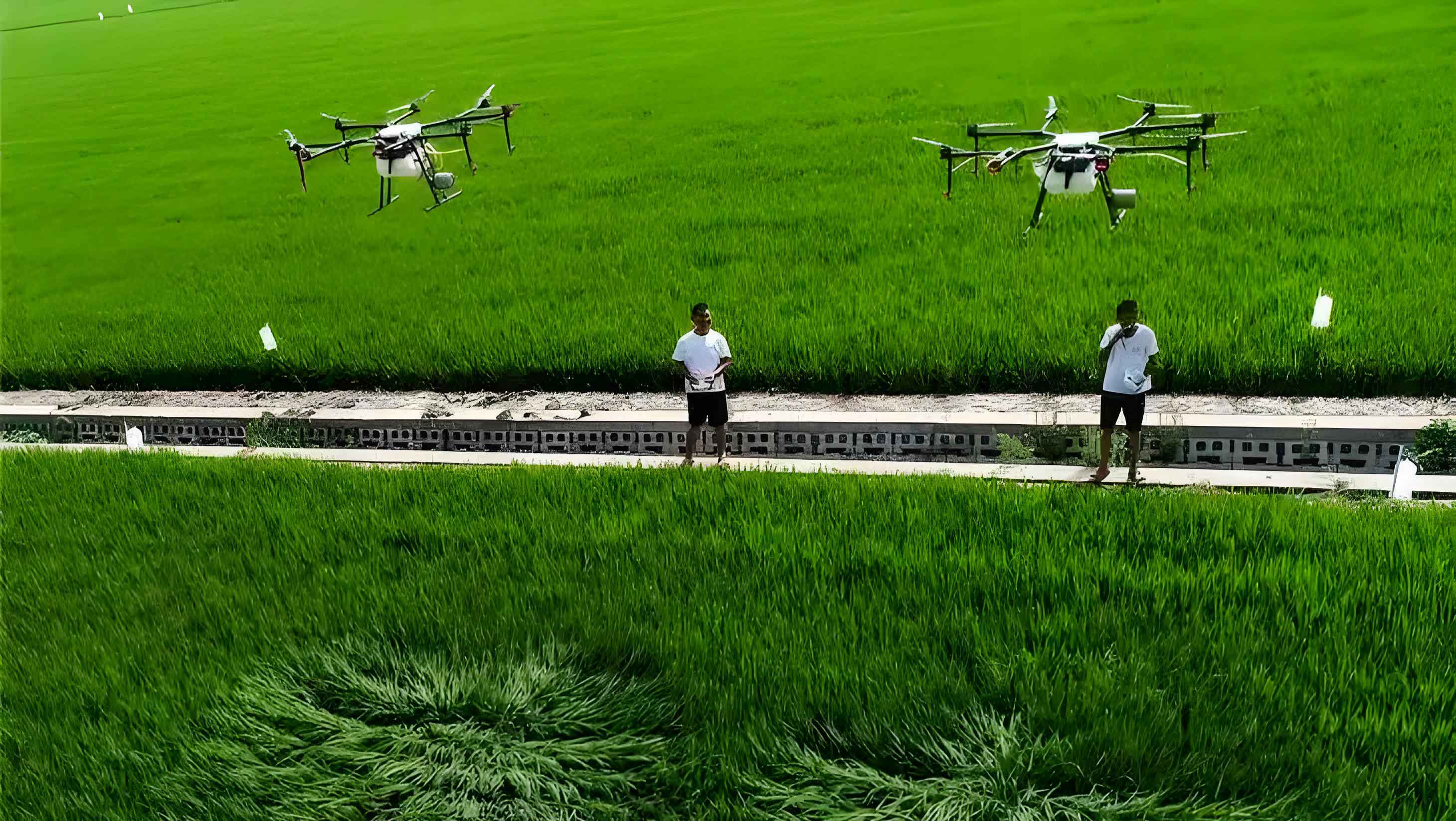
Structural light-weighting is therefore a primary focus in drone design. While extensive research exists on light-weighting small-scale quadcopters, studies focusing on larger, more payload-capable octocopter frames for agricultural drone applications are relatively limited. This work aims to address this gap by performing a topology optimization on the airframe of an octocopter agricultural drone using COMSOL Multiphysics software. The objective is to minimize structural compliance (maximize stiffness) under a volume constraint, ultimately achieving a lighter structure without compromising mechanical integrity.
1. Fundamentals of Structural Topology Optimization
Topology optimization for continuum structures is a computational method that seeks the optimal material distribution within a given design domain to extremize a system performance (e.g., stiffness) subject to constraints (e.g., volume). The design domain is discretized into finite elements, and an optimization algorithm determines whether each element should be filled with material or be void.
The Variable Density Method (VDM) is widely adopted in commercial software. It introduces a pseudo-density, $\rho_e$, for each element, which varies continuously between 0 (void) and 1 (solid material). To penalize intermediate densities and steer the solution towards a solid-void design, the Solid Isotropic Material with Penalization (SIMP) model is used. It defines the interpolated Young’s modulus $E(\rho_e)$ as:
$$ E(\rho_e) = E_{min} + \rho_e^p (E_0 – E_{min}) $$
where $E_0$ is the Young’s modulus of the solid material, $E_{min}$ is a very small modulus assigned to void regions to avoid numerical singularity, and $p$ is the penalty factor (typically $p \geq 3$). The optimization problem is formulated with $\rho_e$ as the design variable.
A common issue with VDM is the appearance of “gray” elements with densities between 0 and 1, leading to ambiguous boundaries. To mitigate this, a projection method using a smoothed Heaviside function is employed. The physical density $\tilde{\rho}_e$ is computed from the design variable $\rho_e$ via a projection:
$$ \tilde{\rho}_e = \frac{\tanh(\beta \eta) + \tanh(\beta (\rho_e – \eta))}{\tanh(\beta \eta) + \tanh(\beta (1 – \eta))} $$
Here, $\eta$ is the threshold (usually 0.5), and $\beta$ controls the sharpness of the projection. A higher $\beta$ value produces a steeper function, suppressing intermediate densities and yielding a clearer 0-1 topology.
2. Topology Optimization of the Octocopter Agricultural Drone Airframe
2.1 Mathematical Formulation
For the airframe of the octocopter agricultural drone, the optimization goal is to maximize global stiffness under a weight constraint. This is equivalent to minimizing the structural compliance, $C$, which is the work done by the external forces. The optimization problem is stated as:
Find: $\boldsymbol{\rho} = [\rho_1, \rho_2, …, \rho_n]^T$
Minimize: $C(\boldsymbol{\rho}) = \mathbf{F}^T \mathbf{U}(\boldsymbol{\rho}) = \mathbf{U}(\boldsymbol{\rho})^T \mathbf{K}(\boldsymbol{\rho}) \mathbf{U}(\boldsymbol{\rho})$
Subject to:
$$ \frac{V(\boldsymbol{\rho})}{V_0} = \frac{\sum_{e=1}^n \tilde{\rho}_e v_e}{V_0} \leq f $$
$$ 0 < \rho_{min} \leq \rho_e \leq 1, \quad e = 1,…, n $$
where $\mathbf{F}$ is the load vector, $\mathbf{U}$ is the displacement vector, $\mathbf{K}$ is the global stiffness matrix, $V(\boldsymbol{\rho})$ is the volume of the structure, $V_0$ is the volume of the design domain, $v_e$ is the volume of element $e$, $f$ is the prescribed volume fraction, and $\rho_{min}$ is a small positive value to prevent singularity.
In this study, the volume fraction was set to $f = 0.125$, meaning the optimized structure can use at most 12.5% of the material in the initial design domain.
2.2 Optimization Setup in COMSOL
Leveraging symmetry, only one-quarter of the octocopter agricultural drone airframe was modeled to reduce computational cost. The design domain comprised the central frame and arms. Non-design domains, representing essential components like the battery and liquid tank with masses of 7 kg and 15 kg respectively, were explicitly defined. The motor mounting points were modeled as boundaries where loads are applied.
The material for the design domain was Nylon (Polyamide), with properties: Density $\rho_{mat} = 1150\ kg/m^3$, Young’s modulus $E_0 = 2\ GPa$, and Poisson’s ratio $\nu = 0.4$.
The loading condition simulated a critical flight maneuver. A 10g upward acceleration was applied to account for dynamic lift forces and provide a safety factor. Furthermore, a reaction torque from the paired, counter-rotating propellers was applied at the motor mounts. Symmetry conditions were enforced on the two cutting planes.
The optimization was performed using the Method of Moving Asymptotes (MMA). A parametric study was conducted to investigate the influence of the penalty factor $p$ and the projection parameter $\beta$ on the prevalence of gray elements. Three parameter sets were tested, as summarized in the table below.
| Case | Penalty Factor (p) | Projection Parameter (β) |
|---|---|---|
| 1 | 1 | 2 |
| 2 | 2 | 4 |
| 3 | 3 | 6 |
2.3 Optimization Results and Parameter Influence
The optimization results for the three parameter sets were filtered to display only elements with a physical density $\tilde{\rho}_e > 0.5$. Cross-sectional views revealed significant differences in material distribution and gray element prevalence.
- Case 1 (p=1, β=2): The resulting topology failed to form a connected load path. The cross-section showed extensive areas of low-density (light gray/white) material, indicating severe gray element issues. The low penalty factor provided insufficient incentive for elements to converge to 0 or 1.
- Case 2 (p=2, β=4): A connected structure emerged. However, large regions of intermediate density (0.5-0.7) were still present, particularly near load application points, leading to fuzzy structural boundaries.
- Case 3 (p=3, β=6): This combination produced the clearest topology. The density was predominantly near 1 in the core structural members, with intermediate densities largely confined to the surface transitions. The gray element phenomenon was effectively suppressed.
The optimized topology for Case 3 exhibited a characteristic “radial” or “spoke-like” truss structure connecting the central payload area to the motor arms. This is a mechanically efficient form for transferring loads from multiple points to a central hub, which is ideal for an octocopter agricultural drone frame. The result from Case 3 was selected for subsequent detailed analysis and validation.
3. Mechanical Analysis of the Optimized Agricultural Drone Structure
3.1 Model Reconstruction
The density distribution from the optimized result (Case 3) was used to reconstruct a smooth, watertight 3D CAD model of the airframe. This reconstructed model of the agricultural drone was then imported into a new COMSOL component for finite element analysis (FEA) under the same loading and boundary conditions used in the optimization phase.
3.2 Static Structural Analysis
A linear static analysis was performed to evaluate the stiffness and strength of the optimized agricultural drone airframe. The results are summarized below.
| Metric | Value | Location |
|---|---|---|
| Maximum Displacement | 4.73 × 10⁻⁴ m | Payload area and arm junctions |
| Maximum von Mises Stress | ~1.5 MPa | Motor mounting boundaries |
The displacement field showed that deformation was primarily concentrated in three key areas: the payload platform itself, the junctions between the radial trusses and the payload hub, and the connections between the trusses and the outer arm rings. This validates the optimization result, as material was strategically placed in these load-bearing paths. The maximum stress was found at the motor mounts, which experience concentrated forces and moments. Crucially, the maximum stress of approximately 1.5 MPa is far below the yield strength of Nylon (typically 40-80 MPa), indicating a high factor of safety. The results confirm that the light-weighted agricultural drone airframe possesses adequate stiffness and strength for the defined operational load case.
3.3 Modal Analysis
To assess dynamic performance and avoid resonance with the propulsion system, a modal analysis was conducted. The natural frequencies of the first six vibration modes are critical for the agricultural drone.
| Mode Order | 1 | 2 | 3 | 4 | 5 | 6 |
|---|---|---|---|---|---|---|
| Frequency (Hz) | 120.44 | 168.68 | 205.63 | 225.54 | 247.19 | 282.82 |
The first natural (fundamental) frequency is 120.44 Hz. For a typical brushless DC motor used in agricultural drone applications, this corresponds to a rotational speed of:
$$ N = 60 \times f = 60 \times 120.44 \approx 7226.4\ \text{RPM} $$
Standard motors often operate below 7000 RPM for such frames. Therefore, the operating frequency of the propulsion system will be sufficiently separated from the structural natural frequencies, minimizing the risk of resonance-induced fatigue or failure during the operation of the agricultural drone.
4. Discussion on Design Implications for Agricultural Drones
The successful application of topology optimization has yielded a novel airframe design for a heavy-lift octocopter agricultural drone. The radial truss configuration is a direct result of the algorithm finding the most efficient load paths for the given multiple load points and central mass. This design philosophy differs significantly from traditional monolithic plate or tube frames and offers superior stiffness-to-weight ratio.
The parametric study highlights the importance of proper optimization parameter selection. The combination of a sufficiently high penalty factor ($p=3$) and a sharp projection ($\beta=6$) was essential to obtain a manufacturable design with minimal gray elements. Using lower values, while computationally cheaper, leads to ambiguous results that are not directly usable for engineering the agricultural drone.
The significant weight reduction achieved—implied by the 12.5% volume fraction—directly translates to operational benefits for the agricultural drone. The saved mass can be reallocated to increase chemical payload, allowing the drone to cover a larger area per flight. Alternatively, it can be used to carry larger batteries, extending flight endurance for the agricultural drone. Both outcomes enhance operational efficiency and reduce the cost per acre for crop protection.
The low maximum stress suggests potential for further optimization. A subsequent size or shape optimization could strategically remove more material from low-stress regions of the current topology, or the volume fraction constraint $f$ could be reduced in a new topology optimization run to push for even greater light-weighting of the agricultural drone frame.
5. Conclusion
This study demonstrates a complete workflow for the structural design of an octocopter agricultural drone airframe using topology optimization in COMSOL Multiphysics. The primary objective was to minimize structural compliance (maximize stiffness) under a strict volume constraint of 12.5% to achieve light-weighting.
The optimization was successfully performed using the Variable Density Method (SIMP) with a density projection filter. A parametric study established that a penalty factor $p=3$ and a projection parameter $\beta=6$ effectively suppressed gray elements, resulting in a clear, radial truss-like topology ideal for an agricultural drone.
The optimized design was reconstructed and subjected to rigorous mechanical verification. Static analysis confirmed that the structure meets stiffness requirements with a maximum displacement under 0.5 mm and possesses a high safety margin, with peak stresses significantly below the material yield limit. Modal analysis revealed a first natural frequency of 120.44 Hz, which is sufficiently high to avoid resonance with standard motor operating speeds, ensuring dynamic stability for the agricultural drone.
In conclusion, the topology-optimized airframe presents a viable, light-weight solution that enhances the payload capacity and/or flight endurance of the octocopter agricultural drone. The methodology and findings provide a valuable reference for the structural design of next-generation, high-performance agricultural drone platforms.